RESEARCH
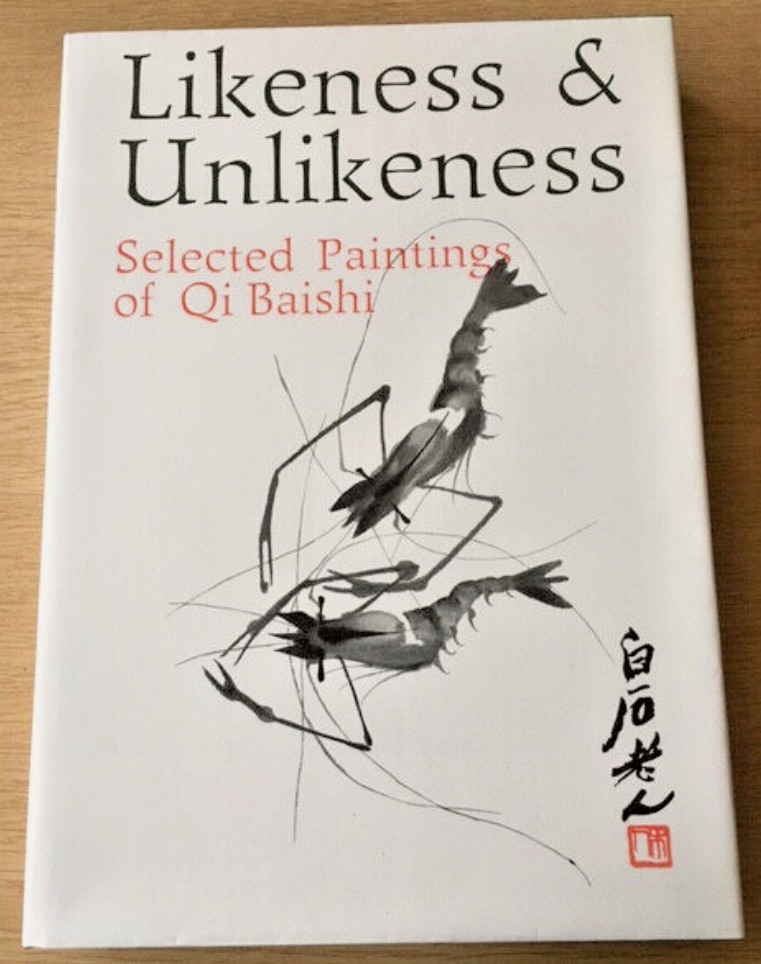
As part of my research to progress my painting practice, I am reading this book about Qi Baishi’s artwork and philosophy:
Below are some key points and notes I made from reading the text.
Poetry and soul in painting:
Within poetry there is painting; within painting, poetry.
A poet loves the moon and plum blossoms because his heart exists in moonlight and flower fragrance. Moon and plum blossoms are things on which he pins his heart and soul.
The mood of the painting comes from thinking which in turn comes from images.
The limited brush work in the painting evolves and extends continuously according to the logic of life and imaginative logic.
The artist’s mood cannot be fully expressed in the painting; only in part does it locate in the painting, and in part beyond it.
Rules of Chinese painting composition:
Concise, concise and concise – the characteristics of Chinese poetry and freehand brush painting.
Conciseness differs from simplicity. In conciseness, images are refined from complex and detailed phenomena.
Play of space and levels of meaning engage the imagination and intellect and stimulate them.
Conciseness is the law of composition in Chinese freehand brushwork.
Concise images are used to abstract and condense.
Omit irrelevant features and represent with a few strokes. Based on understanding of form.
Likeness and Unlikeness:
Traditional Chinese painting relies on painting from memory and feelings. Unlike western art that encourages sketching on site.
So the flowers in Qi’s works are flowers of both reality and imagination. They are flowers which have been assimilated by the painter’s heart and are permeated with emotional colours and the light of the painter’s ideal.
Qi’s motto: ‘The marvel of a good painting lies between likeness and unlikeness.’
Likeness means the concomitance of an actual object with the painter’s understanding of it. Unlikeness refers to the artist’s abstraction of the object in his treatment of it.
Unlikeness is a phenomenon of sight, likeness of the heart. [Note: I believe the translation of this has swapped the sentences. I think it should be ‘Likeness is a phenomenon of sight, unlikeness of the heart.’]
Concise composition depends on both sight and heart, and also on the combination of realism and romanticism.
Regarding the rendering of light – it is derived from the mind’s eye of the artist thus represent a synthesis. Whatever stands out is bright, obscured is dark.
More on composition:
The opposition and unity in contradictions.
Utilising contrasts.
Qi contrasts sparse and dense, a few scattered twigs on which appear an abundance of fruits and flowers.
Contrasting – large splashes of heavy black ink against large white spaces.
Sturdy pines contrast with tender, delicate grasses; quiet rocks with chirping birds. Wisterias spreading randomly with flowers in neat arrays.
Composition is the specific application of dialectics in its combination of images. Both opposite and complementary to each other. Each shining more brilliantly in the other’s company.
Qi’s motto in full with explanation:
‘The marvel of a good painting lies between likeness and unlikeness. If it is an exact likeness, it is catering to vulgar tastes, but no likeness is simply cheating.’
My analysis of some of the work from the book:
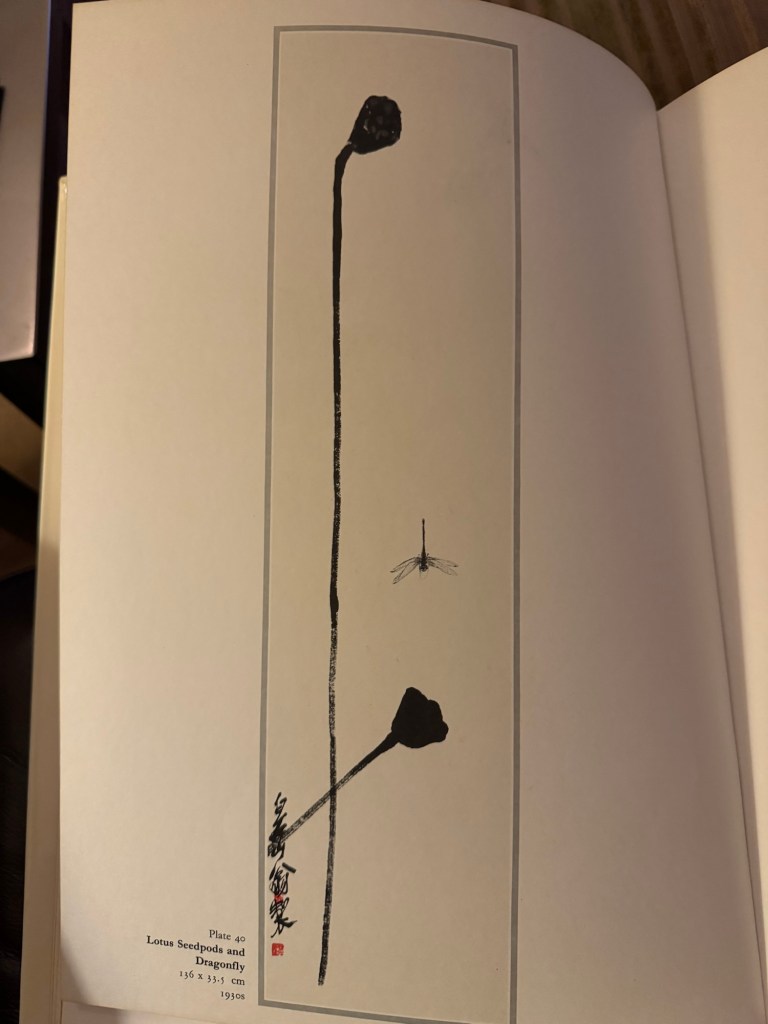
Composition – extensive use of negative space as a form of conciseness, removing the irrelevance.. Contrasting the lack of details (abstraction) of the lotus see pods to the detailed dragonfly.
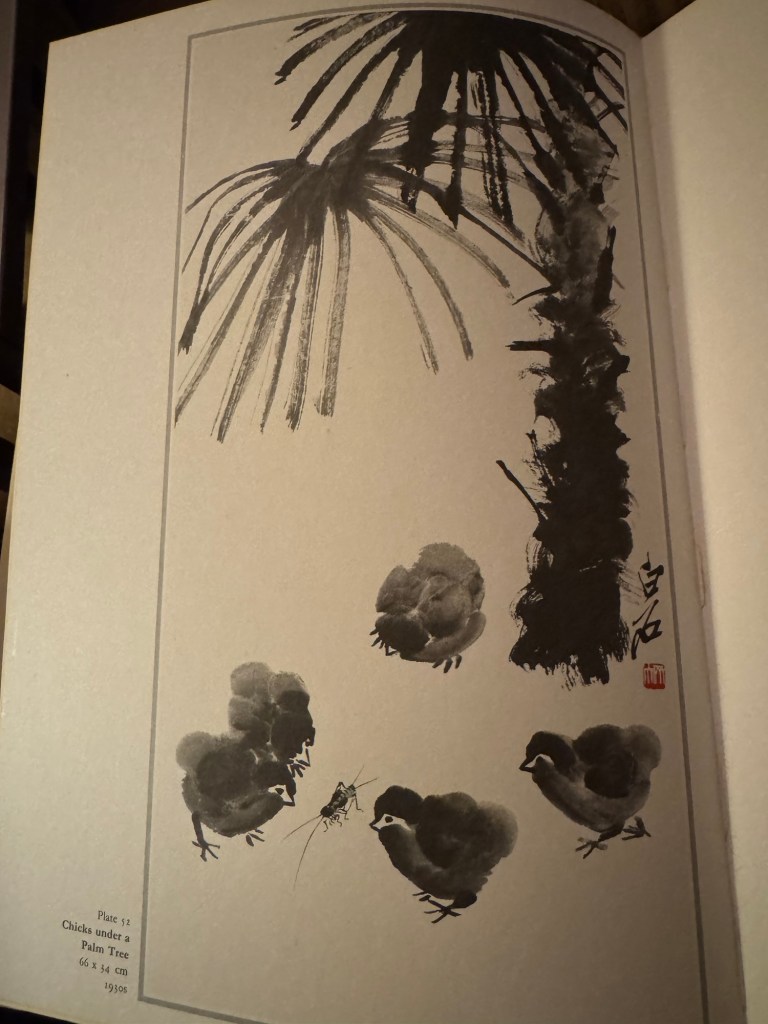
The conciseness in the depiction of the tree especially the leaves. The chicks are also reduced to a few round shapes with soft edges but the insect is detailed. All other background has been eliminated.
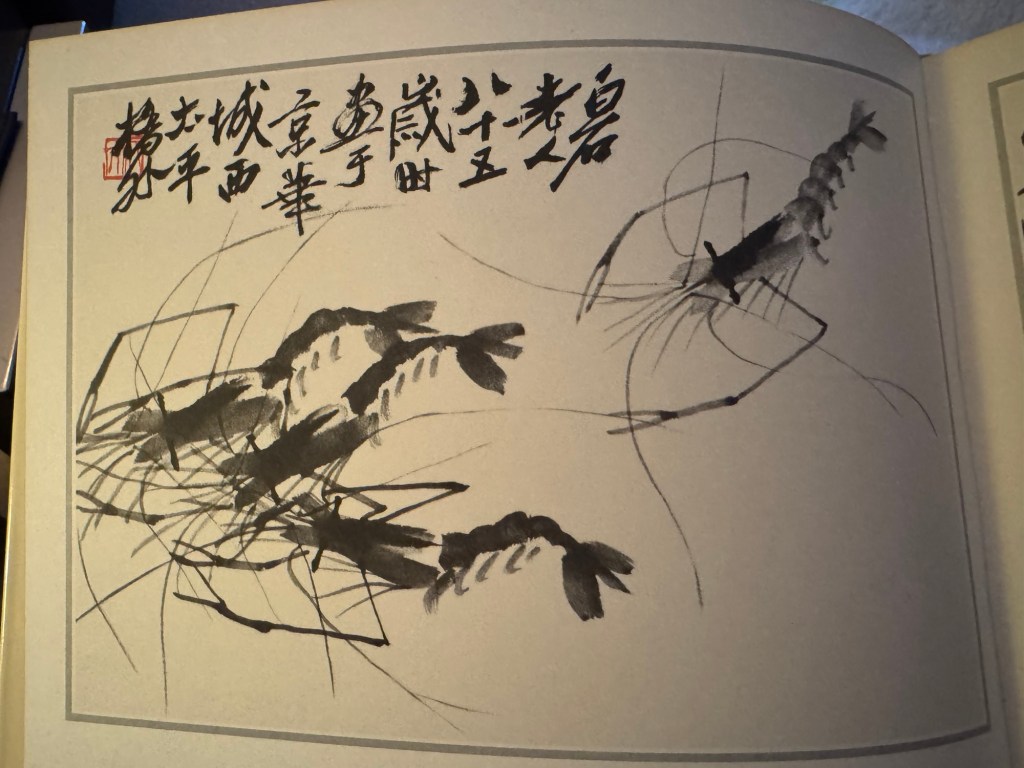
Shrimps are one of Qi’s most famous images. There is no background depicted, water, plant life or sea/pond beds have all been eliminated. But there is no doubt that the shrimps are in water and in movement. The depiction of the shrimps’ pincers and tentacles gives the sense of movement. The clustering (3+1) and distribution of the shrimps give a sense of an ongoing story where his painting is a snapshot in time. Qi has spent hours observing shrimps and their movements then painted them from memory thereby adding his own interpretations.
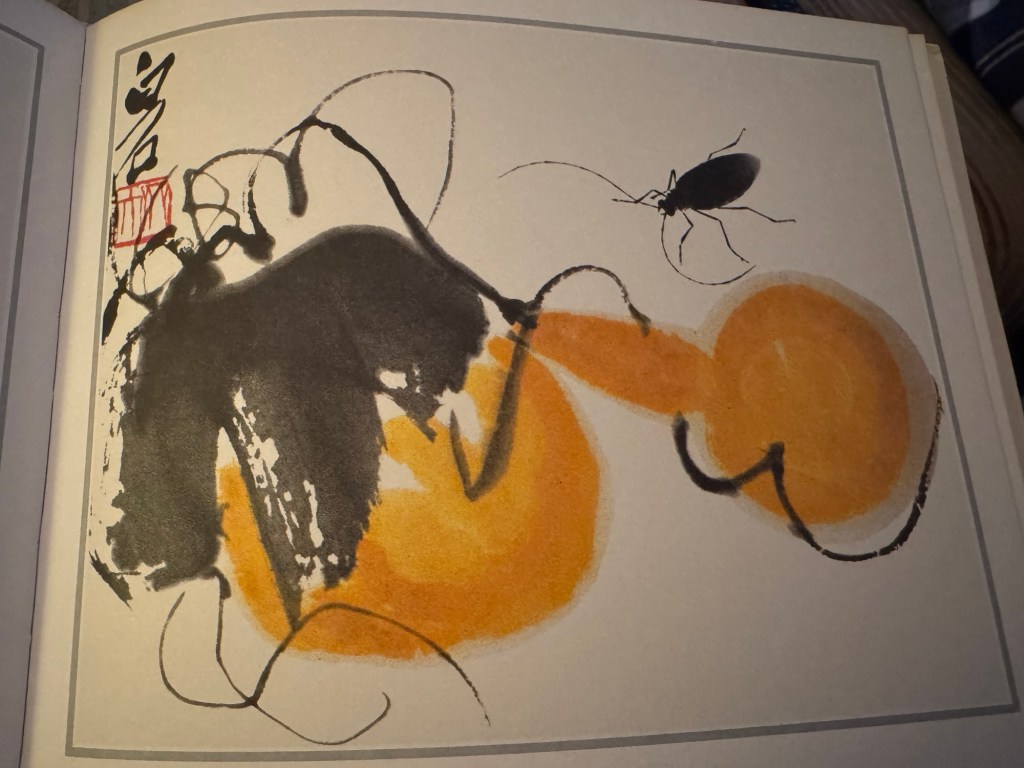
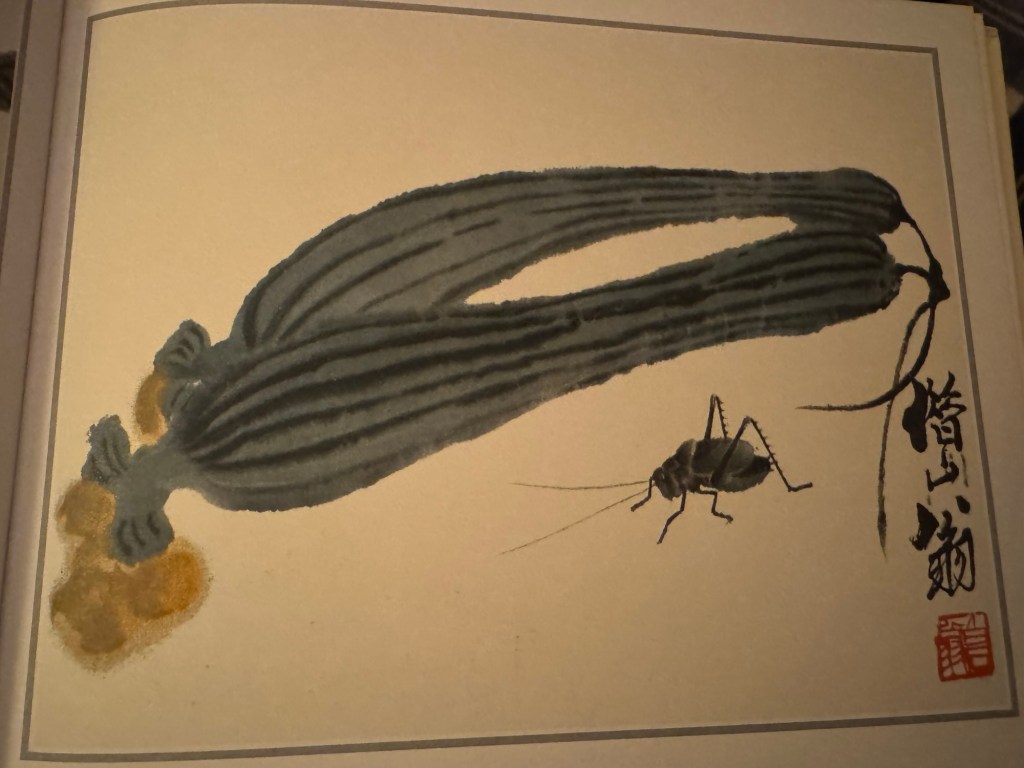
The three paintings below all show highly abstract plant or fruit with more precisely depicted elements such as insects:
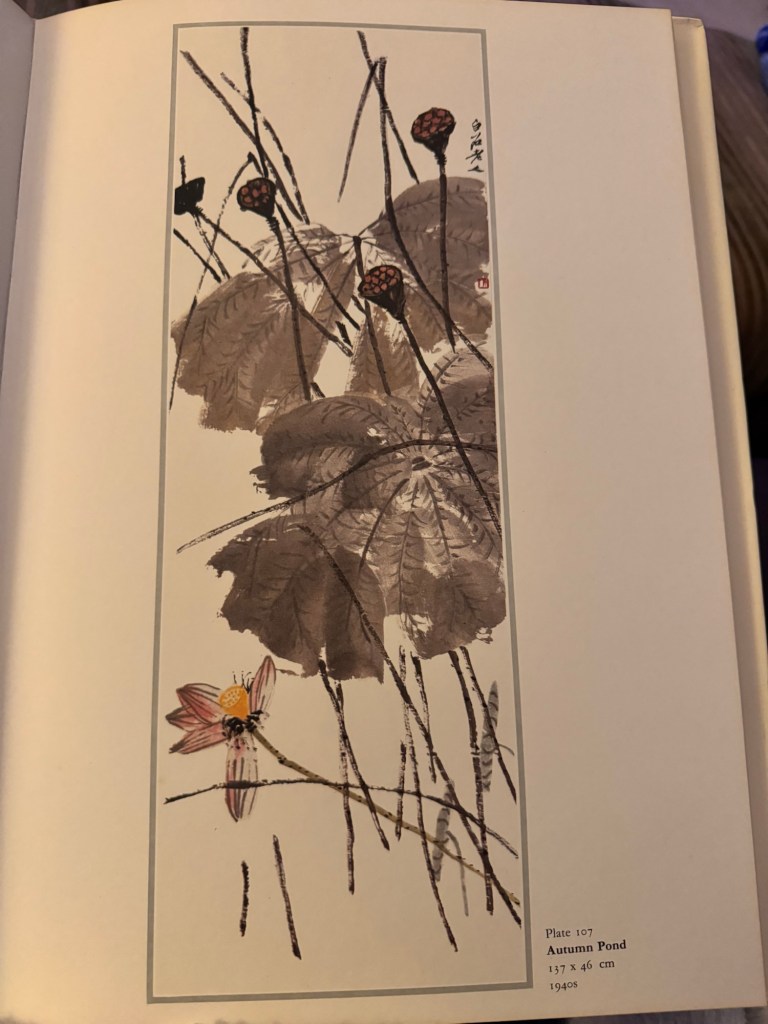
Neatly laid out flowers all point up among random branches.
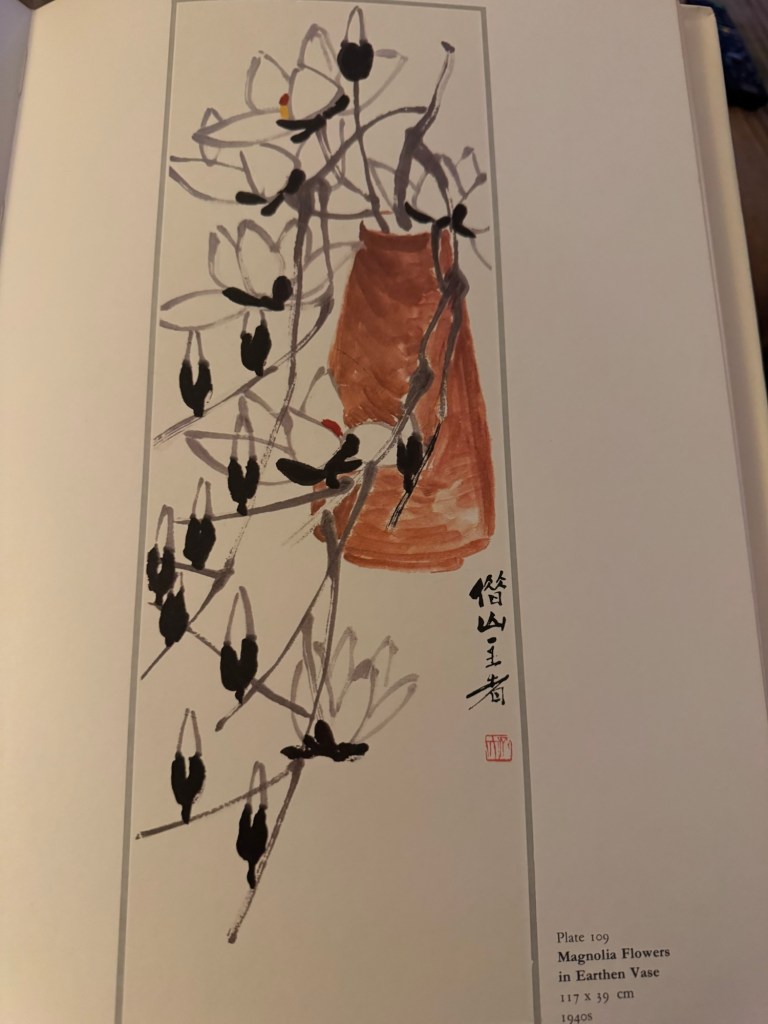
Contrasts of neat streams of flowers among expressive and random branches:

REFLECTIONS
What has been useful is the confirmation that there is nothing ‘magical’ about painting; there isn’t some kind of concept on a higher level that only certain ‘blessed or gifted’ artists can achieve. As for talent, that is subjective – I believe. Like art, a ‘talented’ abstract artist may produce art that is undesirable in some people’s eyes yet totally desirable for others. Hence I believe talent is subjective.
But painting is difficult – this was said to me by one of my fellow MA students who is an experienced painter. I couldn’t agree more. That’s also why I like painting. It’s a challenge that can be rewarding or frustrating – both are equally energising. Thinking about painting and art making consumes my mind and that must be why I only allowed myself to get deep into it after retirement. Perhaps I knew it would become like this.
I recently started learning about photography, I thought about incorporating that into my practice or even developing that into a main part of my practice – photography is an artistic as well as scientific subject hence I thought it would appeal. I attended a six week course to learn digital photography. I enjoyed the learning very much but I wasn’t as ‘bothered’ as I thought I would be. I think it’s because creating an image was too easy – doesn’t mean the image was any good, it was just too ‘quick and easy’ to get an outcome. Especially with a good digital camera (I bought a used Canon EOS 77D for the ‘new hobby’). The photography tutor was excellent and we did some good walkabout photography exercises in town. Within 20 minutes of walking around, I could produce a large number of images to choose from and there would typically be a couple that felt satisfactory. That’s too quick for me. There was little agony, self doubt or deliberation involved. Perhaps it’s my rebellion against the instant gratification culture that so dominates modern life and I want to exclude myself from that culture. It’s not because I think that’s wrong or want to judge, I just need a slow and drawn out agony to feel alive! In writing this paragraph, I have just come to realise why I paint.
Having said all that, I was recently given my late father-in-law’s treasured Hasselblad medium format film camera. It is a work of art in itself and the quality of engineering (all mechanical) is beyond words. I feel so privileged to have it. I have written another blog to capture my first experience with using it. I think analogue film photography is a different game to digital photography and the slowness of the process feeds my need for the excitement from a ‘drawn out agony’. All the anticipation. I am captivated.
Back to painting and likeness and unlikeness… I learnt a lot about composition in Chinese painting. That was very helpful. However, I also work extensively with composition in western art which is a different approach. So once again there is conflict in how I would bring the two together. Another opportunity to explore the third space where two cultures come together to create something new…
Another key learning is the likeness coming from sight and unlikeness coming from the heart. The latter being the artist’s influence or interpretation of the reality – this I have not done so much of and I need to work on this aspect a lot more. I recognise that I often rush into a painting because I’m so excited about a new idea. I have learnt that I need to take time to think about what and how I feel about the subject, what I’m painting and let that feeling play out more on the canvas with the subject I’m painting being the ‘carrier’ of that sentiment. Whoa! Easy to say!
Perhaps I can do some free writing before starting a painting to get insight into my thinking and feelings about whatever I’m making.
LEARNING
– Use conciseness and negative space to create impact and tension on the canvas.
– As I approach a painting (or any artwork), think more about how I feel about the topic and less about the detail of the representation. Incorporate more the heart and less of the sight to achieve a better balance of likeness and unlikeness.
– I have learnt about why I paint through this research and my reflections.
– I have yet to resolve the conflict between the different approaches between Chinese and Western art composition. What does transcultural mean in terms of composition when they are so different?
NEXT STEPS
– Take my learning forward to my next painting especially the part of applying the heart more to create unlikeness.
 elizarawlings