MA U2: Cheongsam Series – Food as metaphor for cultural identity – Introduction

Further to my blog on the Cheongsam series where I introduced the idea of using food as metaphor for racial or cultural identity, I want to capture more of my thoughts, ideas and research on this subject to document the meaning behind this series of work. Here is my earlier blog with some background and where I had generated a preliminary design digitally:

MA U2: Cheongsam Series #5 – She’s a banana! – Part A

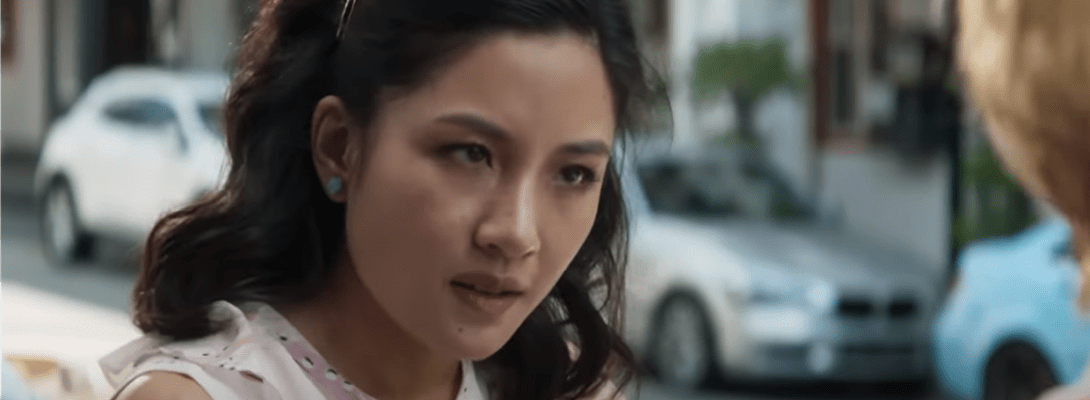
In the above blog, I referred to the Hollywood film Crazy Rich Asians where the American-born Chinese protagonist was referred to as ‘a banana’ by her best friend because the protagonist was perceived by her future mother-in-law (a traditional Chinese woman living in Asia) to be ‘yellow’ on the outside but ‘white’ on the inside.
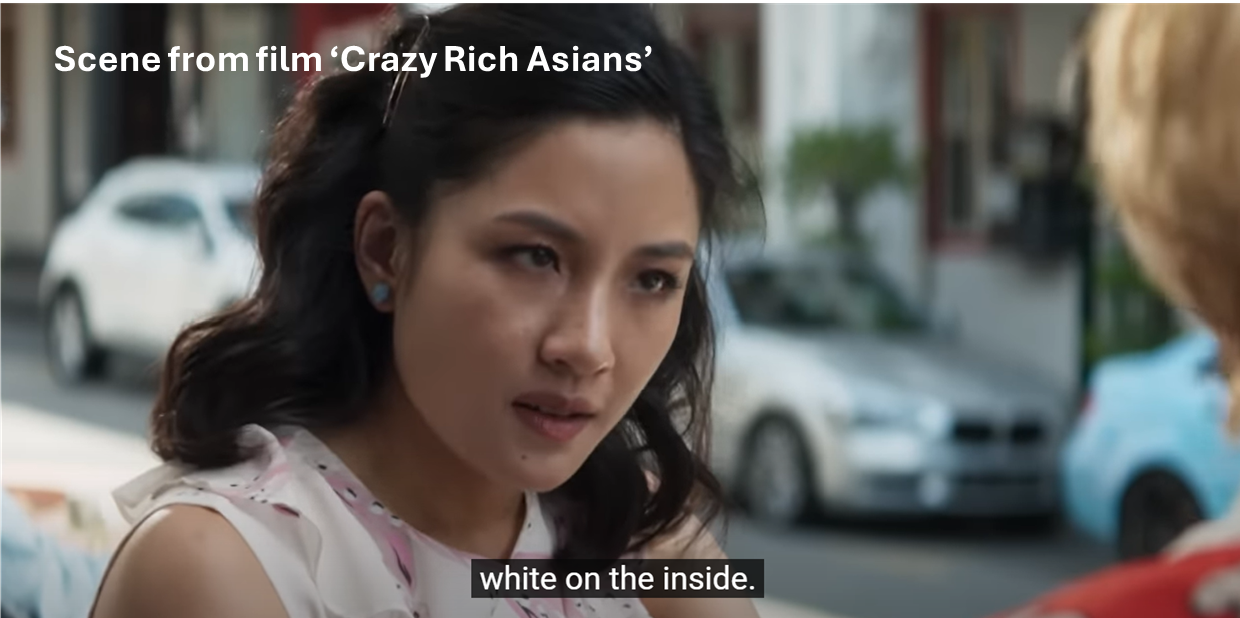
Here is a clip of the scene:

‘Banana’ reference, clip time from 1:15 to 1:45:

https://youtu.be/QC8Fdx0OZYY?si=v0sOGeJKtGbUH4d2

In my earlier blog, I mentioned that I remember being called a banana, too, because I moved to the UK as a young teenager and have lived here for decades, hence I have inevitably adopted much of the British culture. As a result, I consider myself a transcultural person and have based my art practice on this subject. I personally do not consider the description of ‘banana’ an insult, it is very widely used within Chinese communities and its meaning is widely known. Also, there is the legacy of colonialism where being considered ‘westernised’ is not necessary a bad thing (reference The Location of Culture by Homi K Bhabha, chapter ‘Of mimicry and man: The ambivalence of colonial discourse’) if one wants to get on in ‘the west’ and avoid being treated as ‘an outsider’. This point deserves to be explored in a dedicated blog so it will not be covered here. All I will say here is that I feel neutral about the term ‘banana’. In fact, I think it is a clever metaphor and a good seeding idea for making art!

In my research, I also found this article which summarises how different types of food are used as metaphors in the context of race and culture identity:

https://www.npr.org/sections/codeswitch/2014/09/12/348008432/overthinking-it-using-food-as-a-racial-metaphor

Although I acknowledge that reducing a race or culture to a colour can be problematic as described at the end of the article, I remain undisturbed by the use of food metaphors for myself because it helps me to start a thinking process. The point about ‘overthinking’ in the article refers to ‘an egg’ which means a person that is yellow in the core but with a white outer layer. As someone who is prone to overthinking, I liked the egg metaphor immensely. Yes, I have a ‘yellow’ shell and much of my core has become ‘white’ due to living in Britain most of my life, but I was born in Hong Kong to Chinese parents and lived there until I was a teenager. The very rich culture and heritage in the Hong Kong Chinese society are deeply rooted within me and will always be part of my core. It is not something that can be erased and also not something that I want to change. So, after much overthinking, I have decided that my response would be, ‘No, I am an egg’ to anyone who thinks I am a banana. Of course, it would be a boiled egg to be precise, but that would be really over thinking it.

NEXT STEPS

In my earlier blog, I had planned to make a Cheongsam painting with bananas as part of the process to explore my transcultural identity. After this research, I want to make two paintings, one with bananas and one with eggs as a response to the former.

ADDITIONAL READING

Here is a list of interesting articles about the ‘banana’ metaphor for East Asians living in ‘the west’ with different points of view and lived experiences:

https://www.thedp.com/article/2016/10/amy-chan-asian-hyphen-american

https://www.rnz.co.nz/national/programmes/voices/audio/2018661528/bananas-split-over-their-cultural-identity

https://dchp.arts.ubc.ca/entries/banana

UPDATE (4th October 2024)

Since publishing this blog and making the Cheongsam paintings, there has been a trial where a teacher went to a protest march holding a placard referring to the then Prime Minister Sunak and Home Secretary Braverman as coconuts. The teacher was trialled and found not guilty.

Her lawyer told the court the placard was “a pictorial attempt” at “political criticism” of Mr Sunak and Ms Braverman.

After a two-day trial, the judge ruled that the placard was “part of the genre of political satire”.

BBC news article:

https://www.bbc.co.uk/news/articles/cx2x202v2ejo.amp
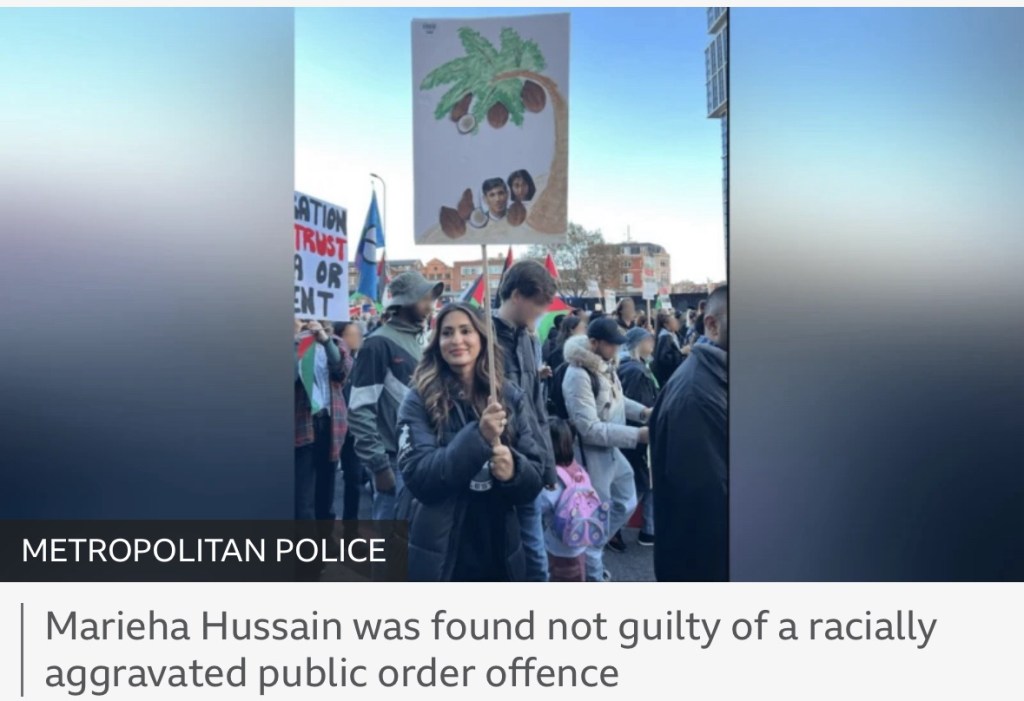
Using ‘coconut’ to describe a person who is ‘brown on the outside but white on the inside’ is equally common as using ‘banana’ to describe an East Asian person.
MA U2: Book art – Part 1

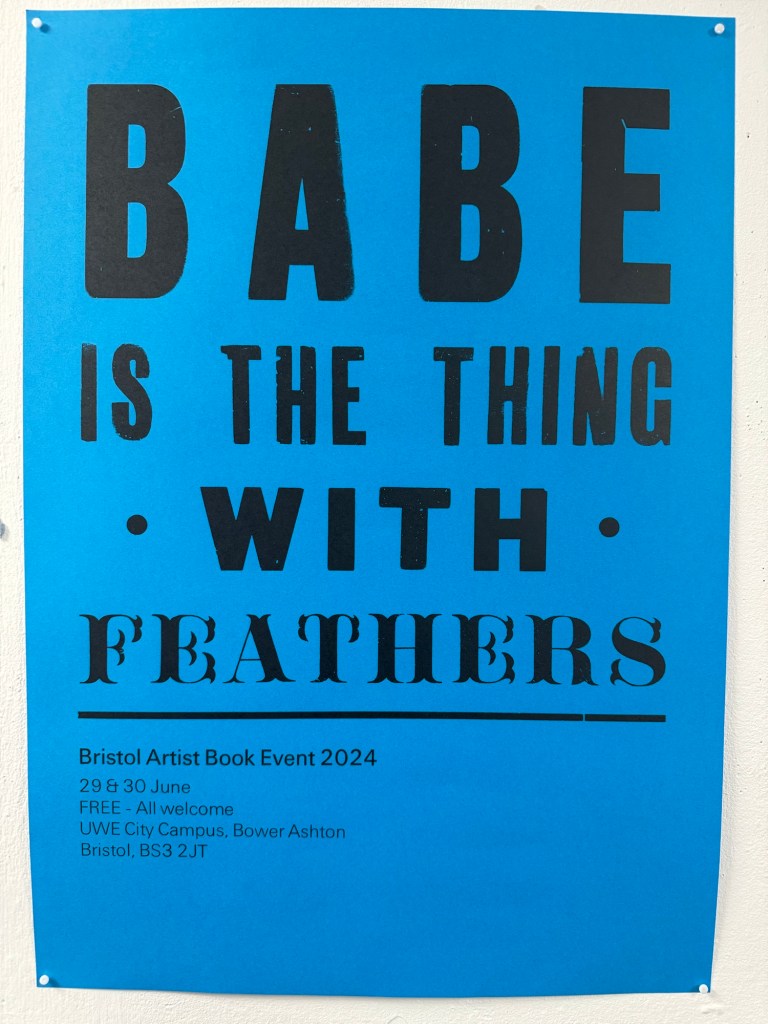
During the MA low residency at CSM in March 2024, we had a book art workshop where we learnt to make zines and some simple book. The artist hosting the session mentioned a book art event that takes place in Bristol once every few years. I was delighted to find that it was on this year and I attended the fair.

There were nearly 100 stands; it was a great opportunity to talk to and learn from experienced book artists. I came away feeling enthusiastic to try this beautiful art form.

Another reason for my enthusiasm was that I recently attended a Suminagashi workshop. Suminagashi is an ancient Japanese technique of making handmade marble paper and washi by floating water-based inks on water, then laying the paper on top to absorb the ink and water pattern. See post:

https://eliza-rawlings.com/2024/07/05/suminagashi-workshop-ancient-japanese-paper-marbling-technique/

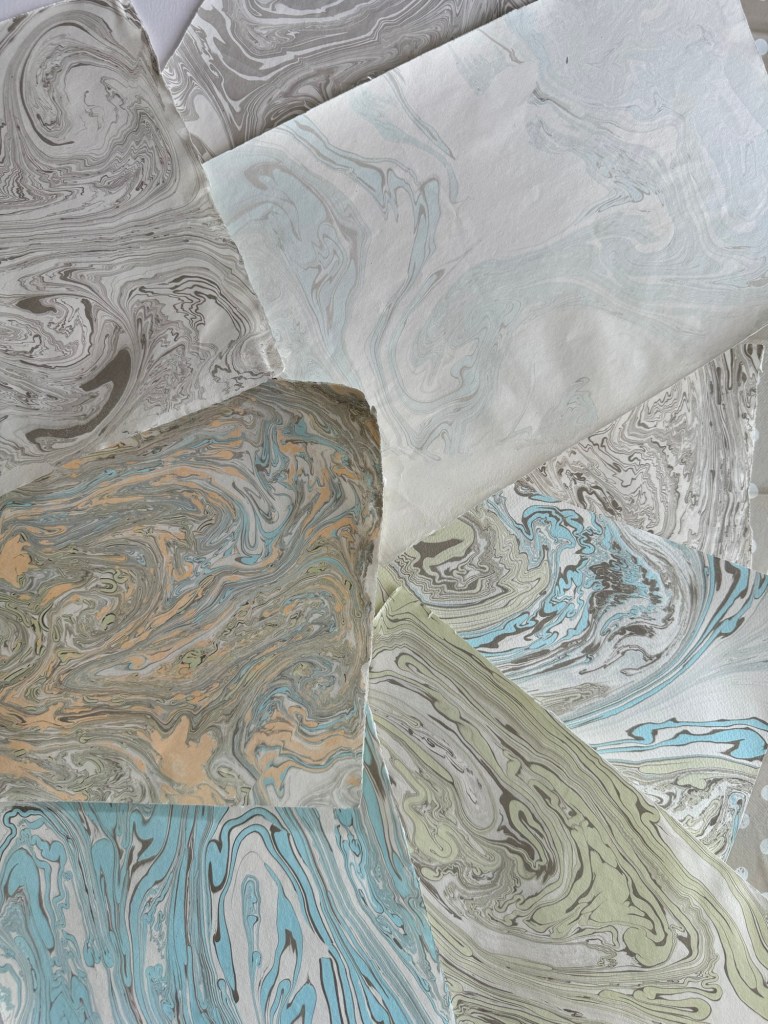
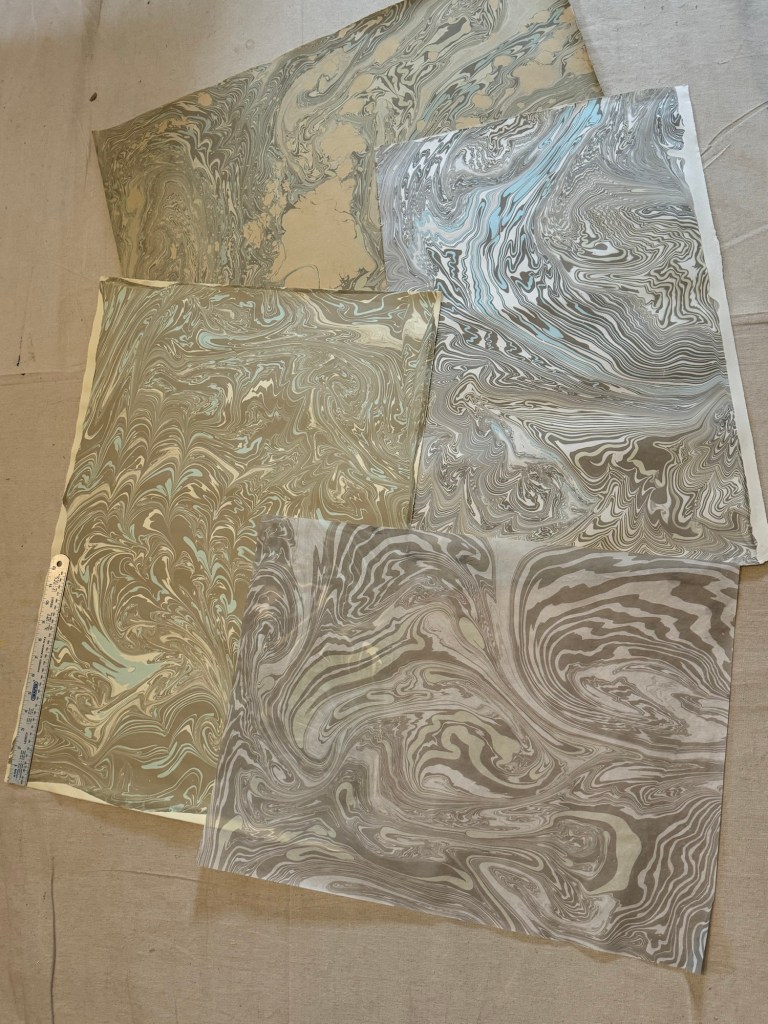
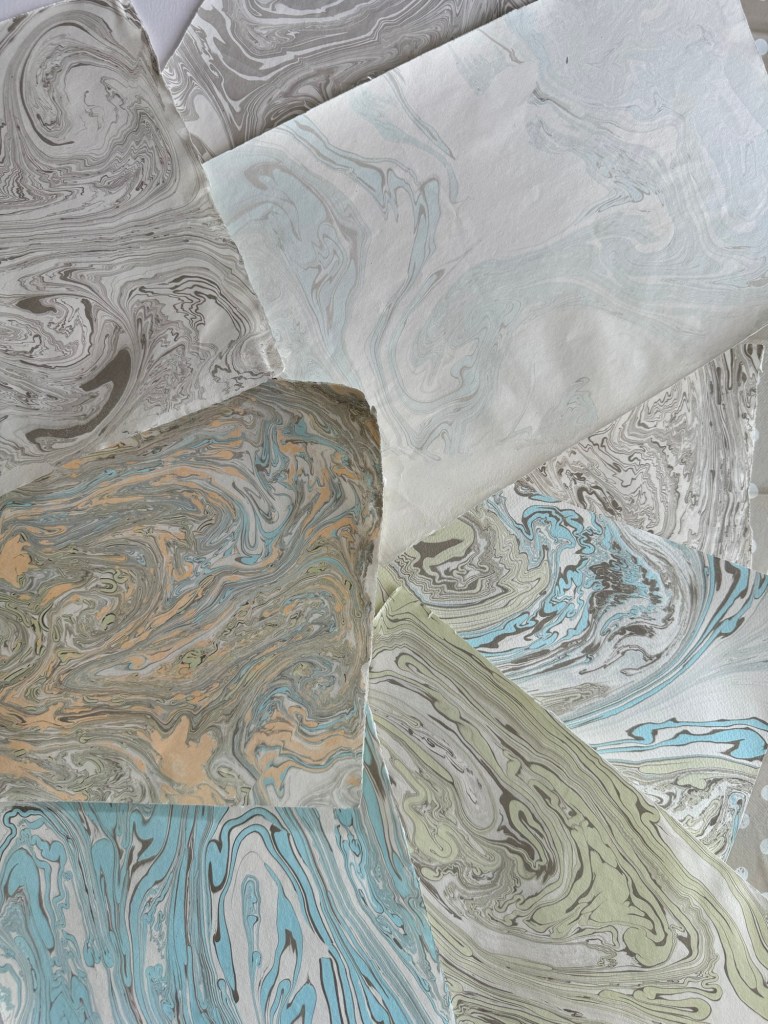
Here are some of the Suminagashi paper that I made during the workshop:

Small A4 size sheets
Larger A2 size sheets

METHOD

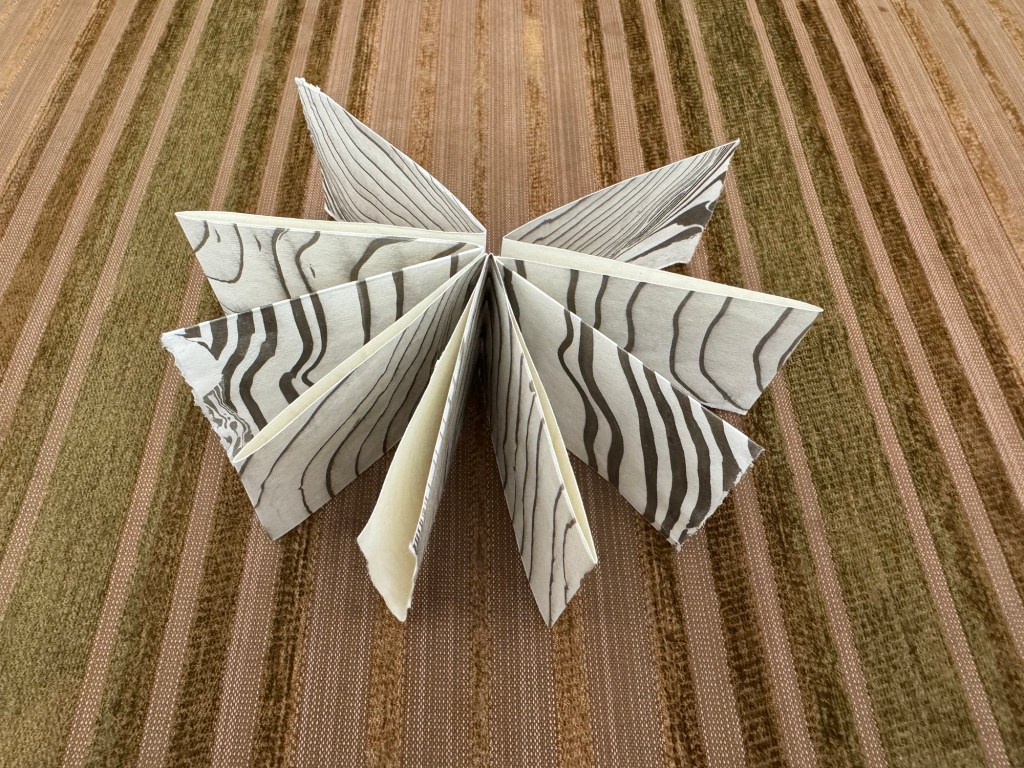
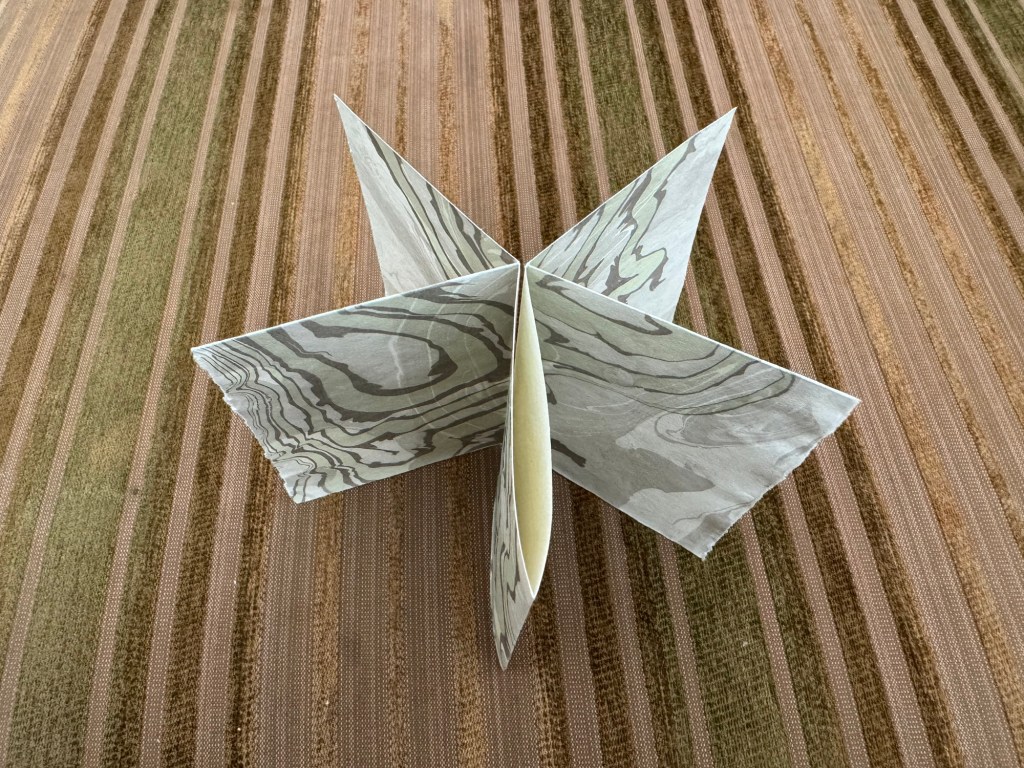
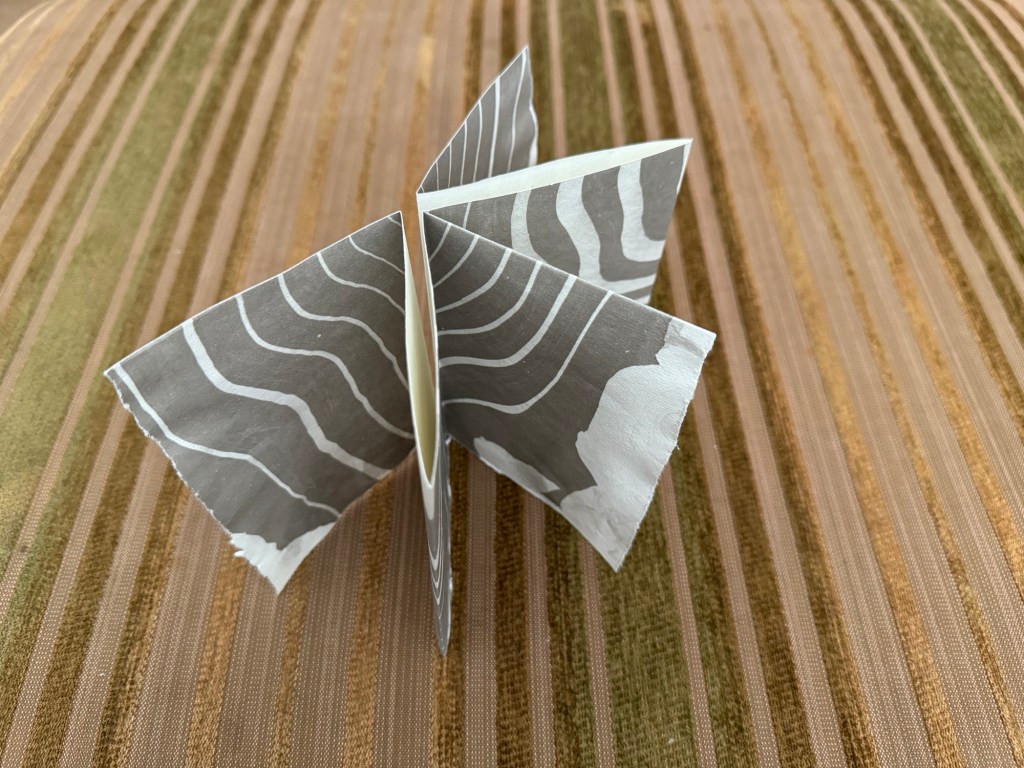
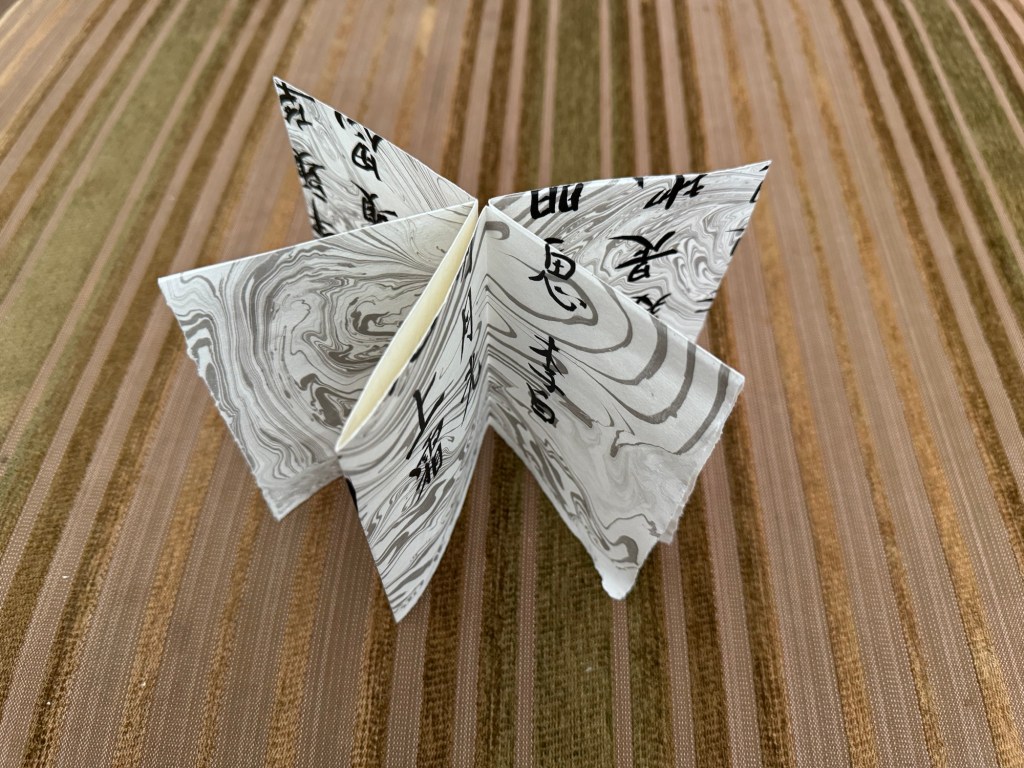
From the techniques learnt during the low residency workshop at CSM, I made a few different types of simple books using the smaller sheets of Suminagashi paper:

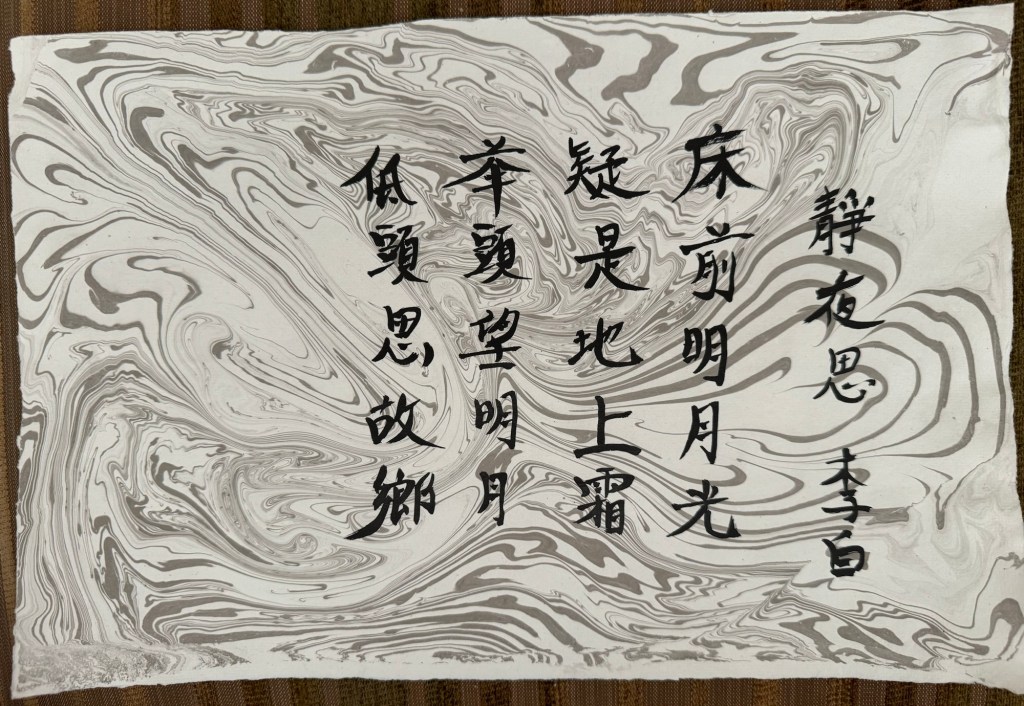
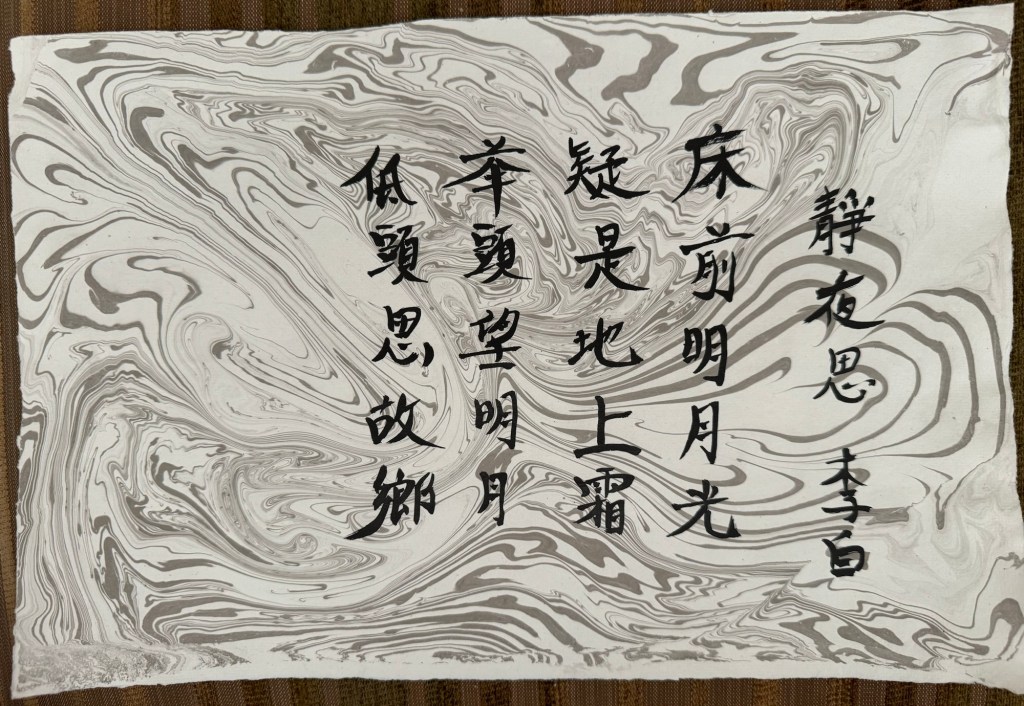
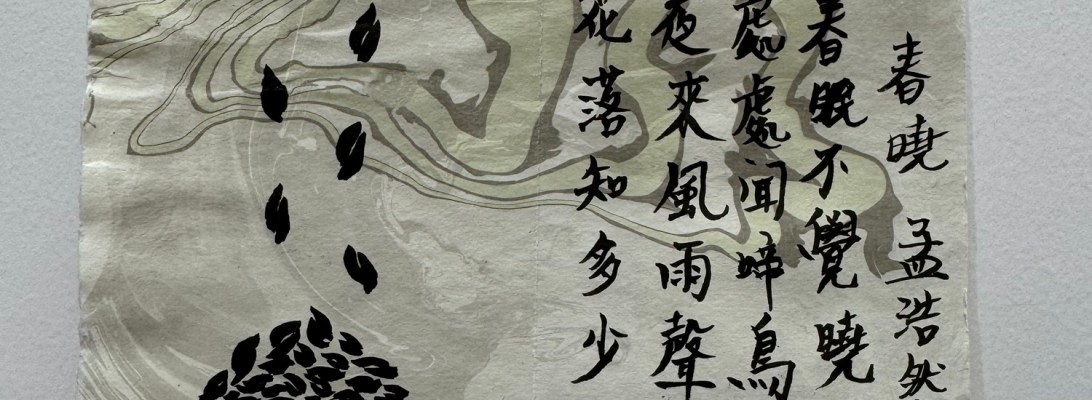
I experimented with some Chinese ink calligraphy on one sheet of paper, then folded it into a simple book:

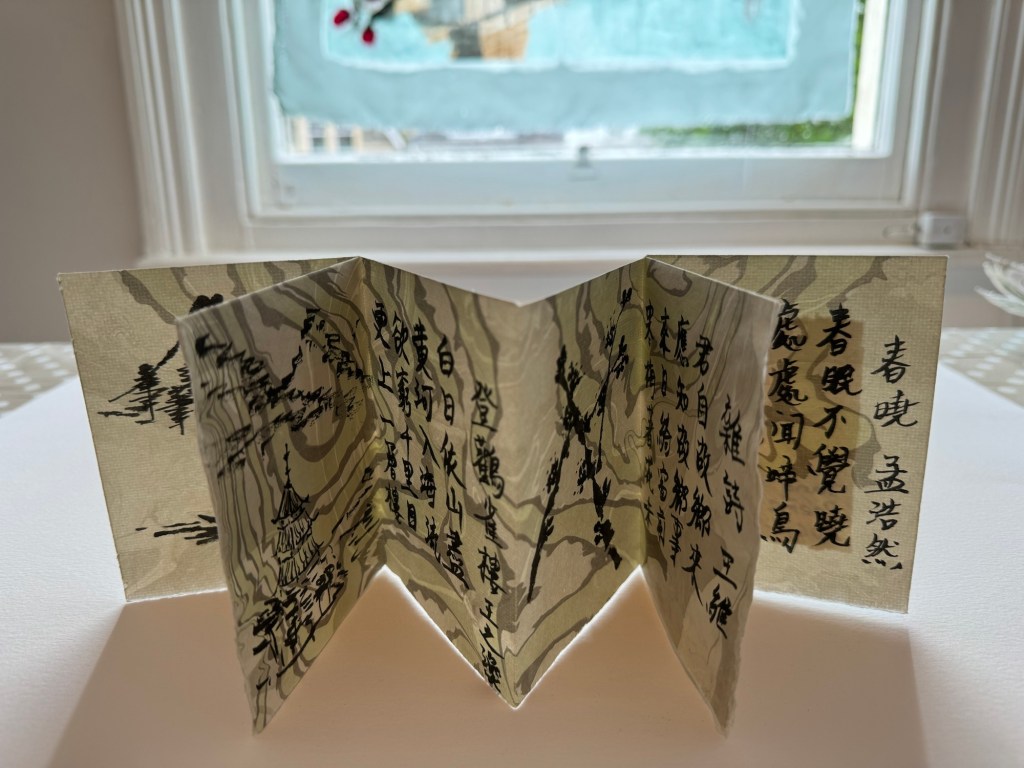
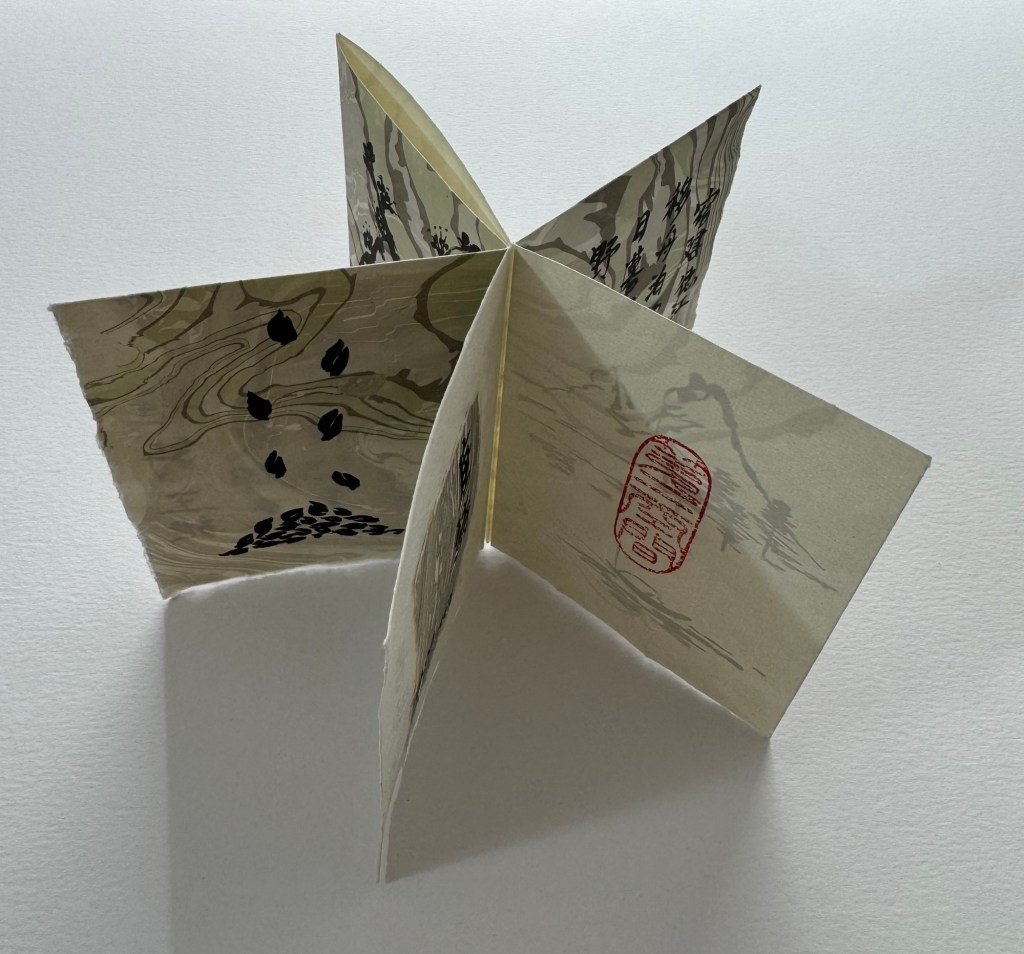
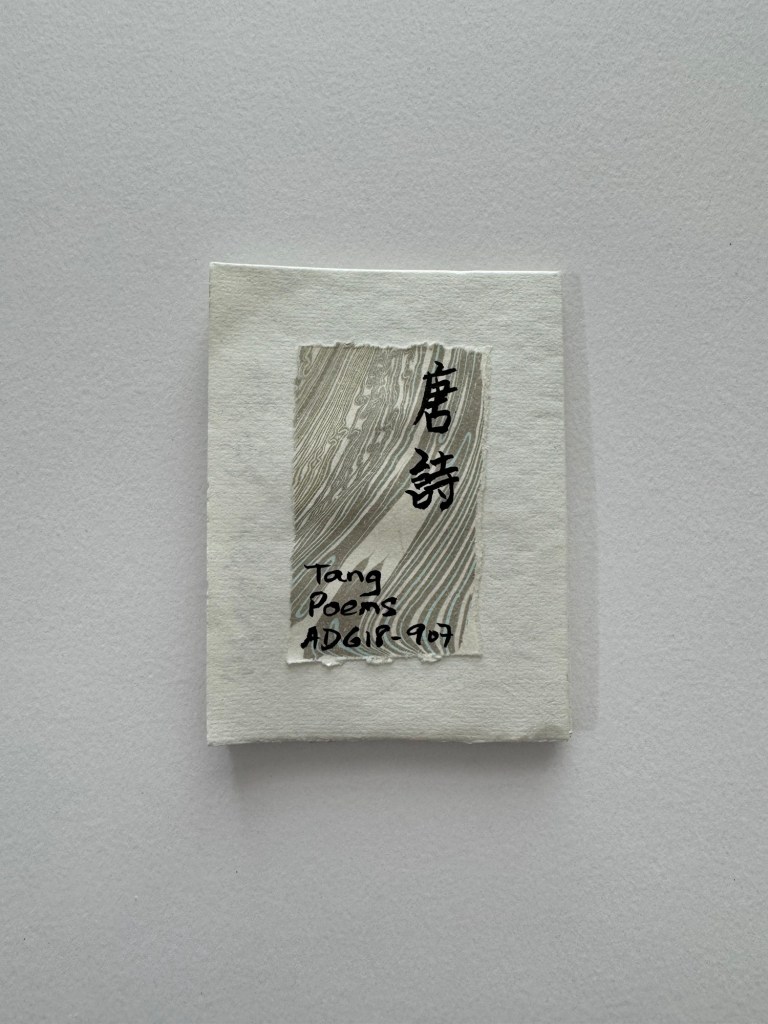
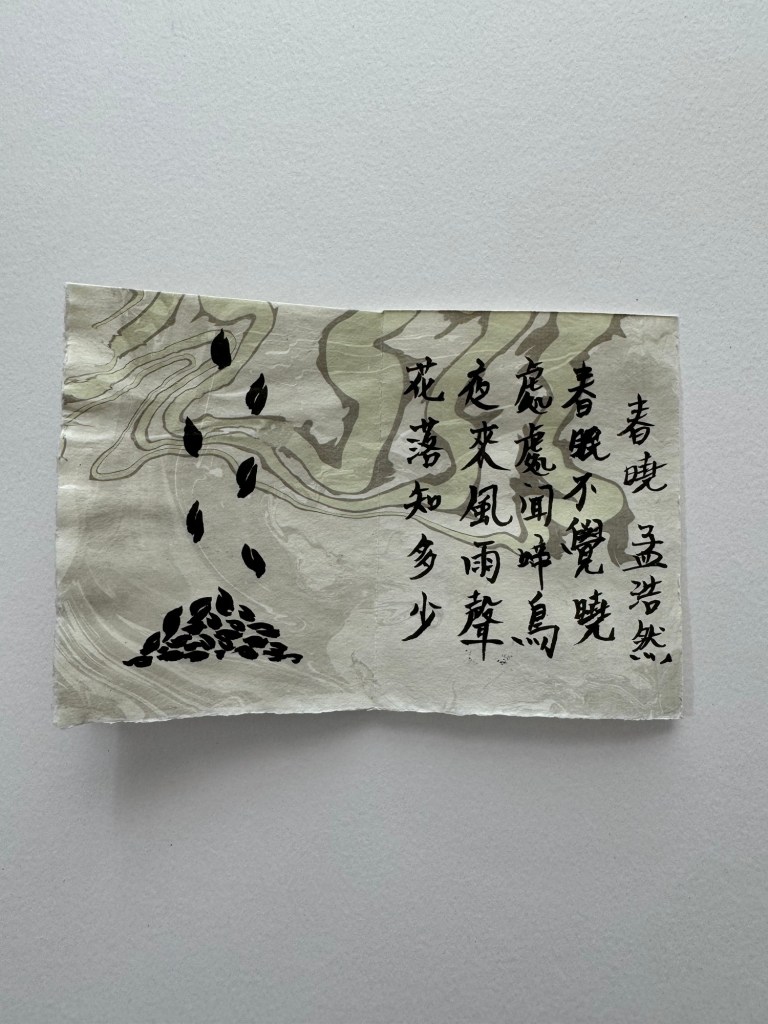
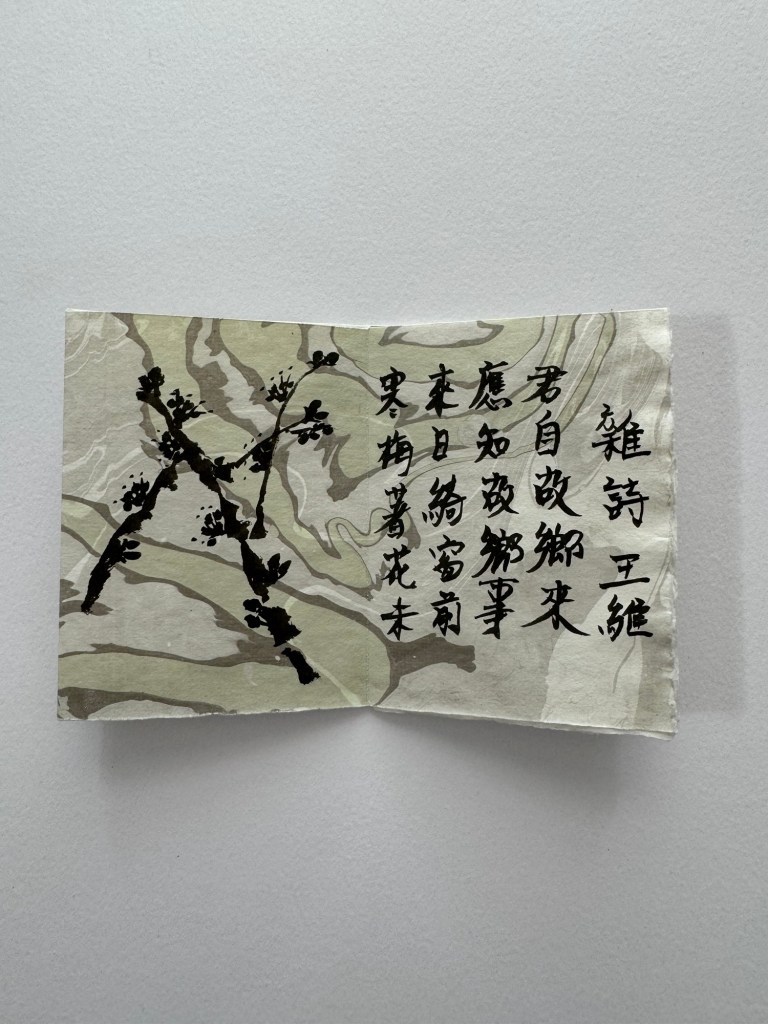
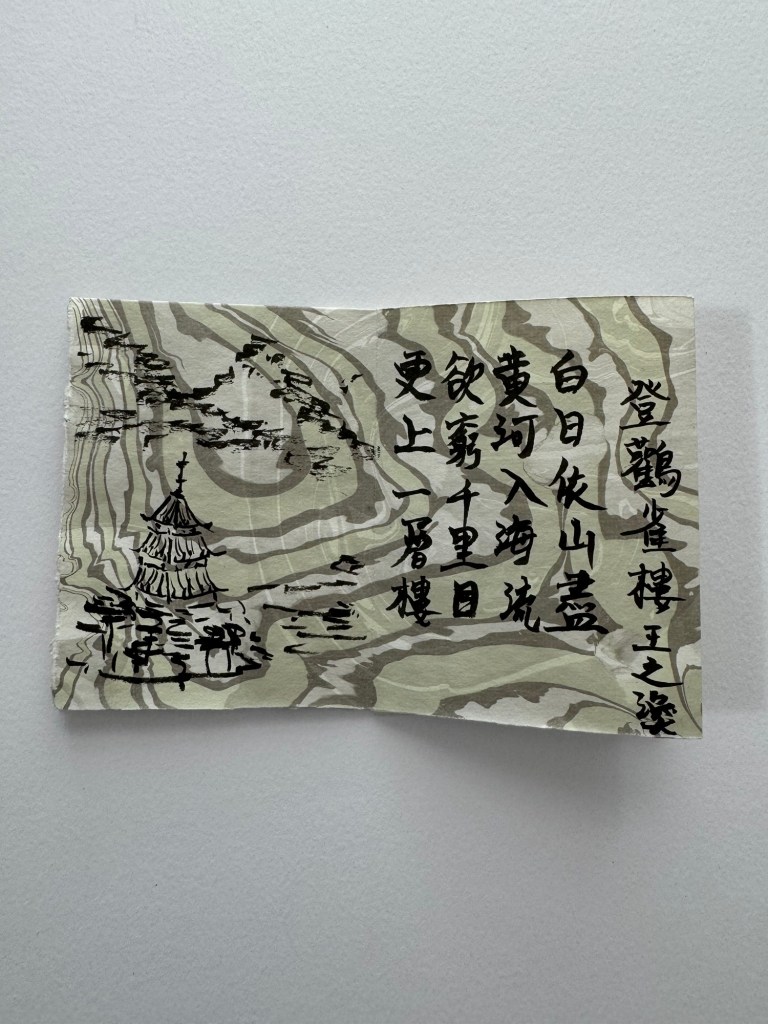
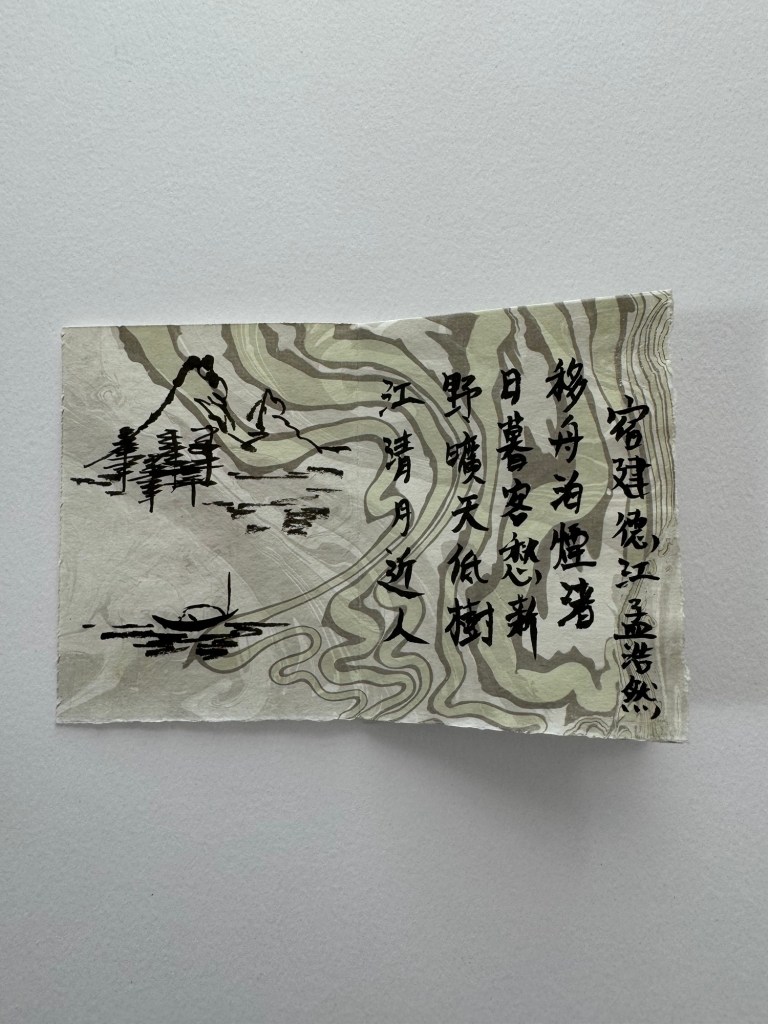
On another Suminagashi book that I made, I chose four Tang Dynasty poems and wrote them in the book using Chinese ink calligraphy, each paired with a small painting:

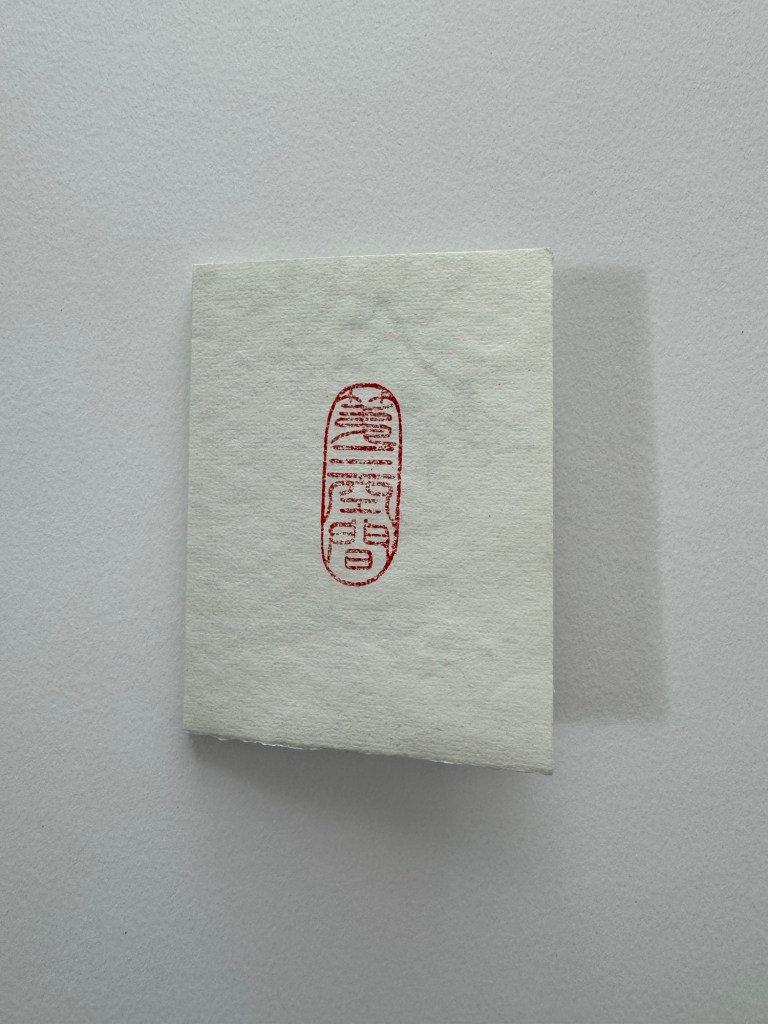
The seal on the last page of the book is a new Chinese stone seal that I designed. I managed to have it carved in Hong Kong and brought back to the UK by my Chinese painting tutor. The phrase on the seal means ‘The Third Space’, a concept that my art practice is based on so I will use it like my artist’s signature. The seal is carved in an ancient Chinese font.

Below is a video with my narration, reading out the English translation of the poems. Note that traditional Chinese books open from the opposite direction to English, Romance or Germanic language books:

REFLECTIONS

I was really inspired by the visit to the book art fair. It helped me to understand how broad the scope of this art form can be. I knew very little about book art until the low res workshop earlier this year and I am excited by it. I enjoyed making the simple books in this exploration, especially using the Suminagashi paper. Here is a summary of what I enjoyed about this exploration:

– I enjoyed the quiet pleasure in the act of folding paper carefully, especially with beautiful paper such as the Suminagashi paper. The feel of the material surface, the edges and creases all added to the meditative effect that this art form has to offer.

– I enjoyed learning a new skill in making books. Although I am only making very simple ones at the moment, I am excited by the potential complexity and scope that book making can offer. It is new knowledge and a new challenge for me.

– Once a book is made, it is like having a new canvas calling out for creativity that requires a new way of thinking compared to my other work.

For me, it is a two stage process: (1) Think about how I want ‘the canvas’ to be and realising that idea through physical making; then (2) express my art on the made canvas. The stages are similar to the Cheongsam (Chinese dress) canvases that I have been making for painting. That approach also requires creating a 3D canvas first through a step-by-step ‘technical’ process before any drawing or painting can take place.

The similarities between my book-making and dress-making to create canvases only occurred to me during the writing of the above reflections. I was beginning to feel concerned that I might be going from one thing to another too soon in my practice. I am not dropping the dress-making work, in fact, far from it – I have planned many other projects based on Cheongsam canvases. But I also want to explore book art and I now realise the similarities between the two in the context of my practice. I believe it can be explained as follows:

– The book-making or dress-making processes start by my following some guided steps, this way of making gives me a structured approach to starting a project. Meaning, it is unlike just getting out a plain sheet of paper or a pre-made blank canvas where you are immediately faced with having to decide what to paint. Through the structural and systematic start of the creative process (i.e. making a book or a dress), I can proceed to create ‘productively’ and while I am making the ‘complex canvas’, I can think about what to paint on the canvas or to finalise the ideas in my head. The process of making the canvas (which in the case of a dress can take several days) gives me quality thinking time whilst doing something productive and not just sat in front of a blank canvas feeling bad that nothing was happening.

LEARNING

Attending the book art fair taught me a lot about the scope that this art form can offer. In my own experiments, I have learnt more about the art of making books from a technical perspective – I am at a very early stage right now but I definitely want to learn more to make more complex or larger books.

My reflections above made me realise that the process of making the canvas myself (e.g. a book or a dress) has been a key part to my enjoyment in making art recently because I have been using the canvas making time and process to aid my thinking and to finalise my creative ideas. I have been doing this without consciously knowing it. I value the fact that making items such as a book or a dress are established processes and therefore give me a secure and stable route to start each piece of work. On the contrary, if I were to create a completely free-form assemblage from found items as a starting point, I would be inhibited by such an open and abstract process at the beginning of a piece of work – I would not know where to start and therefore it would be like sitting in front of a blank canvas again. This realisation is very important and useful for me because I can now think about other potential canvases that I can make from an established method in order to expand my practice.

NEXT STEPS

– Continue to make books and learn about book making to expand my knowledge.

– Think about other canvases that I can create in addition to books and dresses that would enable me to have the quality thinking time as part of my creative process and to avoid the ‘starring at a blank canvas’ problem.

UPDATE:

I made another book using a piece of Suminagashi paper folded into a small long book. In it, I wrote four short Tang Dynasty poems in Chinese calligraphy and coloured some areas using Chinese painting colour.

Suminagashi workshop – ancient Japanese paper marbling technique

EXPERIENCE

I recently attended a Suminagashi workshop ran by artist Sarah Amatt. Suminagashi is an ancient Japanese method for marbling paper or washi by floating ink on water then absorbing the pattern onto the paper. Here is a video showing the process as demonstrated by Sarah:

Demonstration by artist Sarah Amatt

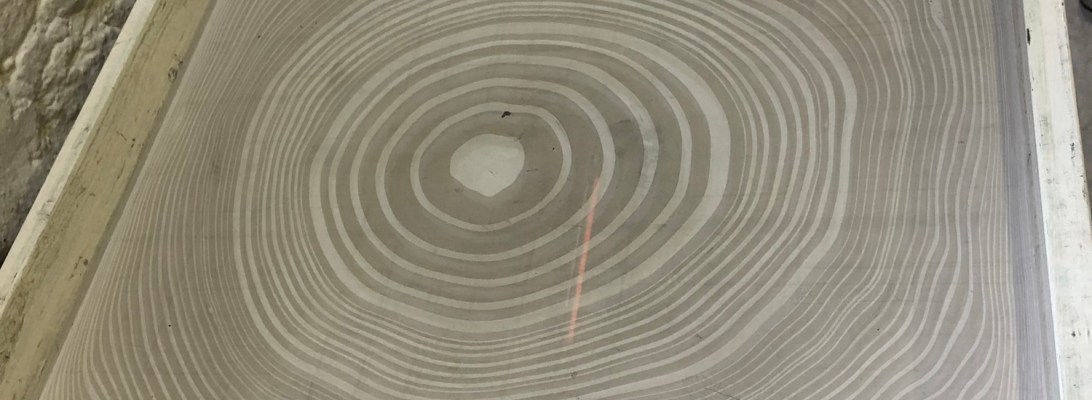
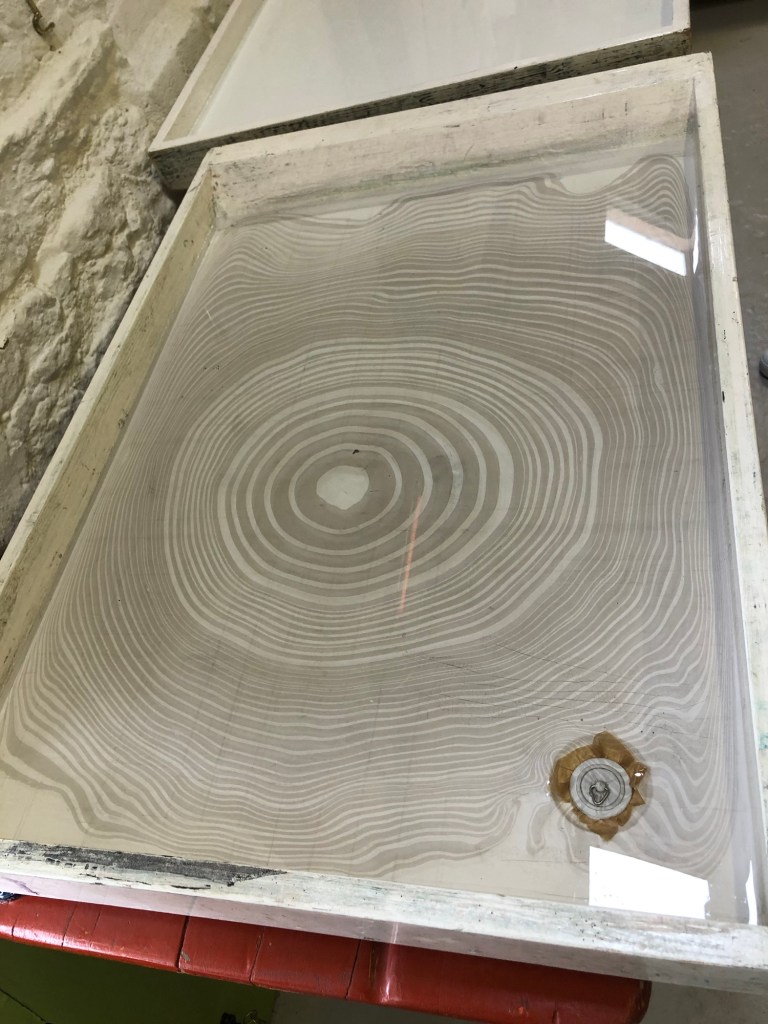
Below is an example of a marbling pattern floating on water ready for the paper to be presented:

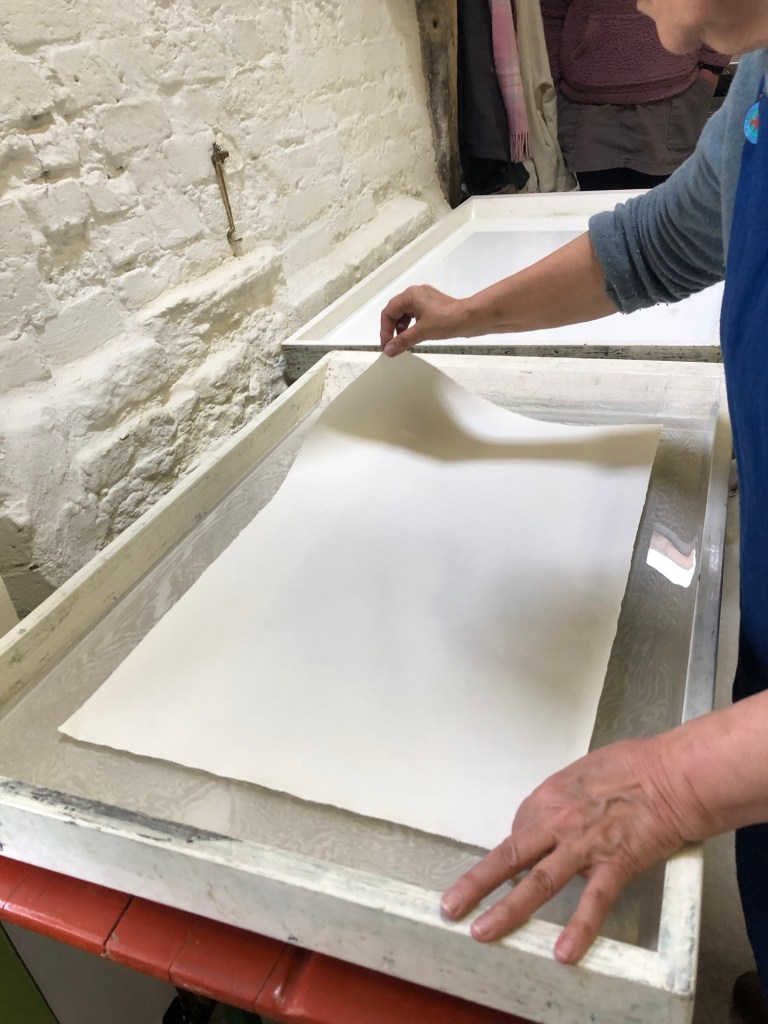
The next step is to place the paper carefully onto the water, either by ‘rolling’ it down from one corner, or holding the paper in a U shape and lowered down from the centre of the paper. This process should be done slowly with very steady hands so the paper floats and does not sink.

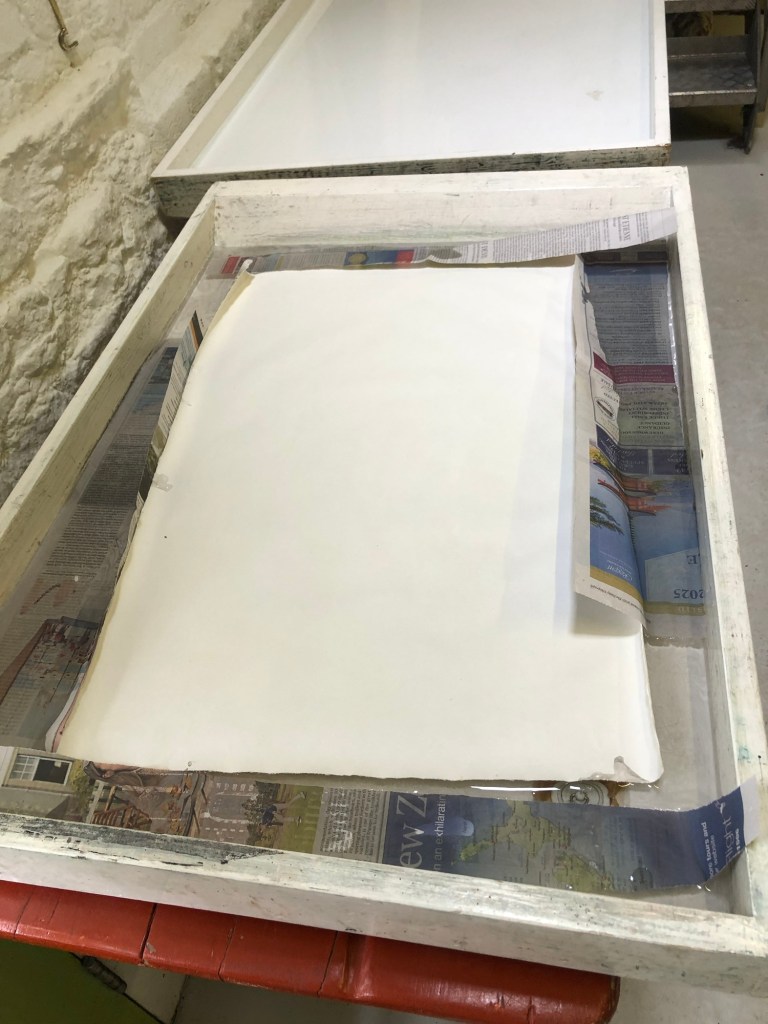
Strips of newspaper can be used to absorbed the extra exposed ink to keep the water as clean as possible for multiple uses.

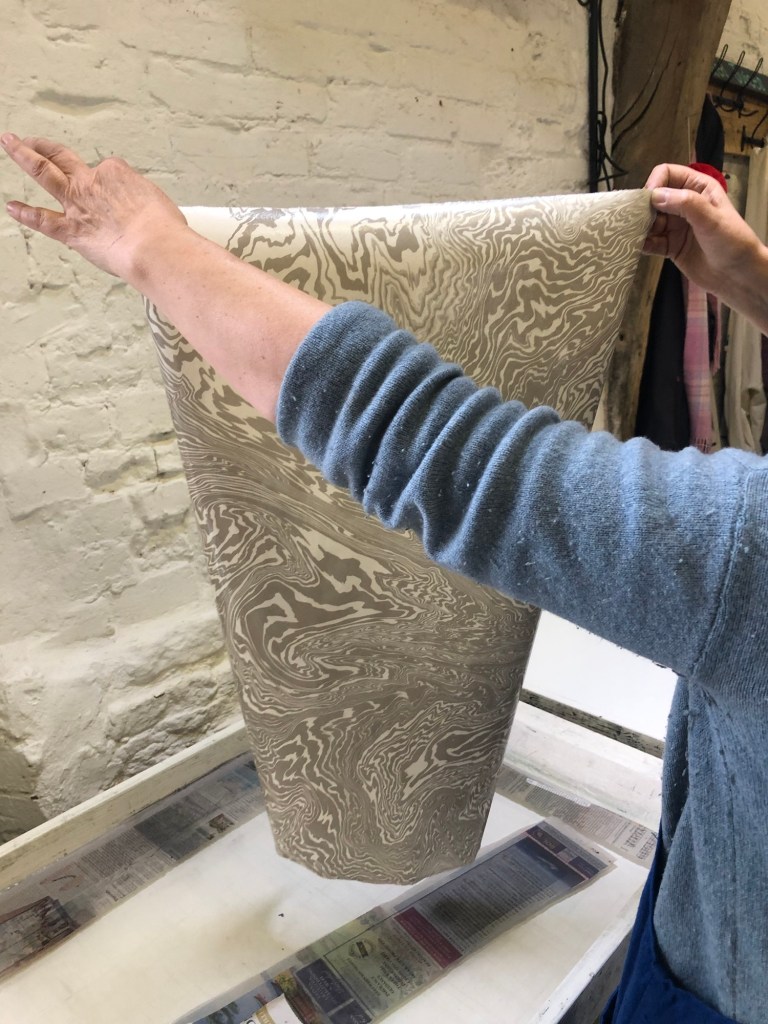
The paper is left on the water for a few seconds then lifted up carefully. It should be washed down with a few cups of clean water by a bucket or sink then put on a rack such as a clothes horse to dry.

We made many sheets of various types and sizes of paper during the workshop:

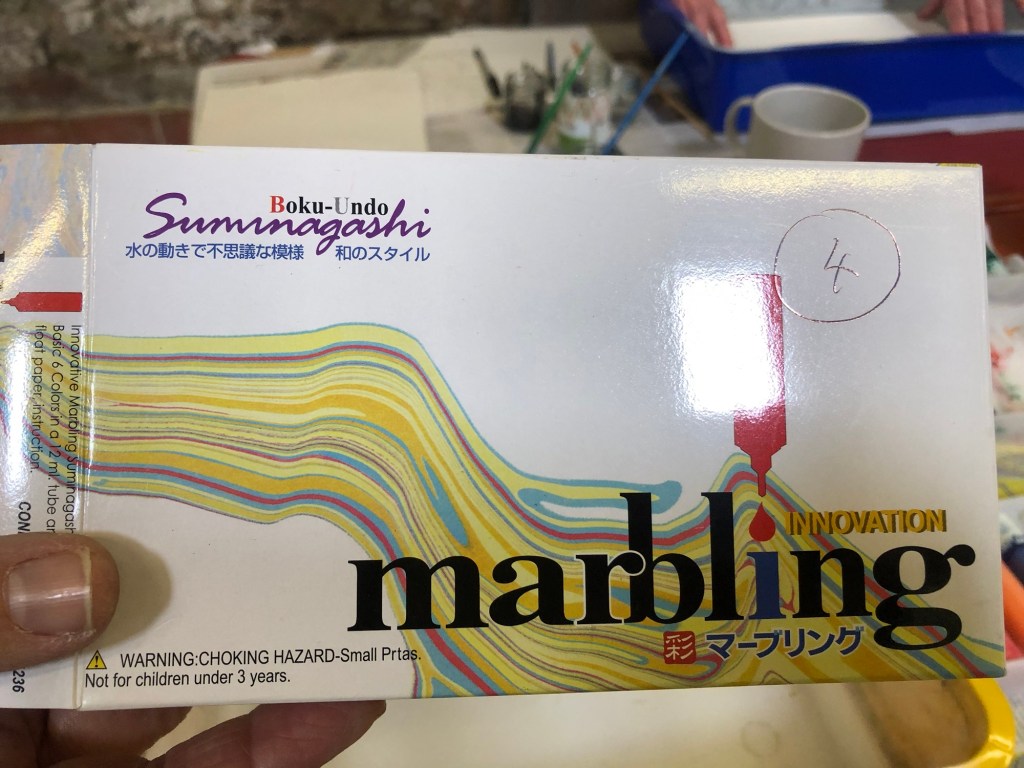
Here is an example of a starter kit of marbling ink:

REFLECTIONS & LEARNING

It was an enjoyable workshop. Sarah encouraged us to experiment which was great. I had no knowledge of the technique or history of Suminagashi beforehand so the workshop was a good learning opportunity.

My reason for attending was to make some patterned paper that I could use in my art practice to make books or sketchbooks. I came away with a good stock of marbled paper. So overall I achieved the objective, learnt some new techniques and enjoyed myself.

NEXT STEPS

Play and see what can be done with the paper and make some books.

Below is an example of using the paper for Chinese calligraphy: