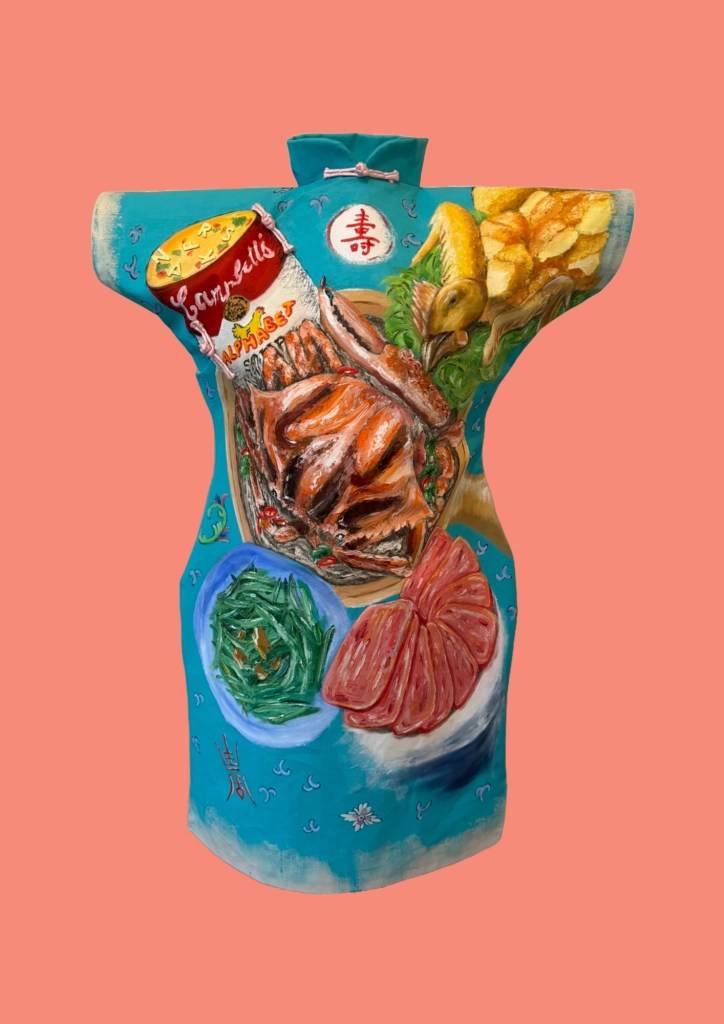
In my search and contemplation about ways of painting, I turned to a Chinese artists that I admire – Qi Baishi. His famous saying, ‘Painting must be something between likeness and unlikeness’ inspired me to experiment with different ways to paint my Family Dinner #2. Here is an image of my original painting in oil on Cheongsam shaped canvas:
METHOD
I started by doing some quick paintings of the individual dishes using Chinese painting materials: Chinese paint brushes, ink and rice paper.
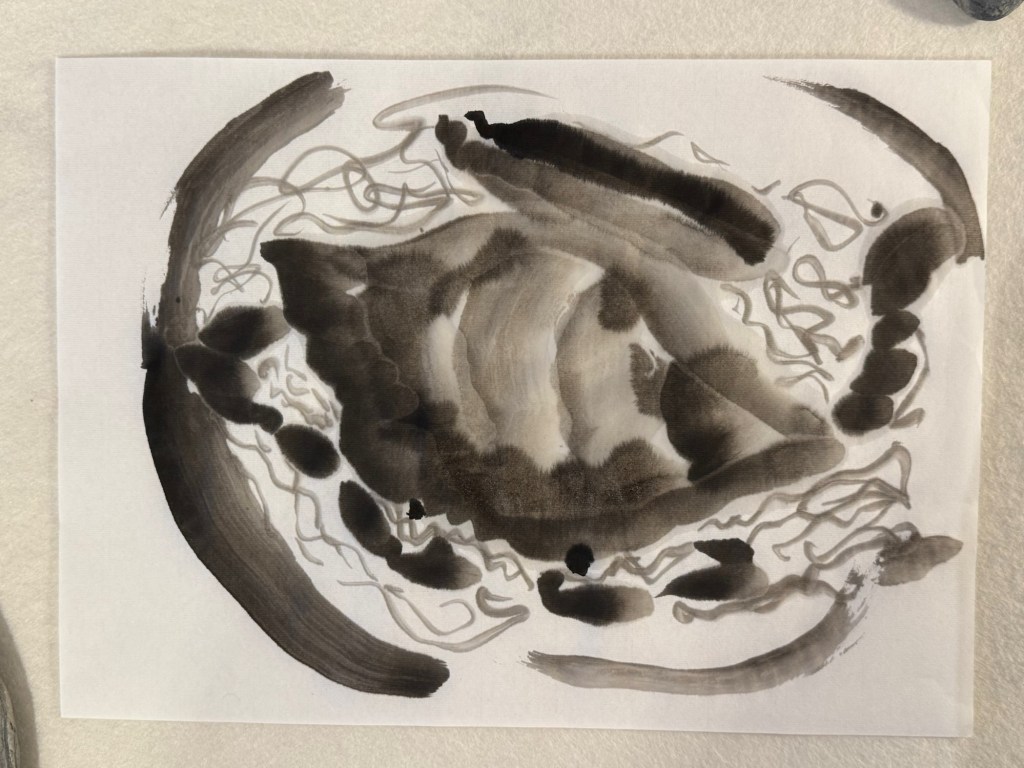
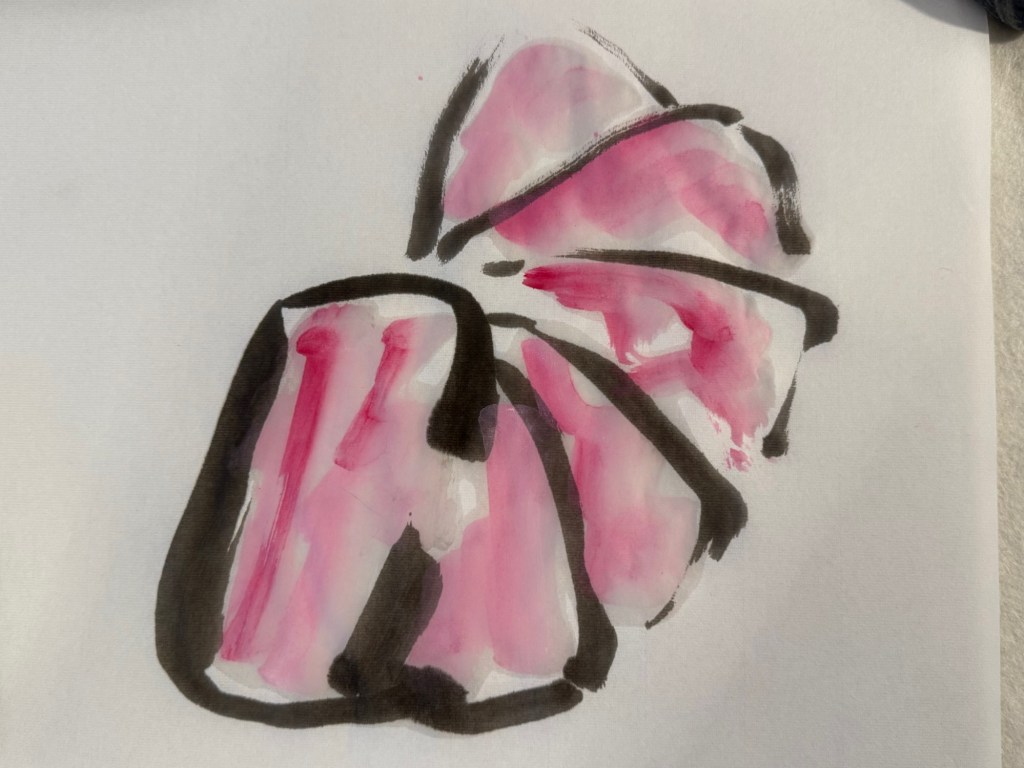
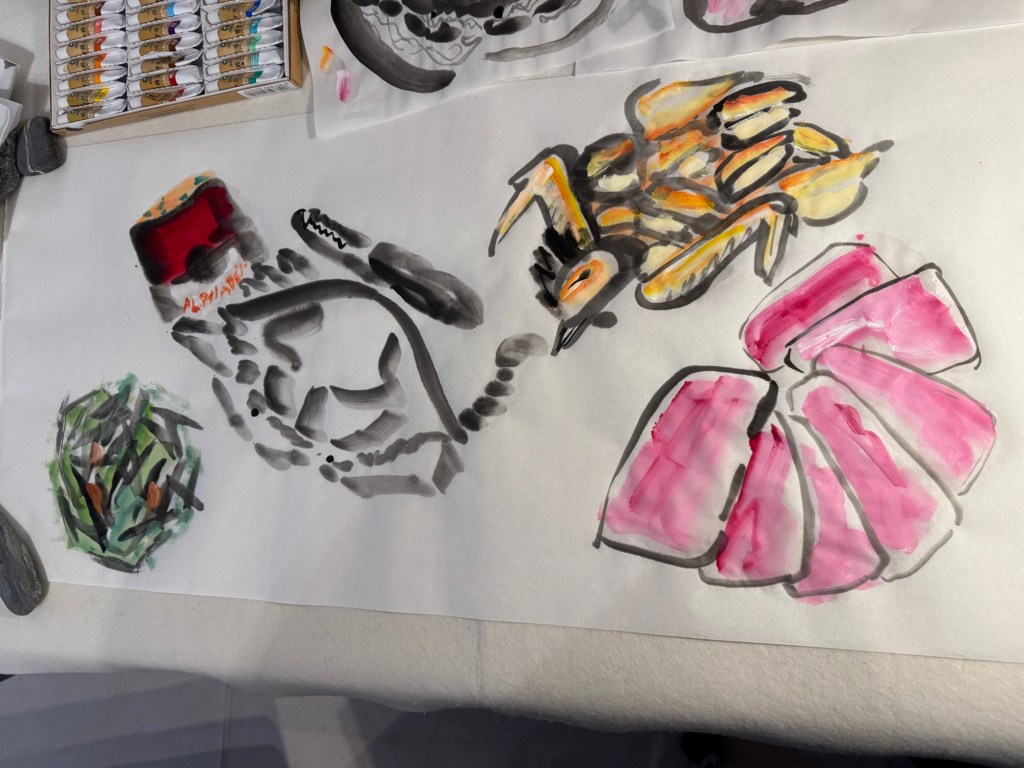
Here is the overall composition marked out on a long Chinese scroll of rice paper:
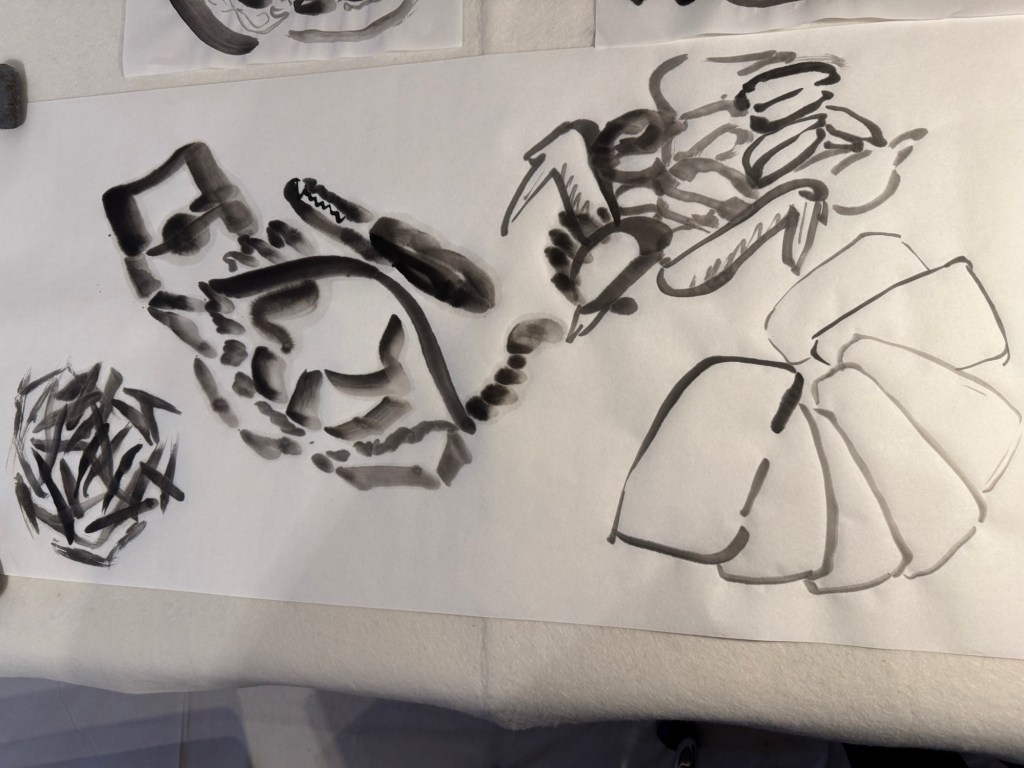
Work in progress:
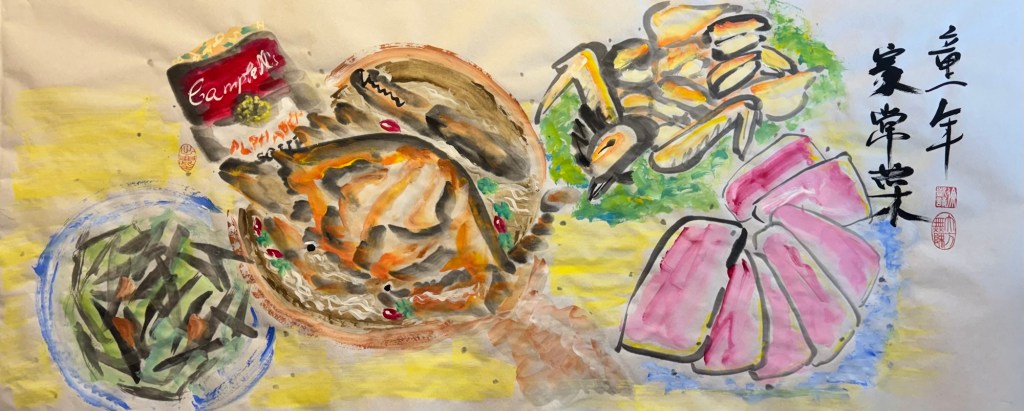
Completed painting – Chinese ink on Japanese Moon Palace (rice) paper, 114x46cm.
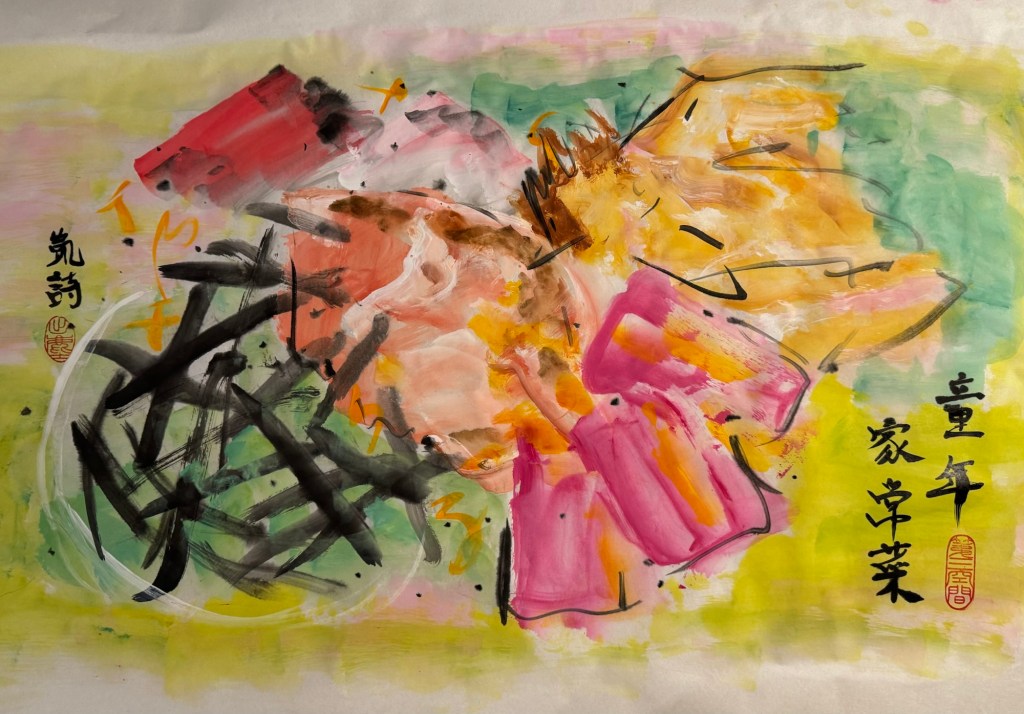
I felt the composition was too uniform and too neatly laid out. Hence I attempted another version with further abstraction to explore ‘unlikeness’:
REFLECTIONS
I enjoy painting in oil very much. I like the feel of the material, the viscosity when undiluted, the way it pushes against my palette knife or brush when painting impasto and then the luminosity when diluted. But painting in oil takes time (for me anyway) and I enjoy taking that time. I also like coming back to ‘play’ with the painting over several days.
Painting in Chinese brush and ink is a much quicker process. I can do several paintings in a day. Something about the materials make me want to paint fast with vigour. So I was pleased to do the Family Dinner explorations here using Chinese painting materials, it helps me to loosen up – both in my brush strokes and in my thinking.
One of the points I took away from my Unit 2 feedback was to paint more, and more. There was a question in the feedback asking if it was necessary to spend time making the Cheongsam canvases; I think that was a good question and perhaps I should spend more time painting and improve on that. Although I want to expand my practice to incorporate 3D, film and photography, I envisage my practice to always be rooted in painting – mainly because I enjoy it and I like the challenge. So I need to paint more to take it to the next level. I don’t know what ‘next level’ means, but I just feel the need to push my current boundaries – wherever that may take me!
I managed to source the following book ‘Likeness and Unlikeness’ abour Qi Baishi’s work:
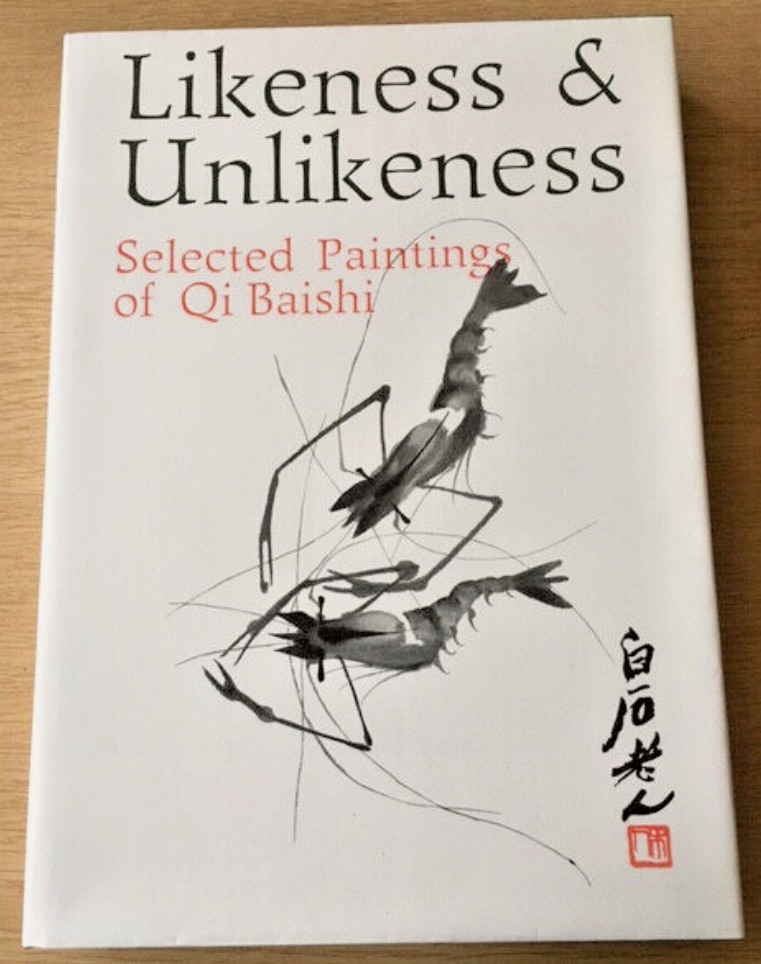
I need to do more research about what he really meant by his saying. Perhaps that would give me inspiration and new ideas to explore. I had thought that ‘between likeness and unlikeness’ meant a way towards abstraction. But when I look at his paintings, there was always good likeness (a shrimp looked like a shrimp). So I discussed with my Chinese art tutor what Qi meant – it appeared to be not about abstraction. She believed it was about the artists putting themselves into the work. I need to research this some more to really understand. I will start by reading the book.
I feel excited about the research between likeness and unlikeness…
LEARNING
I want to take my painting to the next level but I have not been able to decide how. The reflections above have helped me. I think I will return to painting on 2D canvas for now while I’m experimenting. I would like to return to 3D canvases such as the Cheongsam dress at some point because I have really enjoyed those paintings.
NEXT STEPS
I want to continue to build on my painting practice in the following way:
– Really explore oil as a material. I am used to using oil undiluted to create thick impasto layers, so I will experiment with thinner layers to give me more ways to express myself. Especially to find ways to create ambiguity, about distant memories.
– Research and understand the meaning of ‘between likeness and unlikeness’, start with experimenting in my Chinese art practices with ink on rice paper. Then maybe transfer the learning and understanding to painting with oil if it feels right.
 elizarawlings