EXPERIENCE / ACTIVITY
Week 2 assignment:
PART 1
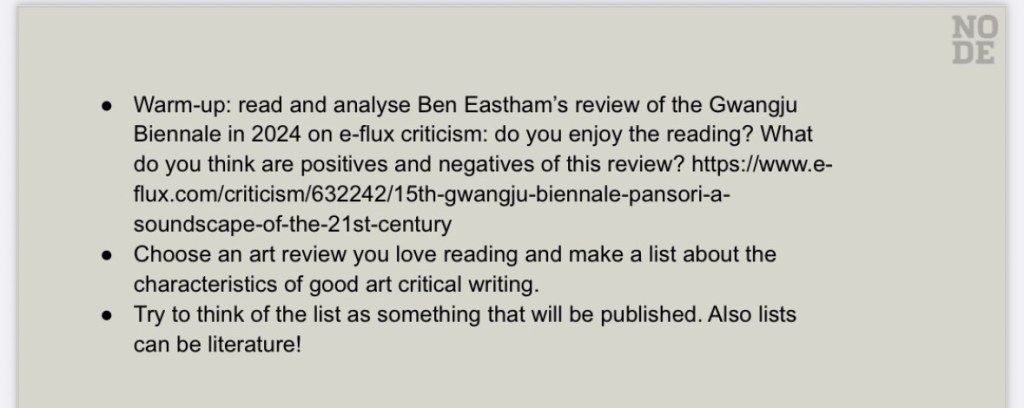
Review article below and write down what I like and dislike:
Like:
Detailed and visual descriptions to help reader visualise the entrance and the space setting the tone of what’s to come. Really helped me clearly to be in the space right from the start. Such clear visual description is consistent throughout the article which can be helpful if the viewer is not visiting the show.
The language is clear throughout and easy to understand.
The use of metaphors helped to make a point (e.g. readers like hanging bats).
Dislike:
After stating that the curators wanted to provide ambiguity, the writer was too detailed and delved just too deeply, leaving little room for readers to enjoy the intended ambiguity.
Picking arguments for the sake of it without understanding the meaning of the art work. Is it just to show off and rant for the sake of it? (Reference ‘space’ being ‘geopolitical’.)
It’s not always clear whether an interpretation is the curators’ views or the writer’s. E.g. Interpretations of the sonic metaphors (dissonance is productive, harmony through the broadcast of diverse voices, and so on) are they the curators’ intended meaning or the writer’s interpretation?
The last two paragraphs feel rushed and at a different pace to the rest of the article, reflecting the challenge of reviewing such a large show and the need to provide meaning without overwhelming the reader whilst trying to cover as much of the exhibits as possible
REFLECTIONS
The key for me is to strike the balance between giving enough details to place the reader in the space but not so much that the reader ends up feeling suffocated with details. Hence need to leave room for the reader to ponder, perhaps leave them wanting more. But more of what?
How to show passion or feelings in the writing without coming across as ranting, especially ranting for the sake of it?
Regarding whether a view/an opinion is the curator’s or the writer’s, that undefined boundary bothered me because – do I want my views to be influenced by such overt interpretations by another visitor (meaning that an art critic is just another visitor) before I see a show? Or is it in fact useful if I’m never going to see that show?
It’s challenging to review a large exhibition – the challenge being the need to strike a balance between providing meaning in the content whilst covering as much as possible without overwhelming the reader.
–
PART 2
An art review that I enjoyed reading:
Do Ho Suh: Walk the House at Tate Modern by Eddy Frankel in The Guardian
I enjoyed reading the review not because I liked it, but because it annoyed me, prompting my disagreement with the writer/reviewer which confirmed my decision to see the show despite it being awarded only 3 stars by the review.
Below are my notes about this review. I have quoted in italics the parts that I wanted to comment on, with my reasons for commenting, followed by my ‘Notes’ on what I learnt about good art writing for me. I have since visited the show and I have added further response to most of the points raised as part of my process of reflection.
Comment #1 –
‘It’s a bit like a vast portrait made in Homebase’. I feel this opening is belittling and condescending likening the art work to something in Homebase – is the writer showing his need to be seen as clever and therefore showing off too soon? It was disrespectful and off-putting for me. Or is it just so difficult to have an attention grabbing headline that anything goes including such tactics?
Note: Avoid using show-off statements to grab attention, this can put some people off and come across as egotistical or shallow.
Comment #2 –
‘Lots of contemporary art is about architecture and the lived environment’ – I do not agree so this statement alienated me as a reader.
Note: avoid sweeping statements especially when it is untrue, one could come across as ignorant or too lazy to fact-check. It’s ok to say that ‘much of the contemporary art that I have seen is…’ – that is stating one’s own experience without stating it as ‘fact’.
Comment #3 –
‘The works on paper can’t compete, and aren’t that great to begin with.’ – let me decide for myself whether they can compete or if they are great.
Note: don’t be over confident about your own opinion, it can come across as condescending which does not endear the reader or just lazy writing.
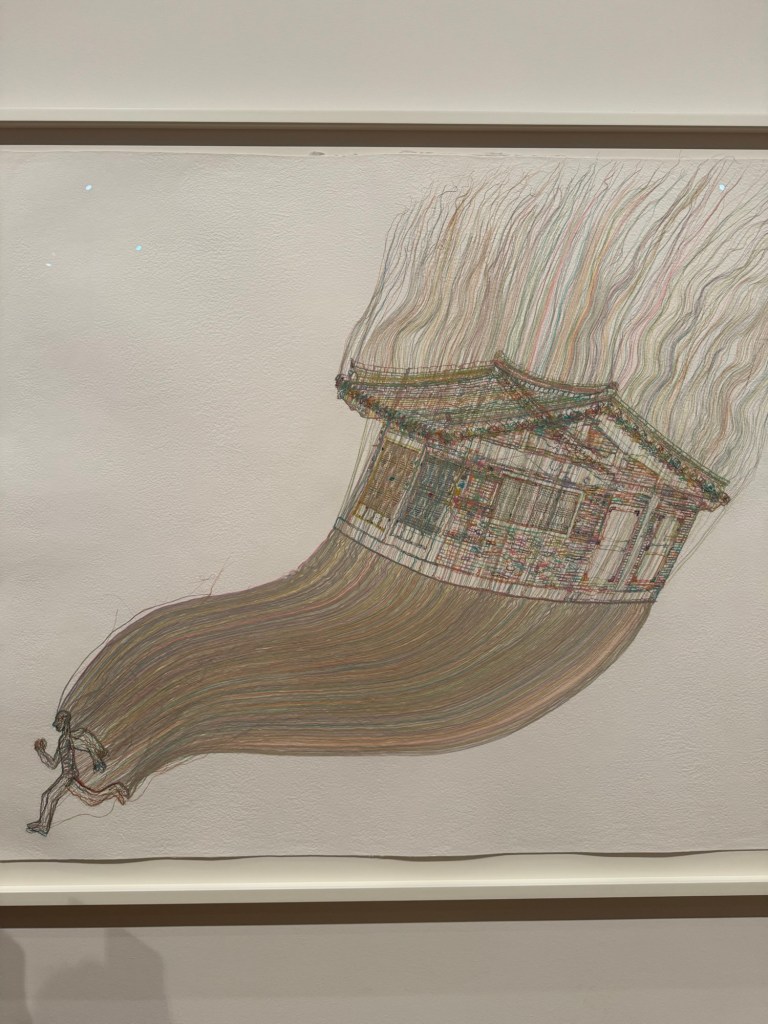
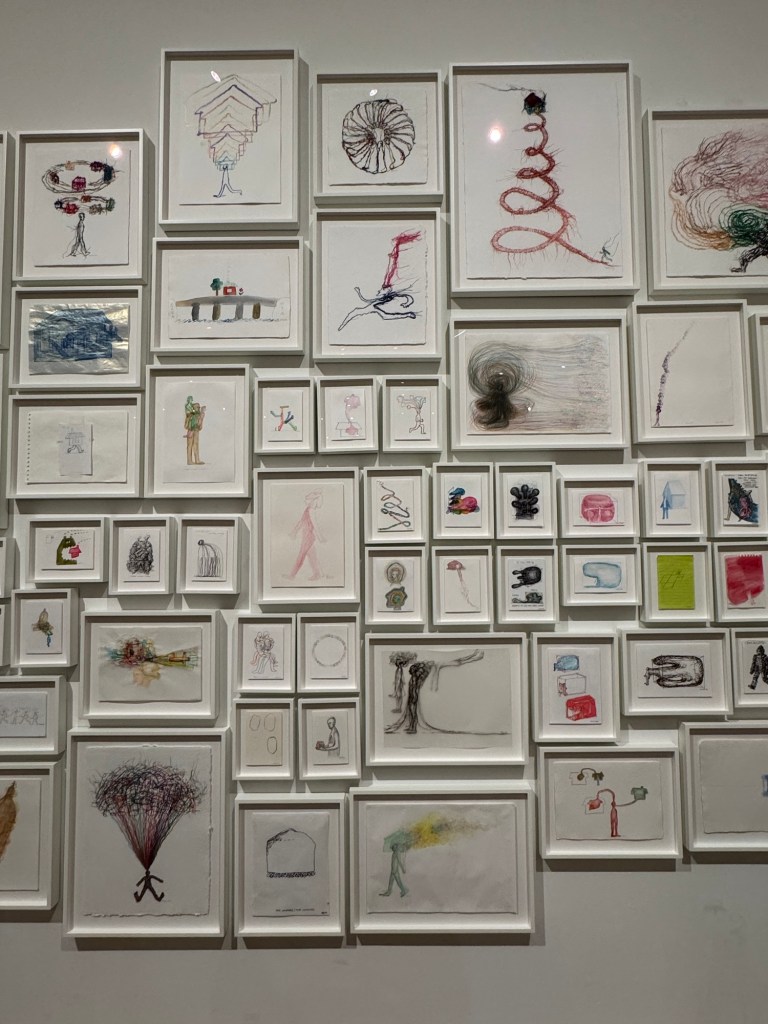
My response after seeing the show: the works on paper were amazing, very sensitive and beautifully executed in terms of aesthetic as well as process. The individual drawings were not that big but they were displayed as a collage that occupied a very large wall. Engagingly arranged.
Comment #4 –
‘The films – long, drawn-out, eerie portraits of dilapidated apartment blocks and an animation about building a home halfway between New York and Seoul – pass by unnoticed’ – well, the writer clearly noticed the film hence writing about it! Also, these are art films, not Hollywood blockbusters.
Note: don’t contradict oneself and be careful of the context of the work being viewed. E.g. the context of an art film may be different to a Hollywood blockbuster.
My response after seeing the show: the films were engaging and incredibly executed. There were clever details that clearly bypassed the reviewer. E.g. a film of a London flat where the main film was running at a certain speed while a view outside a window was showing a digger dismantling a building was seamlessly shown as a high speed stop-motion film – very cleverly executed to have a fast film framed within the main film and made it look like one film. The film about the empty flats prompted a conversation with my daughter as we have both lived in such flats when we were students. It resonated with both of us. Both films were busy with many viewers when I visited bursting out of the allocated space. So I would not agree that any of them were ‘passed by unnoticed’.
Comment #5 –
‘And there’s a part of me that thinks the work is too pretty for its own good’ – so the drawings earlier were great, now the writer says the work is too pretty. Which one is it?
Note: Be more intelligently critical in the writing or it could come across as incoherent and lazy in thinking deeply. If the reviewer is feeling undecided or conflicted – it’s ok to say so, don’t leave a contradiction unaddressed.
My response after seeing the show: the works were meticulously planned, aesthetically captivating and cleverly executed. Every piece was thoughtful and sensitive. I found the work mesmerising to look at. Every piece engaged me and I don’t always say that at an exhibition. I found resonance with the artist and his work.
Comment #6 –
‘Memories aren’t always pretty and pink, sometimes they’re horrible and filthy.’ – who are you to decide what our memories are like?
Note: be clear it’s your opinions rather than stating them as though they are facts – avoid wild claims as facts, it may annoy people like me that don’t want to be dictated to.
My response after seeing the show: Much of the work were not pretty and pink. There were different colour palettes and materials used to convey the artist’s memories. There were grubbier looking work – e.g. memory works that were entirely done in graphite – so how could they be ‘pretty and pink’? Once again, the writer is making untrue, broad and lazy observations.
Comment #7 –
‘But all this ceaseless excavation of often hyper-personal memory still works, largely because it manages to trigger your own memories. It makes you think of all the flat-shares you’ve lived in, all the houses of your childhood. Those rooms, buildings, spaces are symbols of past joy, love, laughter, tears and arguments, every grimy student flat is a container of memory, every childhood bedroom is a place of history. The difference here is that Suh hasn’t left any of it behind, he’s carried his past with him, refusing to let go, refusing to forget, and the results, at their best, are as beautiful as they are moving.’
Note: The writer has been rather negative using disputable and sweeping claims about the art work then returning at the end to credit the artist with some positive comments – the approach feels incoherent, coarse and lazy.
My response after seeing the show: This last paragraph seems to strike a different tone to the rest of the article. It is in fact a good summary and shows the writer/reviewer in fact understood the show. So why some of the earlier nonsense – were they just for effect to purposely provoke the reader? Is that approach just an art critic’s tactic?
ADDITIONAL RESEARCH & REFLECTIONS
My course tutor (rightly) challenged my thinking in what I have written above. Perhaps I was being too harsh on criticising The Guardian reviewer Eddy Frankel – perhaps he wasn’t being that negative and it was ok for him to express his opinions (of course it was). I acknowledge that I may have felt compelled to defend the artist, Suh, after seeing his show and I was touched by how beautifully and meticulously he approached his work. I felt that Frankel didn’t really understand the show or the artist hence was being lazy in his observations and use of language. By that, I mean some of his use of language was not considered enough or appropriate or the show – whether he was being critical or not. My tutor suggested that I read another review of the same exhibition to see how I feel.
I therefore read three other reviews. My notes are as follows.
1 – A reviewer and website that I do not know. It came up high on the ranking when I Googled for reviews:
https://www.madeinbed.co.uk/reviews/do-ho-suh-walk-the-house-the-tate-modern
Vocabulary used: tender, obsessive, and quietly radical, emotional imprint, staggering, sublime focus, not just an exhibition; it’s a gentle haunting, rendered in translucent fabric and delicate graphite, ethereal installations that blur the boundaries between architecture and memory, ghost-like, hand-stitched from diaphanous polyester in hues of rose, sea-green, and smoke-blue, incredible detail, painstakingly and lovingly reborn in thread and tulle, an embodied act of memory, obsessive and simultaneously moving acts of remembrance, preserving its textures like a fossil, it’s a love letter and a eulogy rolled into one, built on touch, labour and longing, map every inch of a memory before it disappears, soft, weightless houses, constructed using photogrammetry, deeply human, Spend time with it. Walk slowly. Let it in.
2 – A reviewer that I do not know from a website that I have come across before:
https://theartsdesk.com/visual-arts/do-ho-suh-walk-house-tate-modern-review-memories-are-made?amp
Vocabulary used: ghostly, painstakingly, every single nook and cranny, resemble an old sepia photograph, delightful sketches, coloured threads embedded in paper, reminiscent of Louis Bourgeois’ depiction, vulnerability, incredibly moving and beautiful work, like an archival display of exotic artefacts, architectural skins, they accumulate like the notes of a symphony, dwells on the desolation of the crumbling concrete blocks, a forgotten shirt trembling in the draft, clinging on in melancholy isolation, confers a ritualistic sense of dignity, unusual clarity and extreme pleasure.
3 – A magazine that I know well and would usually trust its content:
https://www.timeout.com/london/art/the-genesis-exhibition-do-ho-suh
Vocabulary used: translucent, vivid, shifting, porous, a quiet spatial autobiography, compelling, intricately rendered, chart emotion.
For Eddy Frankel’s review in The Guardian –
Vocabulary used: It’s a bit like a vast portrait made in Homebase, ghostly, beautiful facsimiles of the houses and apartments, fragile, wispy, delicate buildings, paper, carefully wrapped around the artist’s childhood home, a sort of memorial, the haunting power of memory, impenetrable and opaque, rooms made of wire and coloured semi-transparent polyester, re-created in wire and fabric, Some are grandiose and European in style, others are ornately Korean, Each space is a slice of the artist’s past, huge and transparent, gleaming white fabric, brightly coloured door handles, like a portrait made in Homebase, emotional focus and simple nostalgic obsessiveness, grey, grimy wall made of rubbings, works on paper can’t compete, and aren’t that great to begin with, long, drawn-out, eerie portraits of dilapidated apartment blocks, pass by unnoticed, too pretty for its own good, the trick of allowing you to walk through a transparent polyester house, Memories aren’t always pretty and pink, sometimes they’re horrible and filthy, ceaseless excavation of often hyper-personal memory, the results, at their best, are as beautiful as they are moving.
My thoughts after reading all three additional reviews:
Although I acknowledge that I was perhaps being harsh on Frankel, after reading the other three reviews, I maintain my view that Frankel’s use of language or vocabulary was lazy or lacked effort for such a sensitive show made with sophisticated artistic language and process. The other reviews, especially 1 and 2, made much more effort to accurately describe the art works and consistently used vocabulary that are aligned with the sentiments of the show throughout the article. It does not mean the review cannot be negative, but it needs to be expressed in a language that reflects or resonates with the show. Frankel’s language is not completely inappropriate but at times comes across as lacking consideration, hence I kept returning to the phrase ‘lazy in his use of language’ – they lack accuracy (compared to the other reviews) and sensitivity for a show with much delicacy. It feels like being served ketchup with a delicately flavoured consommé. That annoyed me because a writer of that reputation (writing for The Guardian) should know better.
–
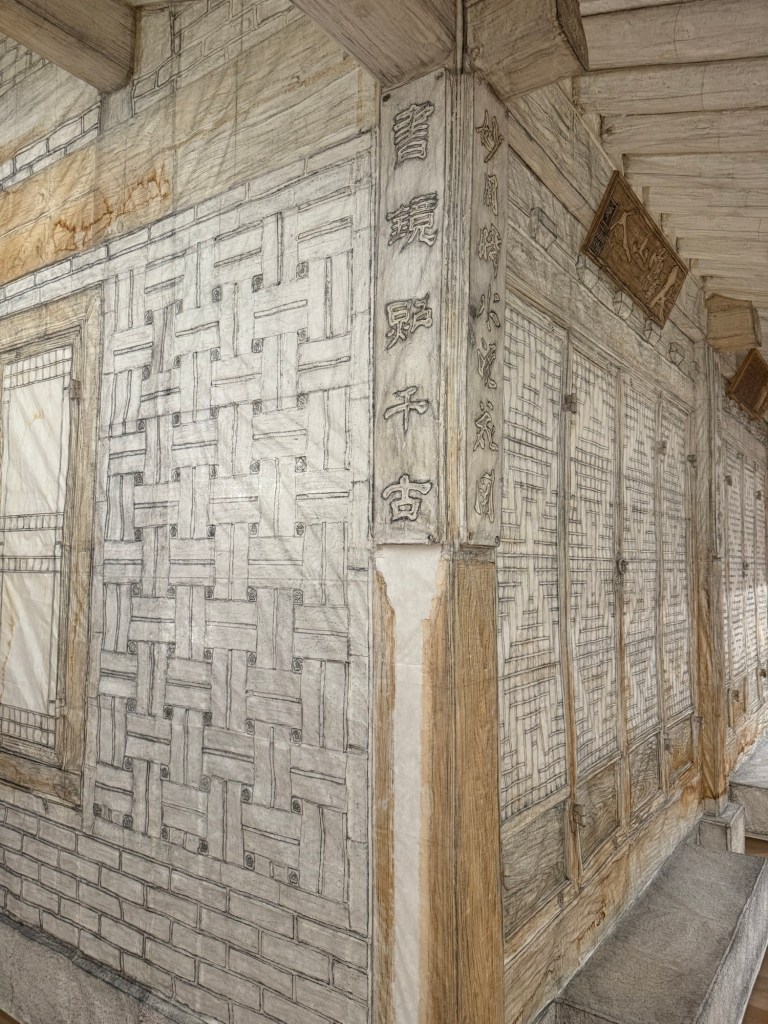
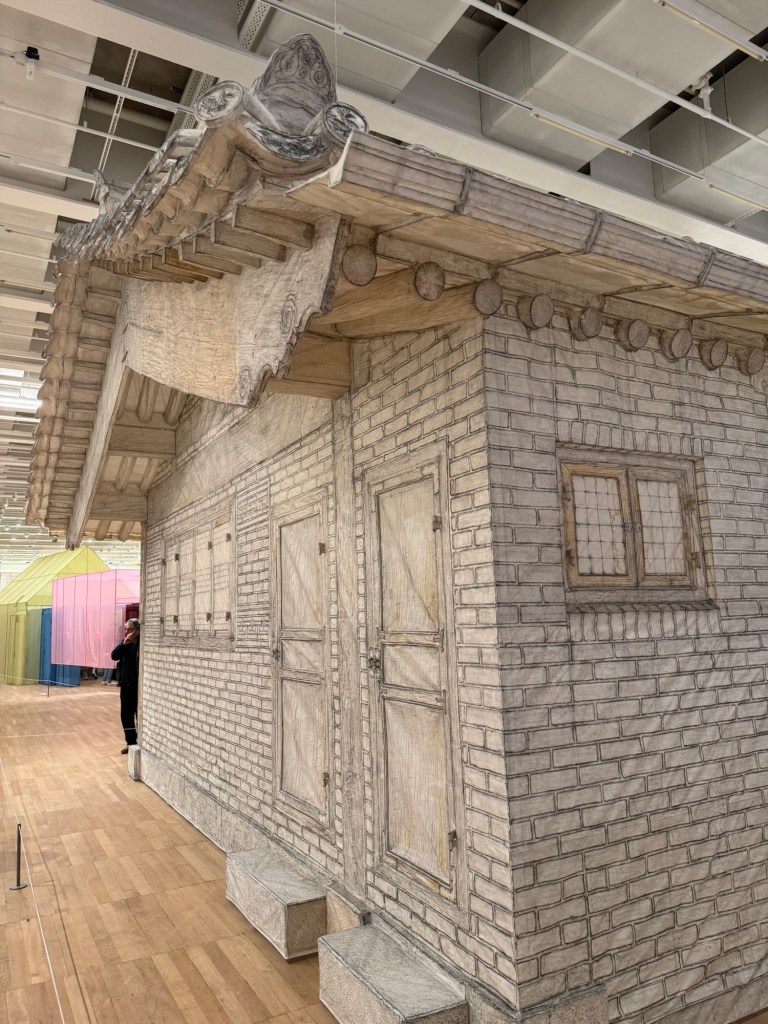
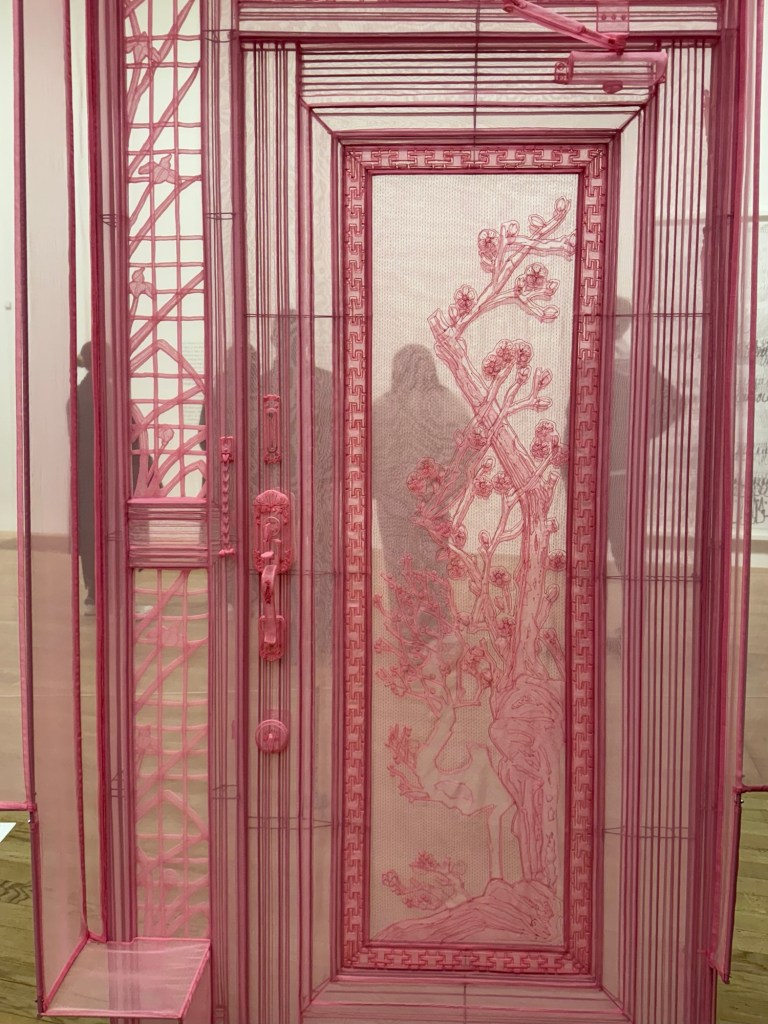
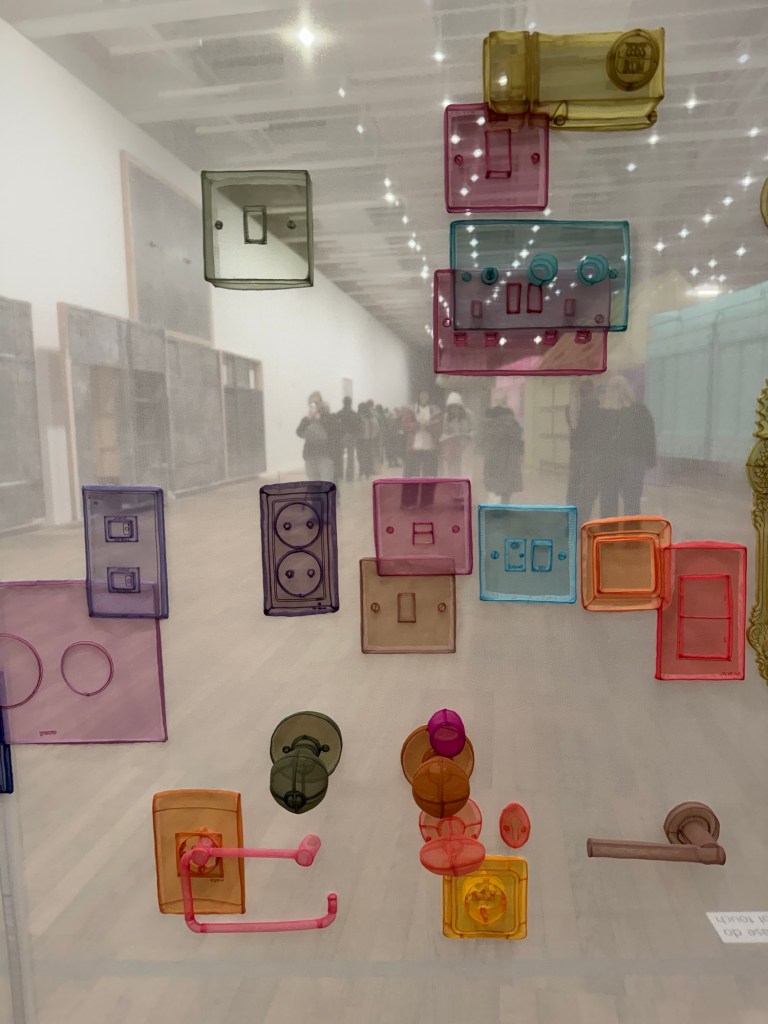
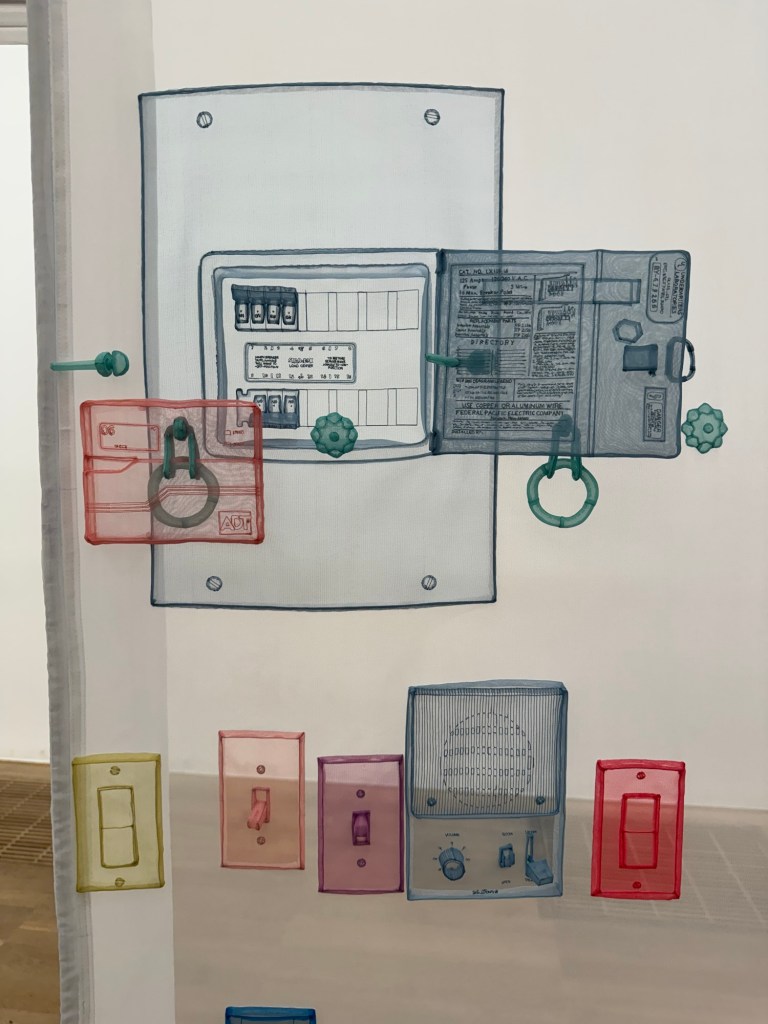
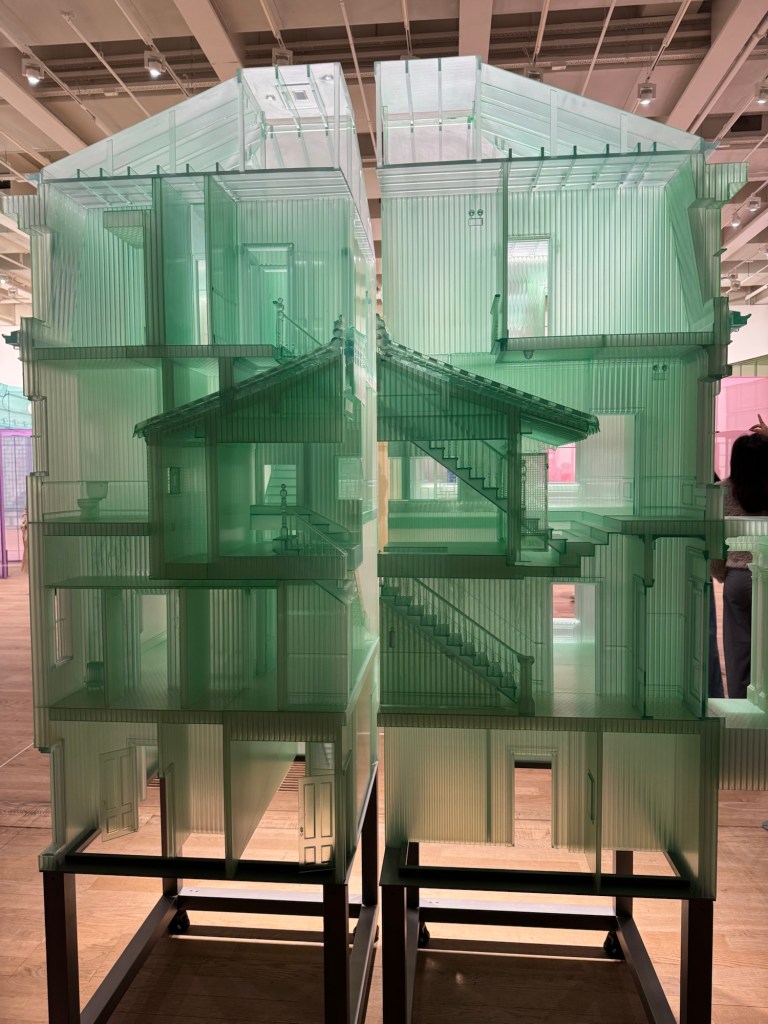
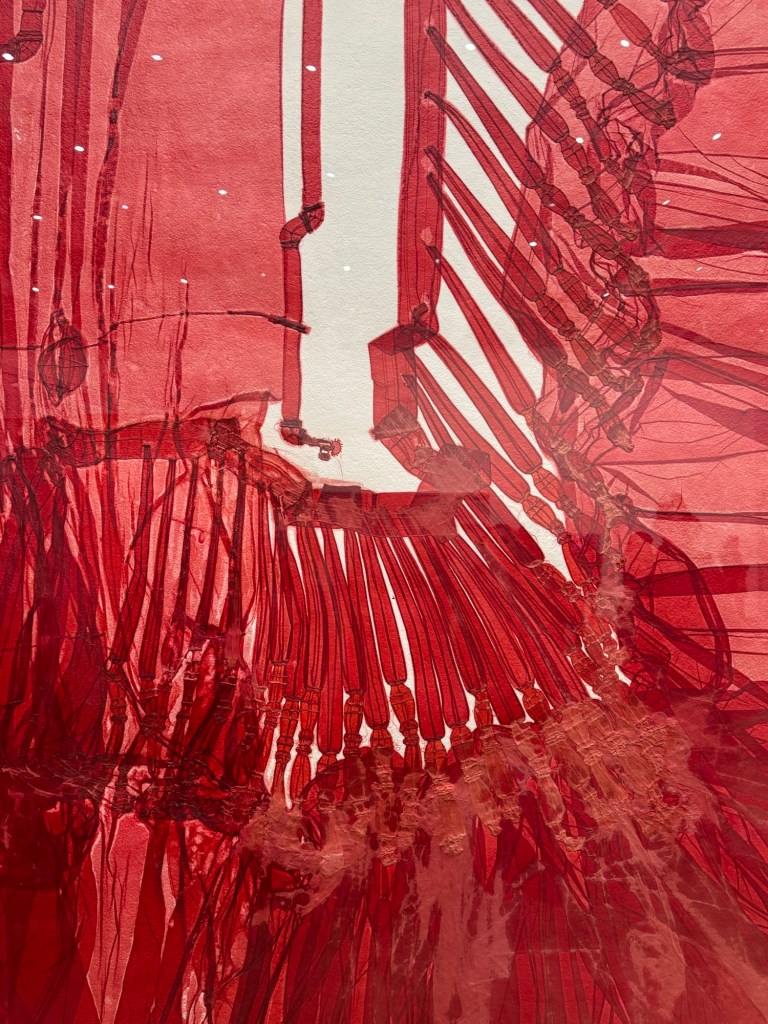
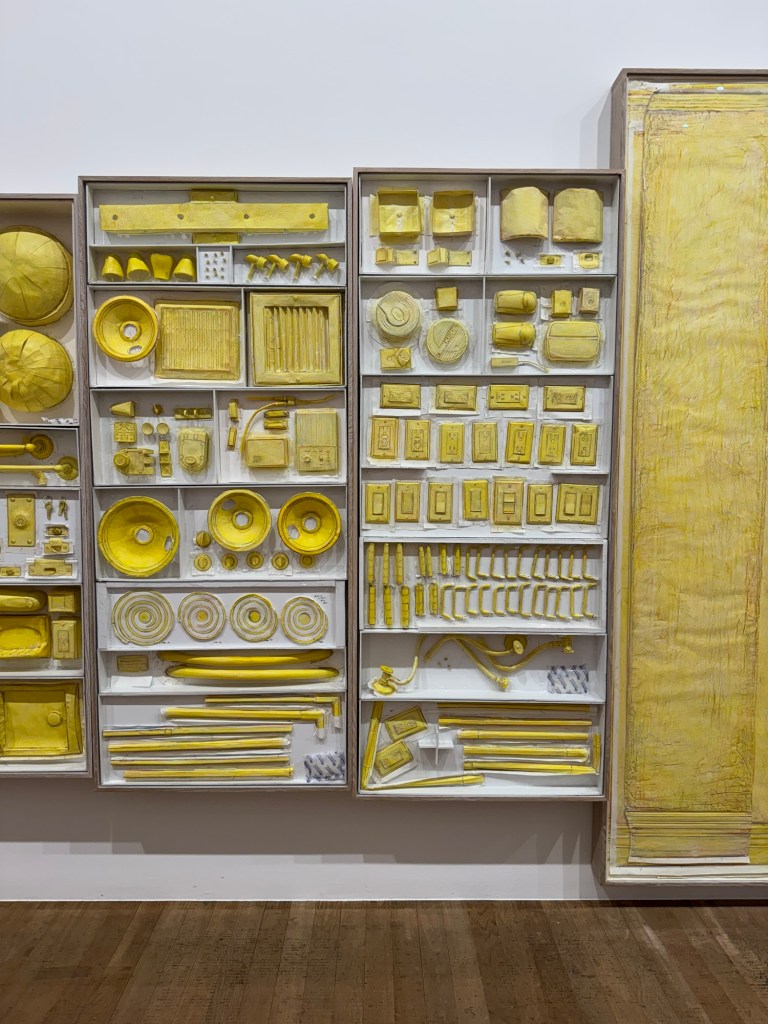
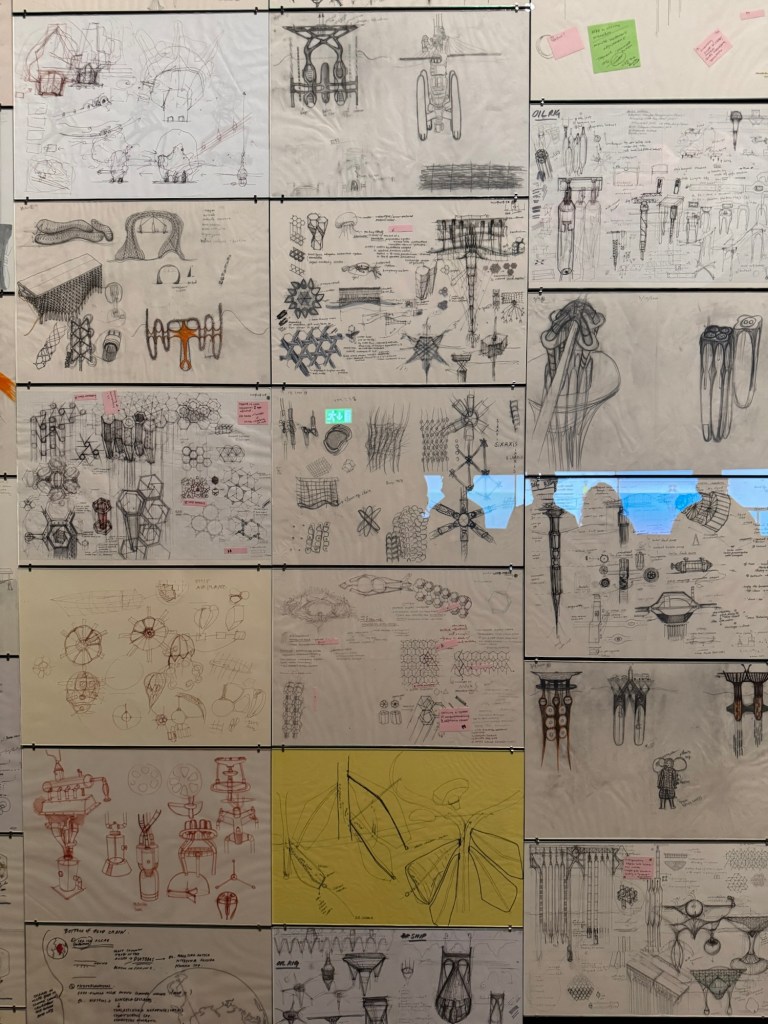
Some images that I took when I visited ‘Do Ho Suh: Walk the House’ at Tate Modern:
 elizarawlings