
EXPERIENCE
In the last year, I have been mostly drawing or painting in Chinese ink for my ‘News’ series of work. Whilst ‘News’ is still an ongoing project, I have returned to painting in oil. Somehow, the winter months make me want to paint in oil with the hours of tinkering in the dark evenings.
My other reason for returning to oil is to explore additional ways to paint on newspapers. I have so far only painted on newspapers with Chinese ink for ‘News’ and I want to experiment with oil on newspapers.
I have felt for some time that I have reached a plateau with my oil painting; I also received some feedback from my MA about painting in thinner layers. So I feel it’s time to take that further and develop my oil painting techniques.
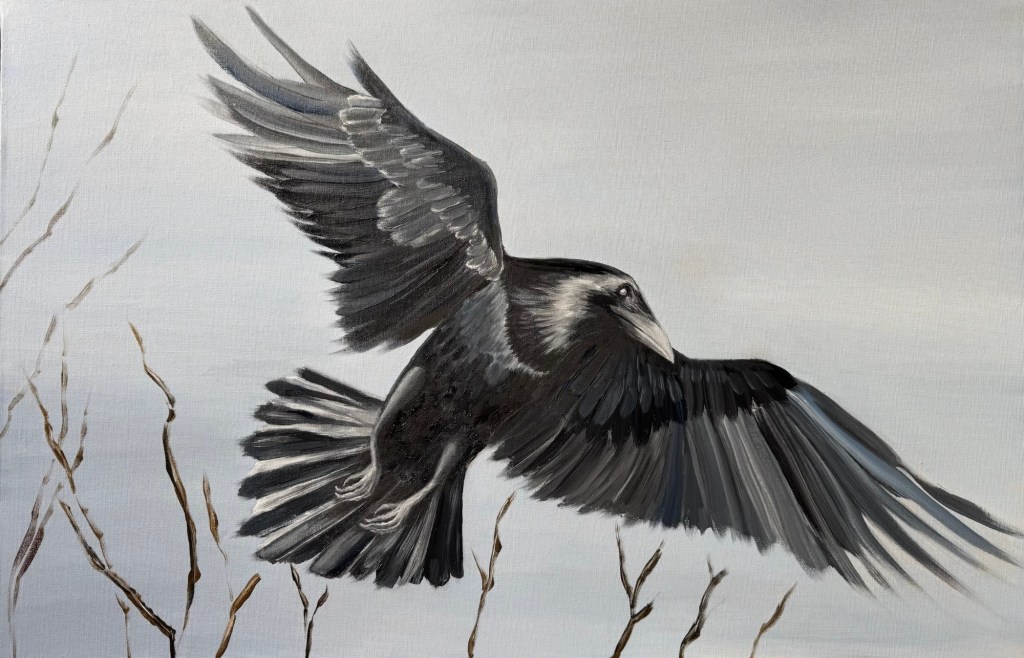
I joined a local public art class on ‘oil painting – improvers’, hoping to explore develop further. In my first lesson, I discussed the use of Winsor and Newton Liquin with my tutor and I experimented with it for a crow painting on canvas board:
I also painted a crow on newspaper. Here, I made a news article collage on a board, then applied one layer of clear gesso and painted on top:
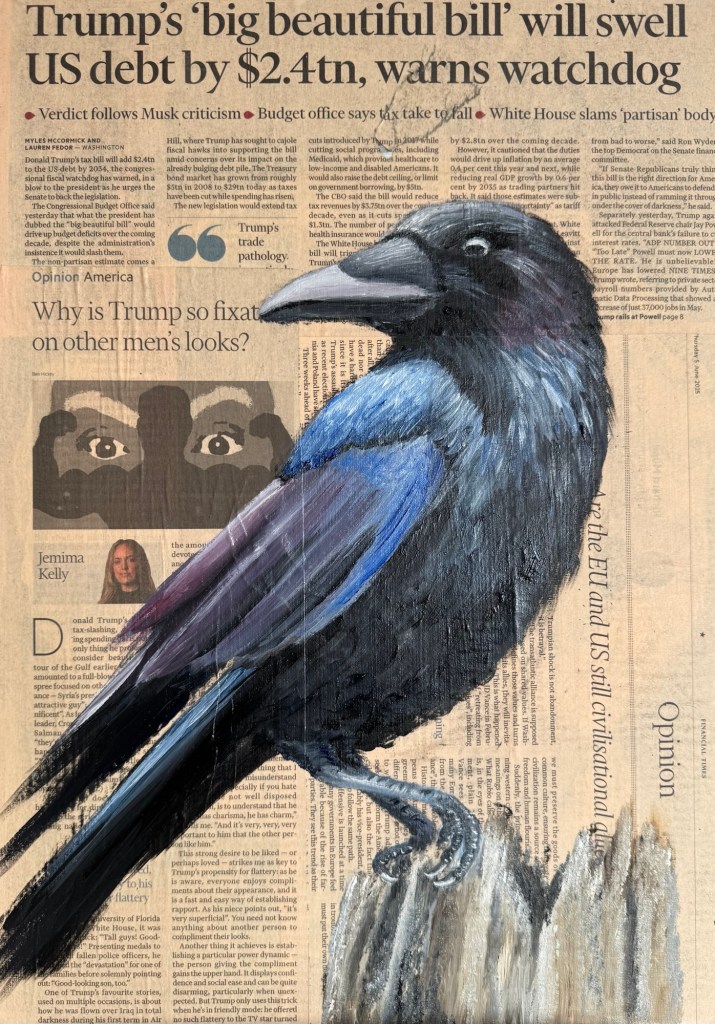
I was hoping to use Liquin to make the oil behave and flow more like ink on the newspaper – it has made it more fluid and I could use soft synthetic brushes to apply the oil to reduce the drag on the canvas, but it is still oil which was ok. I was happy with painting in thinner layers but I was still focusing too much on the fine detail. I wanted to be more loose and I discussed this with my oil tutor.
My tutor made the following comments:
-Painting from photos makes one more prone to focusing on the details.
-Having lots of time can draw the painter into over focusing on the details.
-Suggested exercise to try – set a time limit to make a painting, say two hours, then just get the whole painting done in that time. It’s ok to go back and improve afterwards, but try to get the whole thing done in two hours.
For the two hour exercise, I decided to painting something that I had not painted before, so I chose an octopus.
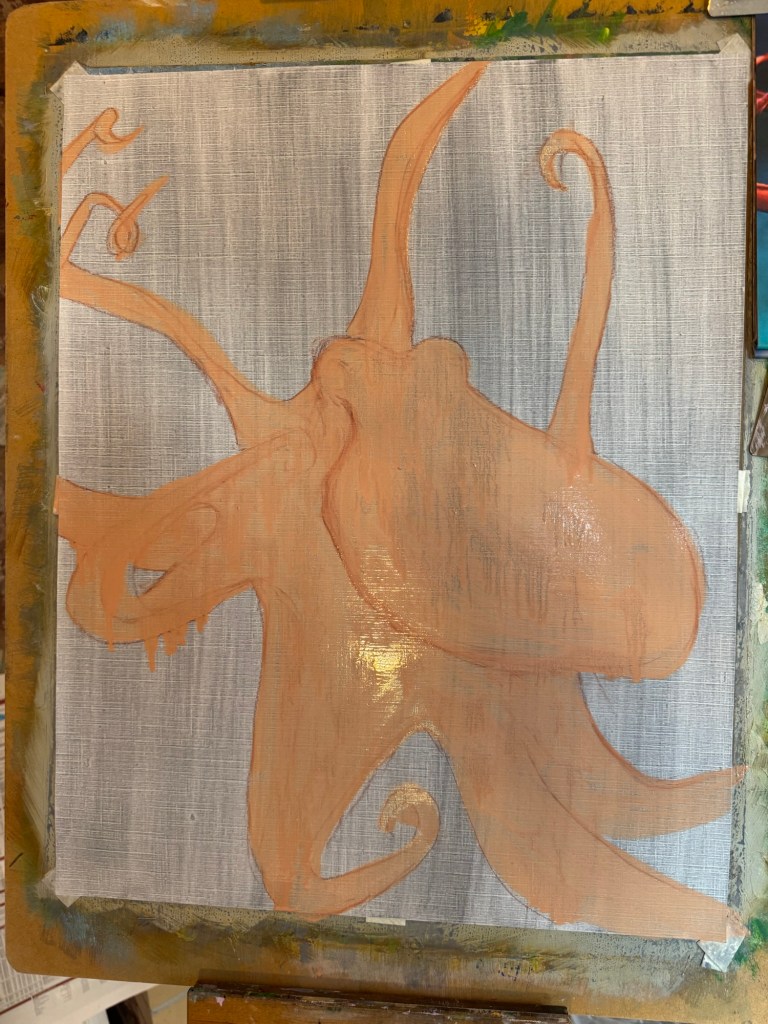
An outline of the octopus was marked out then a lean layer was added for the octopus.
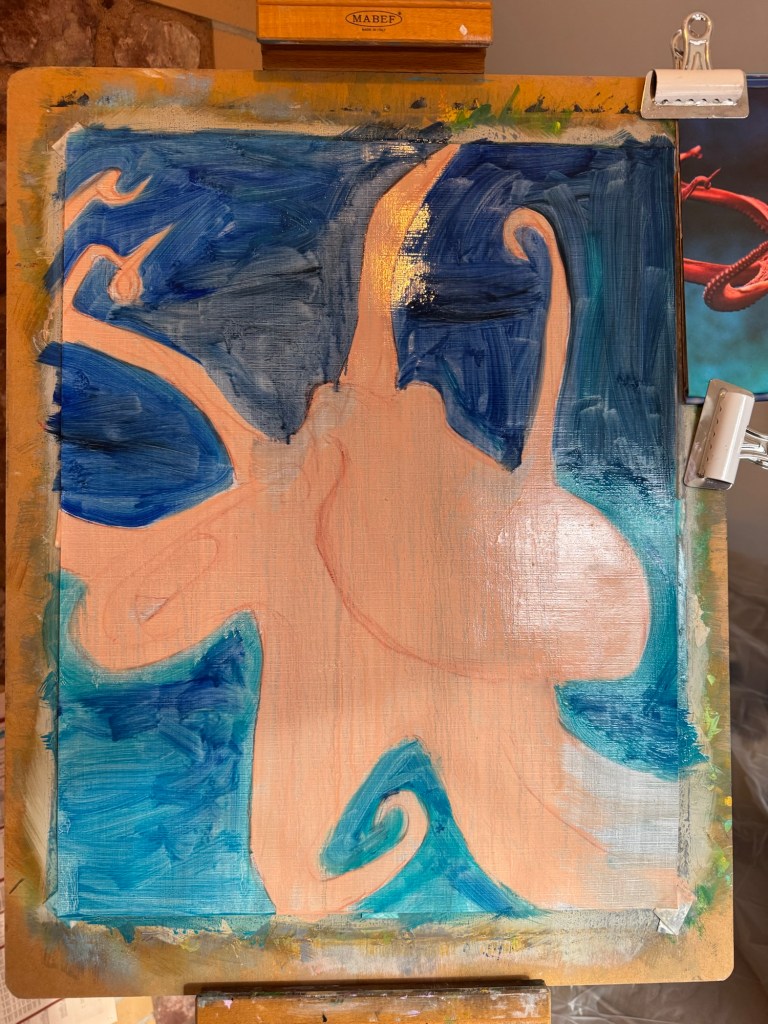
A lean layer of the sea was added:
Progress at one hour:
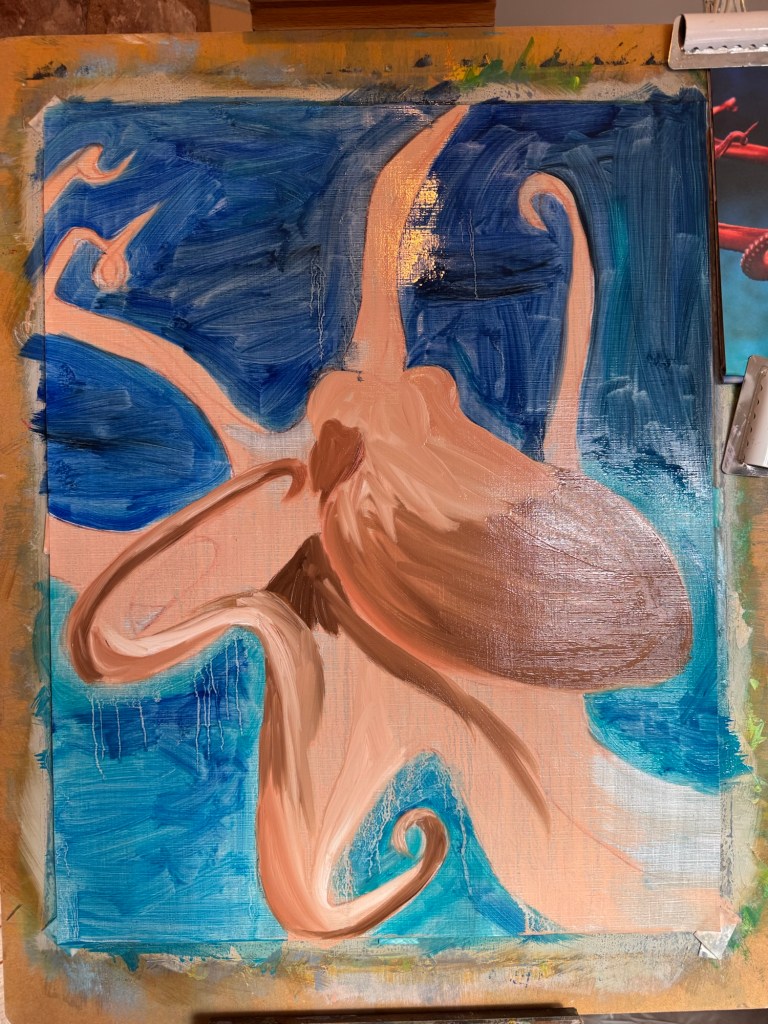
Progress at two hours:
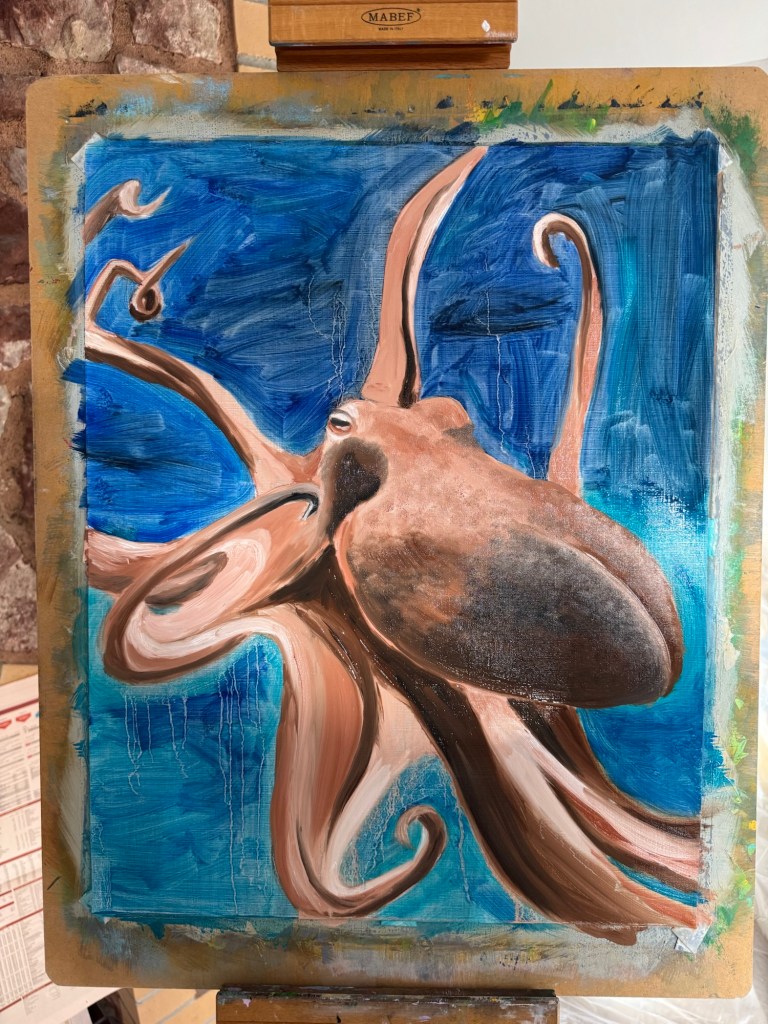
Then I worked on improving it for one more hour such as adding the suckers on the tentacles.
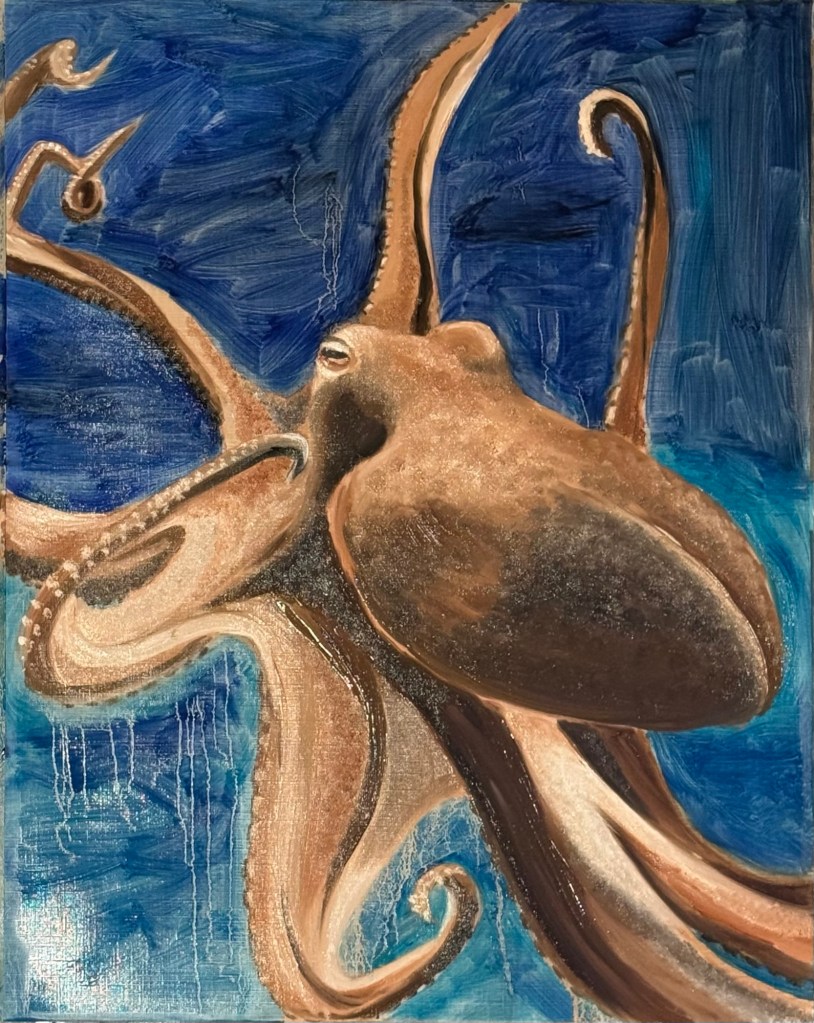
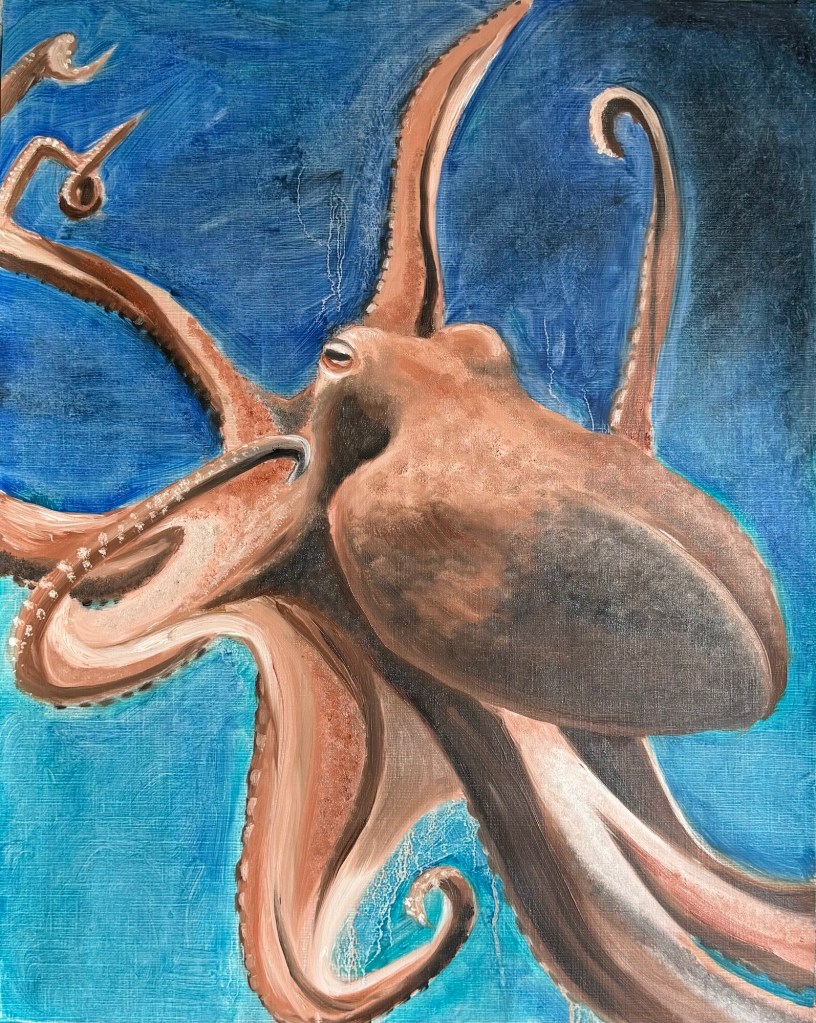
Kitchen paper was used to give the sea a more blended but slight ragging effect:
REFLECTIONS
I have enjoyed painting in oil again. I’m also excited by the possibility of using oil on newspapers just to see what happens. I think oil on newspapers gives opportunities to try different materials and perhaps large and heavier canvases.
The experiments with Liquin were successful in that I like using it; it helped the oil paint to flow but unlike linseed oil, it doesn’t ‘bleed’ even if large quantity is used. Also the quicker drying property suits the quick painting experiments that I’m doing at the moment.
The two hour painting was enjoyable but challenging. I felt rushed to start with, I needed to mark out the object which took time. Then blocking the octopus with a lean layer of oil took me to 15 mins in. I found myself at times drawn into details too soon, then I remembered it was a timed painting which pushed me onto the next part. I think if I wasn’t timed then I would have spent too much time on certain details. So the timing helped to move me on. I also make a mistake with mixing the paint for the sea as I added too much yellow and had to started again which wasted time.
As I painted, I started to remember fundamental oil painting techniques and processes that I had long forgotten – such as marking out shapes of the same tone systematically. Over the years, I had drifted into painting an object at a time, e.g. I would have approached each tentacle at a time, when I should have blocked out the same tone on the whole painting which is more efficient. So I switched to this way of working part way through.
I soon doubted if an octopus was a good subject because it is anatomically very complex. Eight is a lot of legs! So again I remembered the basic concept of just seeing shapes and paint according to those shapes. Also, squinting my eyes to see the shadows and shades better.
LEARNING
The timed painting surprised me by making me remember and refocus on the basic techniques of oil painting – many of those I had stopped using. So I think I need to refocus on the basics and make them default parts of the process. More timed painting practice needed!
NEXT STEPS
Do more timed paintings to hone the loosening approach and just more oil painting to improve my process.
 elizarawlings