EXPERIENCE
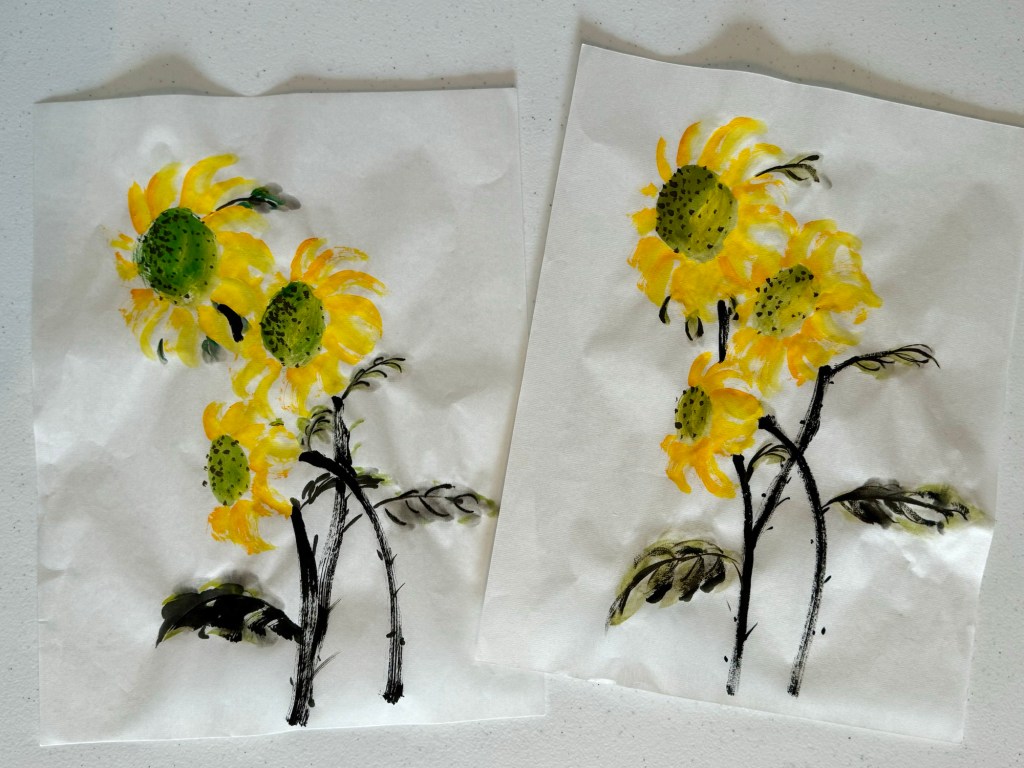
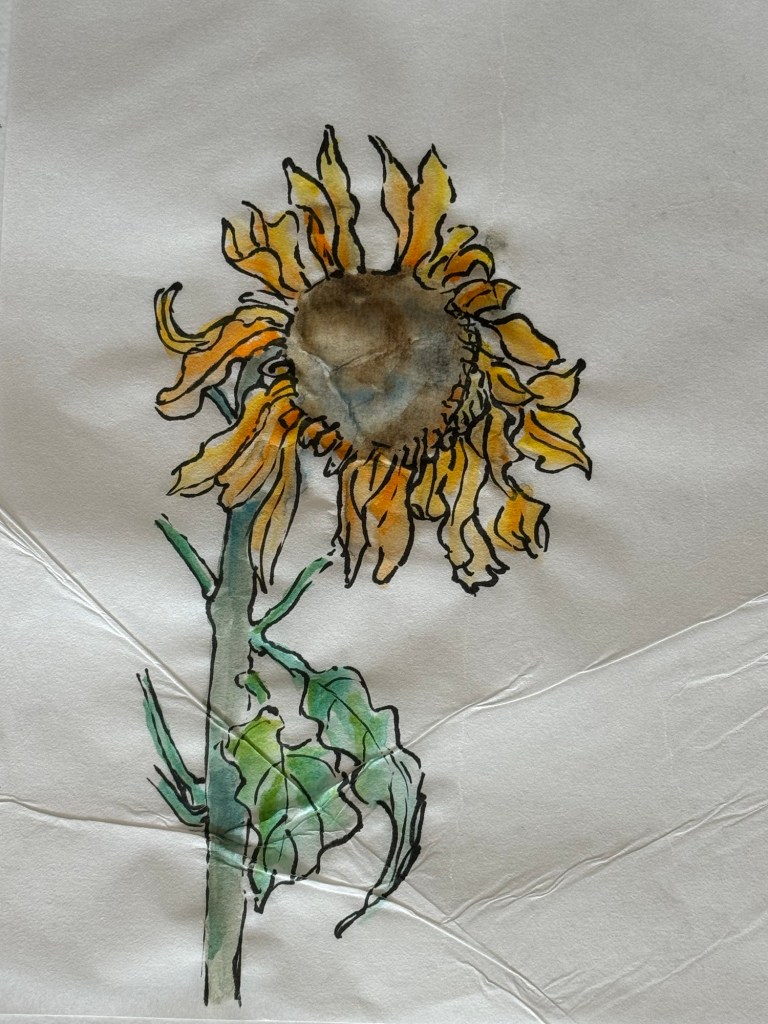
I have been learning Chinese brush painting in parallel to doing my MA Fine Art Digital course. I am new to Chinese painting and there is a lot to learn. So practicing is key. Below are some of my latest Chinese paintings, some of them are copies from books and worksheets that my tutor gave me. I believe it is important to periodically capture my progress but I do not plan to reflect extensively on these paintings because they were mostly learning exercises.
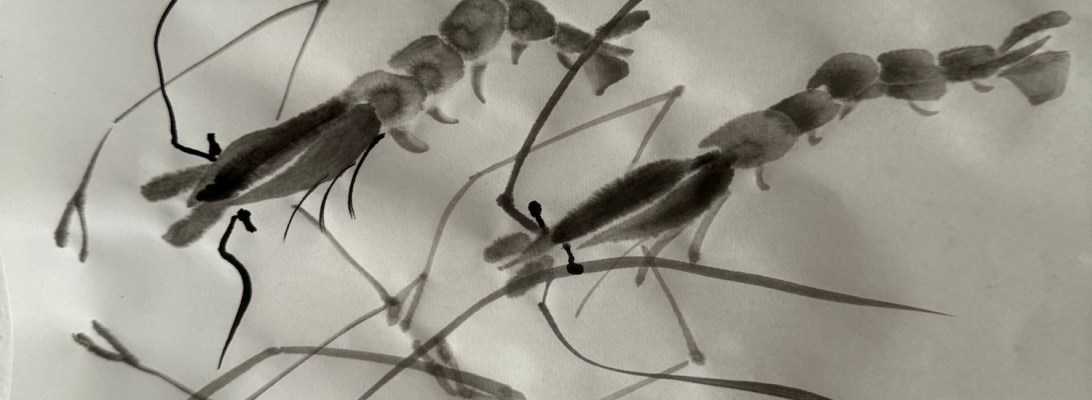
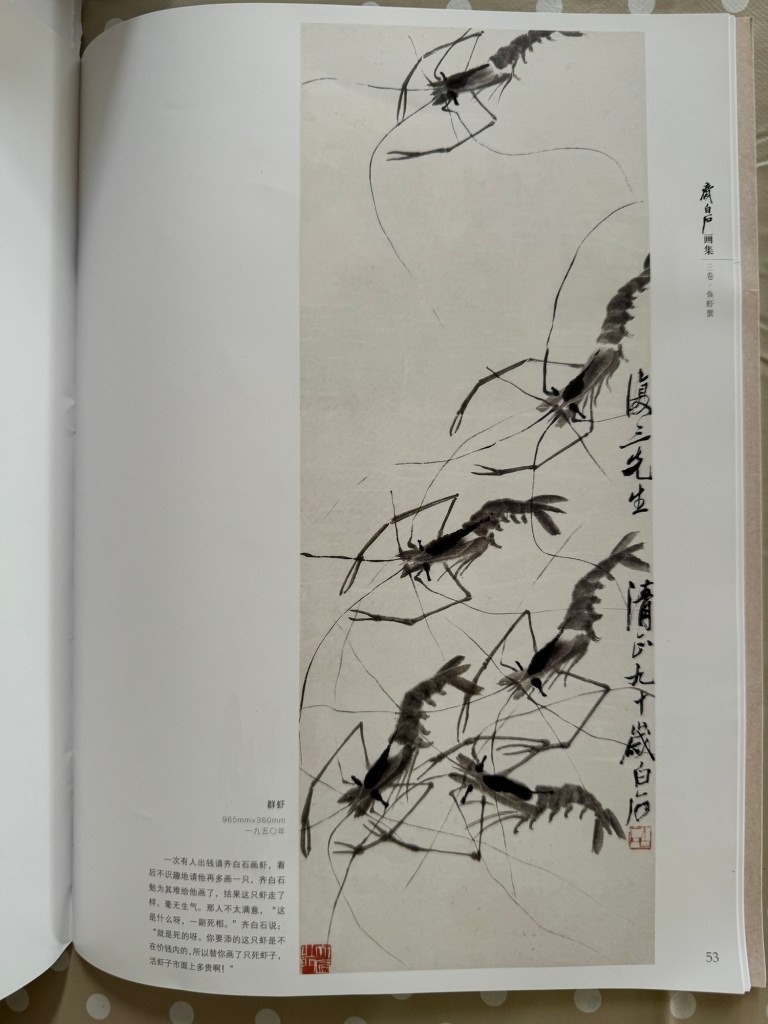
Shrimps – inspired by Qi Baishi
Trying out different compositions, colours and canvas sizes:
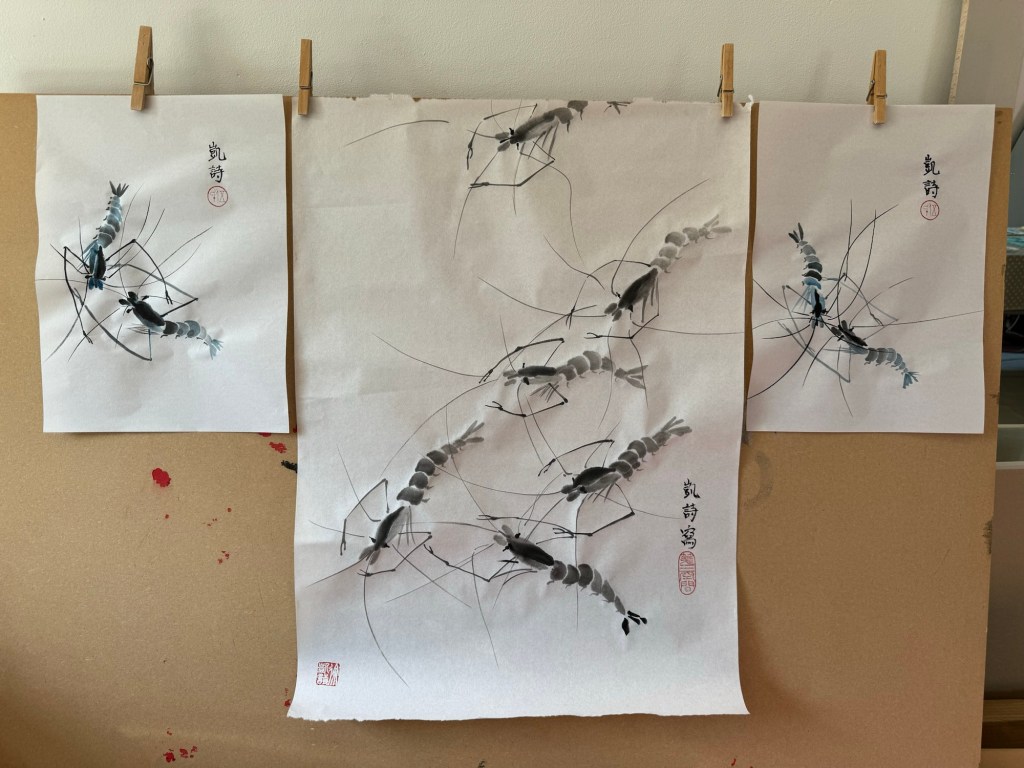
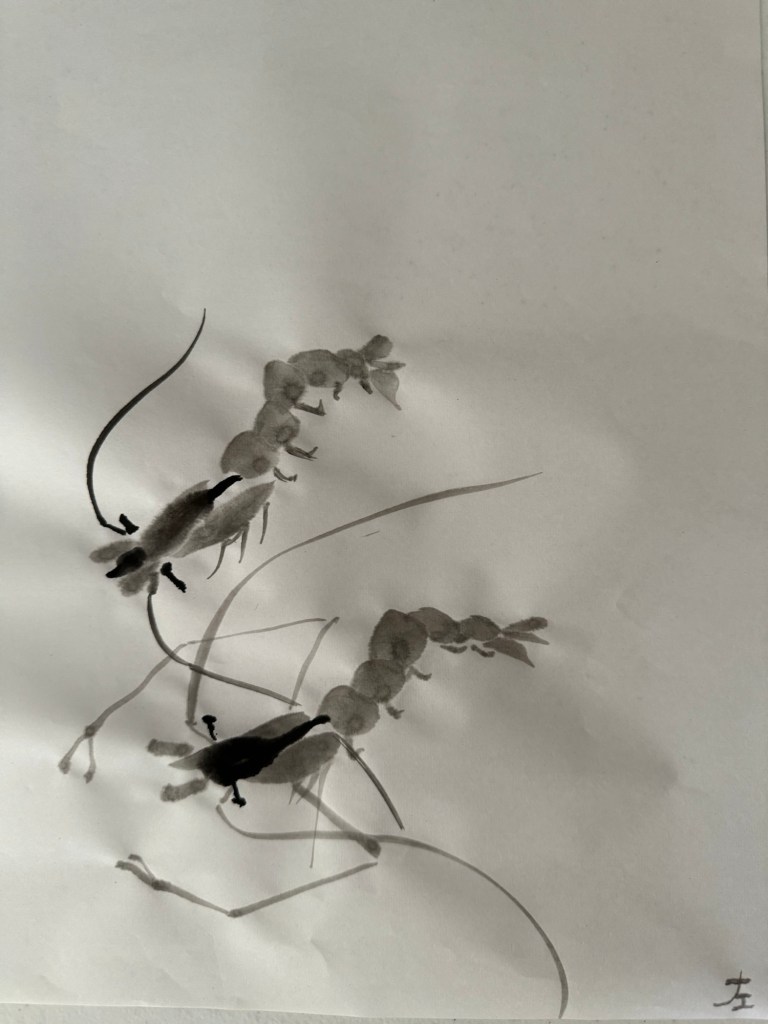
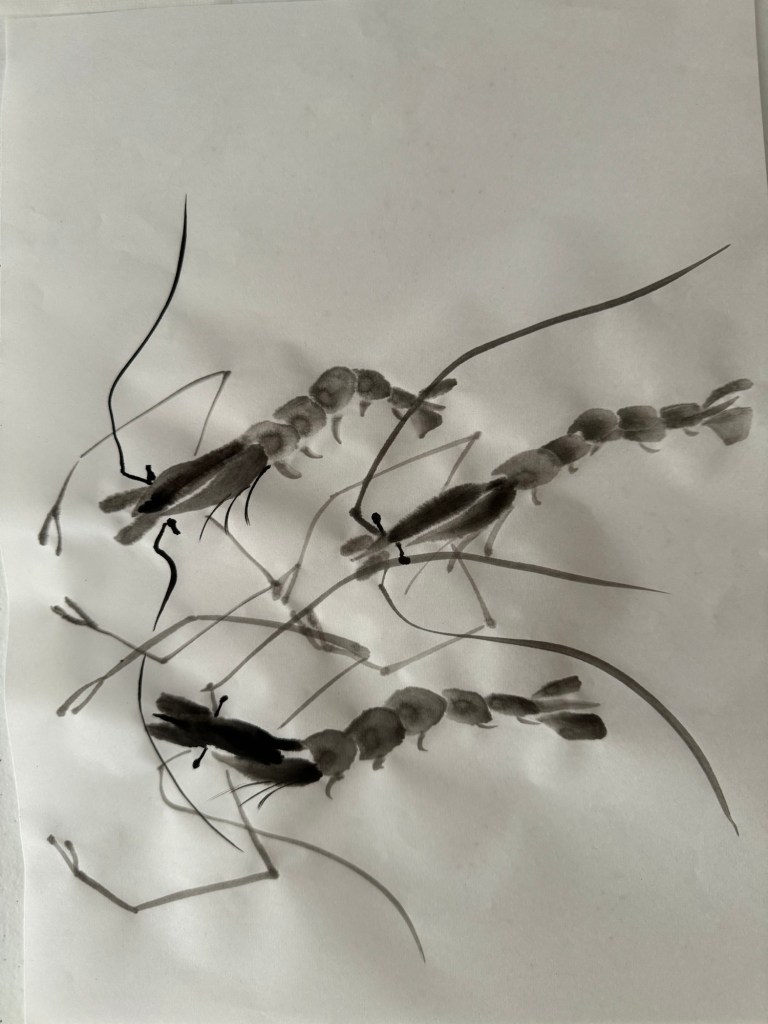
Image of one of Qi Baishi’s famous shrimps paintings:
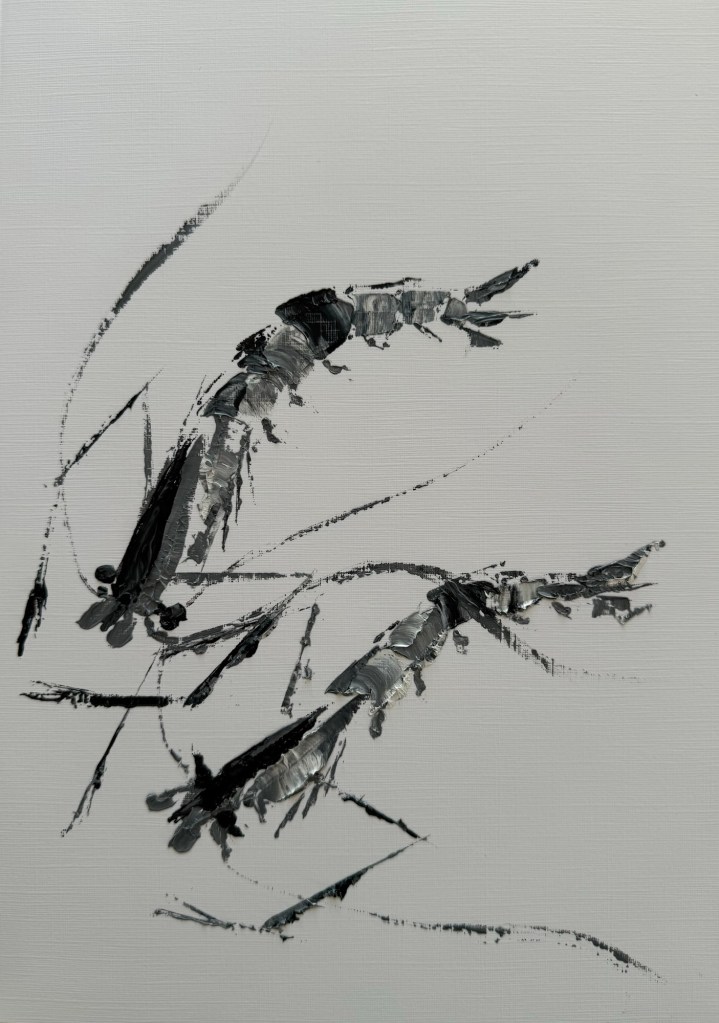
I also tried to paint them in oil to compare the process and effect:
–
Sunflowers
–
Abstract experiments
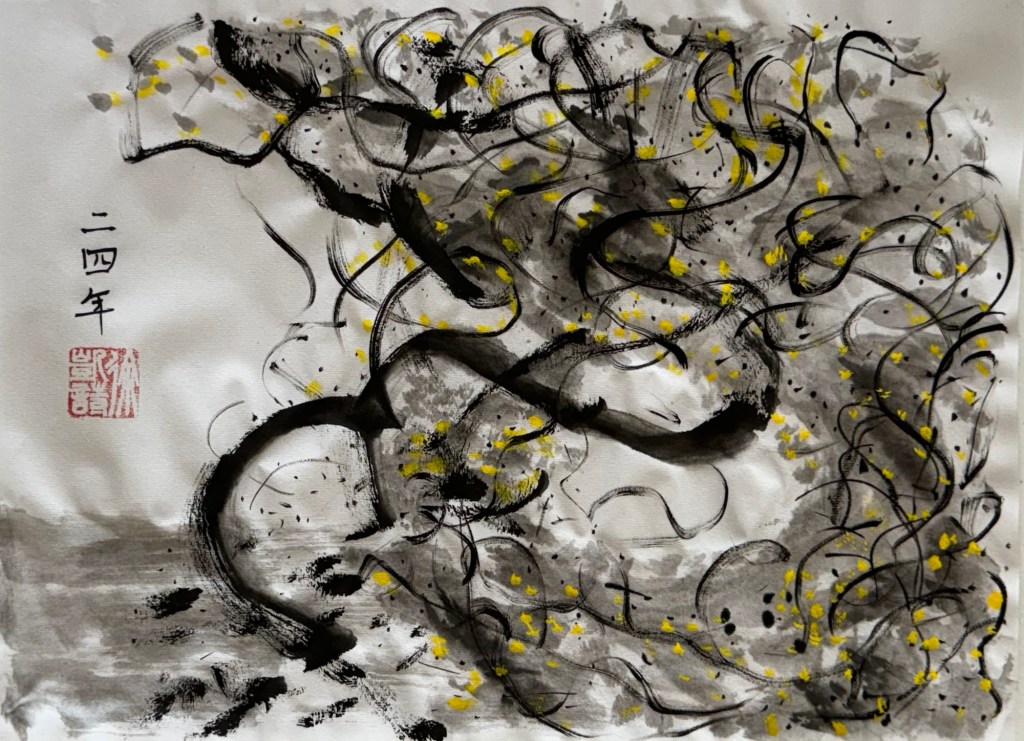
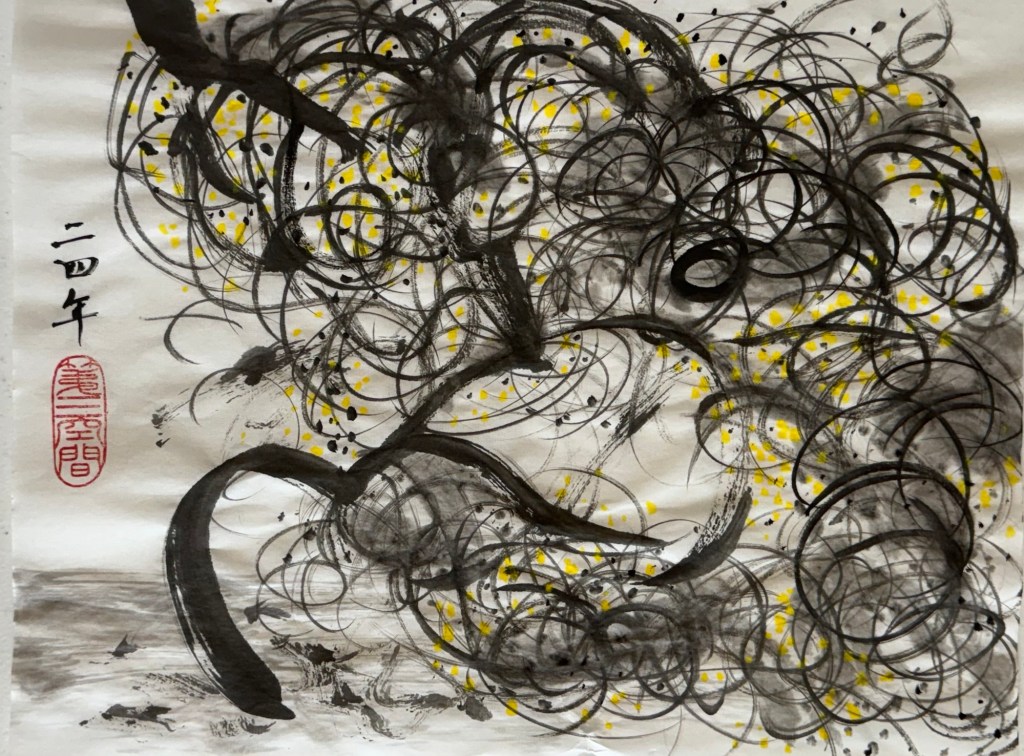

–
Pine tree
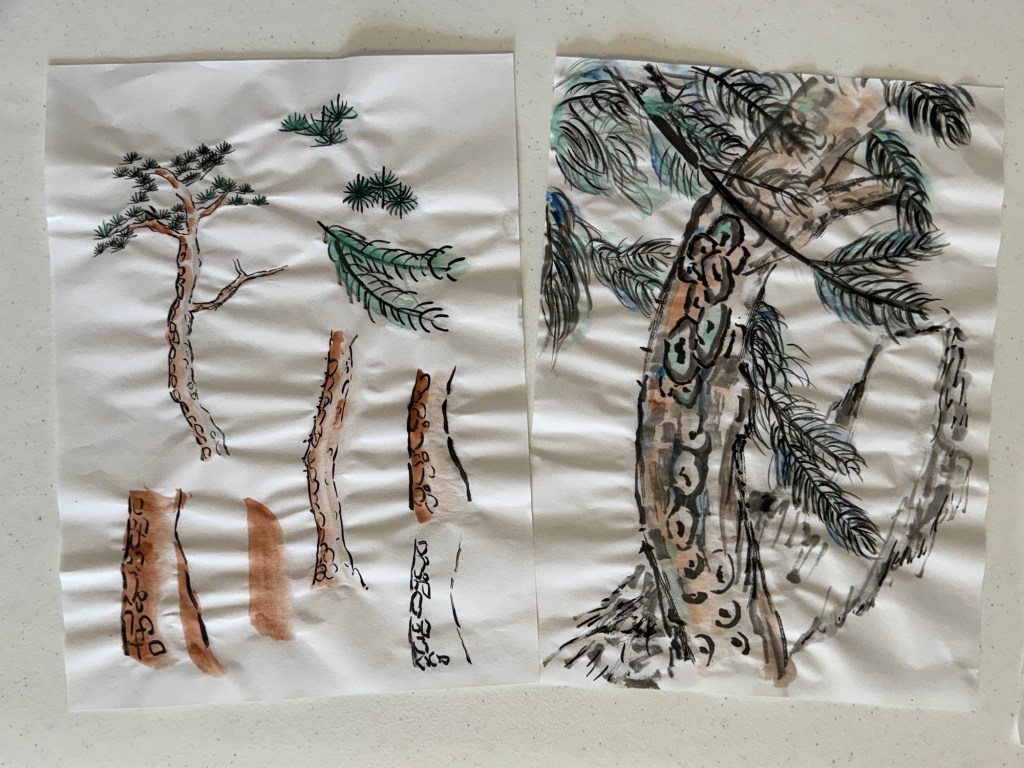
–
Mountain water landscape with silk wash
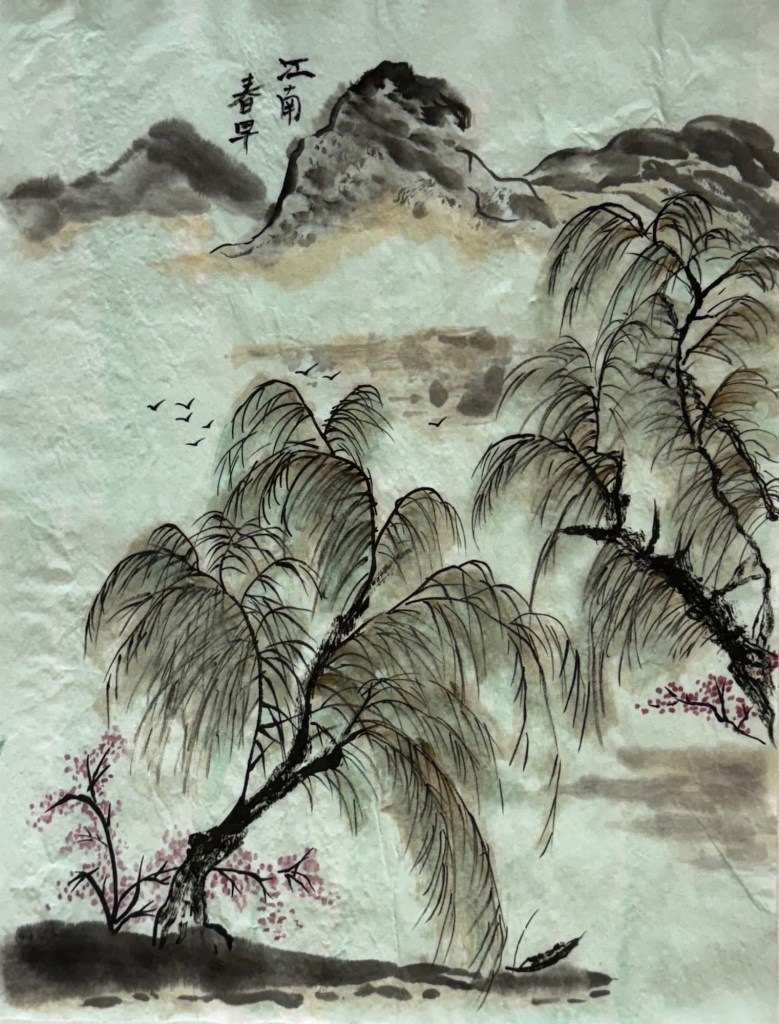
–
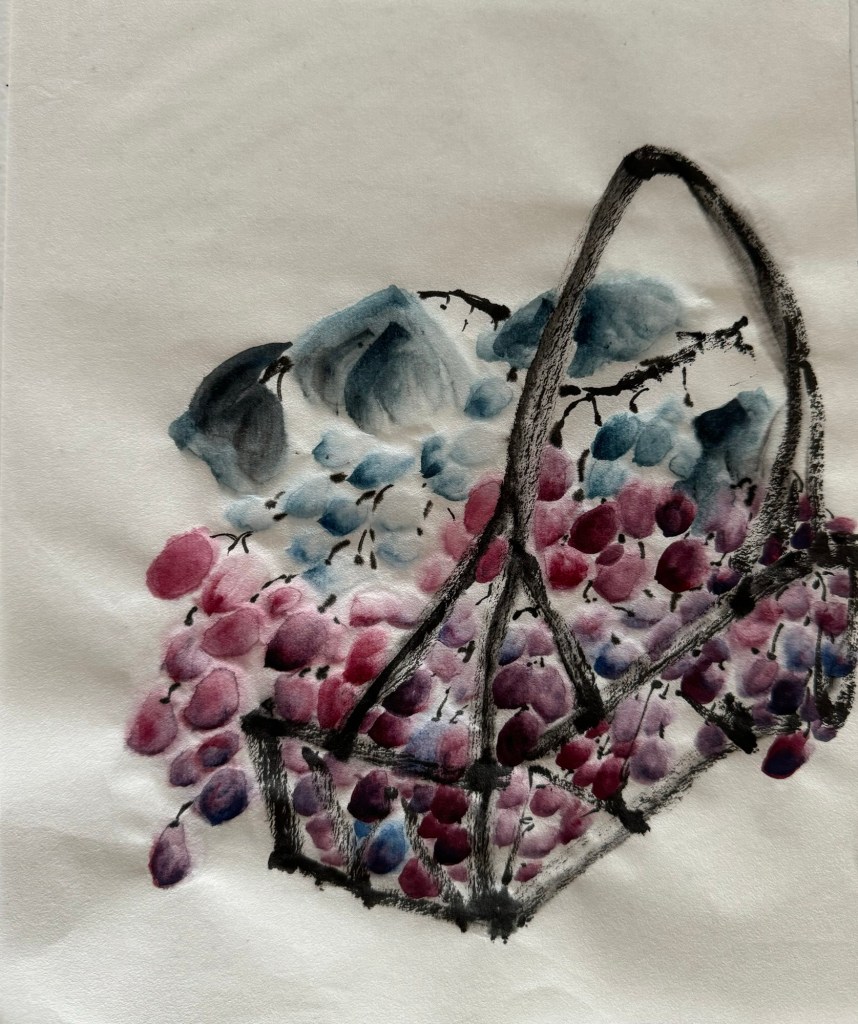
A basket of grapes
–
REFLECTIONS
– I am increasingly enjoying learning Chinese painting and have improved to a stage where I actually can enjoy it rather than get frustrated by it!
– I am particularly interested in learning more about Qi Baishi’s shrimps because I admire his style of painting. I have been advised by my Chinese painting tutor to start with understanding the fundamental anatomy of a shrimp before going free style. I will do that next.
– Much of Chinese painting involves symbolism. After researching more about the symbolic meaning of shrimps, I found (and remember) that the word shrimp in Cantonese sounds like ‘ha’ which is the sound of laughter. In Mandarin, it also sounds like the word ‘laugh’. So it symbolises happiness which is good to bear in mind for future use in my work.
– I was disappointed with how the shrimps turned out in oil. They seem clumsy compared to the ones in Chinese ink.
LEARNING
– Always start with understanding the anatomy and doing some sketches of them (in pencil or thin line paint) before going free style in Chinese painting.
NEXT STEPS
– Do the shrimp anatomy sketches in meticulously style before painting more shrimps!
 elizarawlings