Research: Simultaneous drawings with both hands

I have been painting with my non-dominant hand in my ‘News’ series of work. I became intrigued about the push and pull between the left and right sides of my brain. So I decided to experiment with drawing with both hands simultaneously.

METHOD

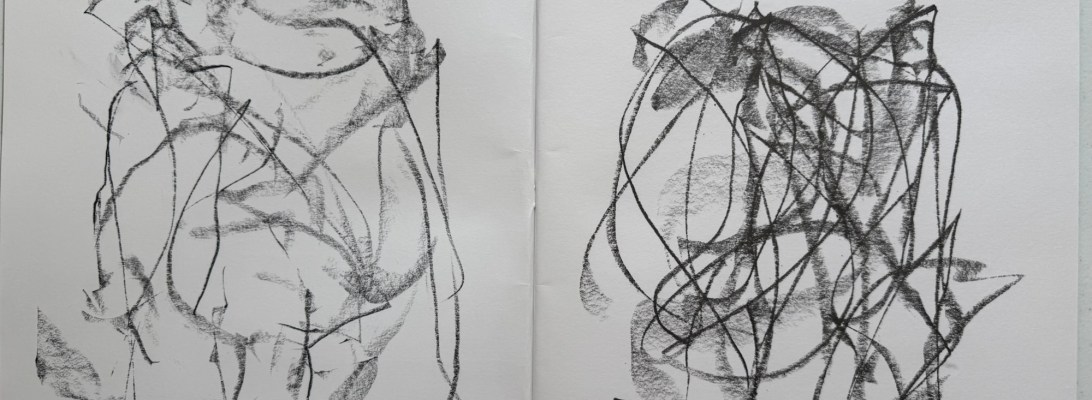
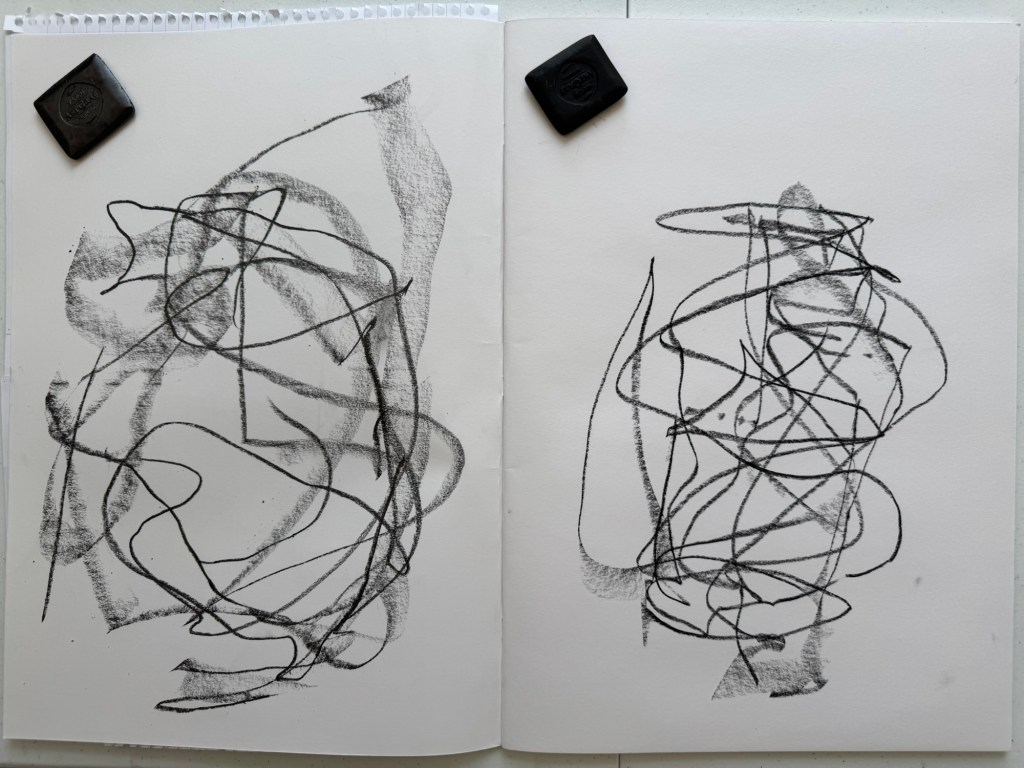
On an A2 sketchbook, I used my left (non dominant) hand to draw on the left page and my right (dominant) hand on the right page. I closed my eyes and drew simultaneously with graphite tabs. Below is the first drawing:
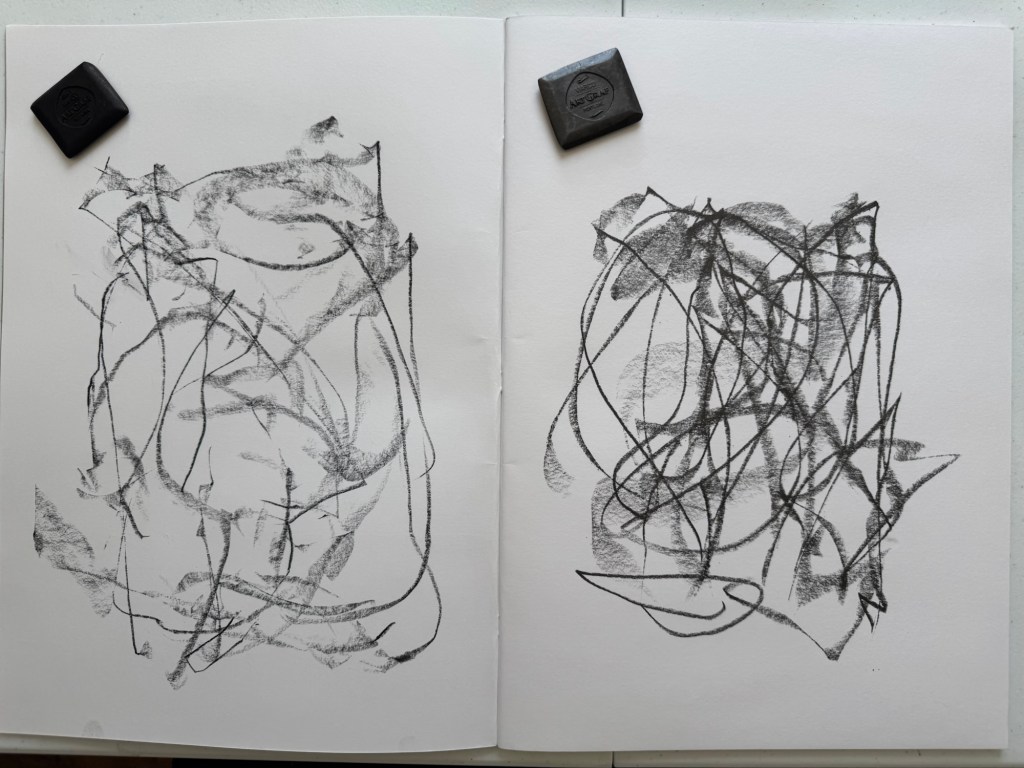
This is the second drawing done in the same way:
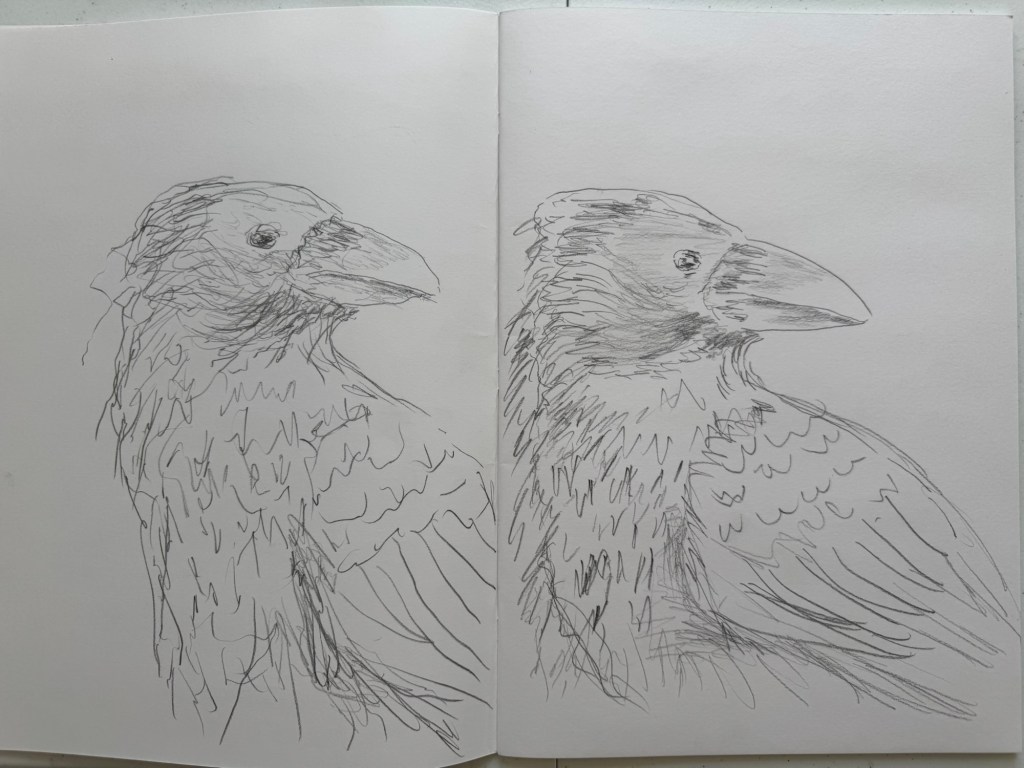
I then drew some crows with my eyes opened. Again, both hands drew simultaneously using 4B pencils. First drawing:
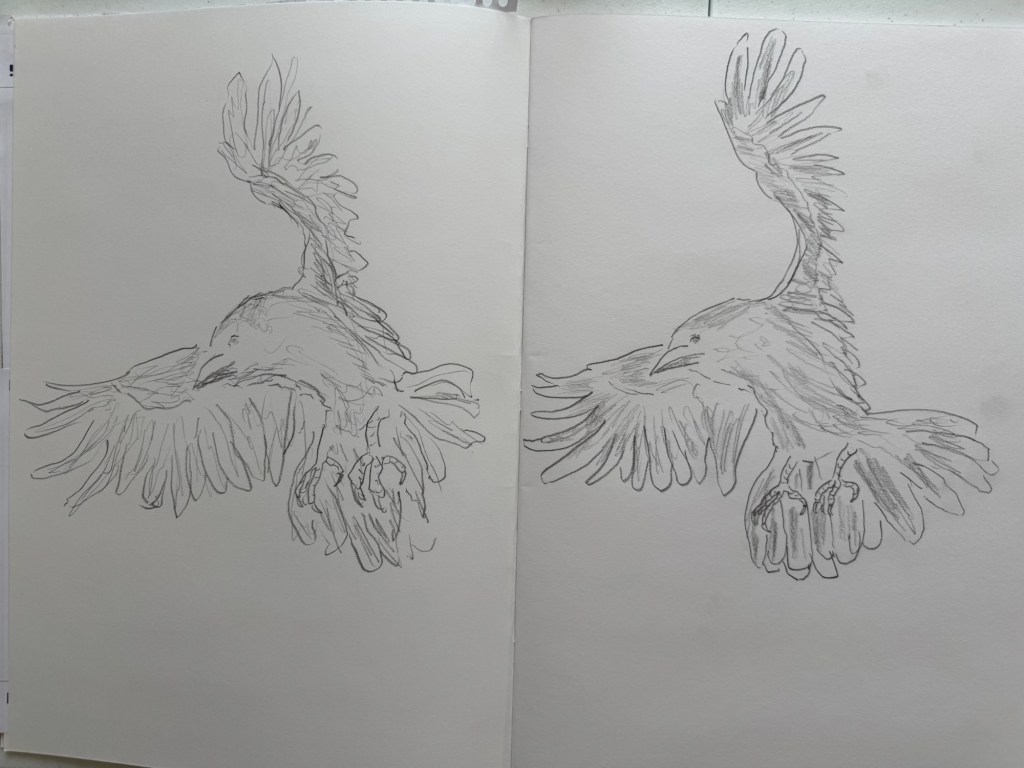
Second drawing:
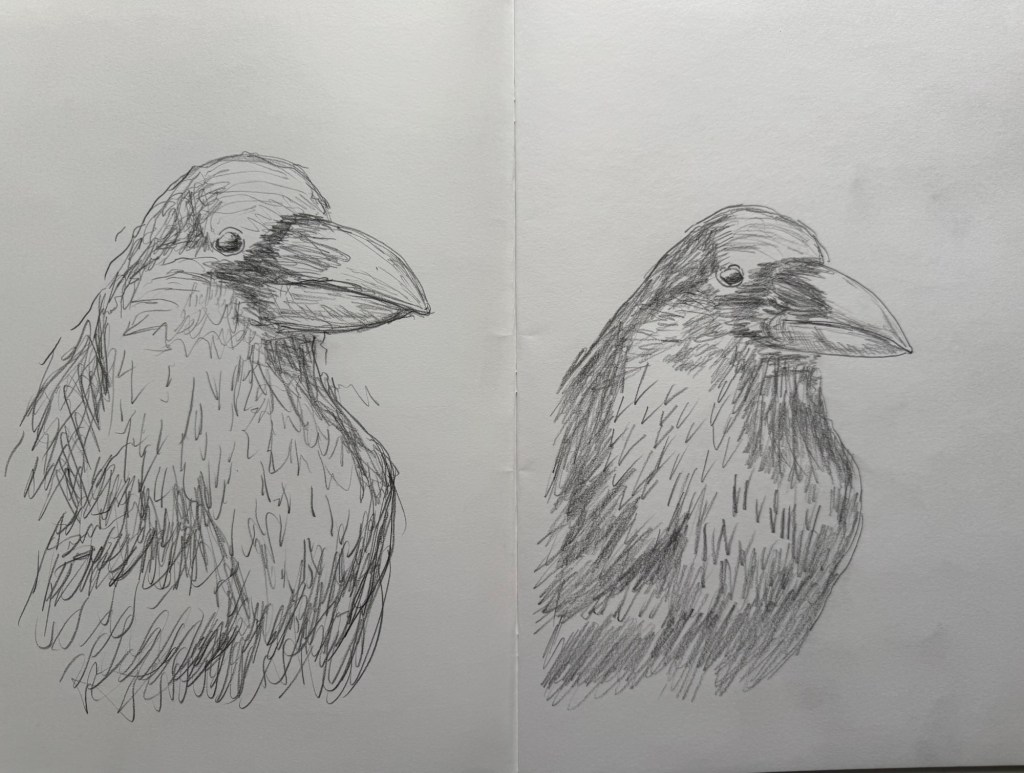
Below is the third drawing. By the time of doing this drawing, my brain felt tired from the intense concentration that I finished these drawings separately:
REFLECTIONS

The first two drawings were abstract mark making with my eyes closed. I wanted to see if there would be any difference with a free and simple method like this. My initial observation was that the non-dominant hand drawings were larger and less restrained. There were similarities in composition but not identical. I purposely wanted to create different images to see if I could get both sides of the brain to do different things simultaneously. So from that point of view, I was not able to create independent images, not even simple ones.

I then drew the crows from photos. In these cases, I purposely created the same image but wanted to do it as a kind of brain training exercise to see if I could do more complex simultaneous drawings. The images were quite similar but the left hand being looser in its mark making, consistent with the abstract drawings.

I prefer the looser mark making from the left hand, but I think I have know this for some time, hence choosing to do the News paintings with my left non-dominant hand.

I have found the simultaneous drawings of the crows rather brain-aching. The intense concentration required to do the drawings was tiring, hence I had to finish the final pair of drawings separately. This makes me think that controlling both sides of the brain simultaneously is not a usual activity, hence so much concentration was needed.

I have also started researching the work of Iain McGilchrist and I am reading the book about the divided brain ‘The Master and his Emissary’. I have not read enough yet to be able to shed light on what I am experiencing with my simultaneous drawings. So I will need to continue with the book to find further insights.

LEARNING

I think it’s too early to extract learning from this exploration. I don’t know how much further I will take these experiments and how they would contribute to my practice. I think I would like to explore more the abstract mark making drawings and perhaps do some paintings with this approach to see what happens. As for the crow drawings, I know I can do them and I am unsure of what else I want out of them at this stage.

Studying Iain McGilchrist’s work will help me to progress this line of research.

NEXT STEPS

-Explore further abstract mark making with both hands. Do drawings as well as paintings.

-Consider if they have to be simultaneous and if I need to close my eyes – what am I trying to achieve with those imposed parameters?

-Consider what I am trying to find out, i.e. what are my objectives for this investigation?

-Continue to read the book ‘The Master and his emissary’ and see how the insight could contribute to my art practice.
MA Degree Show – Reflections

My MA Degree Show took place from 1-6 July 2025 at Central Saint Martins’ campus at Granary Square, Kings Cross, London. It was a fantastic experience and I want to capture my reflections and learning here.

METHOD

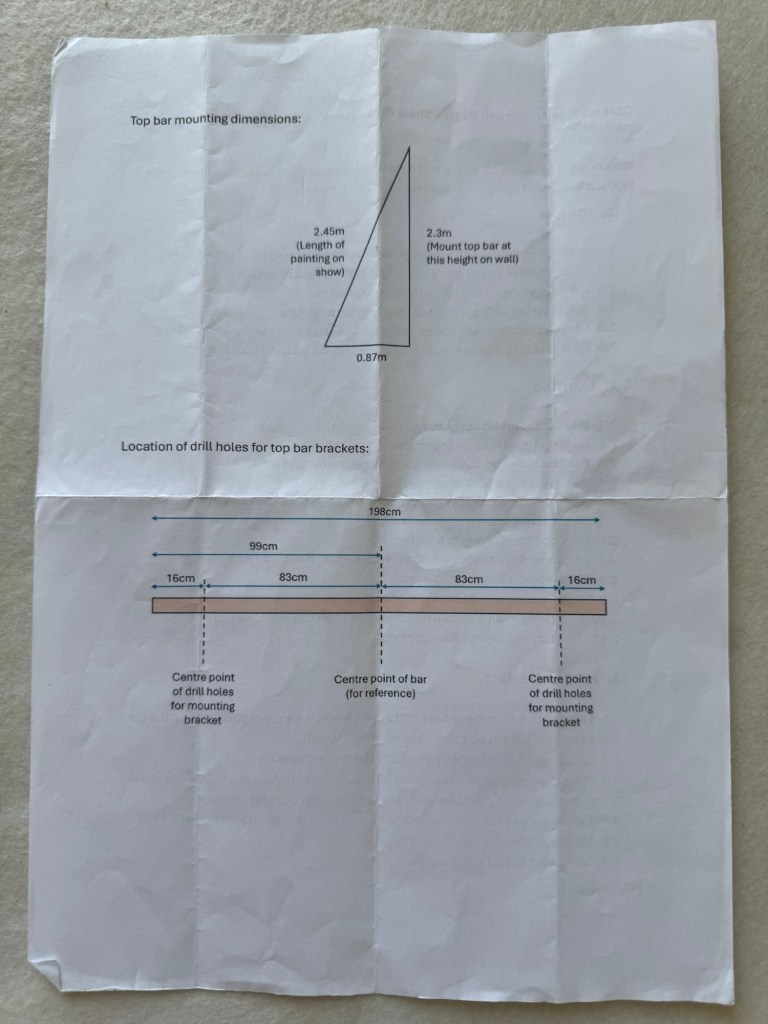
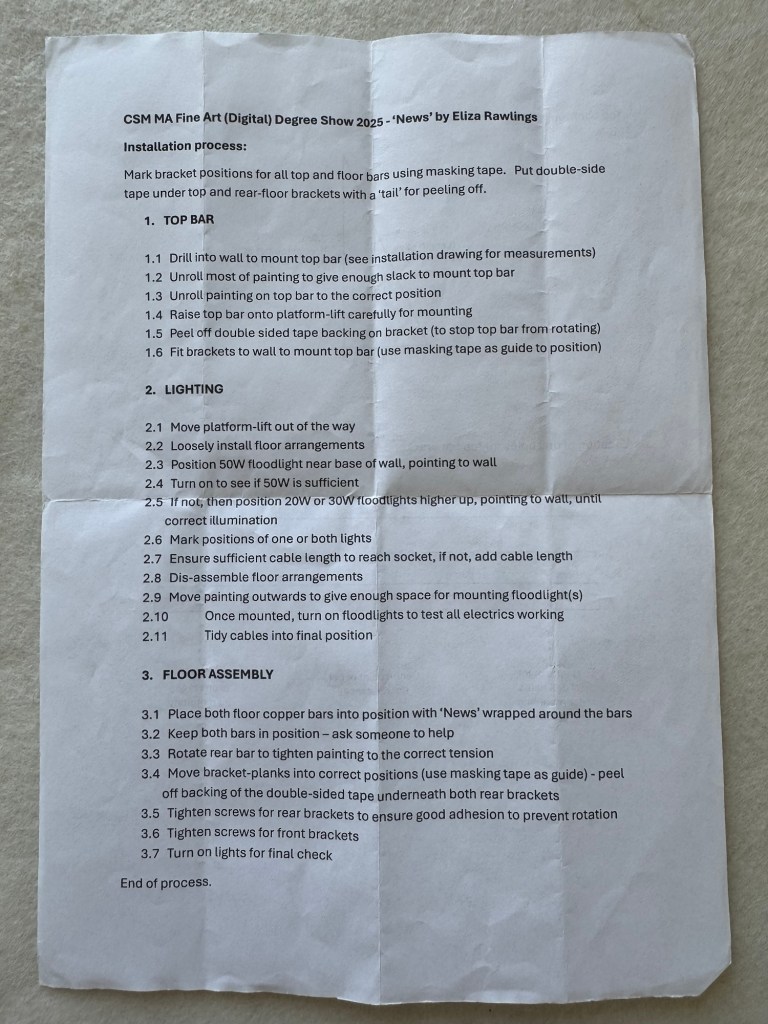
After planning what to show, creating the work and buying the parts, I wrote a list of installation instructions and a simple drawing to show the top-bar mounting. This is to ensure a smooth installation process especially where a technician’s help was required. The technicians are usually very busy, hence I wanted to use their time efficiently.

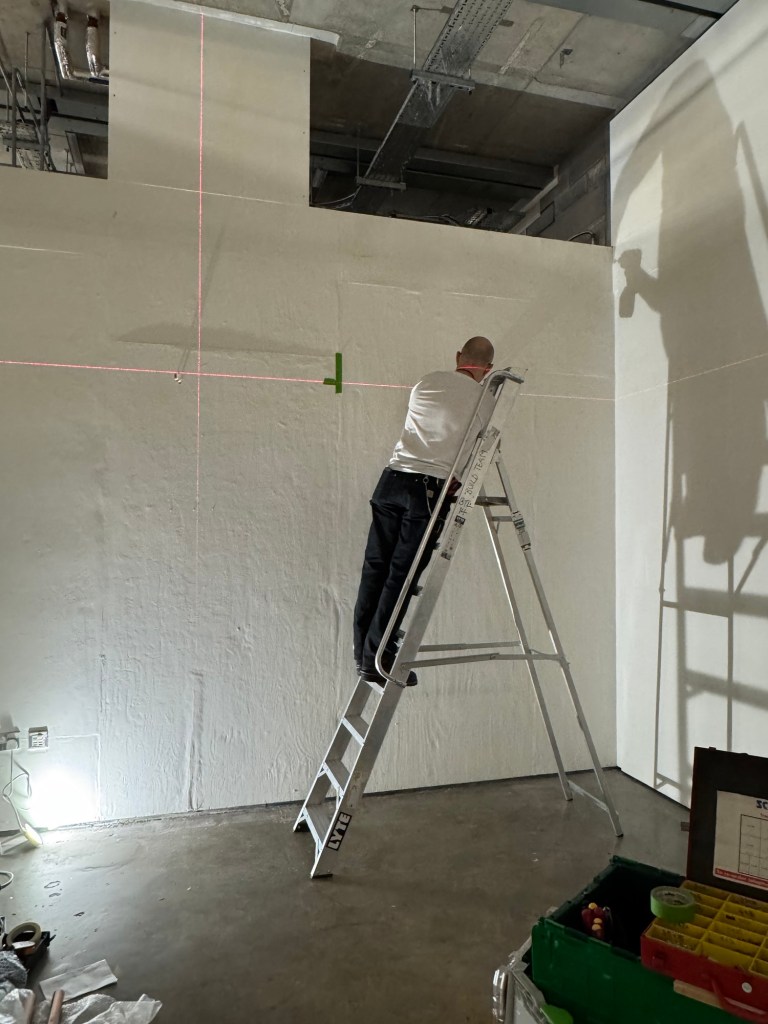
The technician used a laser levelling device to mark out the drill positions which made it a quick process:

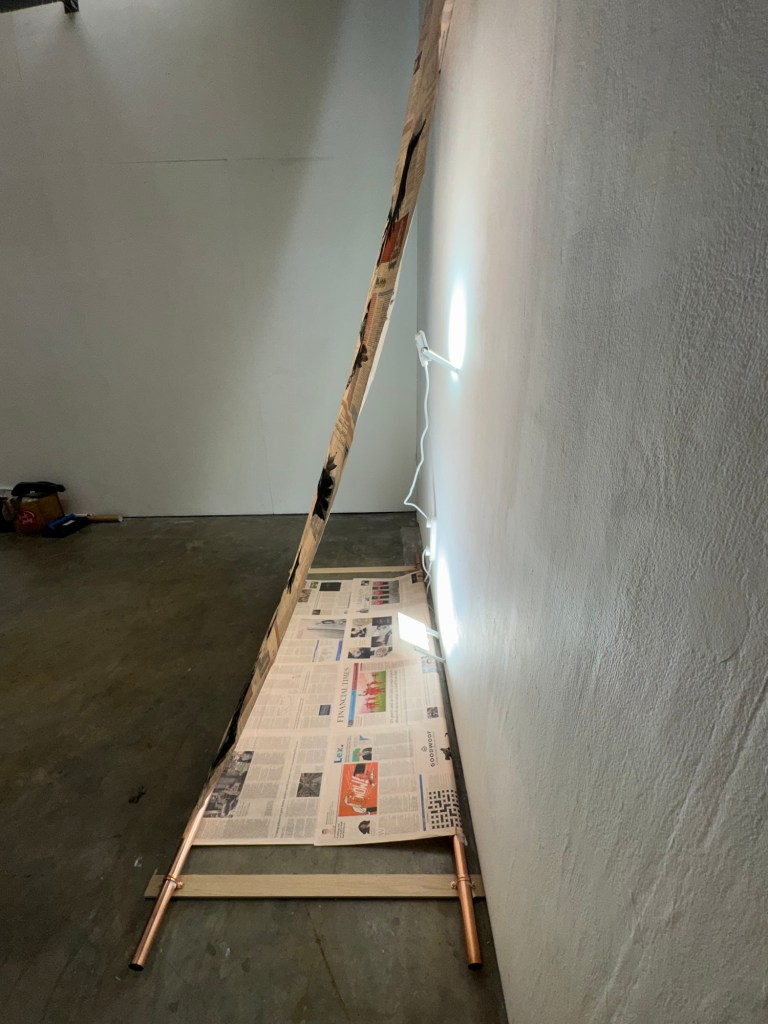
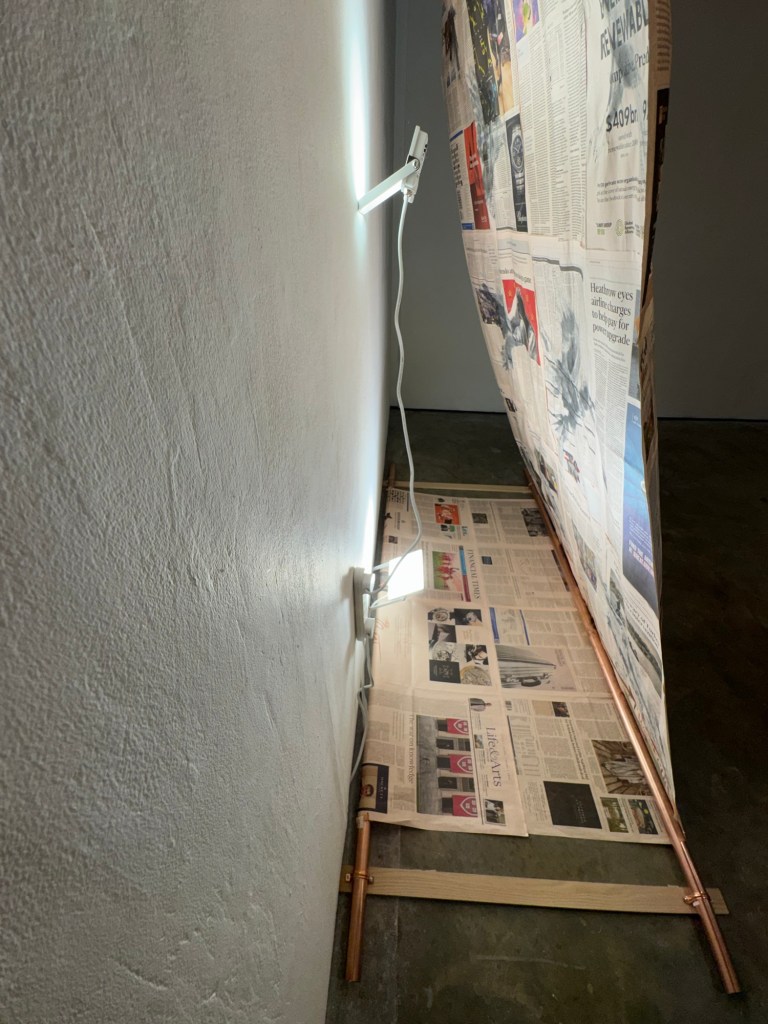
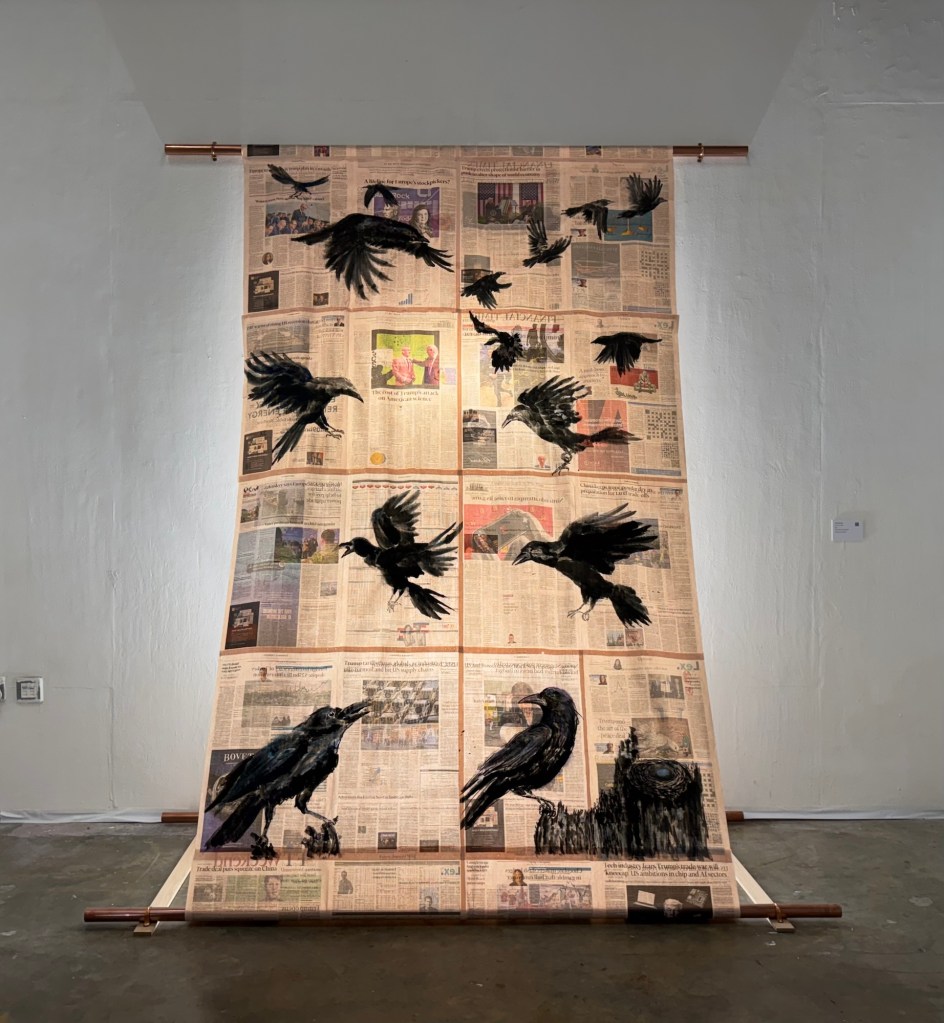
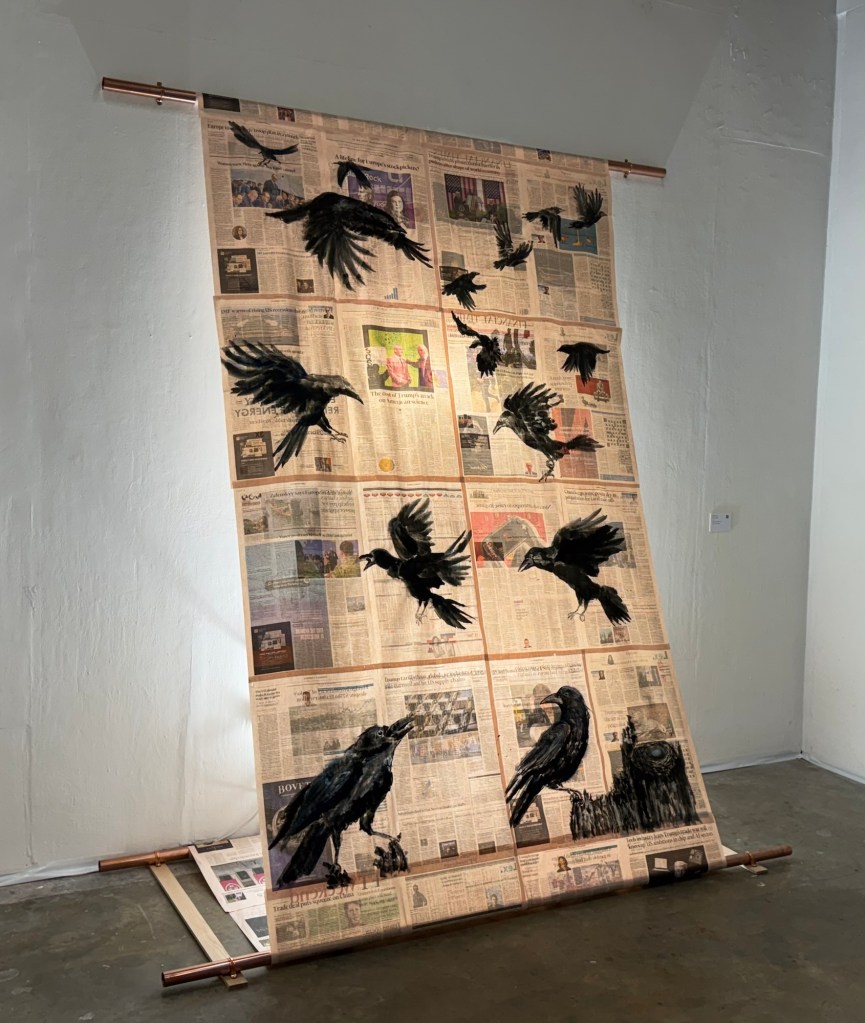
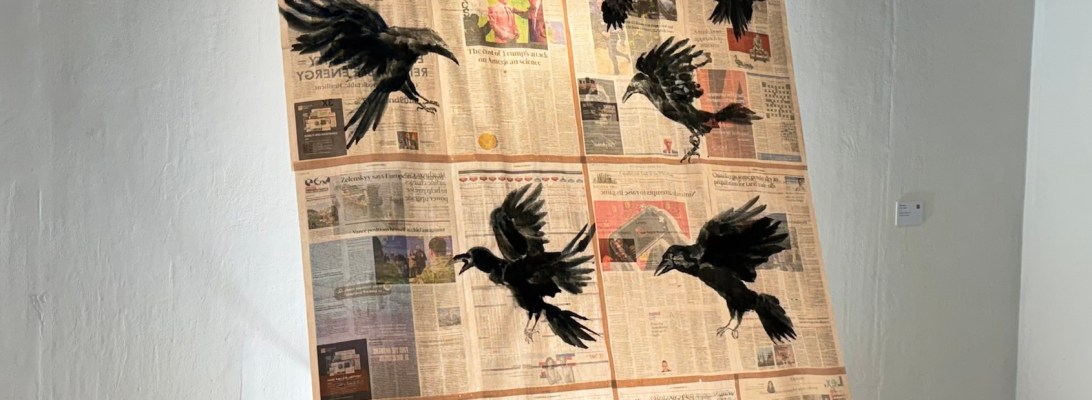
After mounting the top-bar, the two floor bars and planks were installed. That was straight forward. Then a key part was the back-lit using flood lights. I had to decide on the power rating and whether to use one or two units. After some trials I decided to use a 50w LED light near the bottom and a 20w light around half way up. This created a uniform spread of light onto the artwork and not patches of light.

The completed installation:

The artwork label stated the name of the art work and that it was painted with my non-dominant hand because I received some feedback that the non-dominant hand element was lost in the piece and I should make that clearer. Hence I decided to state that on the label.

REFLECTIONS

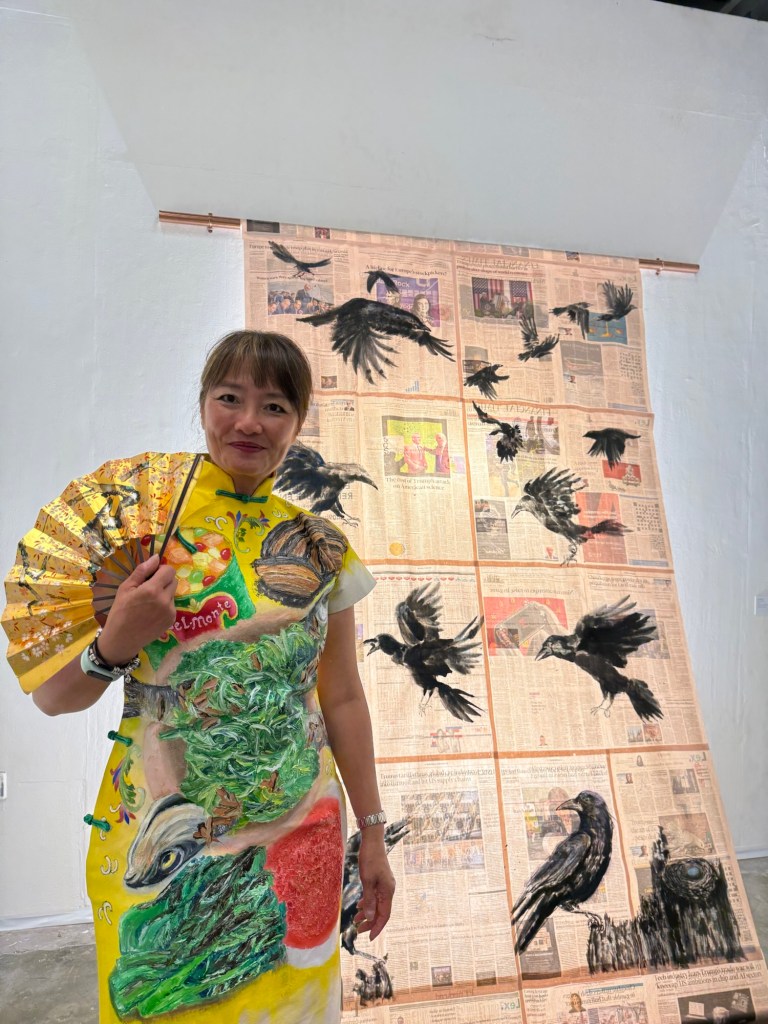
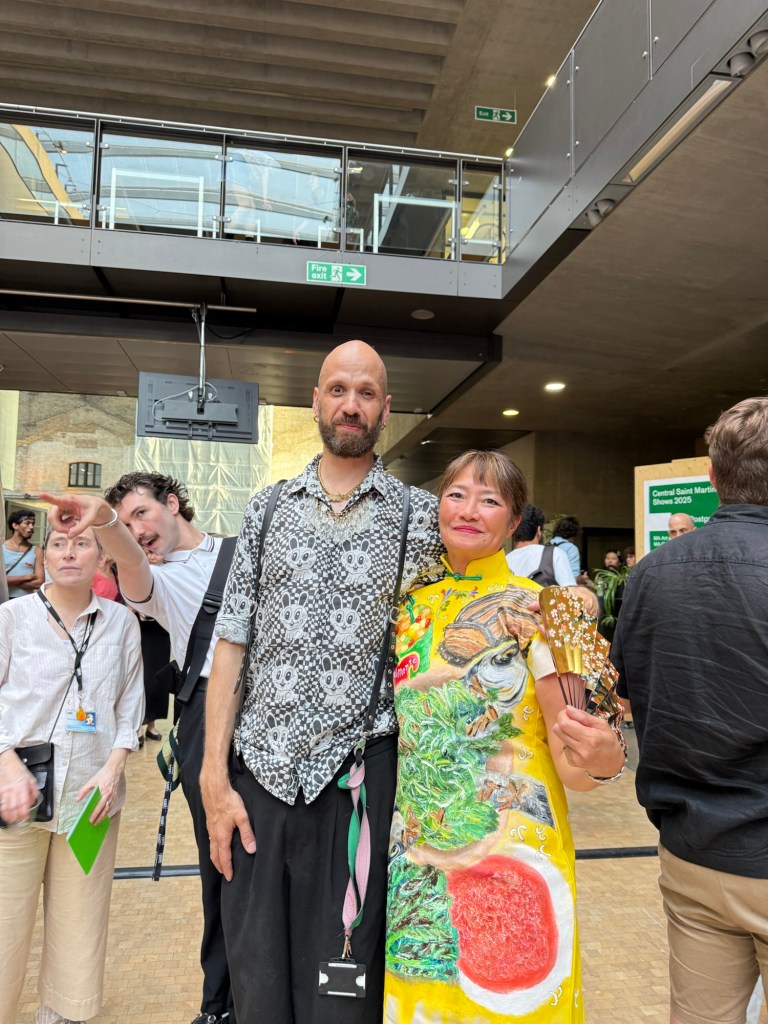
I have thoroughly enjoyed the show – both the install and the show. I wore my Family Dinner Cheongsam painting on the PV night and I enjoyed the compliments and the feedback. During the show, I have at times stood back from my News work and observed visitors looking at my work. It was satisfying when they stopped by, looked carefully and closely to the work. The experience confirmed to me that I enjoyed showing my work. Not necessary wanting people to say ‘it’s amazing’ but I wanted people to think it’s a thoughtful or clever idea, more so than ‘it’s a beautiful painting’ because it was never intended to be.

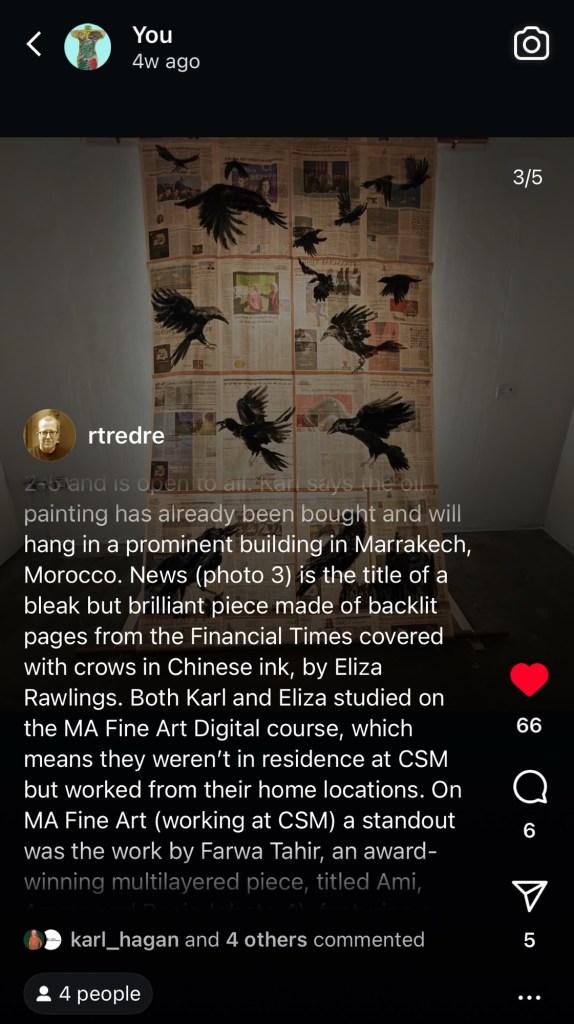
The most satisfying feedback I received was from this person ‘rtredre’ (a CSM MA course leader) on his Insta account. He described my piece as ‘bleak but brilliant’ and I was one of four pieces of work that he picked out from the show. I was delighted by this feedback and his description was exactly what I wanted – it was meant to be bleak and I was flattered that he thought it was brilliant.

I had a few conversations with visitors, excluding friends and family, the following conversations were the most notable:

-A curator/culture manager who was working on his PhD in London. He had a good look at the piece then asked me to explain to him which I did. His feedback was that he got what I wanted to convey from the work itself and my explanation just reinforced it which was good to hear. He also advised me, as a curator, to spend time making work and be true to myself, I.e. not to let anyone (galleries etc.) to push me in specific directions.

-A management consultant who enjoyed arts and talking to artists. She liked my work and encouraged me to start collecting email addresses to form a database for circulating newsletters or inviting to future shows. She gave me her details for us to stay in touch.

-A CSM tutor who liked the way I painted with Chinese ink and she felt my use of the non-dominant hand was very interesting and worth further exploration.

-Another CSM tutor who talked to me about Iain McGilchrist’s work on the divided brain – again referring to my use of the non-dominant hand as an interesting area.

I feel that the overall show was a success and I was happy about how everything went. I was pleased with the preparation I did beforehand and minimised any last minute panics on site. I feel that many other artists were much more relaxed and left a lot of decisions till they were on site. I think in the short term, I would still work the way I have because not being completely prepared might cause me too much stress. Being prepared helped me to enjoy the experience and I guess that’s just who I am.

As for my work, I feel there is still much work to be done on ‘News’ and I have not reached the end of this project yet. With much of the world still in turmoil, I feel there is still more to say for me and I will continue. Perhaps think about a more ambitious way of showing the work from an installation perspective. I feel that my engineering and metal fabrication experience could enable me to do a more complex installation.

LEARNING

-I enjoy showing my work and talking to visitors about my work. I think I was at times still talking like a student or ‘beginner’ and didn’t convey the confidence that I should feel or that I actually felt deep down. I should find opportunities to talk about my art and develop a confident way of talking about my work.

-Some of the conversations with visitors were encouraging in that they talked about my future shows like it was a given that I would do more shows. That was very encouraging.

-My work was picked out by a CSM MA course leader among three others – two of them were winners of top awards from the show. That gave me a new level of confidence as an artist.

-With several people mentioning that my use of non-dominant hand was interesting from an academic research perspective, I felt excited by those conversations and I will explore the subject further as part of my practice research.

-I feel there is still much work to be done on my project ‘News’ – perhaps choose another topic to focus on for a change but remaining with the ‘News’ concept. Use my engineering knowledge to design more complex installations.

NEXT STEPS

-Create opportunities to talk about my work in a more professional way. Perhaps start with talking to artist friends. Or do more videos where I talk about my work. I have been used to talking professionally about my business in my ‘previous corporate life’. I would never have talked in an ‘uncertain or apologetic way’, so perhaps I could channel some of those skills for talking about my art. I am a professional artist now after all!

-Research about the use of my non-dominant hand – both in practice research and academic reading. Explore more non-dominant hand vs dominant hand making – study myself to see what I find. For academic reading – start with Iain McGilchrist’s work.

-Continue to make more ‘News’ work, explore other news topics.

-Explore more ambitious way to show the work in terms of installation – use my engineering skills.

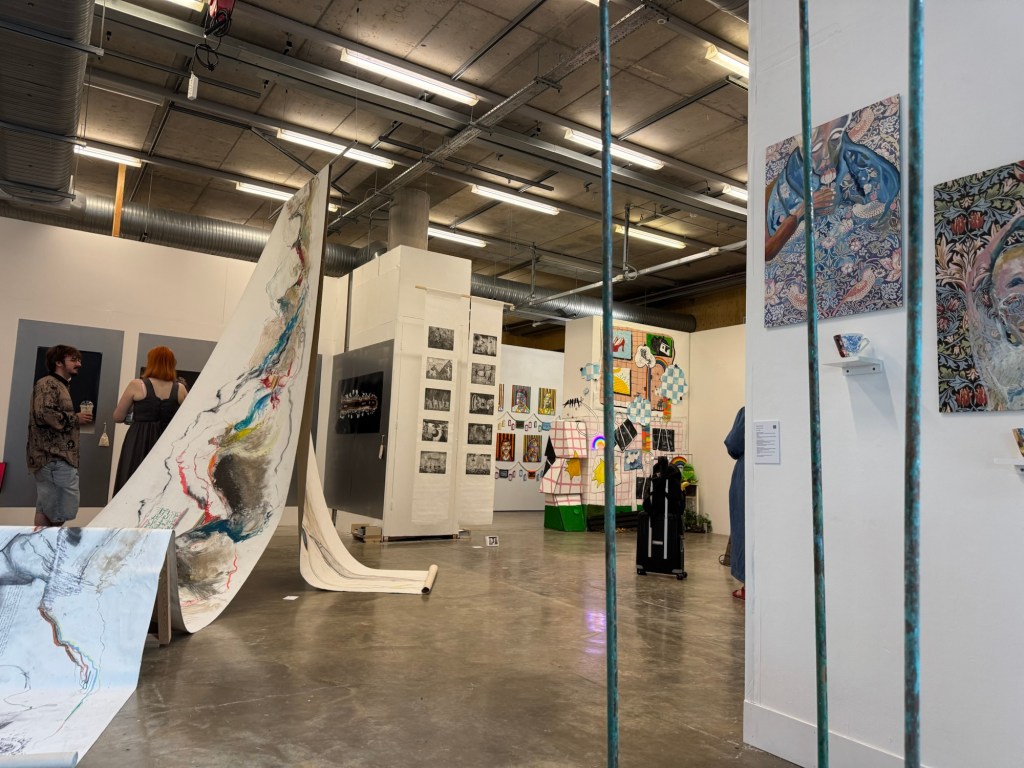
Some photos from the Show: