EXPERIENCE
In the last few months, I have been making paintings on Cheongsam shaped canvases. The idea came to me when I accidentally found my mother’s Cheongsam in my attic. The shape of the dress is so iconic and I am so fond of the Cheongsam that I felt compelled to do something with it.
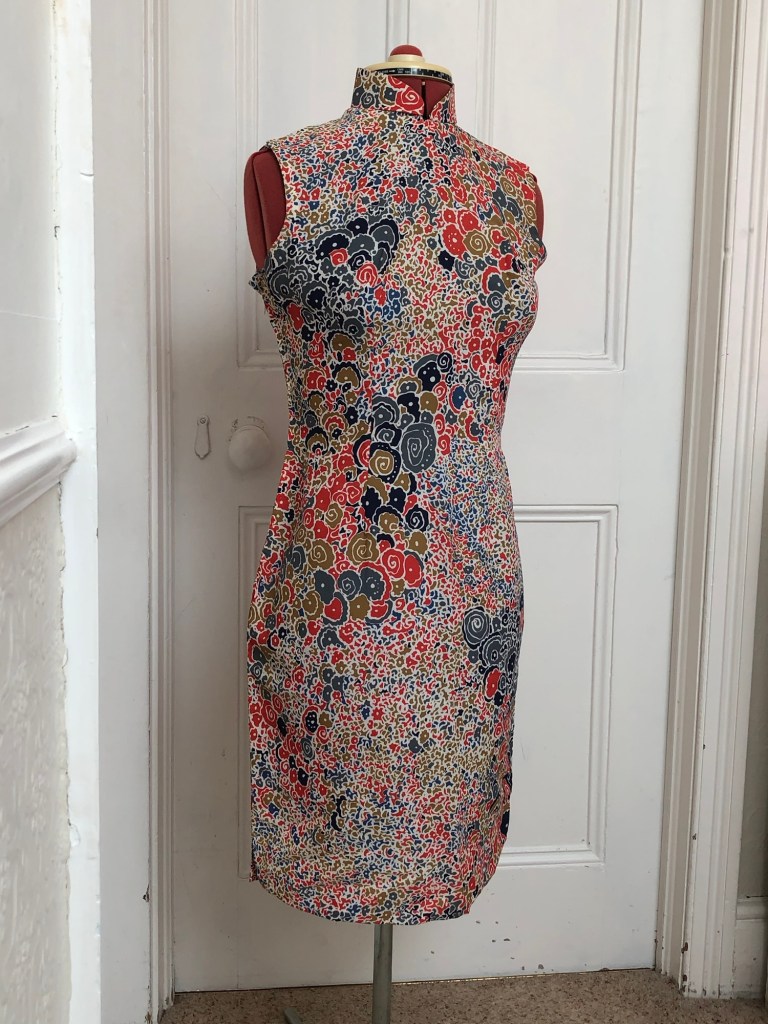
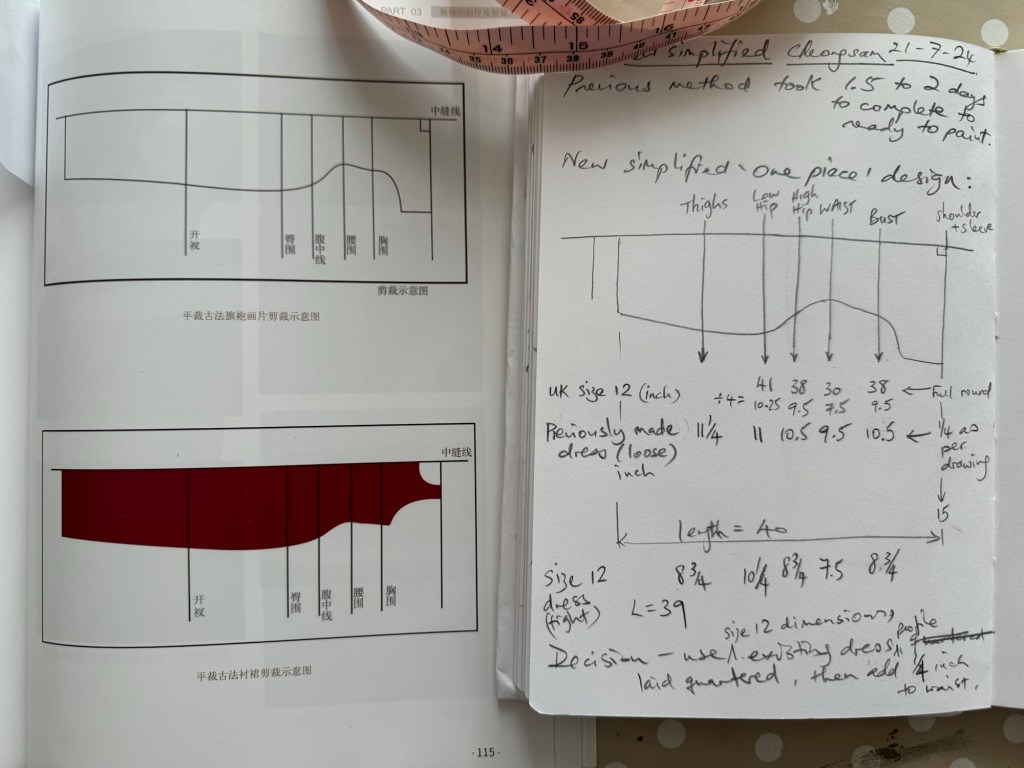
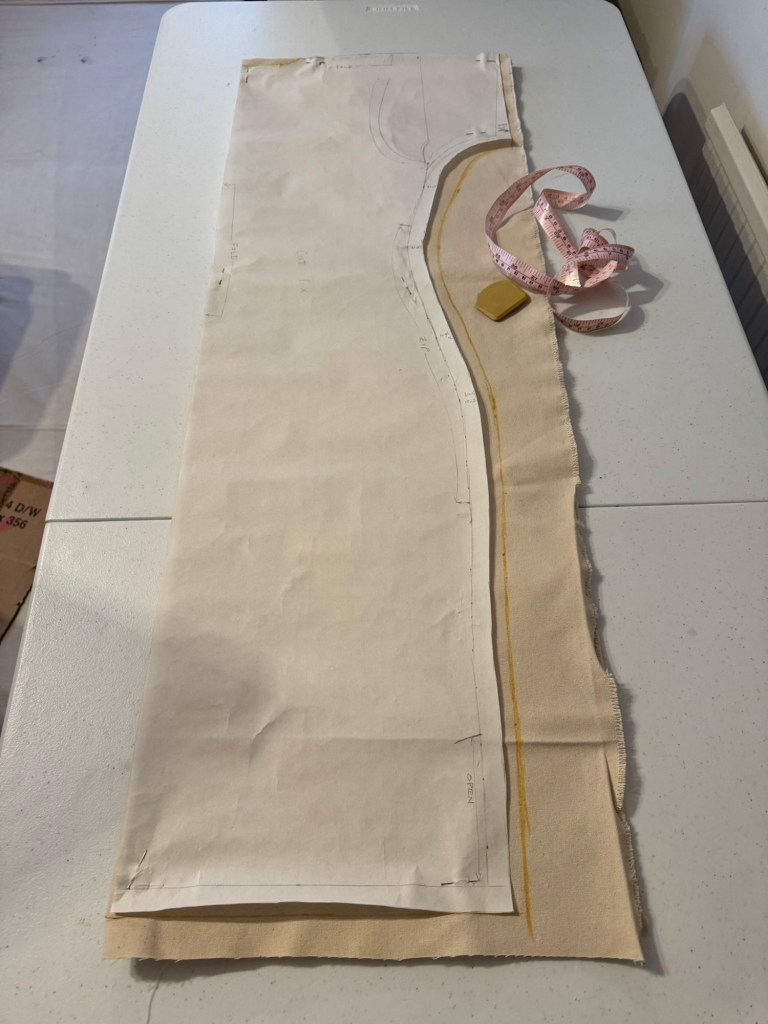
I made painting canvases in the shape of a Cheongsam and developed the dress pattern over time to create a design that was quick and easy to make.
Below are the Cheongsam paintings that I made and each has been documented with its own blog, so I will not elaborate on the background and my reflections. It’s just a quick list and recap here.
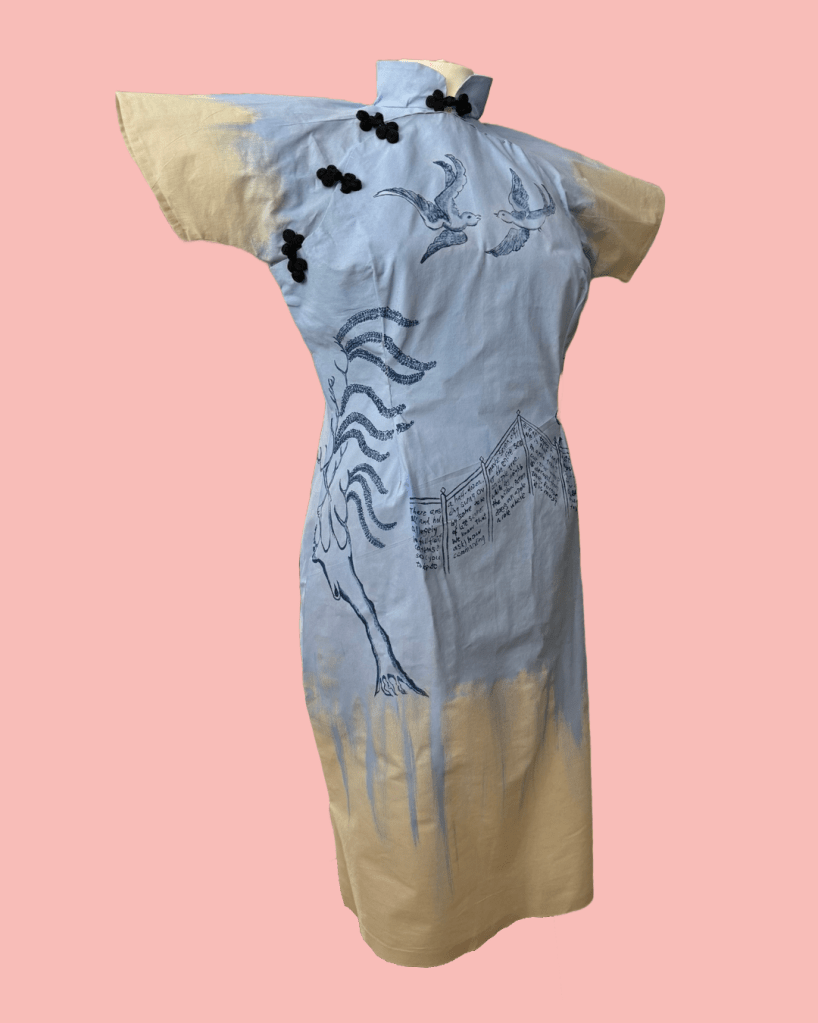
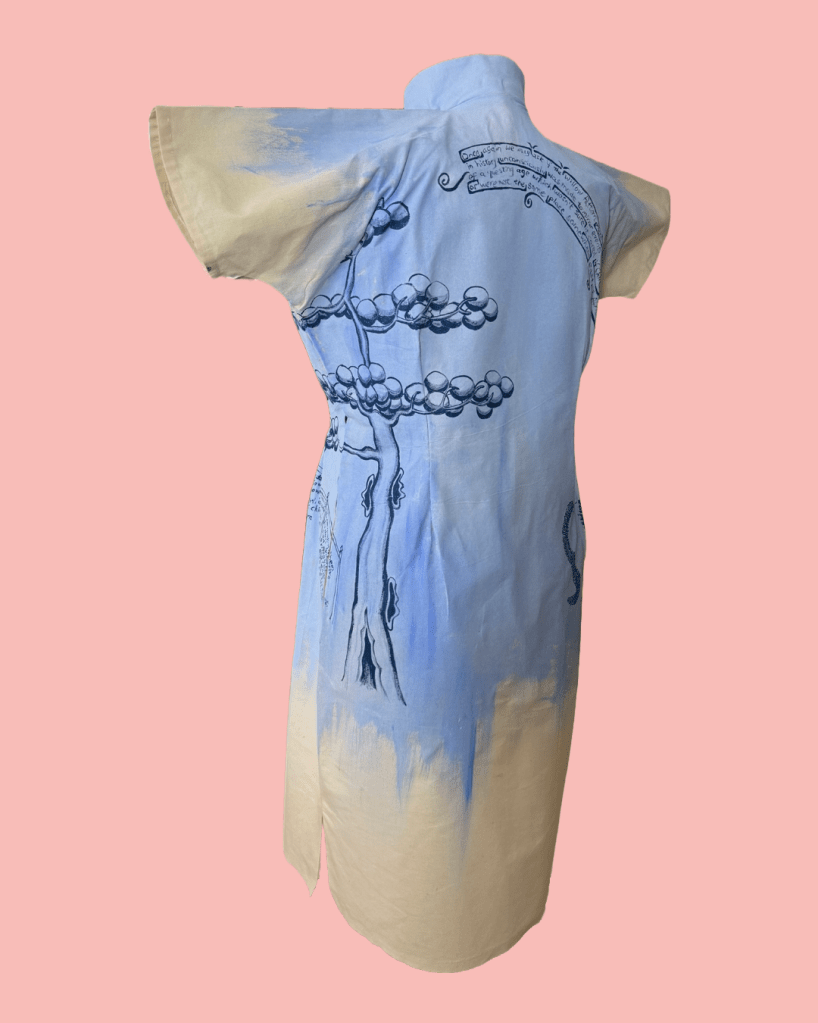
The first Cheongsam painting was my response to the traditional Blue Willow pattern. It was painting in acrylic on calico canvas:
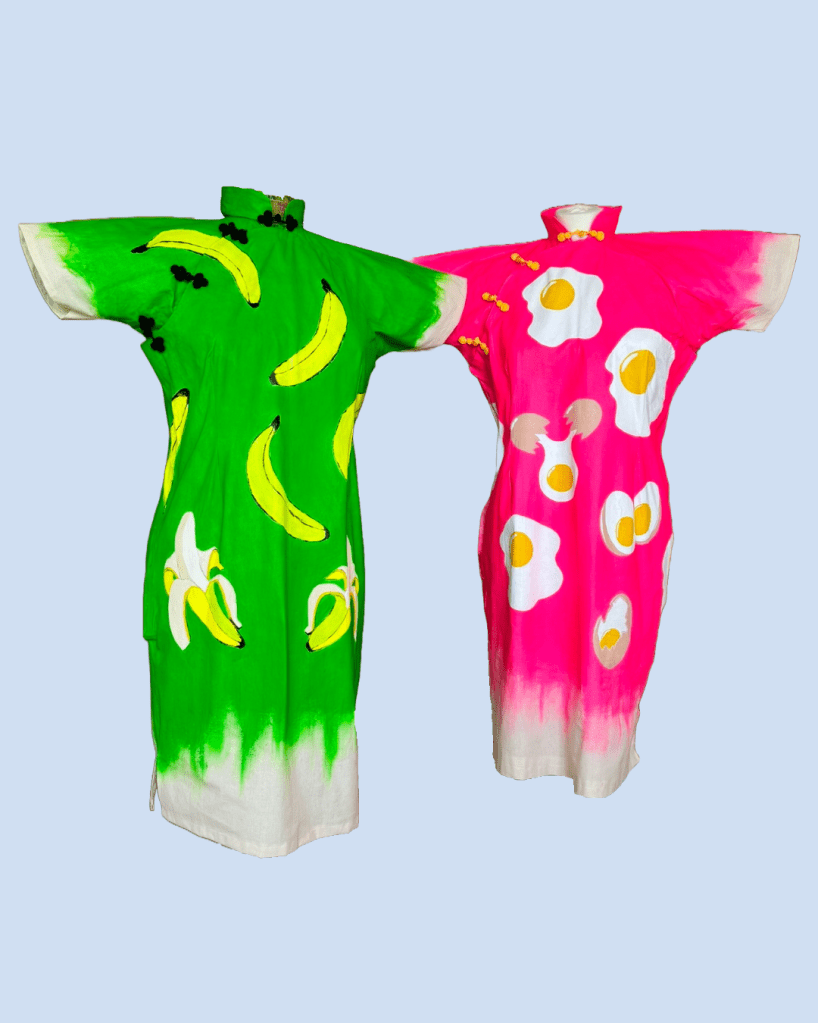
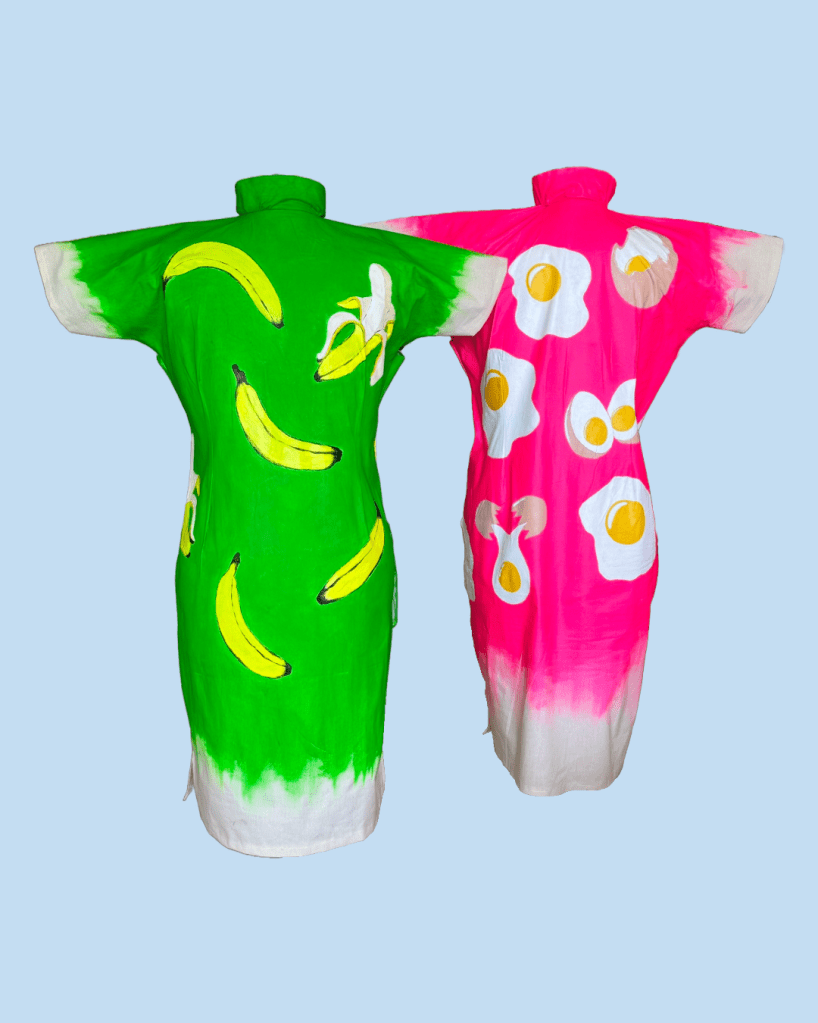
The second and third Cheongsam paintings are also acrylic on calico canvas and are intended to be shown as a pair (diptych). They depict food used as a racial identity metaphor. One is called ‘You’re a banana’ and a response to it called ‘No, I am an egg’.
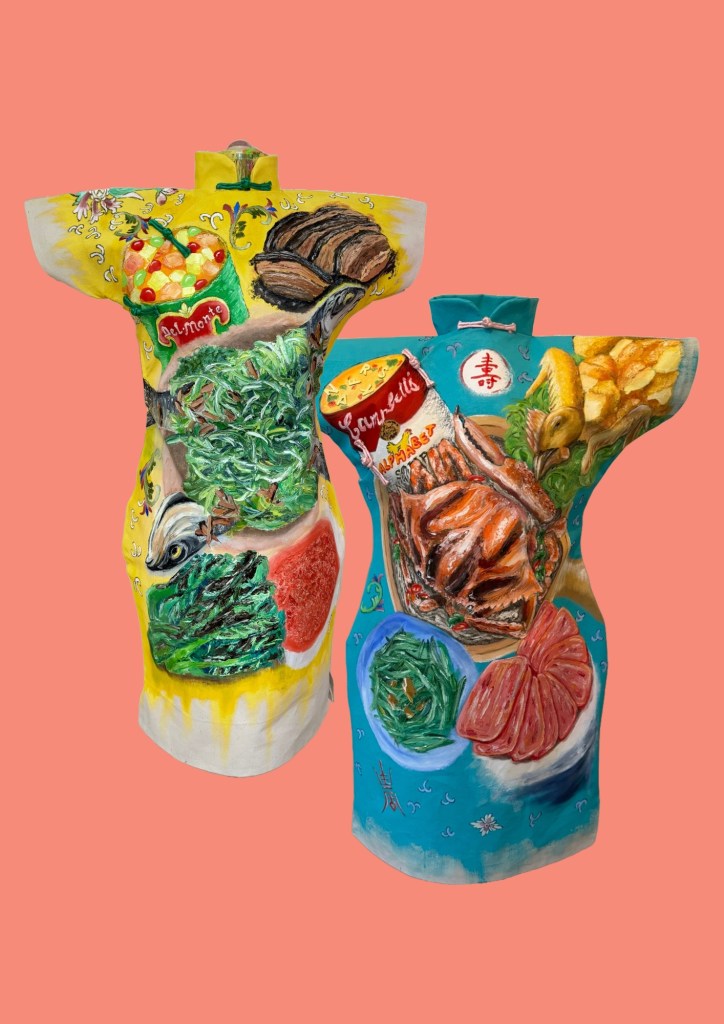
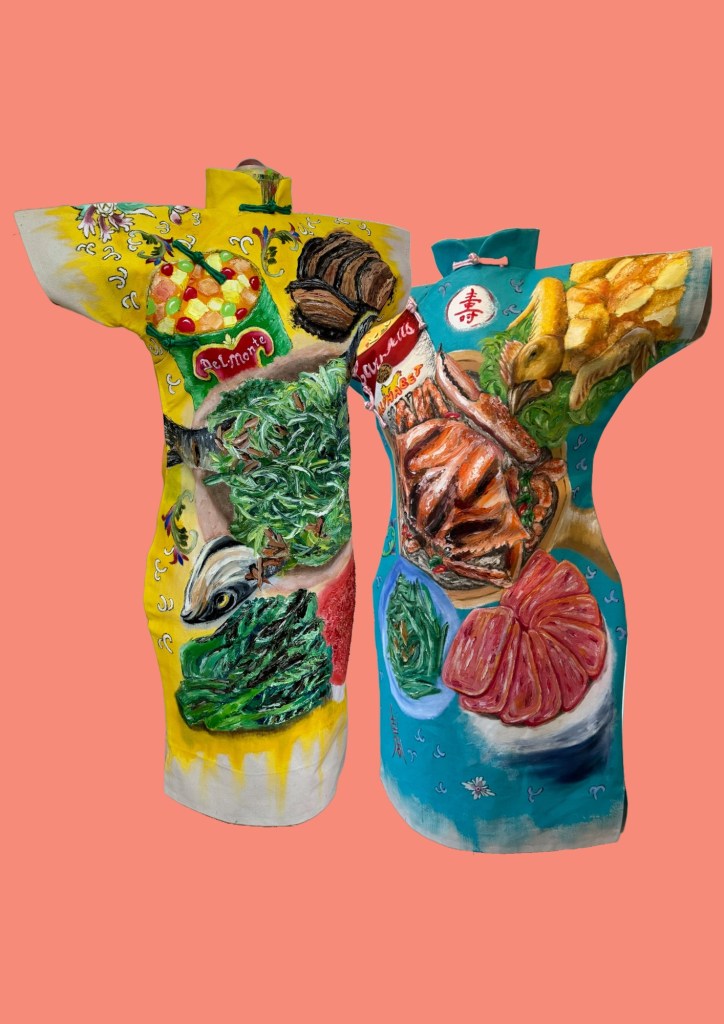
The final pair of Cheongsam paintings are Family Dinners #1 and #2, depicting my childhood family dinners while growing up in Hong Kong. Both are oil on cotton canvas.
REFLECTIONS
I have thoroughly enjoyed making the Cheongsam paintings because:
– They are something different. They brought a new dimension and energy to my practice.
– I felt they could help me to make my work recognisably mine. This was an objective I set for myself in my study statement.
– I have enjoyed the dressmaking element. The technical discovery has been rewarding. The process of dressmaking reminds me of my childhood watching my mother making dresses. Brought back many memories.
– I enjoyed the challenge of making 3D paintings. I had previously explored the subject of expanded painting and I was pleased to return to that kind of work.
– I enjoyed exploring food as identity metaphor. It has opened a whole can of worms that has required more thinking and research that are ongoing.
– I enjoyed painting the dinners very much. I love painting in oil and food brings me much pleasure – both eating and painting them. Food is such a large part of my Hong Kong Chinese culture that painting them onto a Cheongsam canvas felt particularly meaningful. Afterall the trigger for painting on Cheongsam canvases came from finding my mother’s dress and she was the one who created all the lovely dishes that we ate. Cooking dinners for her family was such a large part of her daily life that it would be impossible to think about her and my family without thinking about her food. When I meet up with my sister nowadays, we mostly seem to talk about food and each dish would lead us into reminiscing about different stories from our childhood.
– I had intended to make more and more Cheongsam dresses for the remainder of my MA course to build up a collection for the final year degree show. However, my thinking has changed since receiving my Unit 2 feedback.
– My Unit 2 feedback made me think more deeply about why I am painting on Cheongsam dresses. Why dresses? Why Cheongsam and is the time well-spent in making dress-canvases? Shouldn’t I spend more time painting? There was a lot to think about and reflect on from the Unit 2 feedback and I have written a dedicated blog on that.
So where does that leave me and my Cheongsams?
I think I should pause on my Cheongsam paintings, because:
– I know I can make Cheongsam shaped canvases. I feel I have developed a good process for that. So I can return to that any time.
– However, I should spend more time on developing my painting techniques. Part of the Unit 2 feedback was about exploring different ways to apply oil. I have started experimenting with that and I should concentrate on that to build up my ‘painting vocabulary’. I do feel that I need to expand my vocabulary to take my work to the next level of expression.
– Part of my plan to expand my vocabulary is to understand more about Qi Baishi’s motto of ‘the marvel of painting exists between likeness and unlikeness’. This requires painting with sight as well as the heart.
– Right now, I feel that I would like to return to making Cheongsam canvases at some point, but I will pause that for now and focus on developing my painting techniques.
LEARNING
There has been much technical learning from the dressmaking that I will take to future projects, especially if I return to making Cheongsam canvases.
I have really enjoyed making the Cheongsam paintings, but that does not mean I have to keep doing them. It’s ok to do something else.
I should spend more time refining my painting skills and challenge myself in that area in order to progress my practice. Once I reach a higher level then I can apply those skills in so many different ways, can be on Cheongsams or anything else.
NEXT STEPS
Continue to build up my ‘painting vocabulary’ by expanding the ways I use oil.
Continue to research the meaning of Qi’s motto – working between likeness and unlikeness.
Pause making Cheongsam canvases – for now.
Do some paintings on 2D traditional canvases.
 elizarawlings