During the MA low residency at CSM in March 2024, we had a book art workshop where we learnt to make zines and some simple book. The artist hosting the session mentioned a book art event that takes place in Bristol once every few years. I was delighted to find that it was on this year and I attended the fair.
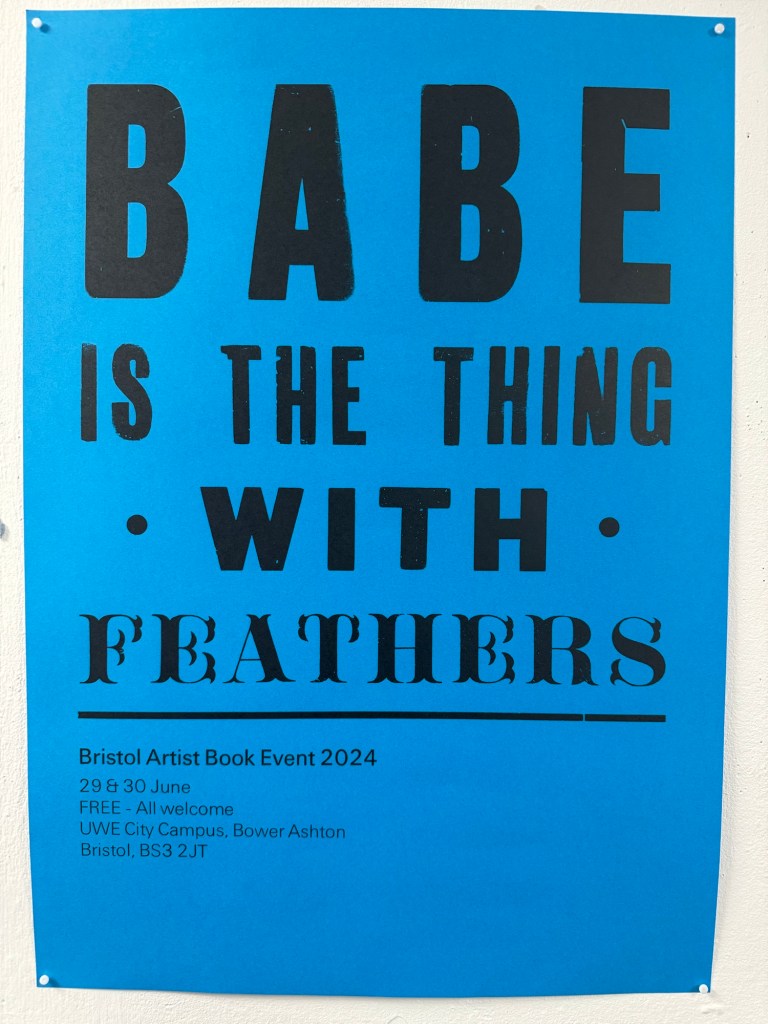
–
There were nearly 100 stands; it was a great opportunity to talk to and learn from experienced book artists. I came away feeling enthusiastic to try this beautiful art form.
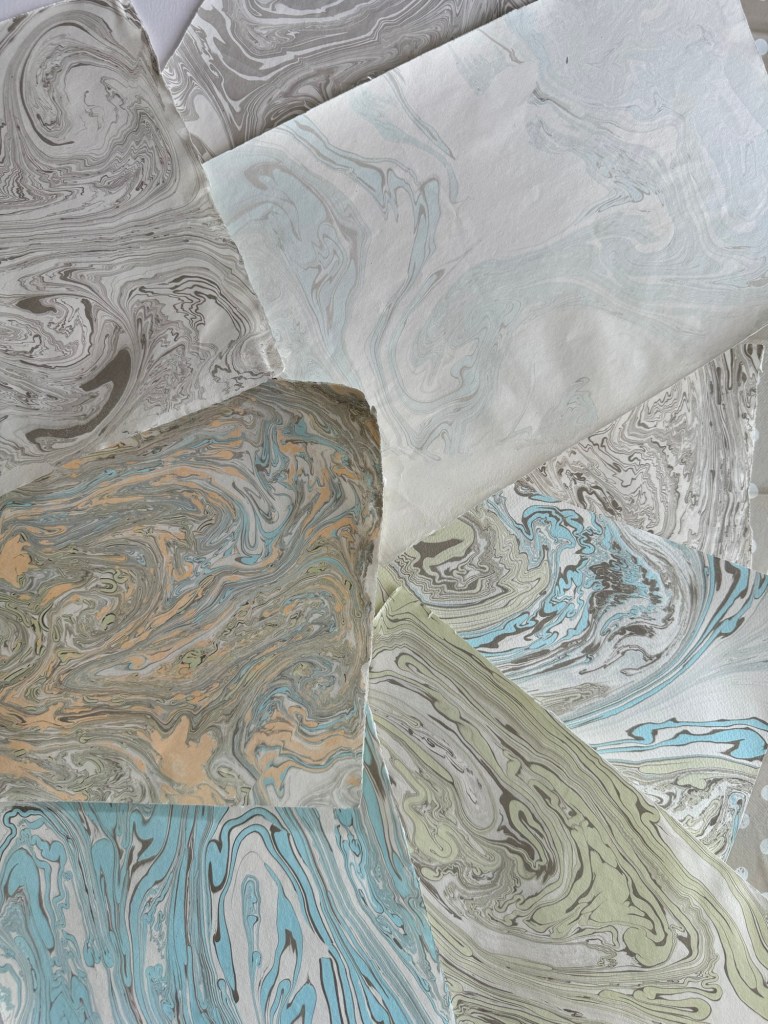
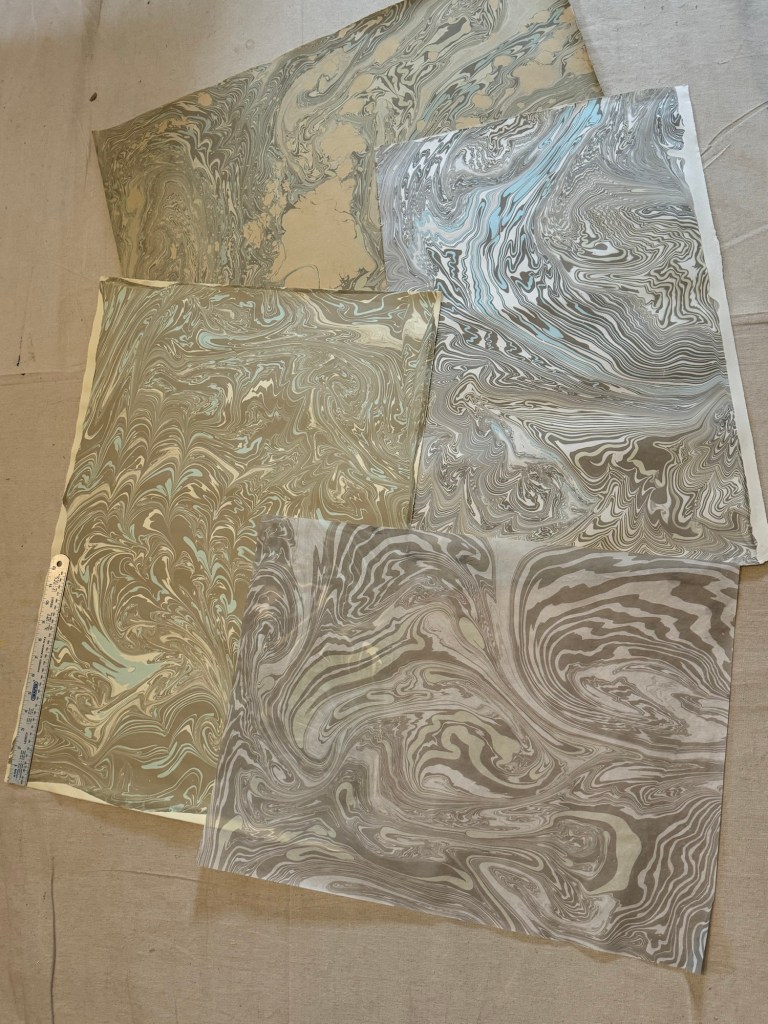
Another reason for my enthusiasm was that I recently attended a Suminagashi workshop. Suminagashi is an ancient Japanese technique of making handmade marble paper and washi by floating water-based inks on water, then laying the paper on top to absorb the ink and water pattern. See post:
Here are some of the Suminagashi paper that I made during the workshop:
METHOD
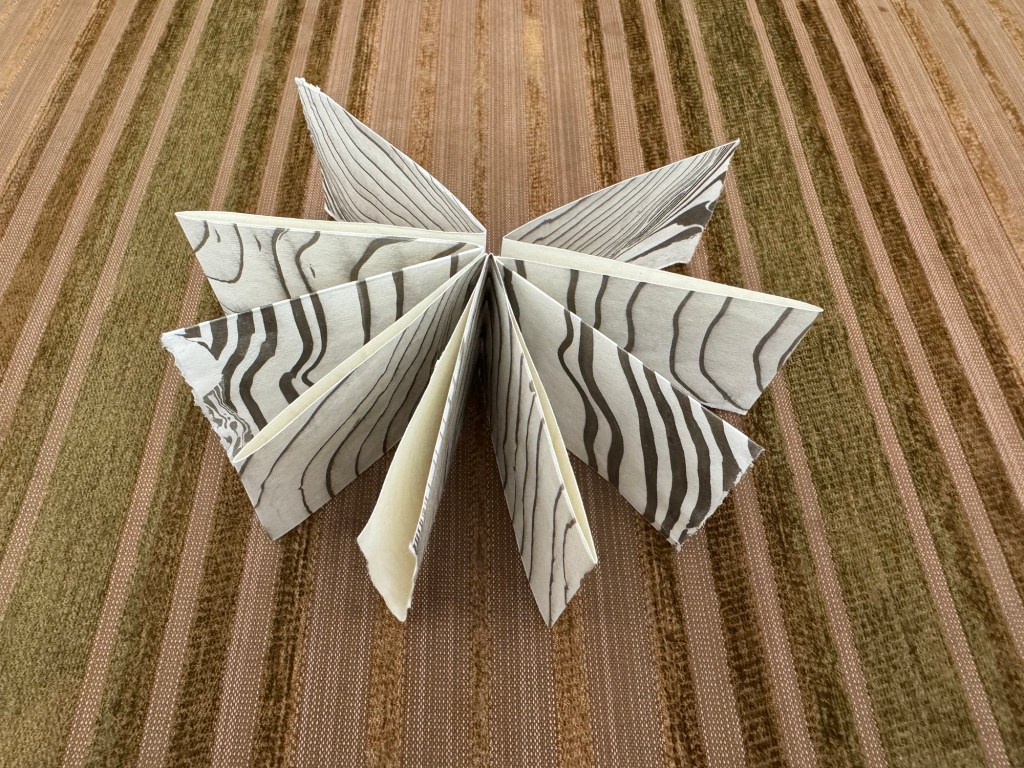
From the techniques learnt during the low residency workshop at CSM, I made a few different types of simple books using the smaller sheets of Suminagashi paper:
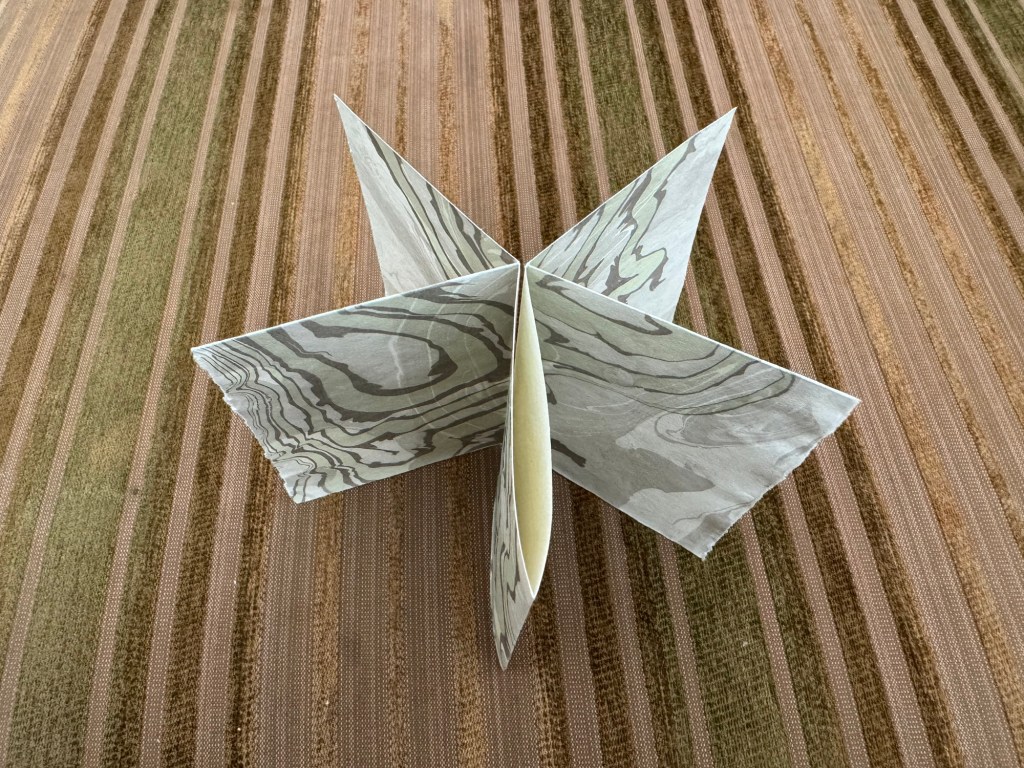
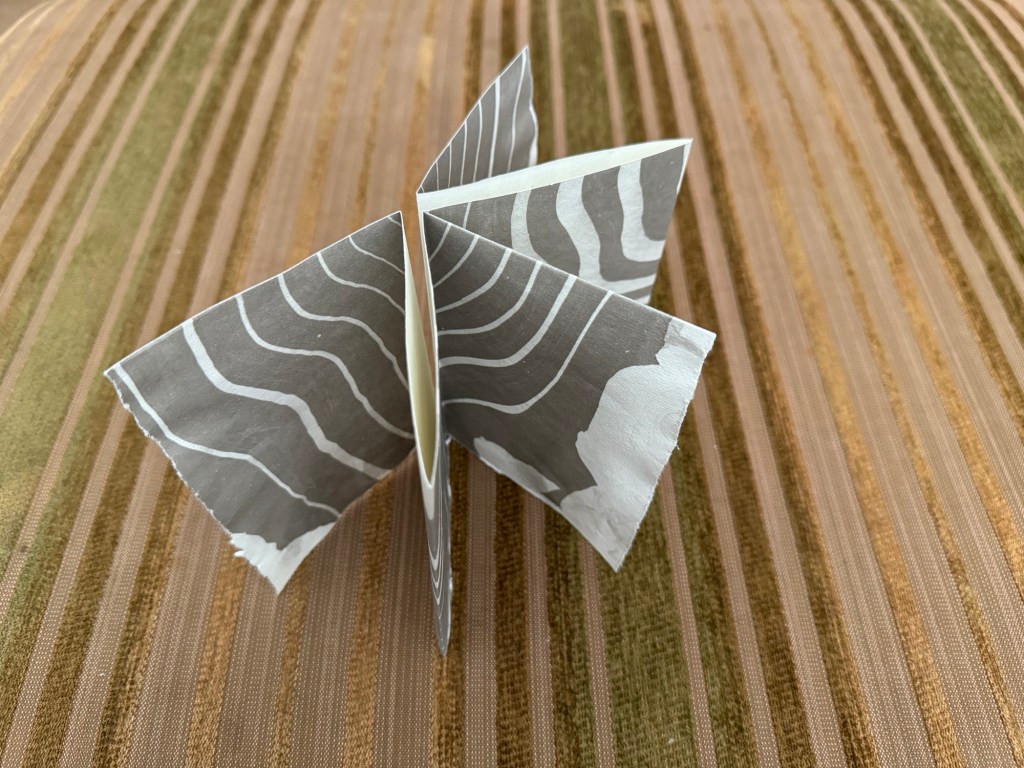
–
I experimented with some Chinese ink calligraphy on one sheet of paper, then folded it into a simple book:
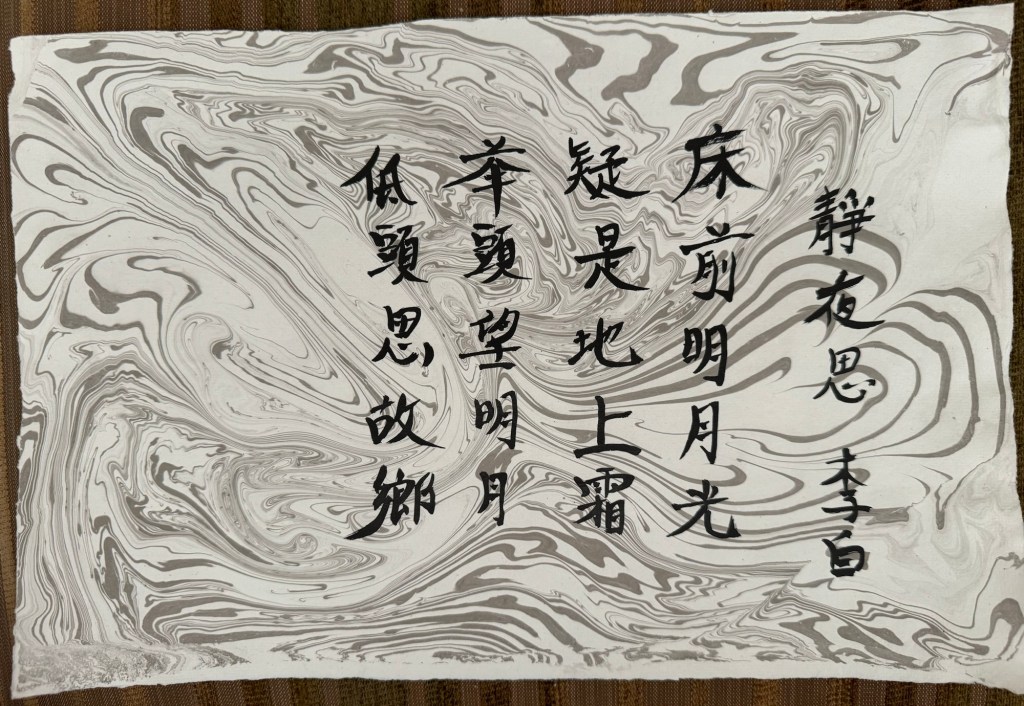
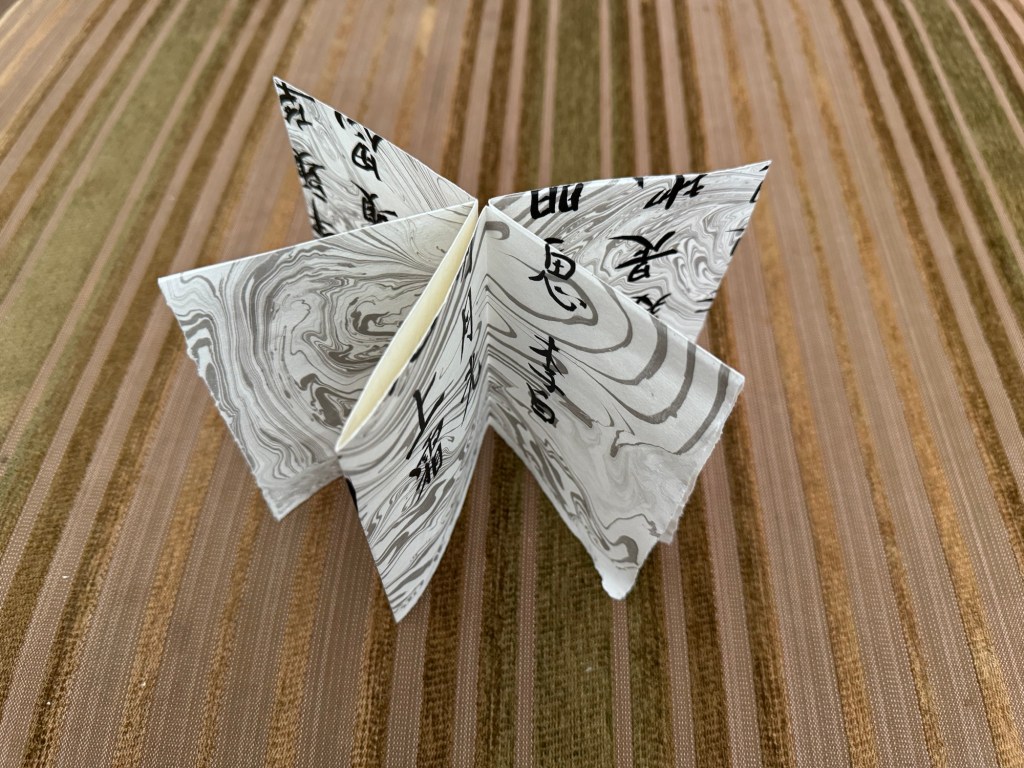
–
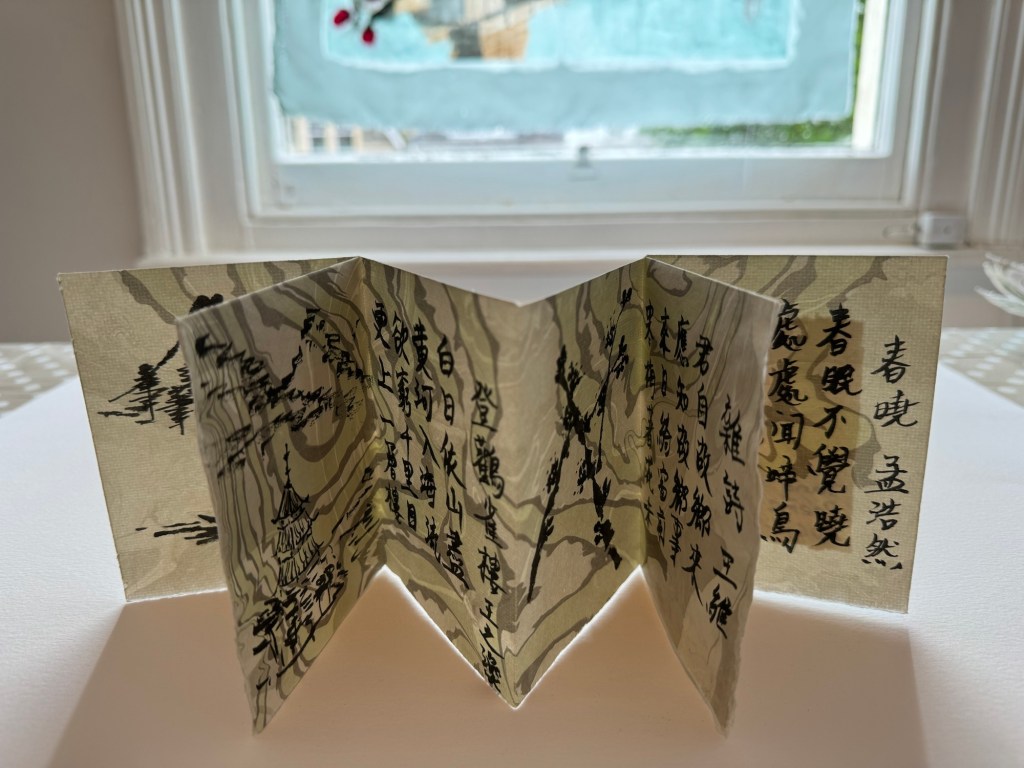
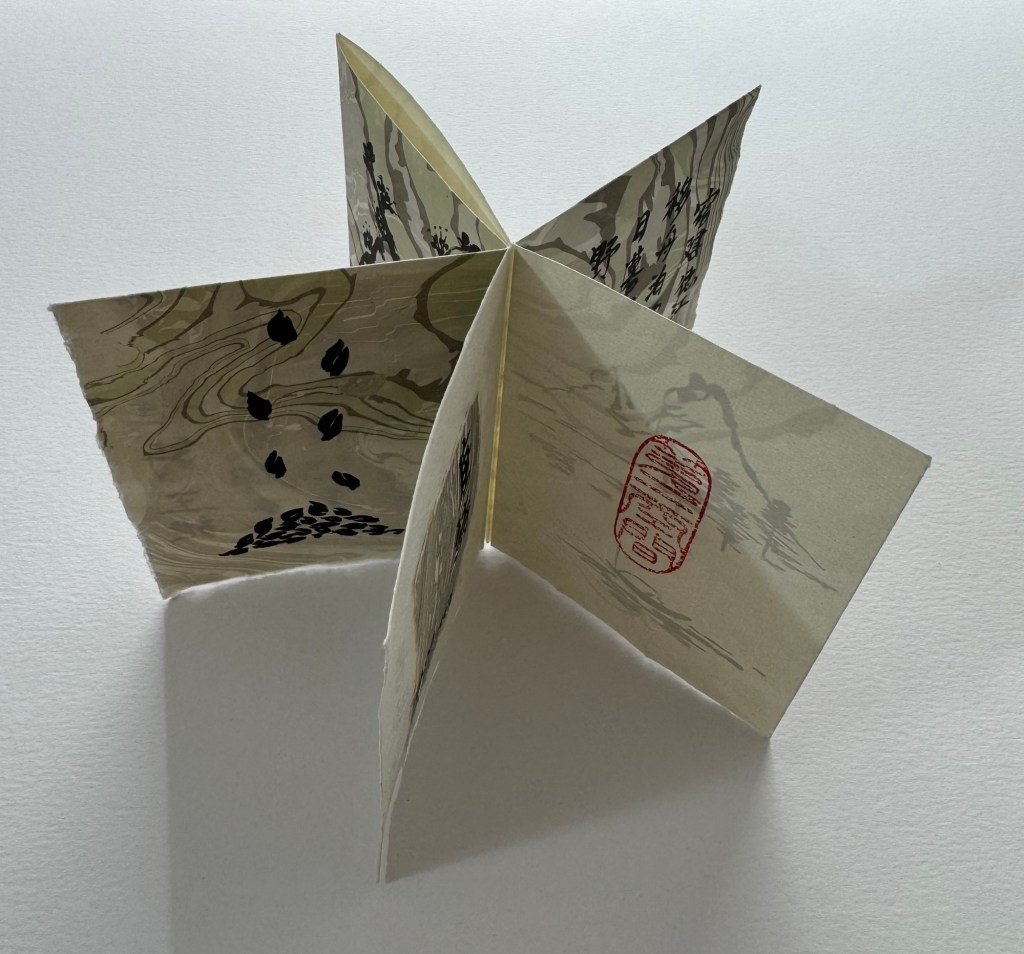
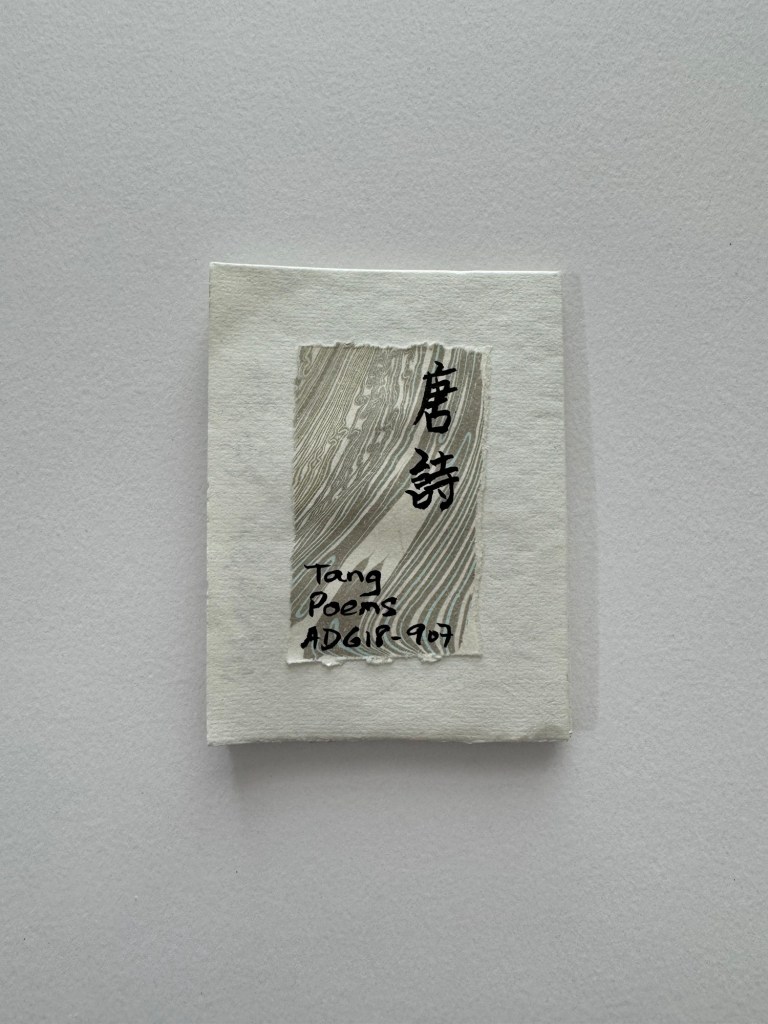
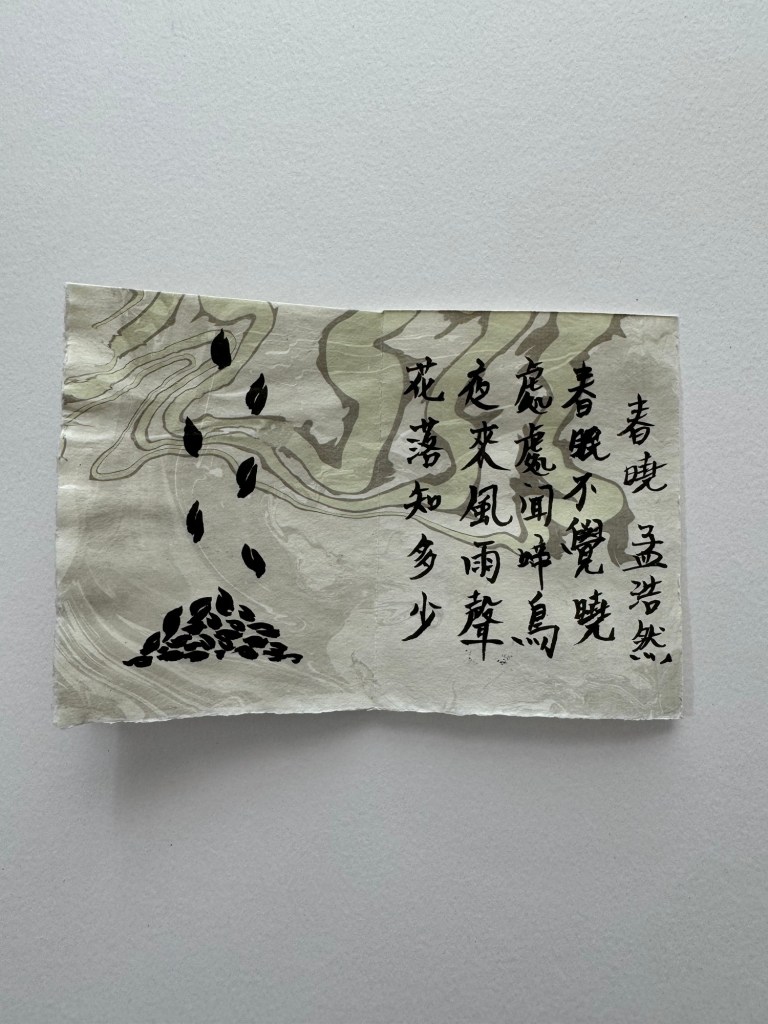
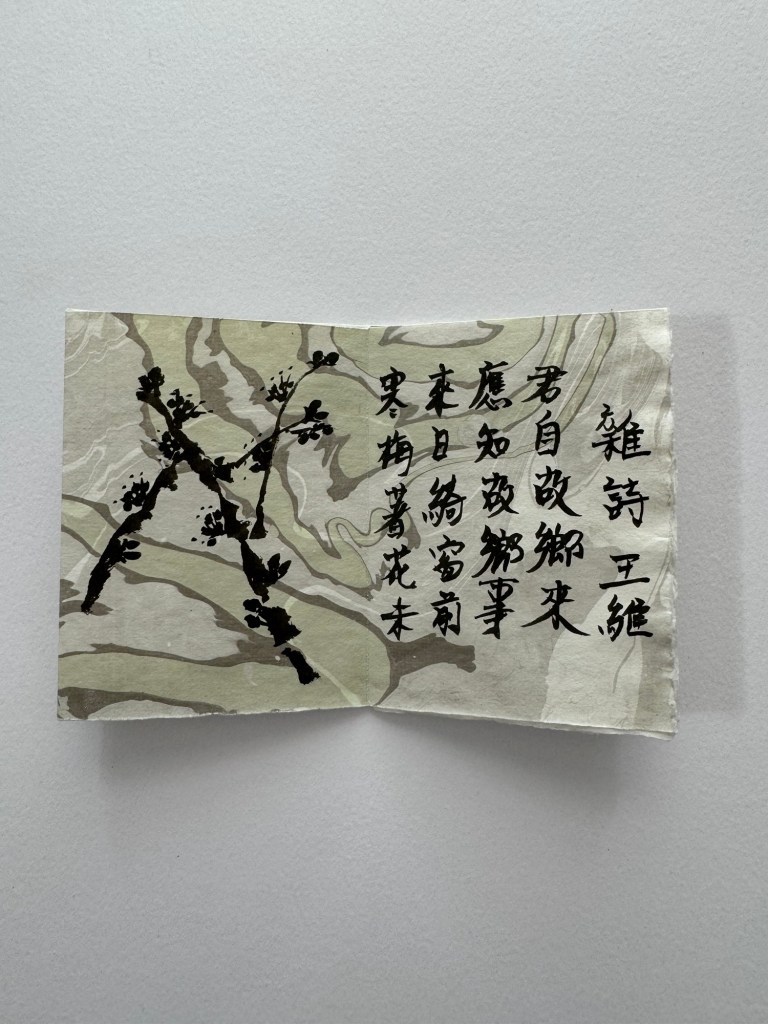
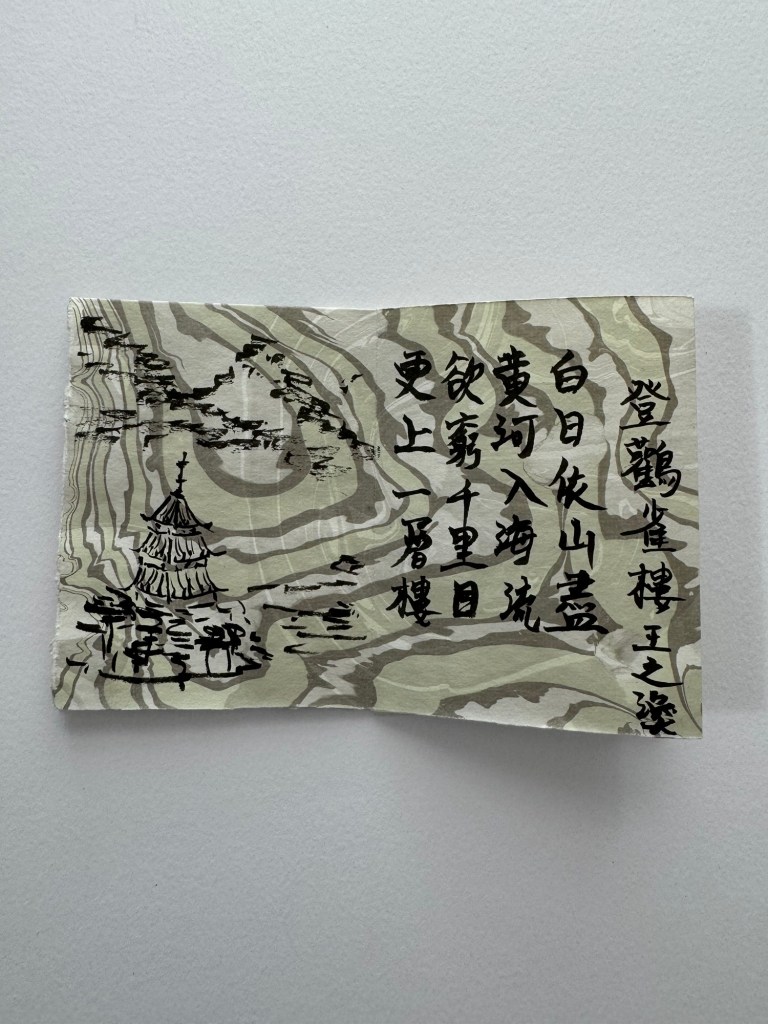
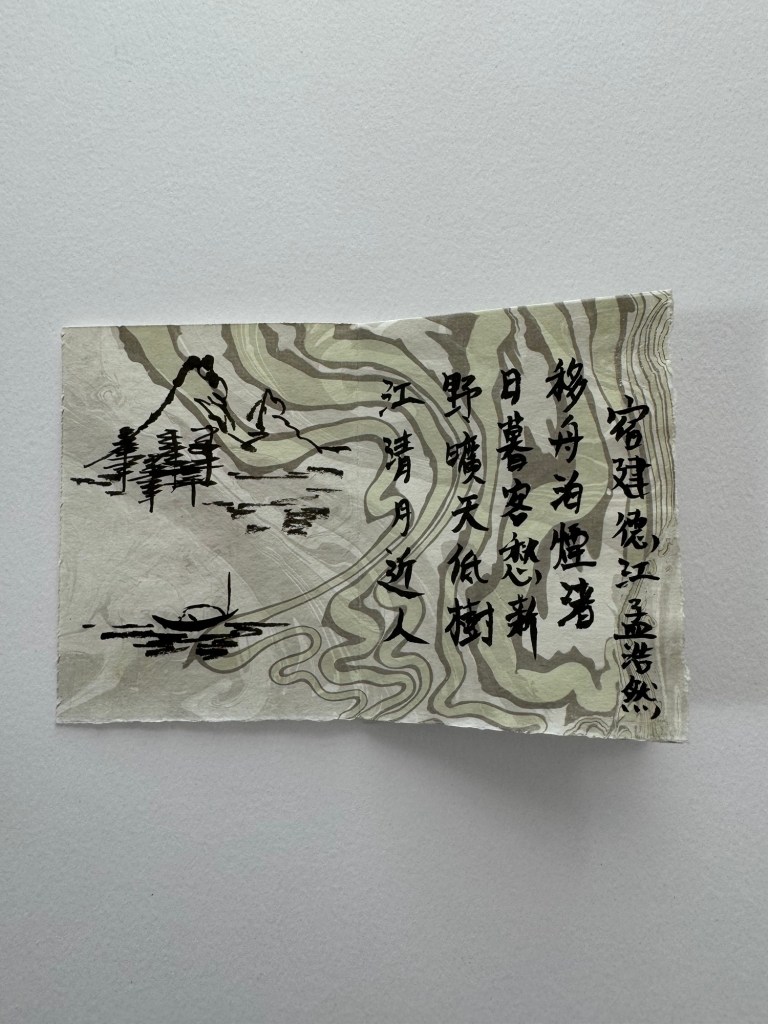
On another Suminagashi book that I made, I chose four Tang Dynasty poems and wrote them in the book using Chinese ink calligraphy, each paired with a small painting:
–
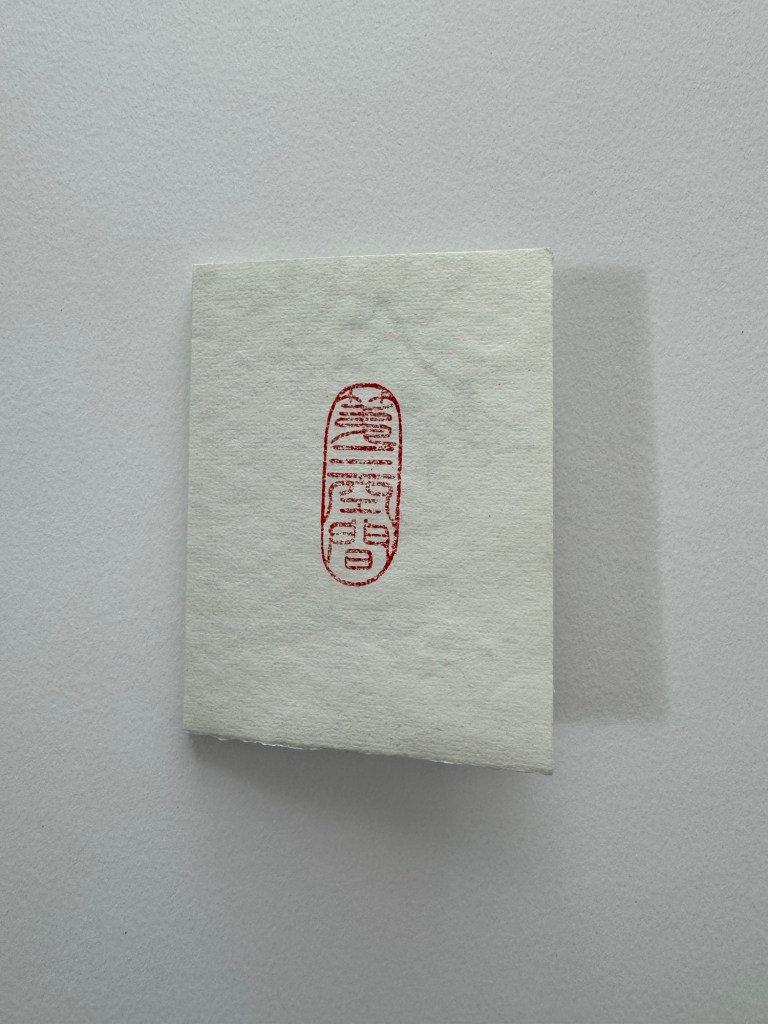
The seal on the last page of the book is a new Chinese stone seal that I designed. I managed to have it carved in Hong Kong and brought back to the UK by my Chinese painting tutor. The phrase on the seal means ‘The Third Space’, a concept that my art practice is based on so I will use it like my artist’s signature. The seal is carved in an ancient Chinese font.
Below is a video with my narration, reading out the English translation of the poems. Note that traditional Chinese books open from the opposite direction to English, Romance or Germanic language books:
–
REFLECTIONS
I was really inspired by the visit to the book art fair. It helped me to understand how broad the scope of this art form can be. I knew very little about book art until the low res workshop earlier this year and I am excited by it. I enjoyed making the simple books in this exploration, especially using the Suminagashi paper. Here is a summary of what I enjoyed about this exploration:
– I enjoyed the quiet pleasure in the act of folding paper carefully, especially with beautiful paper such as the Suminagashi paper. The feel of the material surface, the edges and creases all added to the meditative effect that this art form has to offer.
– I enjoyed learning a new skill in making books. Although I am only making very simple ones at the moment, I am excited by the potential complexity and scope that book making can offer. It is new knowledge and a new challenge for me.
– Once a book is made, it is like having a new canvas calling out for creativity that requires a new way of thinking compared to my other work.
For me, it is a two stage process: (1) Think about how I want ‘the canvas’ to be and realising that idea through physical making; then (2) express my art on the made canvas. The stages are similar to the Cheongsam (Chinese dress) canvases that I have been making for painting. That approach also requires creating a 3D canvas first through a step-by-step ‘technical’ process before any drawing or painting can take place.
The similarities between my book-making and dress-making to create canvases only occurred to me during the writing of the above reflections. I was beginning to feel concerned that I might be going from one thing to another too soon in my practice. I am not dropping the dress-making work, in fact, far from it – I have planned many other projects based on Cheongsam canvases. But I also want to explore book art and I now realise the similarities between the two in the context of my practice. I believe it can be explained as follows:
– The book-making or dress-making processes start by my following some guided steps, this way of making gives me a structured approach to starting a project. Meaning, it is unlike just getting out a plain sheet of paper or a pre-made blank canvas where you are immediately faced with having to decide what to paint. Through the structural and systematic start of the creative process (i.e. making a book or a dress), I can proceed to create ‘productively’ and while I am making the ‘complex canvas’, I can think about what to paint on the canvas or to finalise the ideas in my head. The process of making the canvas (which in the case of a dress can take several days) gives me quality thinking time whilst doing something productive and not just sat in front of a blank canvas feeling bad that nothing was happening.
LEARNING
Attending the book art fair taught me a lot about the scope that this art form can offer. In my own experiments, I have learnt more about the art of making books from a technical perspective – I am at a very early stage right now but I definitely want to learn more to make more complex or larger books.
My reflections above made me realise that the process of making the canvas myself (e.g. a book or a dress) has been a key part to my enjoyment in making art recently because I have been using the canvas making time and process to aid my thinking and to finalise my creative ideas. I have been doing this without consciously knowing it. I value the fact that making items such as a book or a dress are established processes and therefore give me a secure and stable route to start each piece of work. On the contrary, if I were to create a completely free-form assemblage from found items as a starting point, I would be inhibited by such an open and abstract process at the beginning of a piece of work – I would not know where to start and therefore it would be like sitting in front of a blank canvas again. This realisation is very important and useful for me because I can now think about other potential canvases that I can make from an established method in order to expand my practice.
NEXT STEPS
– Continue to make books and learn about book making to expand my knowledge.
– Think about other canvases that I can create in addition to books and dresses that would enable me to have the quality thinking time as part of my creative process and to avoid the ‘starring at a blank canvas’ problem.
UPDATE:
I made another book using a piece of Suminagashi paper folded into a small long book. In it, I wrote four short Tang Dynasty poems in Chinese calligraphy and coloured some areas using Chinese painting colour.

 elizarawlings