Following on from Cheongsam Series #2, the plan was to create a wearable painting in the form of a Cheongsam. I have little experience in dressmaking but I remember watching my mother make dresses when I was young. She was a very talented dressmaker and I used to enjoy watching her work. I vaguely remember my grandmother being a dressmaker, too, so I guess my mother must have been inspired by her mother. I also learnt sewing at school so I have some knowledge of the process. I started to research how to make a Cheongsam.
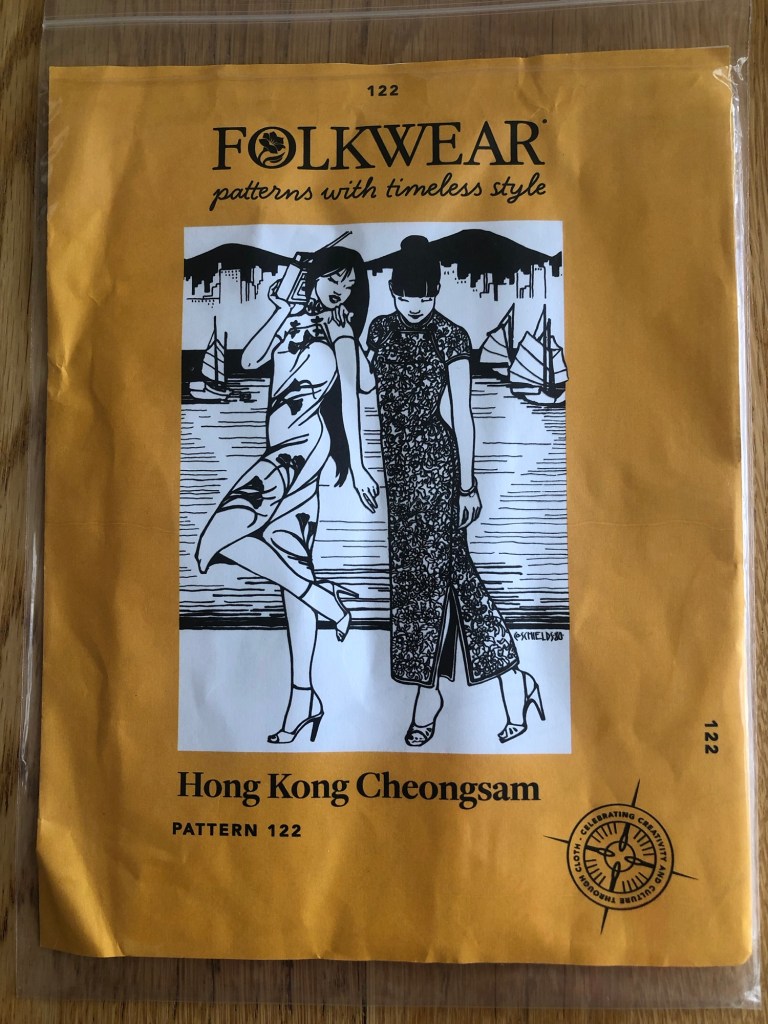
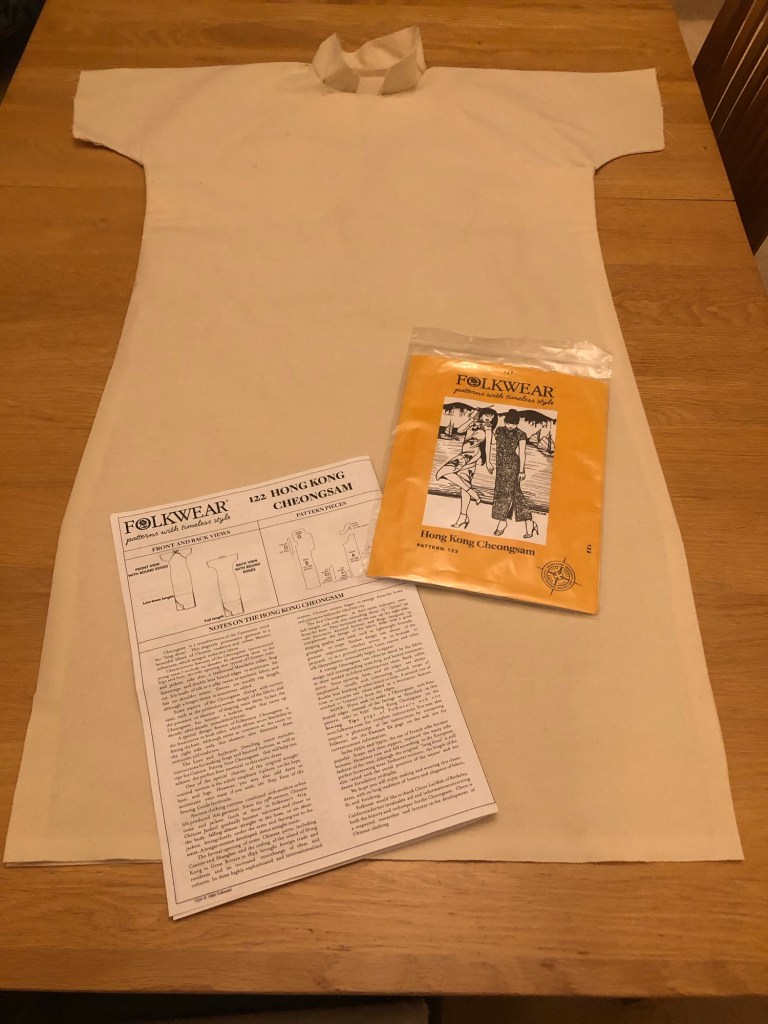
I researched different sewing patterns online looking for one that’s not too complicated and I managed to find one. The reviews of the pattern suggested it was easy to make and I ordered one.
METHOD
–
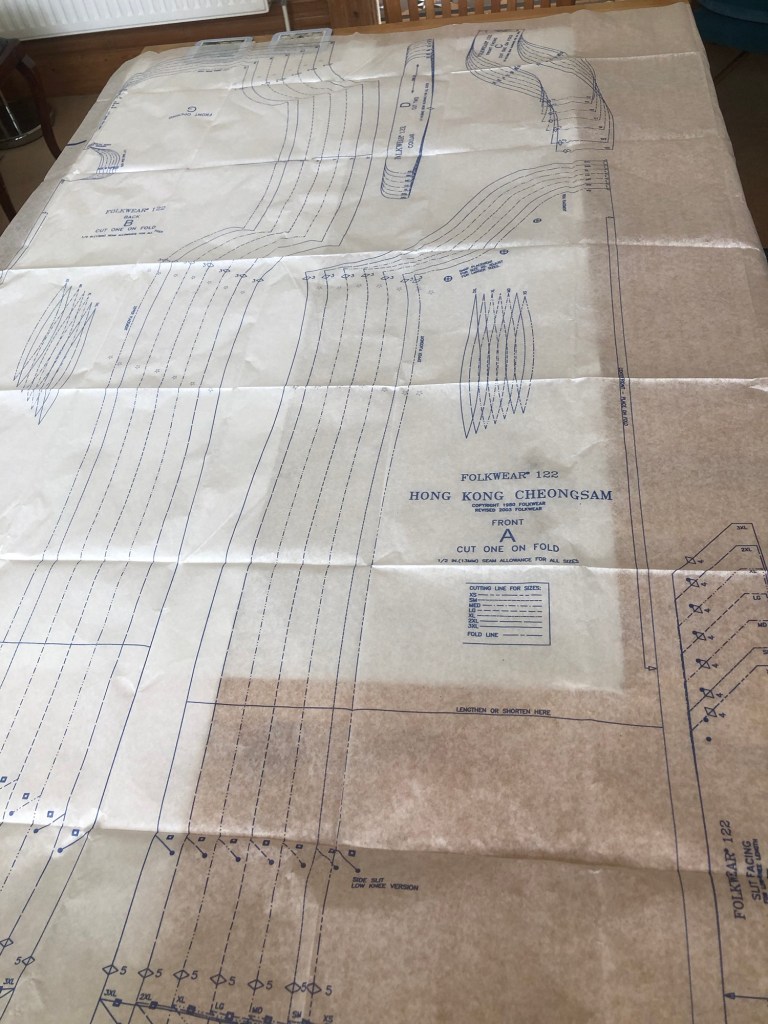
The pattern seemed straightforward and simple which was a great way for me to learn to make a Cheongsam. I measured myself and chose a size on the pattern.
–
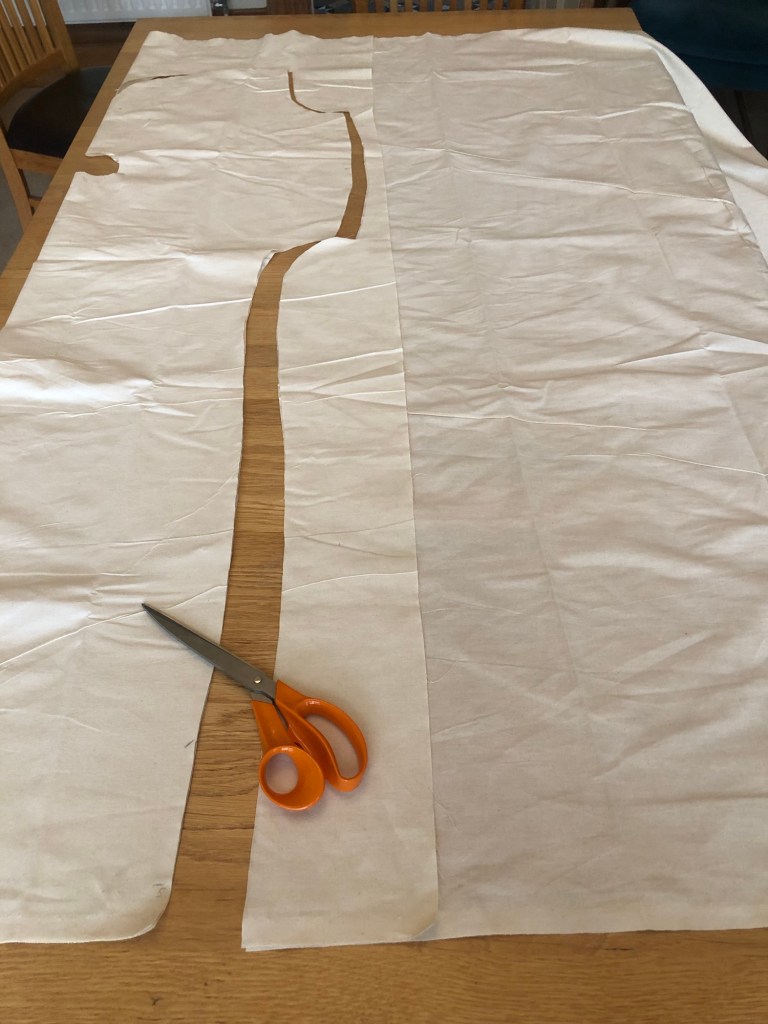
The fabric I used was a light weight calico cotton canvas material. I felt the light weight yet tough texture of the fabric was suitable for a wearable painting.
–
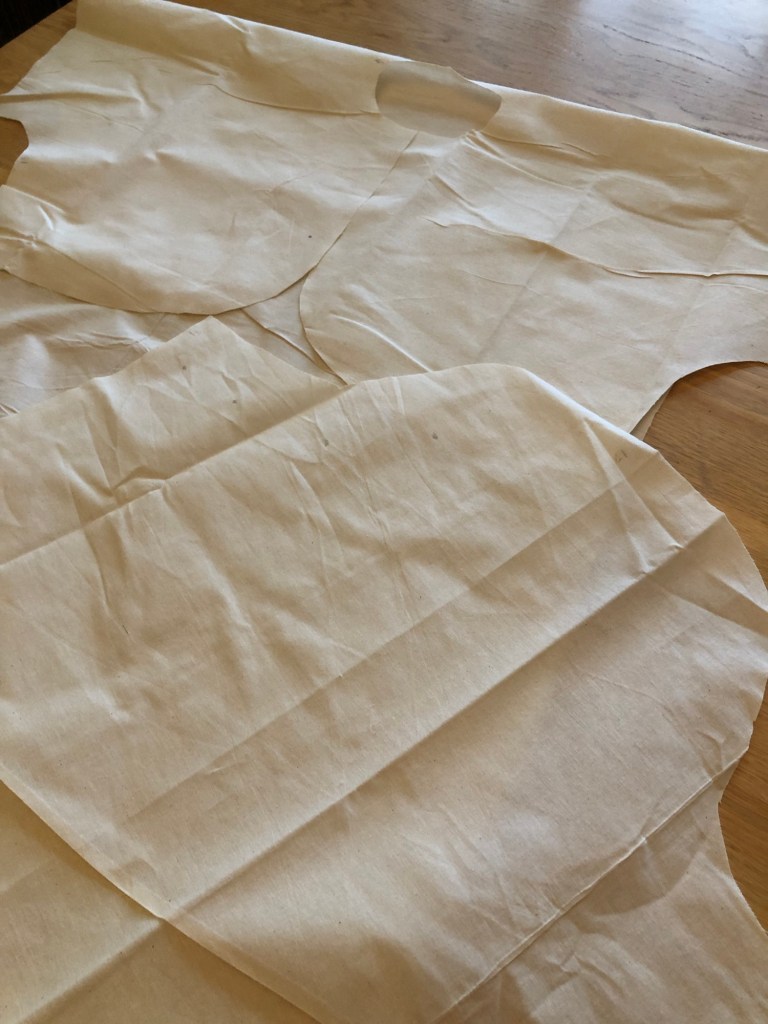
Pieces of canvas material was cut according to the pattern.
–
My 40 year old sewing machine which has not been used for many years refused to work due to years of neglect. So I had to hand sew the dress.
–
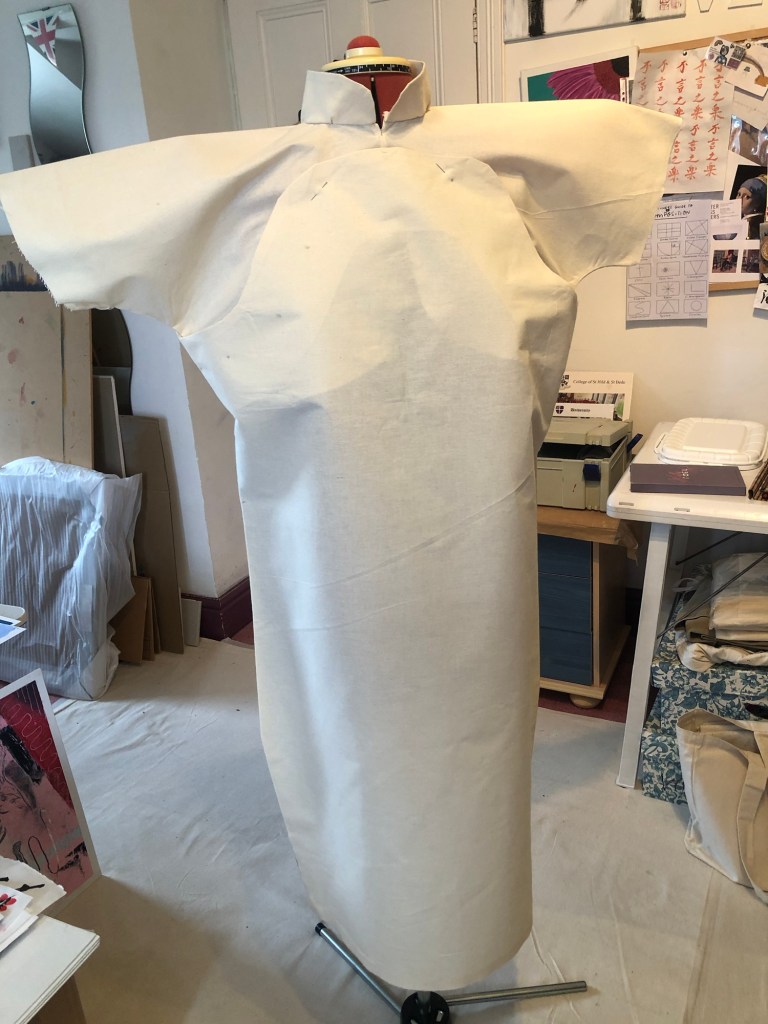
The canvas dress was put onto a dress maker’s mannequin for finishing.
–
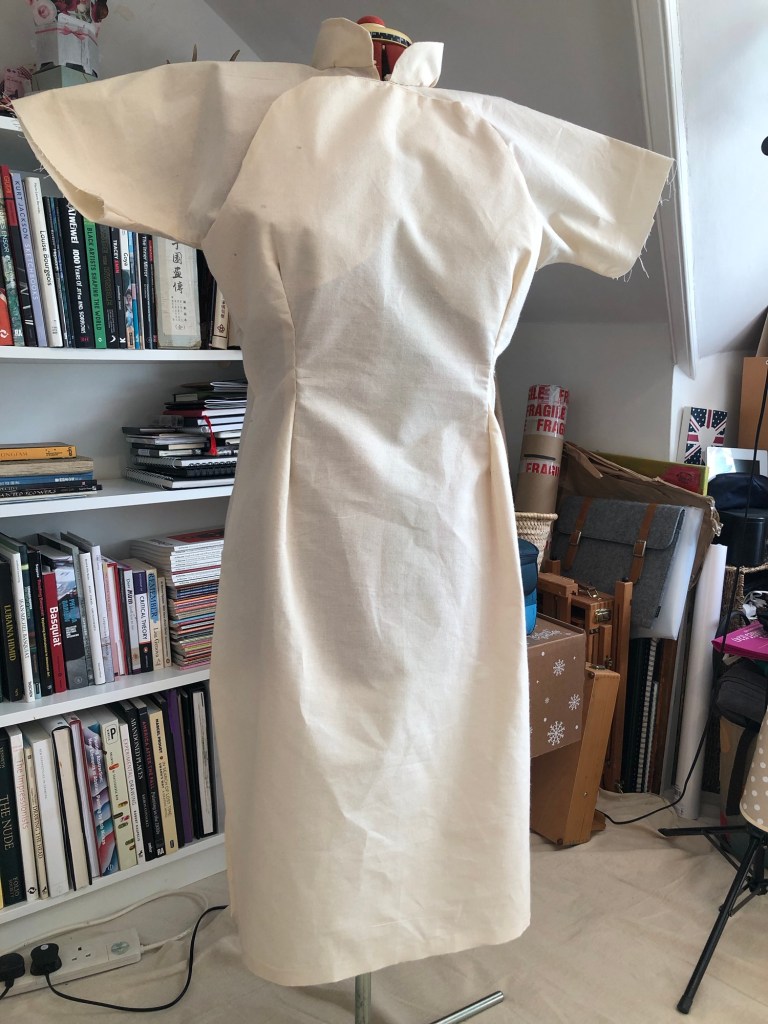
I was overly generous in my fabric cutting so the dress felt very large. The sewing pattern had provision for darts for a tighter fit. So I marked those out and sewn darts onto the front and back.
–
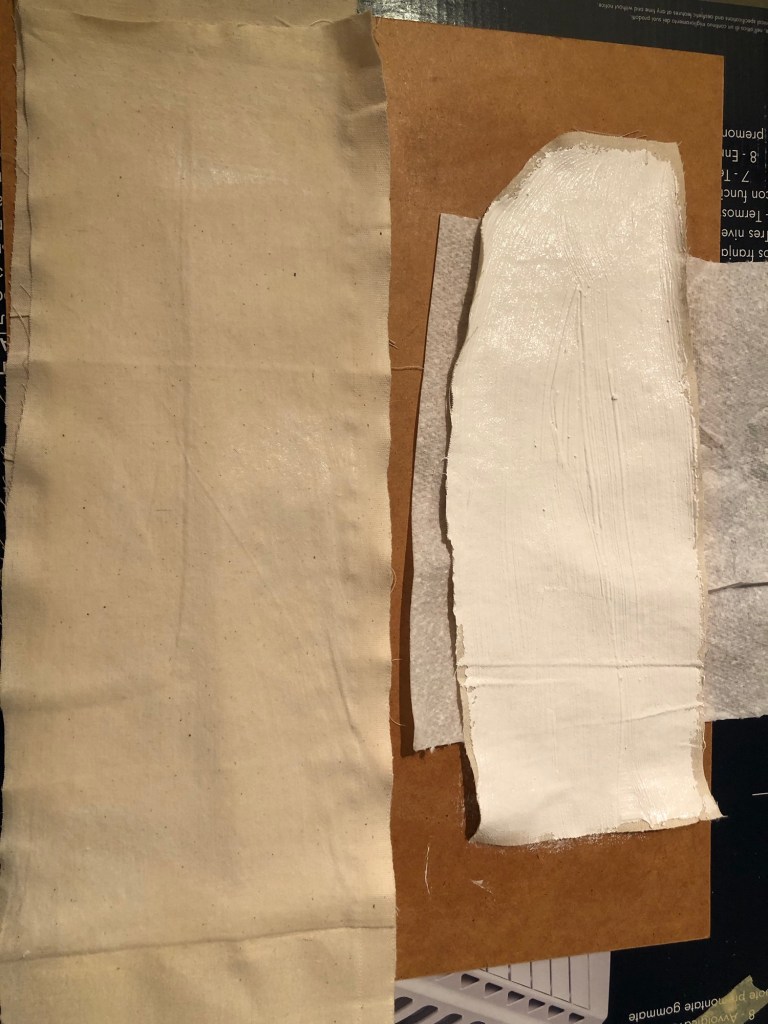
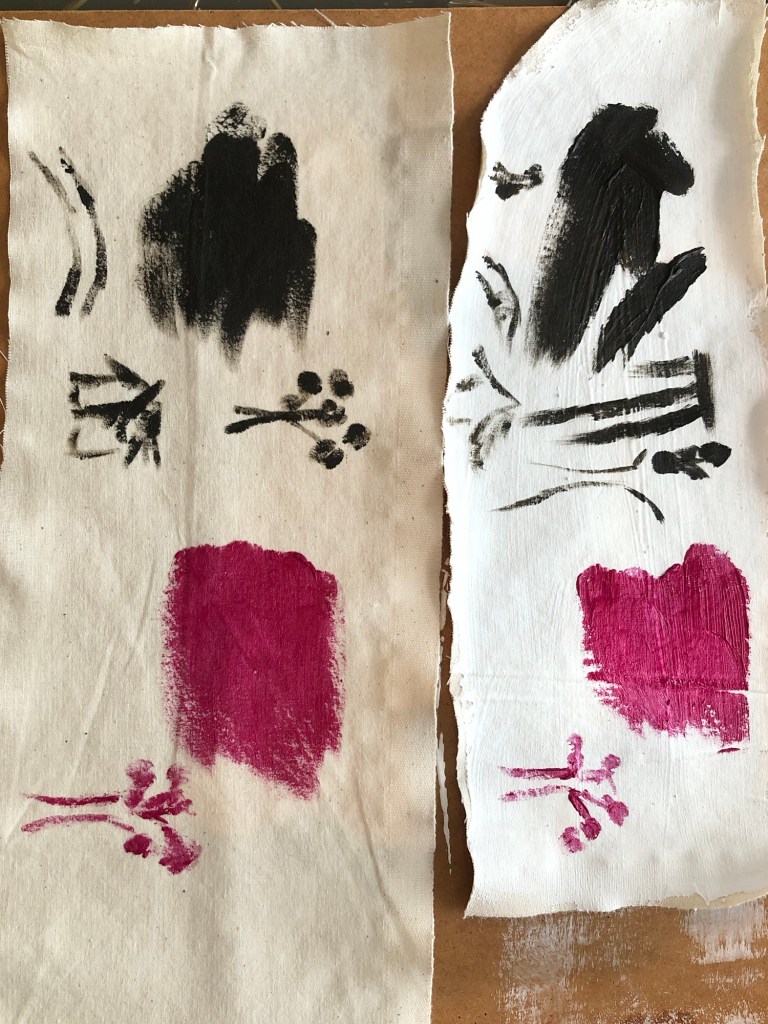
To decide on a primer for the canvas dress, both gesso and diluted white acrylic paint were painted onto fabric samples as experiments.
–
Once dried, acrylic paint was applied to both surfaces to see which would perform better. The gesso was preferred because it provided a smoother surface.
–
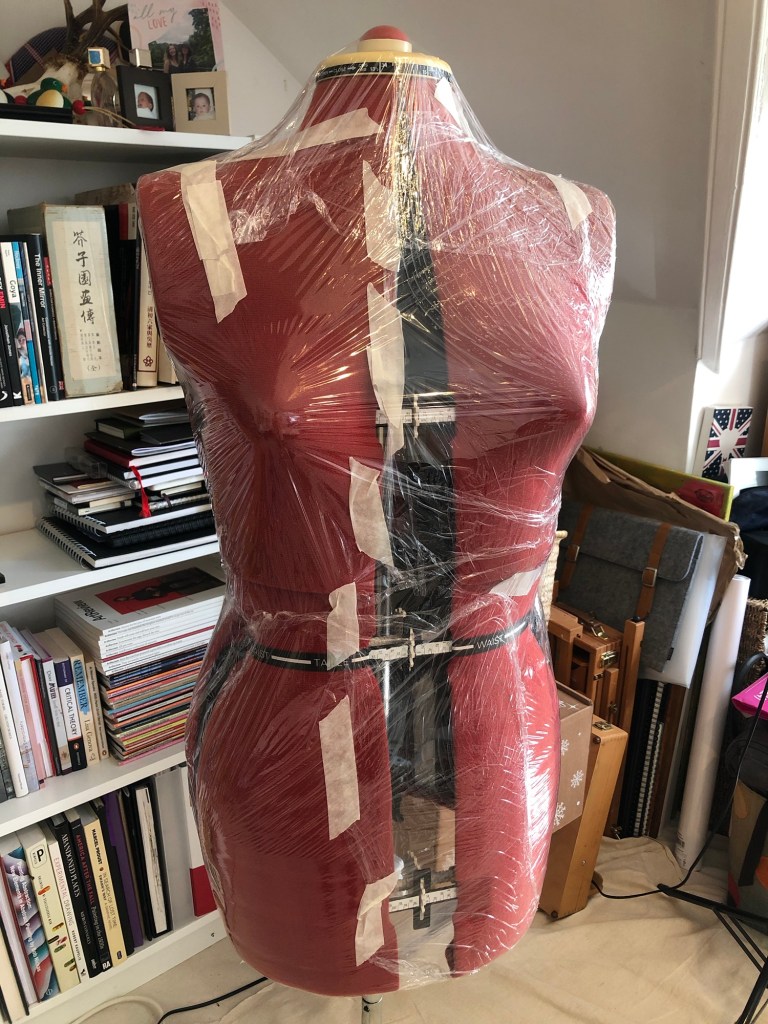
Since the fabric was light weight, the mannequin was wrapped in clingfilm for protection from the painting process.
–
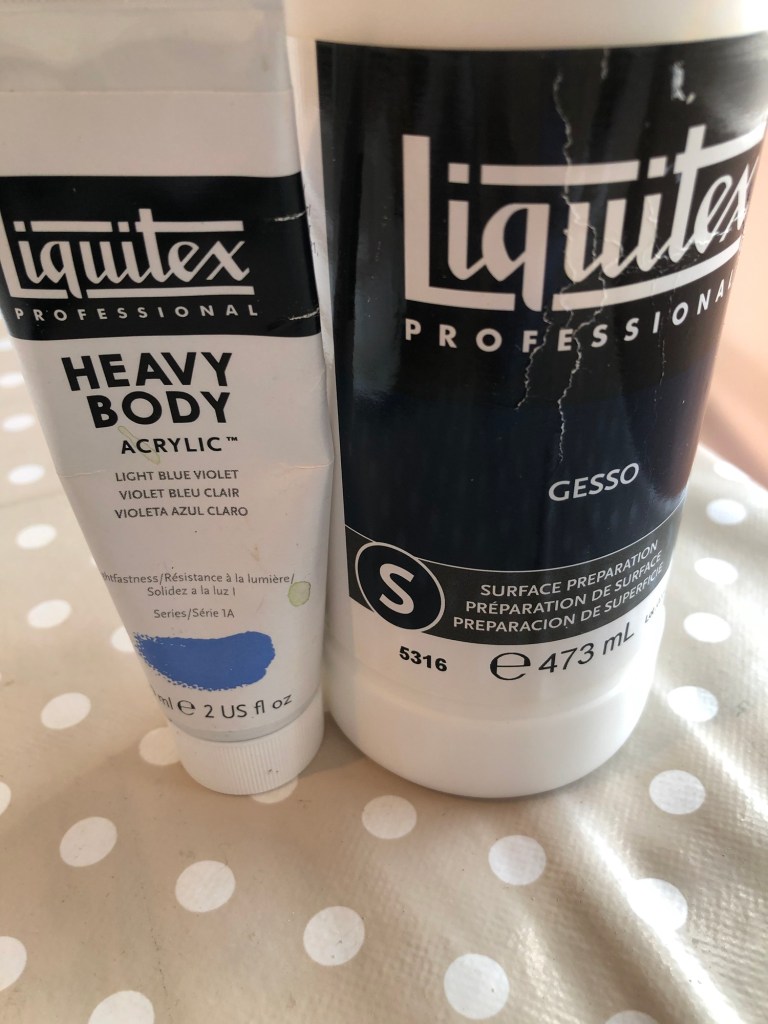
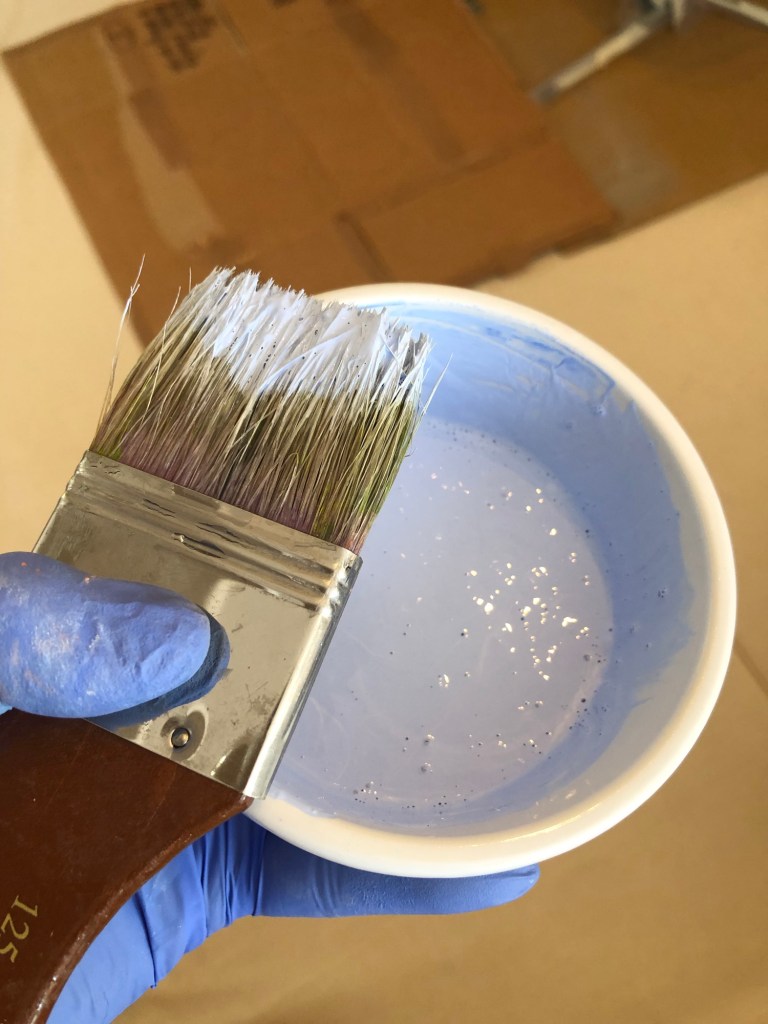
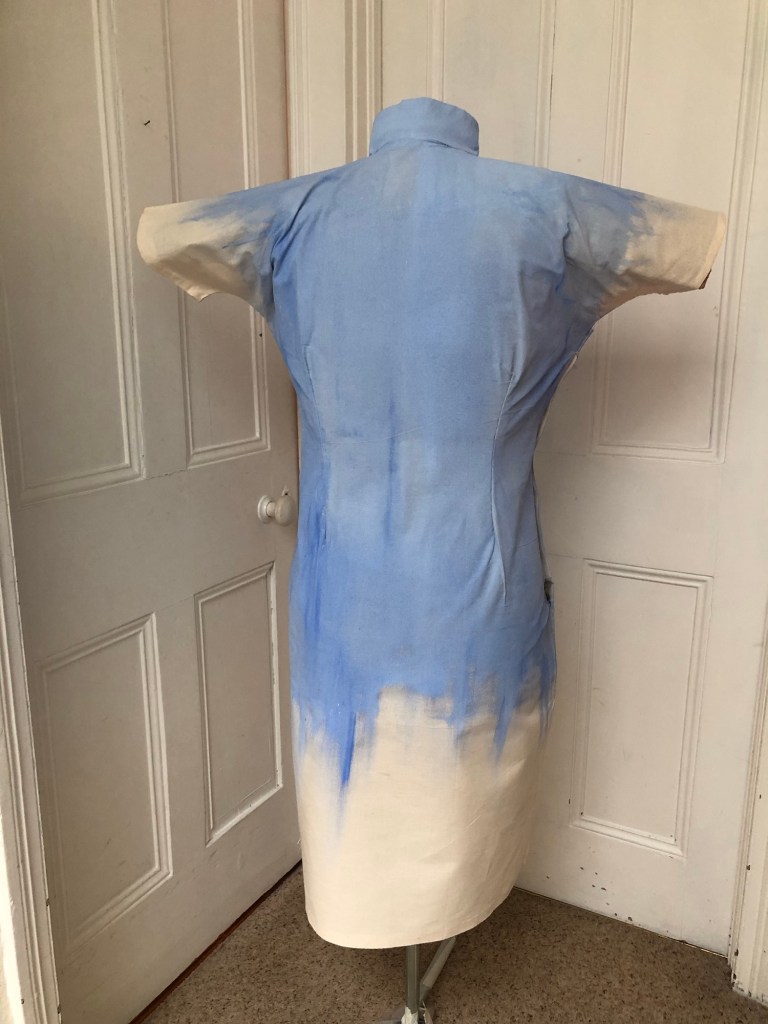
White gesso with acrylic blue tint were diluted as primer.
–
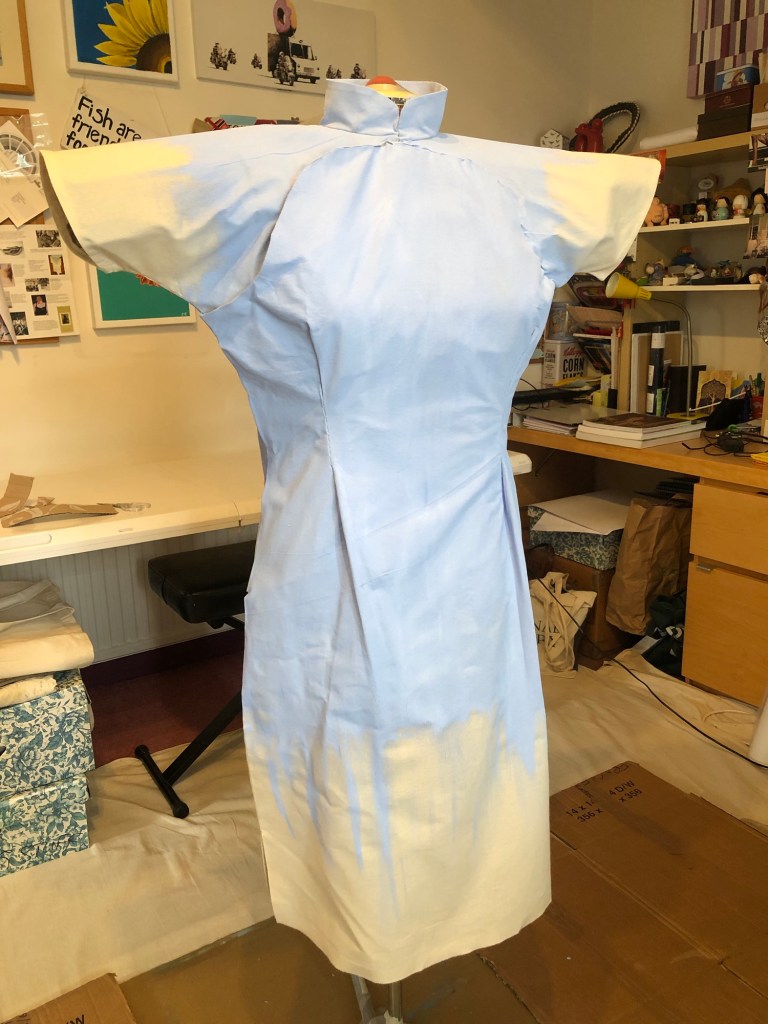
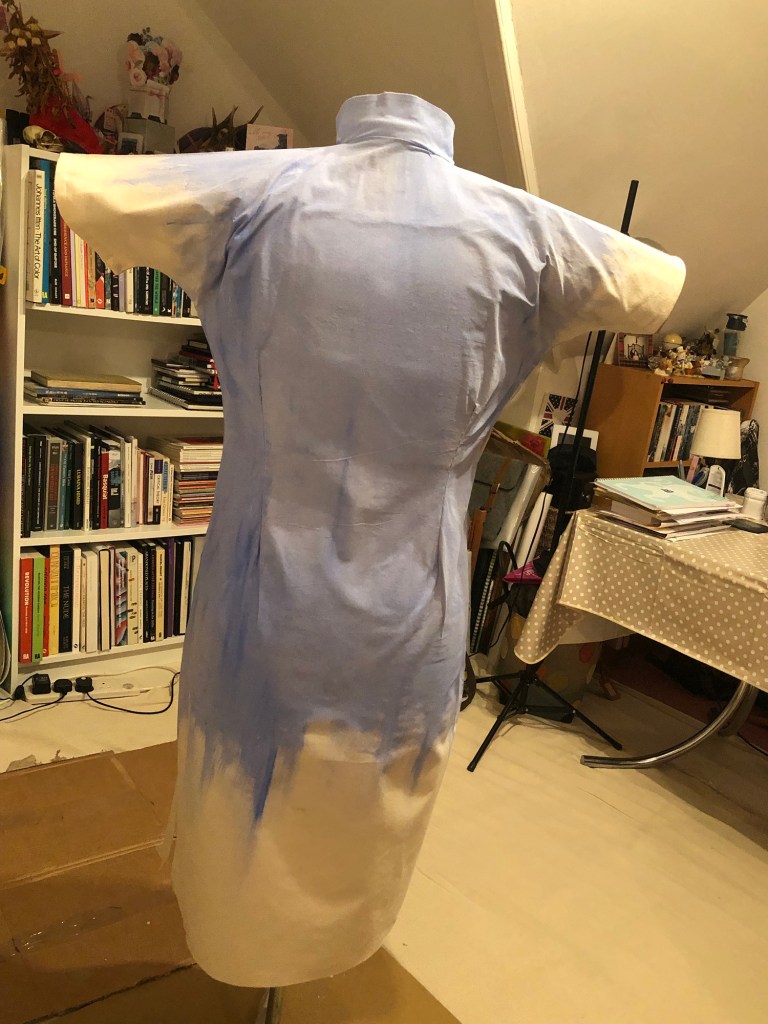
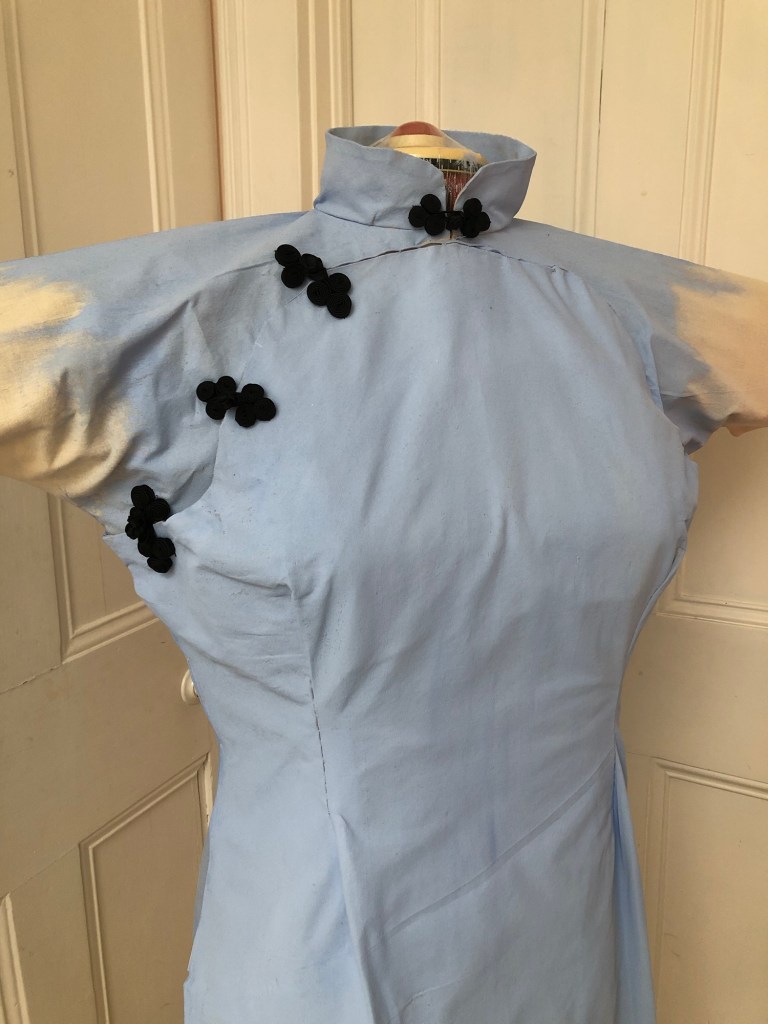
The canvas dress was primed on both sides. The tint worked well and I could use that as the background for the painting.
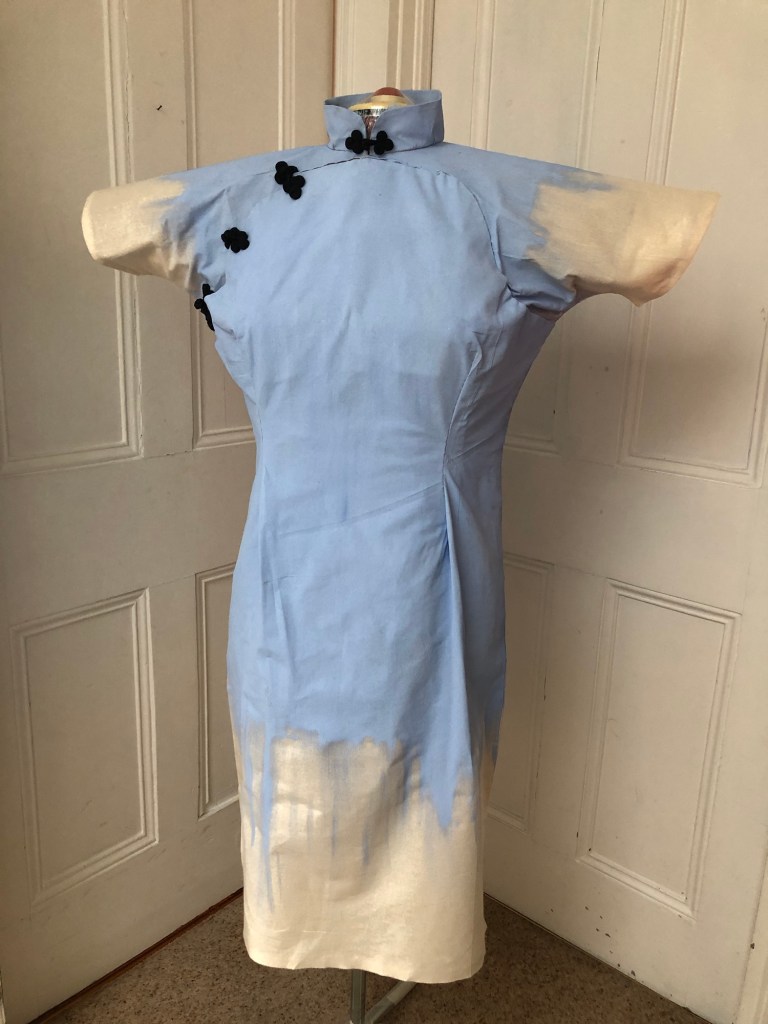
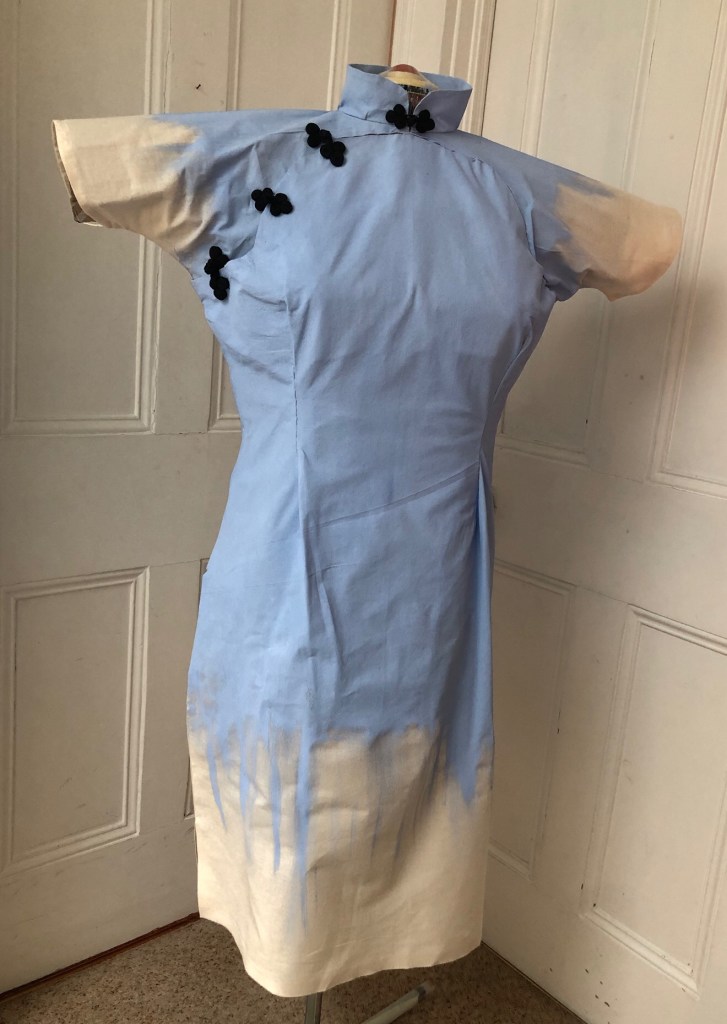
The final finishing step was to add the frogs (tradition fabric buttons or fasteners).
–
REFLECTIONS
I am pleased with the fact that I managed to make a canvas dress using a bought sewing pattern. This experience has given me confidence to take on other sewing or textile projects which will provide an addition dimension to my practice which I feel excited about. For now, I have made a 3D canvas in the shape of a Cheongsam and primed it. Although the painting was not yet finished, I wanted to pause and reflect on the progress so far and take time to consider what to paint on the dress.
The Cheongsam series started as a result of me finding my mother’s old Cheongsams in my loft, which triggered intrigue and inspiration for me to make work on the Cheongsam subject. I know little about the Cheongsam and I am starting to research about its history especially its evolution and how the style changed over time partly due to influences from the West. E.g. the Cheongsam started off as a loose fitting garment, however, as European designers such as Christian Dior marketed more figure-hugging dresses that were pinched at the waist, the Cheongsam started to evolve as Chinese women wanted to emulate European fashion. From around mid-20th century, the Cheongsam started to evolve as a result of the two cultures coming together and the new figure-hugging silhouette emerged which lasted till today. To this end, I believe the modern Cheongsam is a form of a Third Space phenomenon which fits in well with my overall research topic based on Homi K Bhabha’s book, The Location of Culture. My knowledge on the Cheongsam is very limited and I will be borrowing several books on the subject from CSM library. I look forward to finding out more to inform my Cheongsam series of work.
Having established that the modern Cheongsam is potentially a Third Space phenomenon, I would like to use the 3D canvas dress made here for a painting to show something about the Third Space, perhaps another Third Space phenomenon. I am considering making a series of Cheongsam canvases, each painted with a Third Space phenomenon and all as wearable paintings. I want to make them wearable so that they are metaphors for the uniform that transcultural people wear and the roles that they play as they navigate the different cultures in their environment. This work can help to inform my transcultural identity and heritage research.
LEARNING
I have learnt various techniques while making the dress and the experience will be useful as I go onto making other garments to feed into my practice.
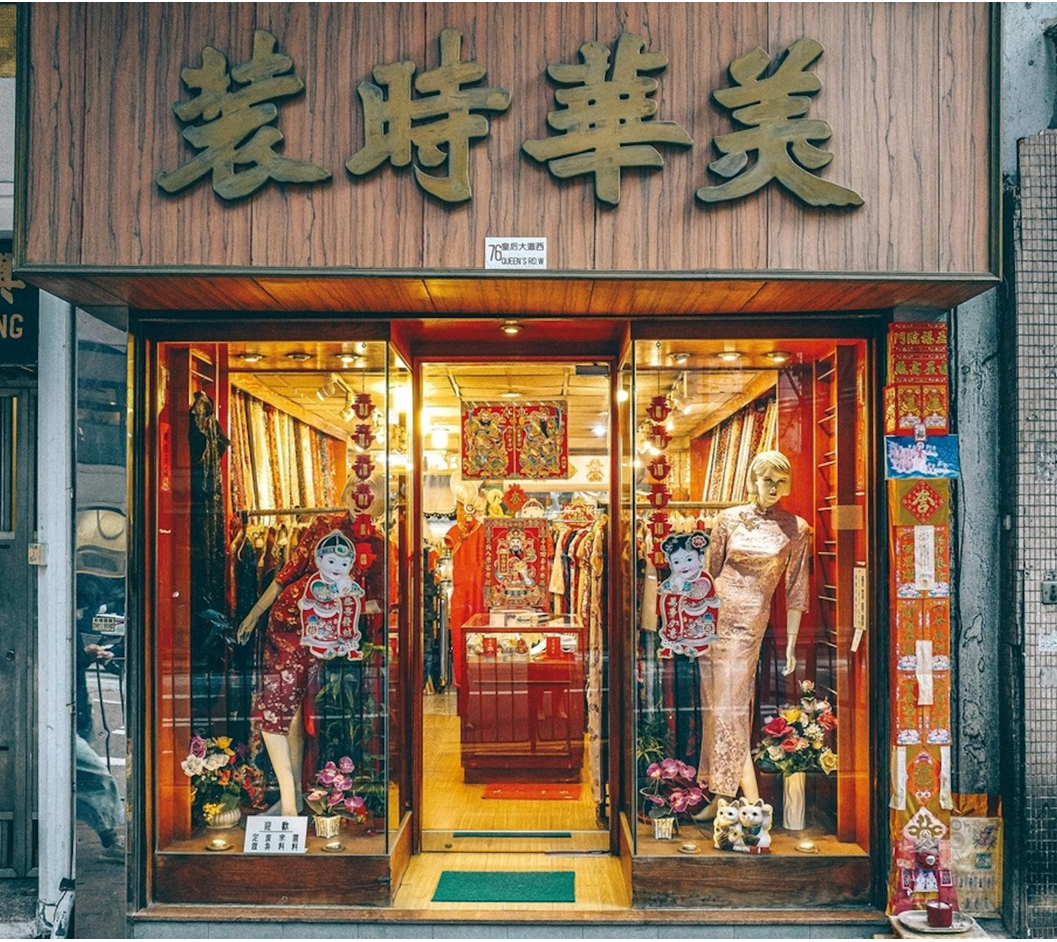
I need to learn more about the history of the Cheongsam because it intrigues me and is an interesting part of the Hong Kong heritage that will help inform my art practice. Especially with my late mother being a skilful dressmaker and I remember clearly the dress that I found being in her wardrobe for many years. My older sister remembers visiting the tailor’s shop with my mother to order the dress. In fact, she has recently found the history of the shop for me – it still exists in Hong Kong.
–
NEXT STEPS
Decide what to paint on the canvas and do the painting.
Research about Cheongsam to build on the series of work.
Make, just make and make some more.
 elizarawlings