It has been a while since I last posted about my Chinese brush painting. I continue to attend my monthly Chinese painting class. After completing the Sumi-e classes, we have returned to meticulous style work. I prefer freestyle and would not usually do meticulous style by choice. However, the tutor is rightly insisting on starting a new topic with meticulous style work so that we pay close attention to the anatomy of the subject.
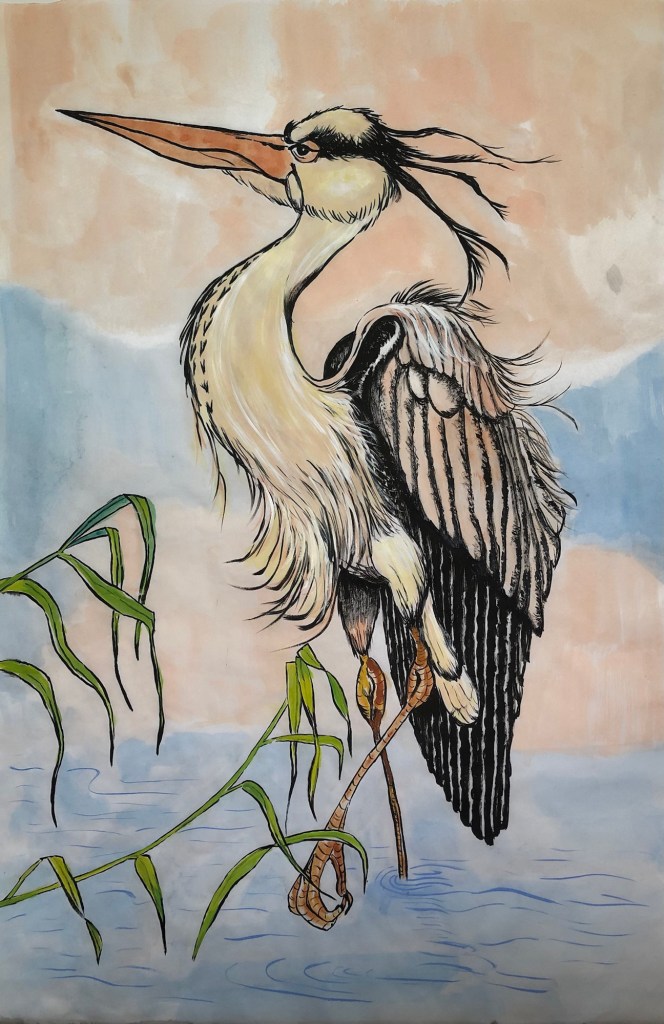
The subject this month is the heron – a beautiful stylish bird that is often depicted in Chinese paintings. The homework was a rather detailed image and we were asked to ‘go big’.
METHOD
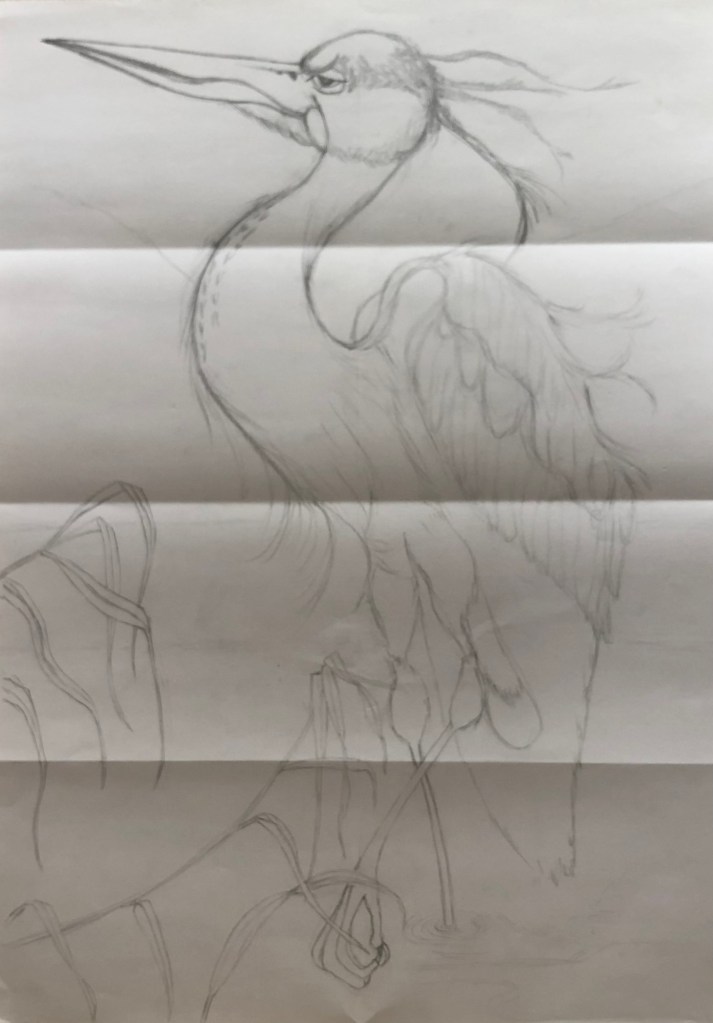
To go big, I did a large pencil drawing of the heron so I can use it as a template for the painting. The tutor said that this method of making a template is not ‘cheating’ as long as the template drawing is done by ourselves, i.e. not just using a photocopy of an image for tracing.
Below is my A2 size pencil drawing:
–
I chose to use Moon Palace paper for this drawing because it was the widest width Chinese painting paper that I have. The paper was laid over the pencil drawing and the outline of the bird was painted using Chinese ink and brush. The brush here was used in drawing mode for the outline, meaning that only the very tip of the Chinese brush was used like a pencil. This stage requires a very steady hand!
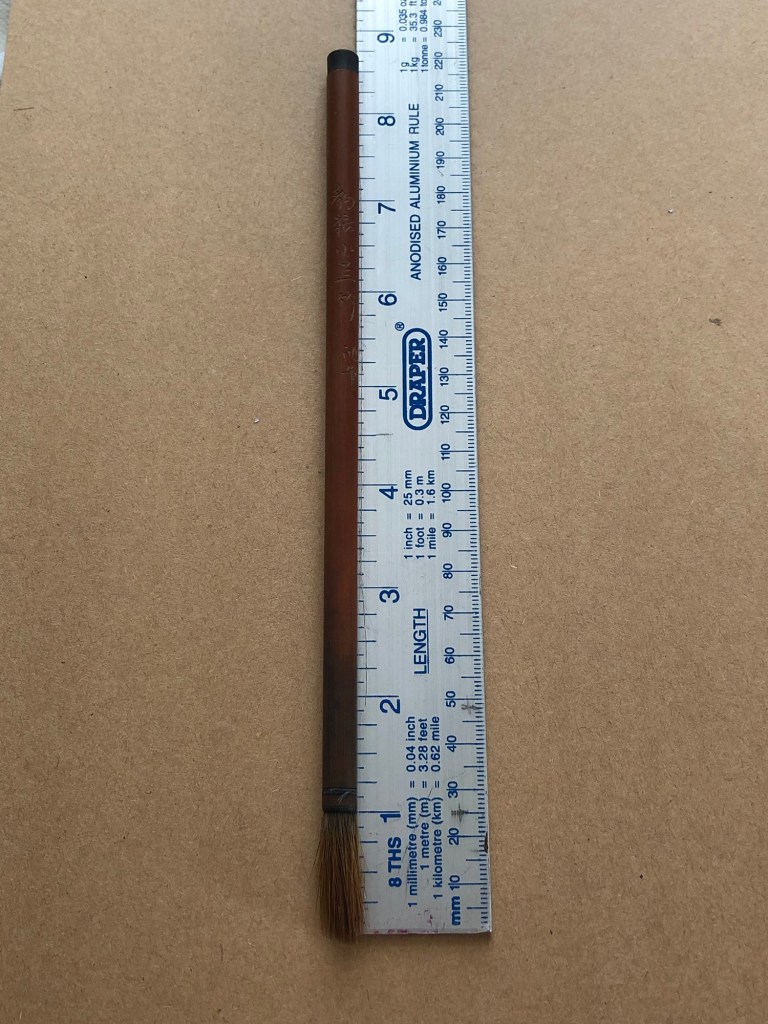
A 30 year old wolf hair brush that belonged to my mother was used for this painting:
Work in progress:
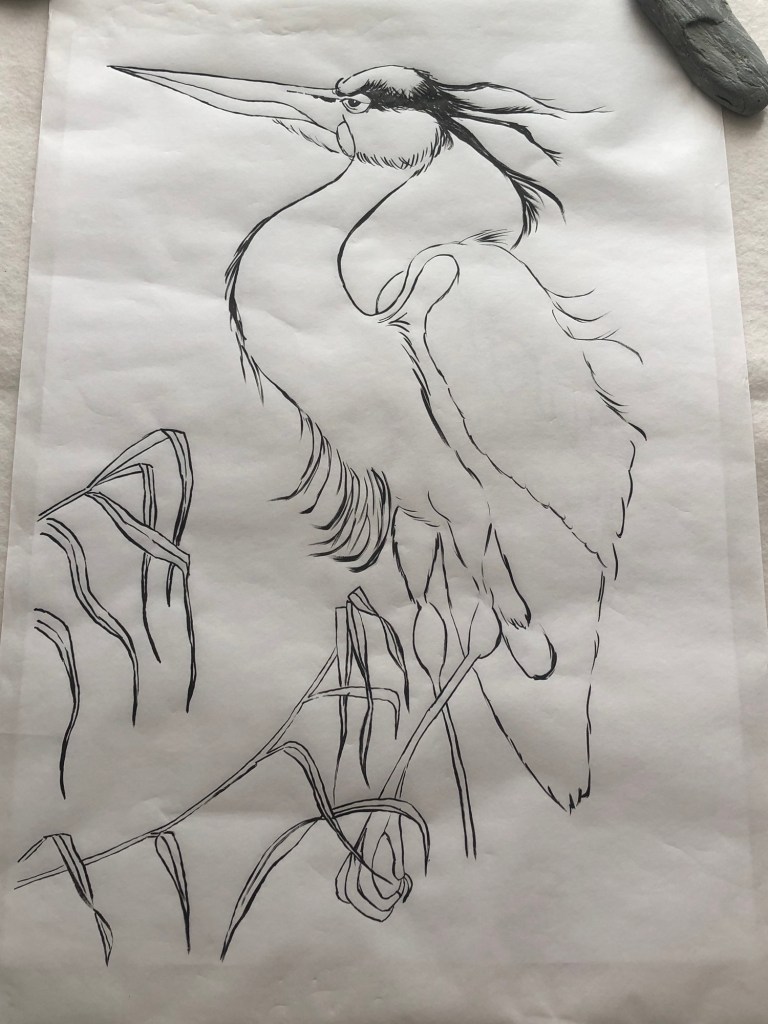
Painting completed with outlines and dark areas ready for colour painting:
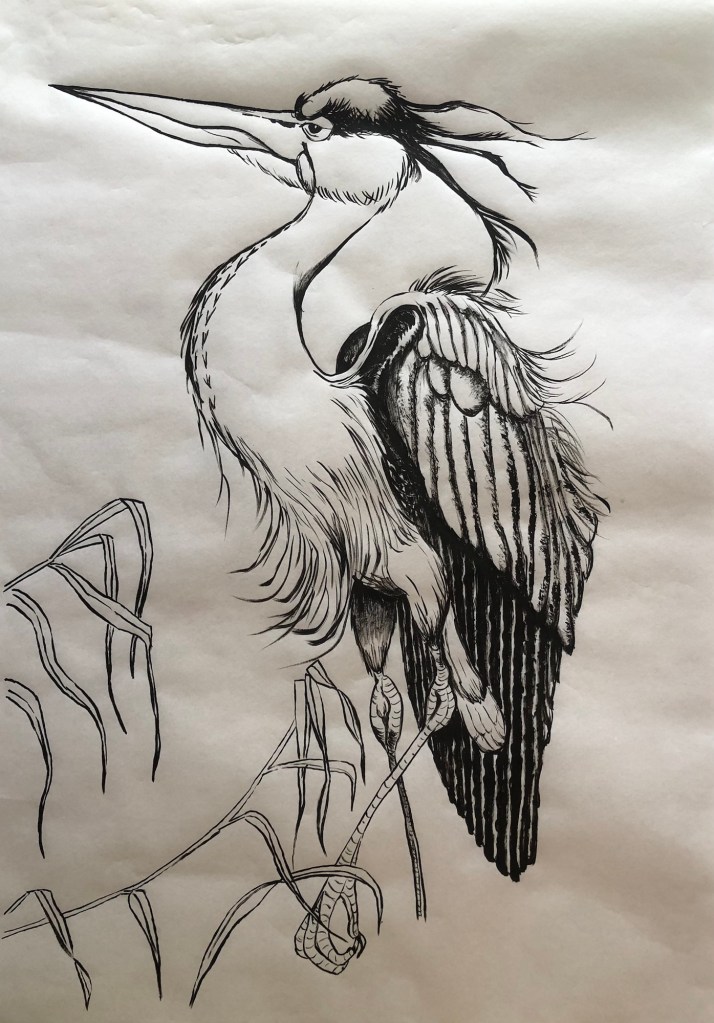
Finished work:
Heron – Chinese ink on Moon Palace paper. Size H68cm x W45.5cm.
–
REFLECTIONS
This is a meticulous style figurative painting. There is technique involved especially in understanding the materials behaviour and working out the optimum process could be challenging. However for me, I feel the illustrative nature of this type of work does not demand the level of thinking or inquiry like making a piece of contemporary art would. So what can I reflect on?
The thought that kept coming to my mind during the making process was – the image seems ‘universal’, so what makes this a Chinese painting? I used Chinese materials (Chinese ink, moon palace paper and my mother’s Chinese wolf hair brush), but the composition in this case seems universal to me. So I posed a question to myself – what makes a painting a Chinese painting? Is it just the materials or does it have to ‘look Chinese’, meaning does it have to possess certain aesthetic qualities? What makes a piece of art ‘Chinese art’? I am puzzled by this and I don’t have an answer yet. It is something that I’ll continue to think about. I may pose this question at my next Chinese painting class and see what others think.
 elizarawlings