I recently completed a research paper titled:
By analysing the work of Njideka Akunyili Crosby and Fiona Rae this paper will argue that transcultural art can enhance understanding of the human experience amid unprecedented levels of migration and displacement.
A copy can be found here:
MA U2: Research Paper
I have enjoyed working on the research paper because it gave me the opportunity to analyse the work of two of my favourite transcultural artists. I like studying other transcultural artists’ work because I usually find resonance and they help to inform my practice.
Below is an extract from my MA Study Statement where I detailed my objectives for my narrative development work.
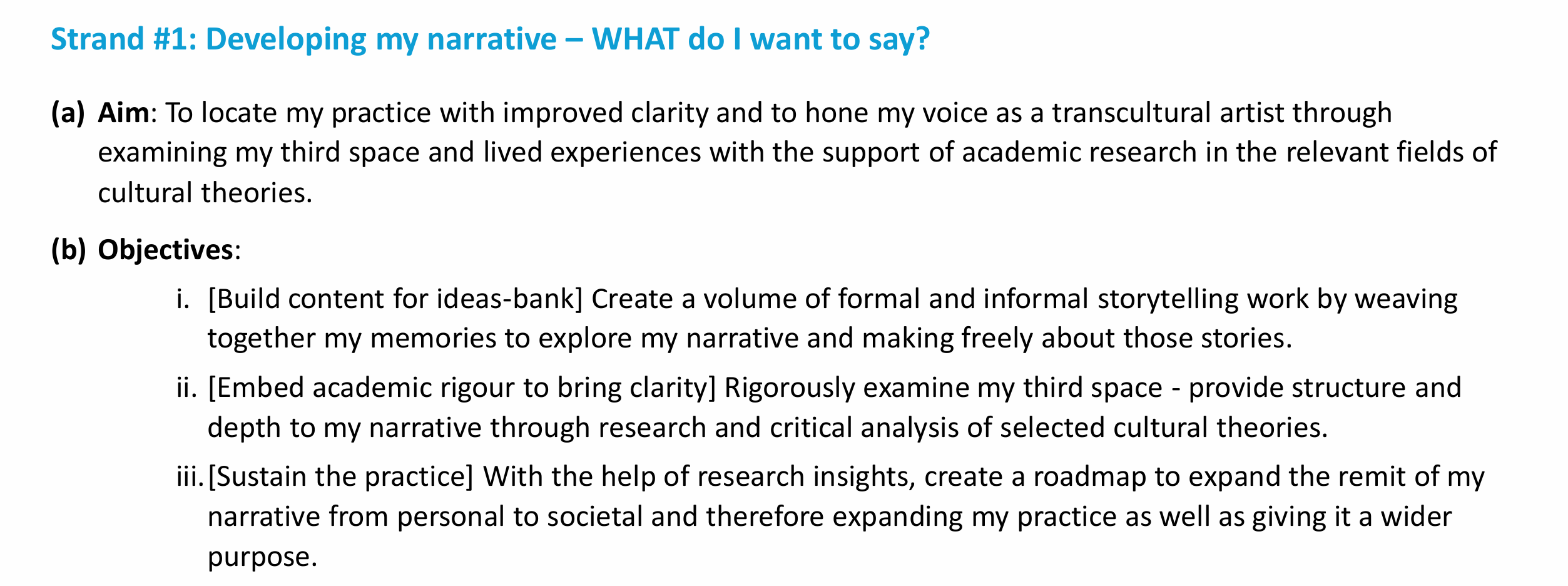
I believe doing the research paper has helped me to address Objectives ii and iii and the reasons will be explained within this blog. This blog captures my thinking, questions and reflections along the journey of writing the research paper with a learning summary at the end.
REFLECTIONS
As stated in Objective ii, I want to use research and academic rigour to bring clarity to my thinking in examining my narrative which is based on the idea of The Third Space.
The Third Space
I first found out about Homi K Bhabha’s notion of the Third Space three years ago when I watched a lecture by the artist Njideka Akunyili Crosby (link included later in the text). In the lecture, Akunyili Crosby explained Bhabha’s Third Space and directly located her art practice within her Third Space. I found such strong resonance with her explanation and her work that I started to research Bhabha’s work, especially his book The Location of Culture:
Bhabha, H. (1994) The Location of Culture. London: Routledge
Bhabha uses concepts such as mimicry, interstice and hybridity in the book and his work was deeply rooted in colonial and postcolonial theories. I found his work very useful in helping me to unpack some of my personal experiences, growing up in colonial Hong Kong, then migrating to the UK in 1980 and now living as a British Chinese. Understanding his work has helped me in the sense-making of parts of my transcultural journey and I have been expressing some of my insights in my identity-based art practice.
So I was excited to approach my research paper using Bhabha’s work as the theoretical foundation to analyse the artistic expressions of the two chosen transcultural artists to examine how the notion of the ‘Third Space’ had influenced transcultural artists. However, my supervisor (rightly) challenged me on why I chose Bhabha’s thirty year old theory and if it was still relevant today.
To justify the use of Bhabha’s theory was a good challenge. For me, Bhabha’s theory was personal, it helped me to unpack issues that have puzzled or troubled me from my childhood in colonial Hong Kong as well as living as a migrant in the UK. So for me, Bhabha’s work is relevant for me today despite it being written thirty years ago. However, I knew that only putting in my personal experience in the research paper as a justification would not be sufficient or academically robust!
I started by researching texts on the meaning of ‘culture’ which helped to anchor my thoughts before proceeding onto the meaning of ‘transcultural’. I then researched more recent academic texts in transculturalism that either directly referenced Bhabha in their research, or described contemporary hybrid existence that reflected the cultural negotiations within the Third Space as asserted by Bhabha. The challenge of a limited word count meant I had to select the most relevant works to focus on for this paper. Examples of texts that I used to justify using Bhabha’s work are as follows along with the lecture by Akunyili Crosby where she located her practice within the Third Space. I felt the latter was the most powerful example of Bhabha’s contemporary relevance:
Iyall Smith, K.E. and Leavy, P. (eds) (2009) Hybrid identities: theoretical and empirical examinations. Chicago, IL: Haymarket Books (Studies in critical social sciences book series)
Grunitzky, C (2004) Transculturalism: how the world is coming together. New York: TRUE Agency
The Museum of Contemporary Art (2018) Njideka Akunyili Crosby [Online Video] Available at: https://www.youtube.com/watch?v=pUZijlho9CM (Accessed 14/05/2024)
Contemporary relevance of my research
My supervisor also suggested that I should extend my scope of research to find relevance in my topic in the contemporary world because merely analysing artistic expressions was not enough. I should seek to ‘go deeper and richer’. This was a bigger challenge than justifying Bhabha’s text.
In my Study Statement Objective iii, I had always planned to expand my practice from personal identity to societal issues to give it a wider purpose. At the time of writing my Study Statement, I had in mind to expand towards the area of postcolonial theories because of my background and also my interest in Bhabha’s work. However, I did not feel the urge to bring postcolonialism into my research paper right now because there has been something else more pressing preying on my mind. I have been very troubled by the ongoing escalation of wars or conflicts around the world and the sheer amount of displaced people as a result. To the extent that I fear society might become immune to such news. The issues surrounding immigration have been at the top of political agendas around the world especially in countries that continue to hold power. Furthermore, closer to home for me, over 200,000 Hong Kong people have moved to the UK in the last three years as voluntary international migrants with the special visa scheme granted by the British Government. I wonder how they are managing in a country with a very different culture after uprooting from their homeland under the circumstances. So all these thoughts have been on my mind.
Then as I started to analyse the works of Akunyili Crosby and Fiona Rae who are both migrants, I was drawn to the extent of the sense-making in their work, the way they use their art to respond to and make sense of their changing environments as they migrated from one country to another. I found much resonance with their work. Bhabha’s notion of the Third Space gave me a structure to analyse and contrast their artistic expressions. It helped me to find differences and similarities. The two artists expressed their transcultural sense-making very differently but their wish or need to go through that sense-making was a common theme. It brought home to me that every migrant or displaced individual have that need to make sense of their new or changing environment and that is fundamental for survival – this was explained and verified when I researched Damasio’s texts such as:
Damasio, A. (2021) Feeling & Knowing. New York: Pantheon Books.
I proceeded to try to bridge my transcultural artists research with this very human ‘need’ that must be happening to millions of people right now around the world (281 millions in 2014 according to The International Organization of Migration).
However, a fundamental question remained – so what? So what if migrant artists share the same human experiences as other migrants? It is not exactly a grand revelation. I instinctively felt that there was something more that a transcultural artist could do than just make art, their stories are human as well as relevant and can enhance our understanding of the human conditions involved or perhaps something even more. So I continued to research hybrid identities, the role of artists, transcultural art etc. hoping to find some inspiration. A ‘lightbulb moment’ came to me from:
Petersen, A.R. (2017) Migration into art: transcultural identities and art-making in a globalised world. Manchester: Manchester university press (Rethinking art’s histories)
Petersen proposes the notion of ‘the artist as a migrant worker’ and explains that instead of cementing the myth of the artist as a detached creator, the proposed notion invites a more profound exploration of how the artist’s role can be reconfigured as that of a translator, mediator and bridge-builder between people and cultures. Petersen contends that art can be an instrument of orientation and has the ability to negotiate contradictions and complexities. Petersen uses a botanical metaphor to describe a migrant’s way of forming affiliations as ‘radicant’, planting roots along its travel like an ivy or strawberry plant, as oppose to a native, or ‘radicle’, that plants a root from it’s original location. Researching Petersen’s text gave me the idea of using transcultural art to help migrants with their personal sense-making and enhance their sense of belonging through finding resonance.
Having analysed the different texts that I researched, I further assert that the native can also benefit from critically understanding transcultural art in order to better appreciate the human experience amid the unprecedented levels of migration that will likely impact all aspects of society whether one is a migrant or a native. I felt that there was also a place for transcultural art to humanise the migration experience so as to prevent society from becoming immune to the ongoing conflict situations and the resultant displacement of people. This is an area that I would have wanted to expand on more but was constrained by word count, therefore I am considering doing further research on this subject.
LEARNING
I have learnt a lot through doing the research paper and it would take too long to detail everything here. In the context of my art practice, the key learning points for me in doing the research paper are as follows.
– Through a deeper insight into Bhabha’s work, I have cemented my belief of its relevance in today’s society despite being written thirty years ago. I also feel more strongly than before that it is relevant to me and I will continue to use it as a theoretical foundation for my personal inquiries. Furthermore, through my research, I have found other more recent texts that will help to broaden my thinking in the topic of cultural hybridity and inform my contemporary art practice. This learning has directly helped me with Objective ii in my Study Statement.
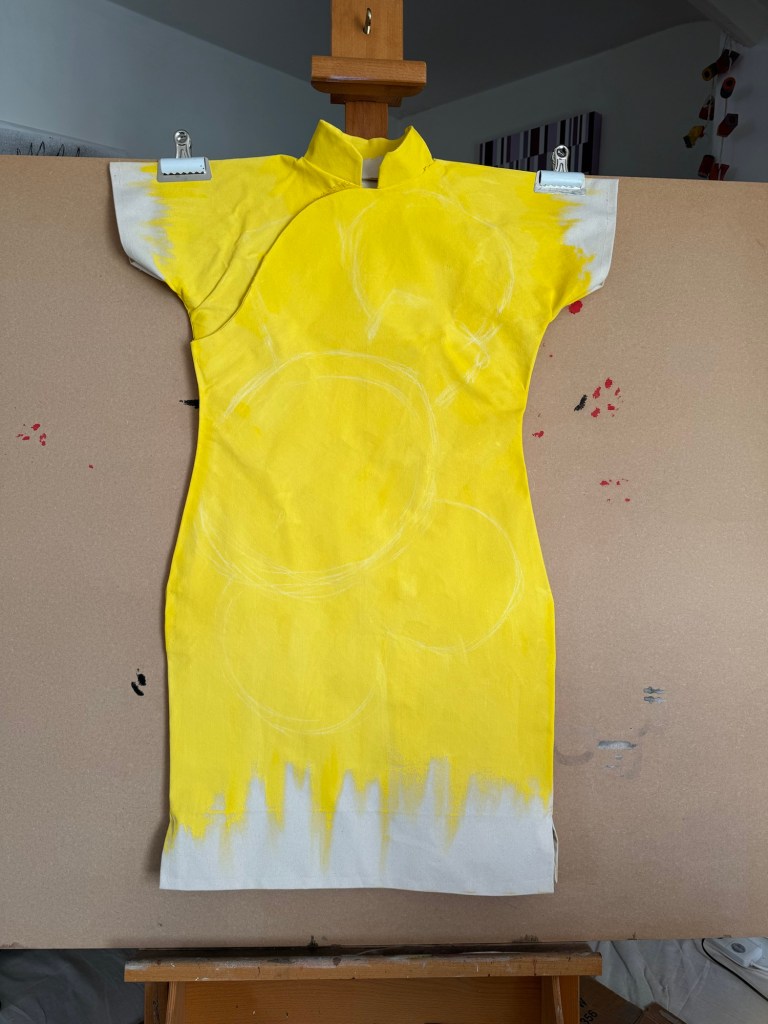
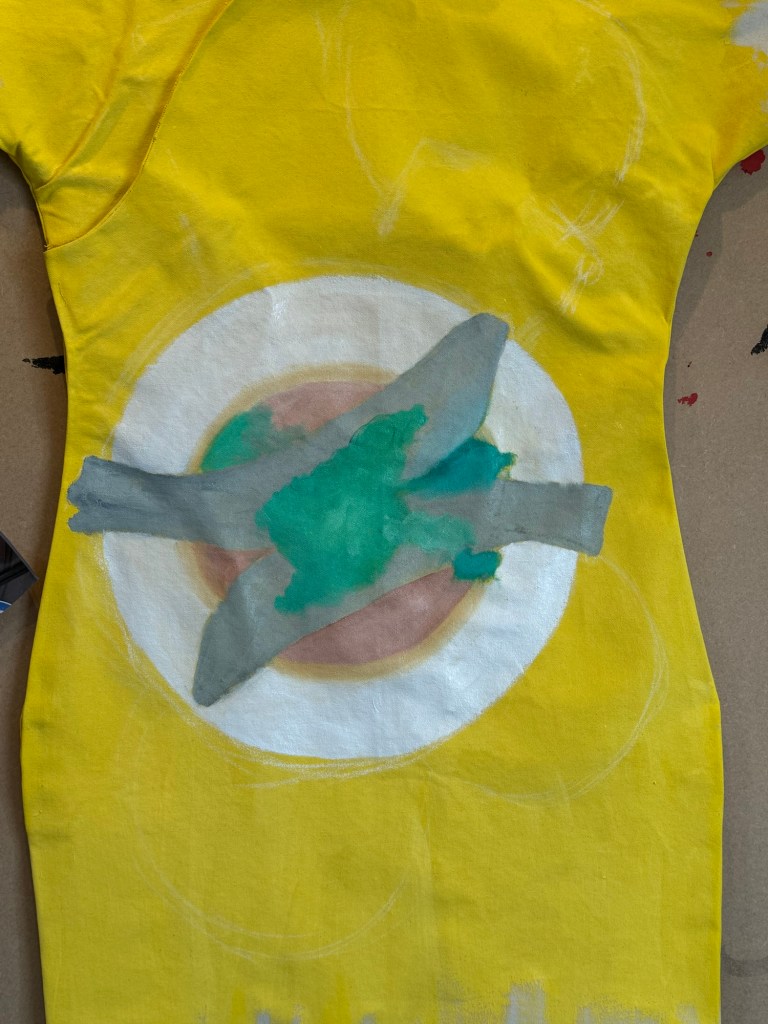
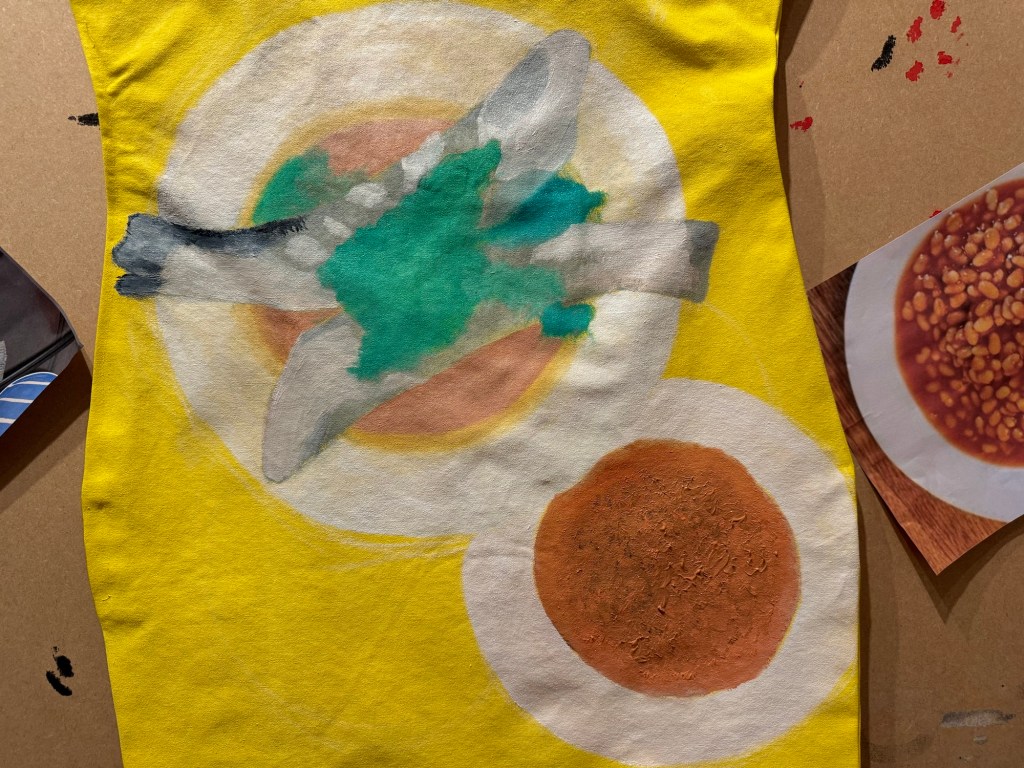
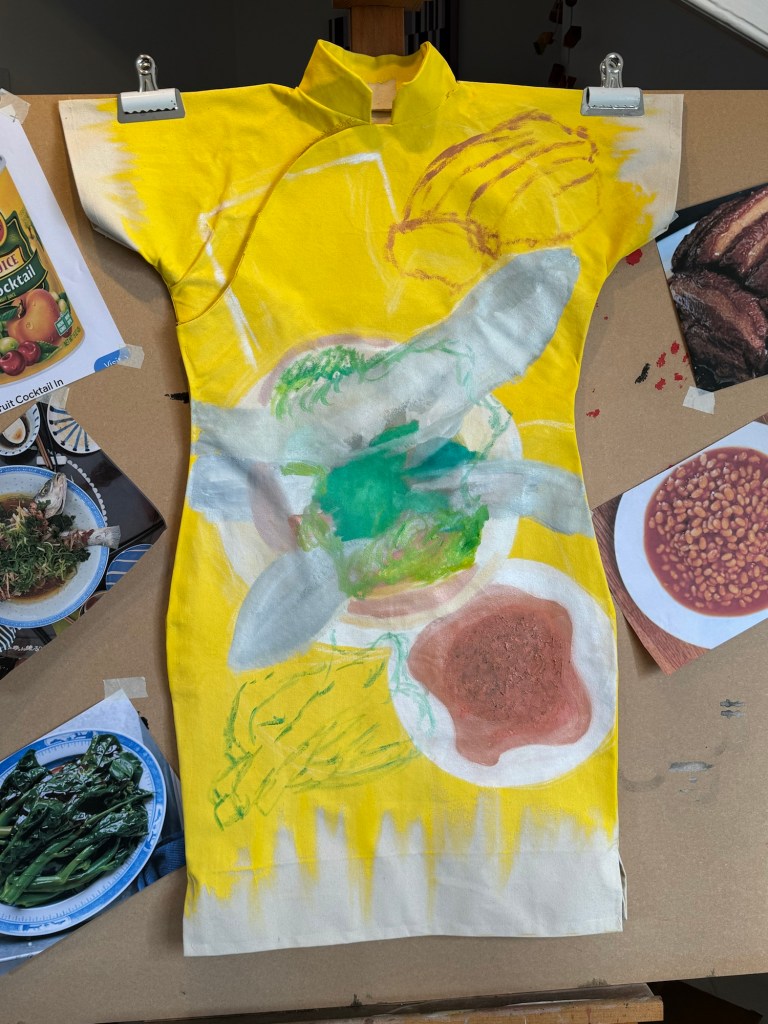
– Analysing the work by the two transcultural artists alongside academic texts has made me think more deeply about what sense-making means. Of course, I understand the dictionary meaning of the phrase but I am beginning to grasp what sense-making feels like. To the extent that after finishing a recent painting, I really felt that I had gone through a sense-making process. It felt like a new enlightenment for me. It still feels nebulous and I hope to grasp it more firmly as I develop my practice.
– I have learnt about the magnitude of the number of international migrants and displaced people in 2024. I knew it was large and increasing, but it was beyond my expectation. Also, it was useful to study research about what causes feelings of isolation for migrates and how senses of belonging are developed. I appreciate I have only touched on the surface of those profound subjects through a 4,000 word research paper and I am compelled to find out more.
– The research has helped me to find relevance for transcultural art and propose a role for the transcultural artist in our society amid unprecedented migration and displacement. As a transcultural artist, I find this exciting and it supports the pursuit of my Study Statement Objective iii – finding a wider purpose for my practice. However, I need to be mindful of some risks…
– I am mindful that a 4,000 word research paper could only touch on the surface of all the issues and ideas that I have discussed. Much more research needs to take place and ideas need to be rigorously examined with a wider audience than just myself before I can really claim the location of my practice within this wider purpose. Otherwise, I could be at risk of being naïve which would not help me and definitely not help the 281 million migrants and displaced people.
NEXT STEPS
Since I have enjoyed writing this research paper and I feel strongly about the topic, I am considering doing further research as part of my personal and practice development.










 elizarawlings