After completing two Cheongsam paintings (‘You’re a banana’ and ‘No, I’m an egg’), I wanted to revisit the first Cheongsam painting I made – ‘Appropriation. Appropriation.’ because I felt it was an unfinished piece. I knew it was unfinished at the time but I was eager to move onto the banana and egg paintings, so I left it. After some time had passed, I felt the urge to finish it off. The areas that I was not happy about were:
– The lack of depth in my representation of what I was trying to say.
– In fact, it wasn’t clear what I was trying to say and how it was relevant to my practice.
– It felt like an unfinished or abandoned piece of work.
I am not always bothered about abandoning work, but so much effort had already gone into this piece, the making of the dress, sewing and painting etc.. I felt it would be worthwhile finishing it.
Below is the unfinished work from earlier and the original blog about my feelings towards the Blue Willow pattern:
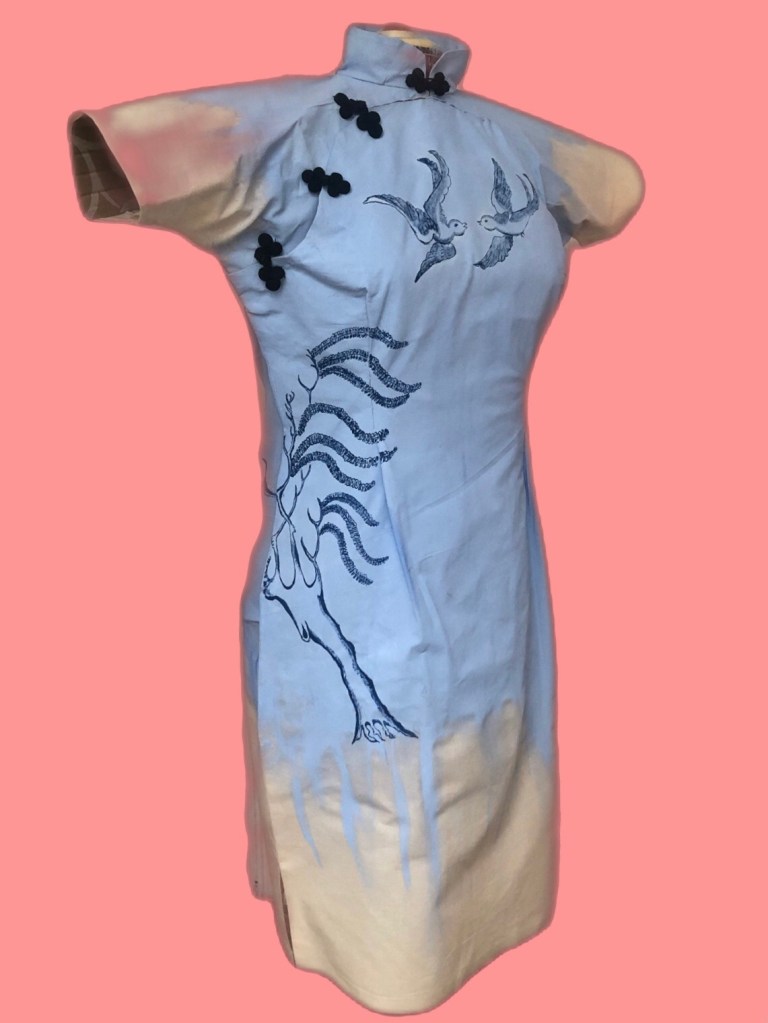
MA U2: Cheongsam Series #4 – Appropriation. Appropriation.
METHOD
In carrying out additional research for this piece of work, I referenced a book about the Willow pattern:
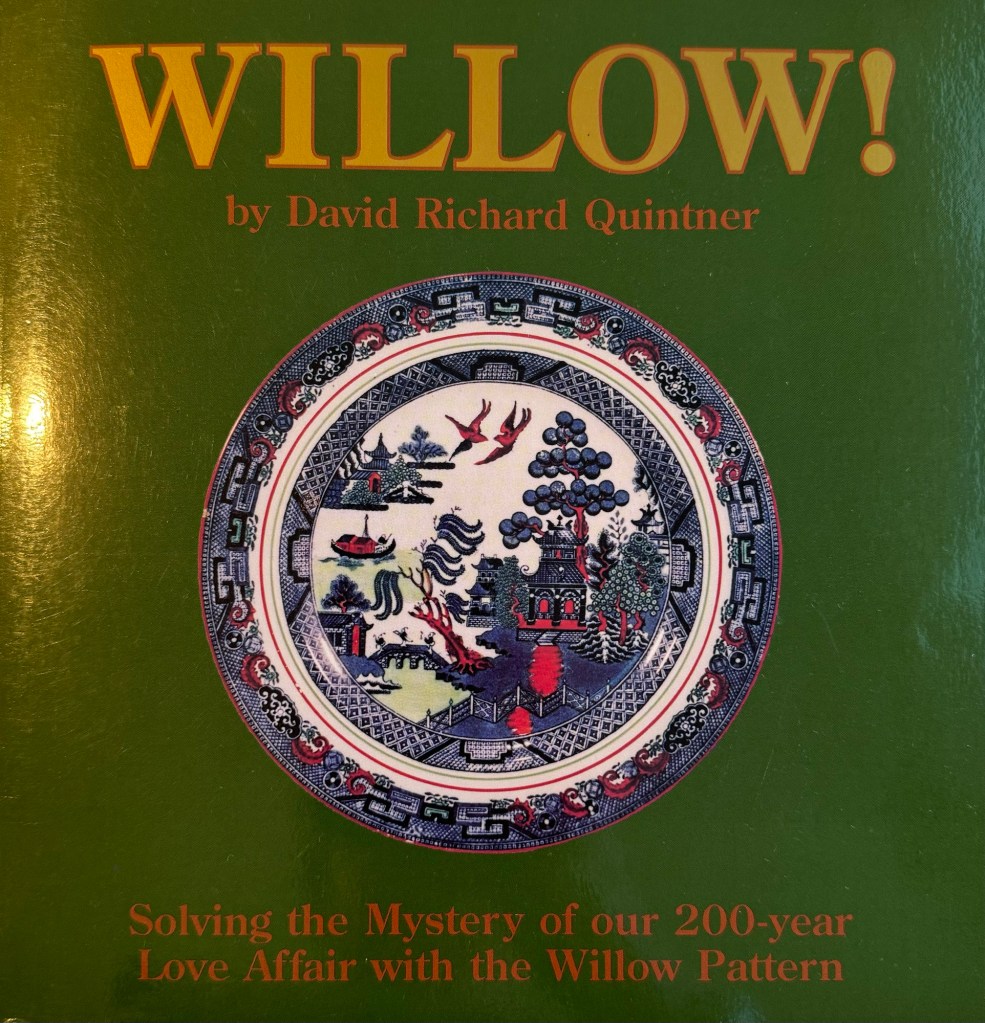
–
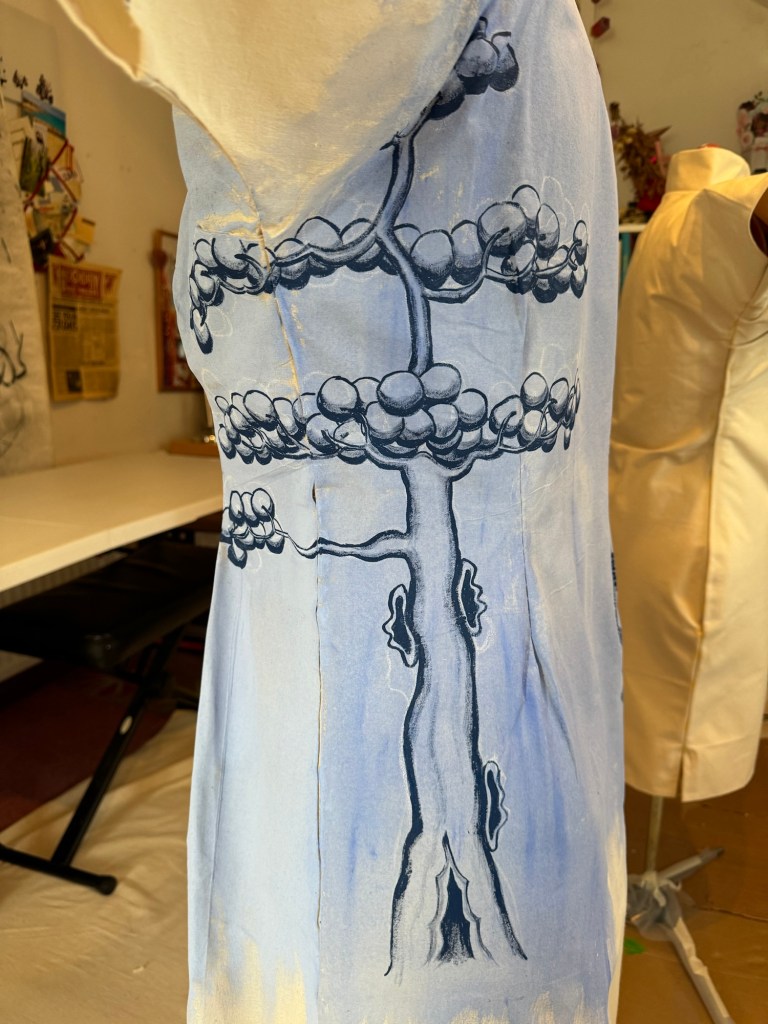
In my earlier blog, I talked about the incorrect depiction of a tree on the Willow design. What should have been a large pine tree that was common in Chinese paintings, was instead depicted in a way that led many to believe it to be a disproportionally large fruit tree. This particular tree was discussed extensively in the ‘Willow!’ book with many suggestions of the different types of fruit tree that it could have been, but without any clue about what tree it really was. So to expose this classic example of an appropriation of something without having basic understanding of what was being appropriated, I decided to add the said tree to my Cheongsam painting and copied some texts from the book to highlight such cultural challenges.
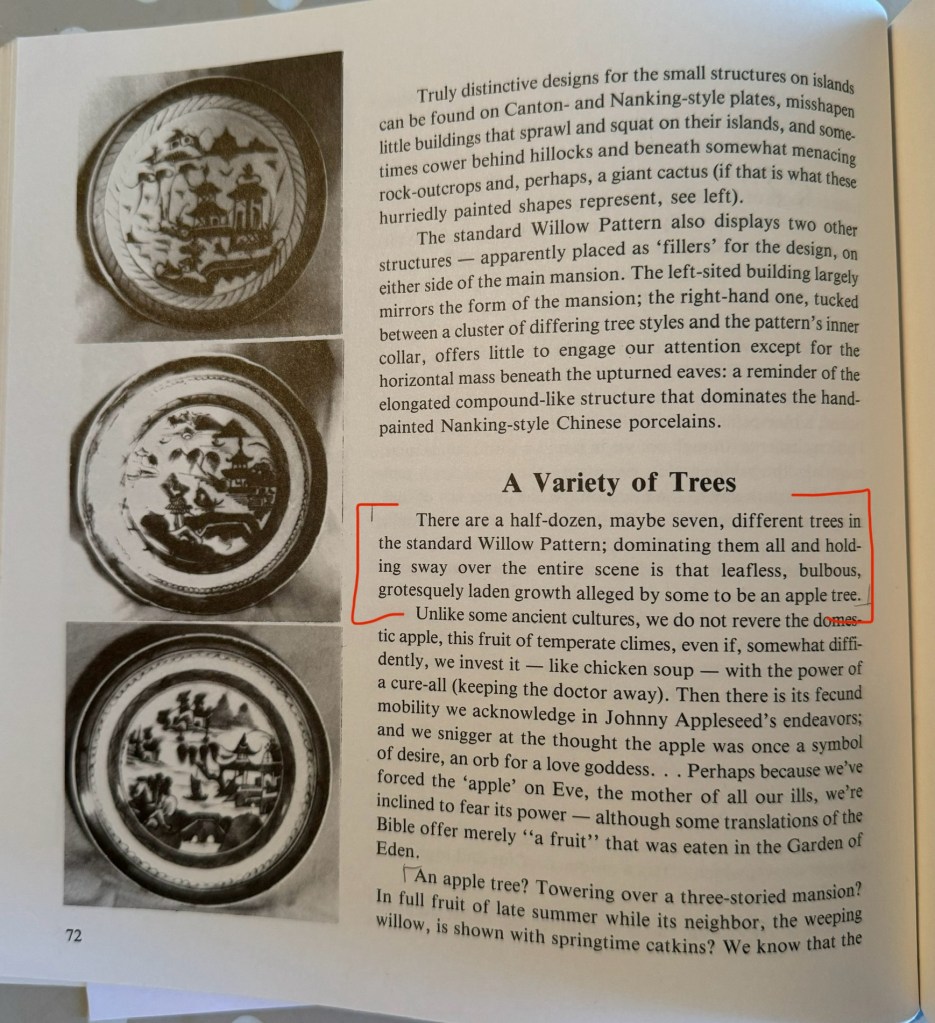
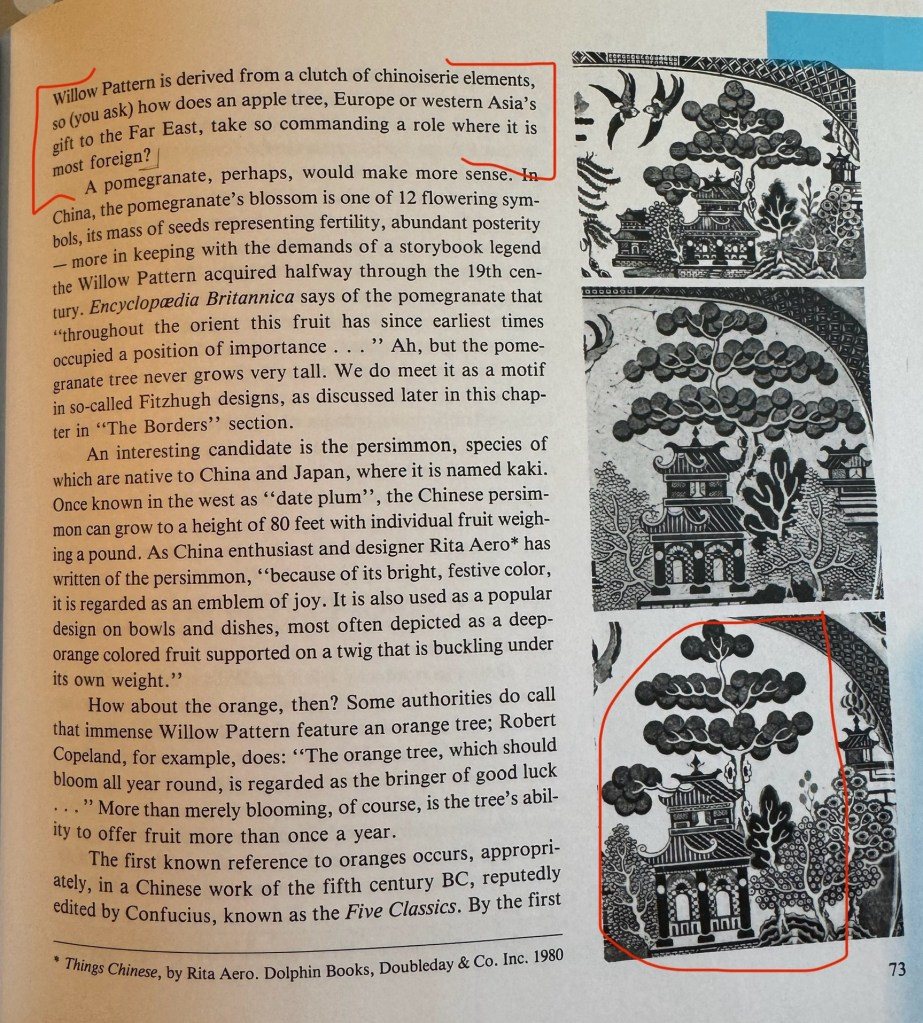
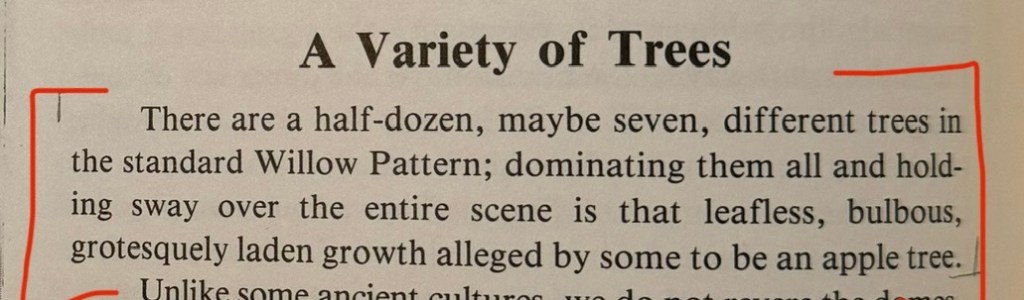
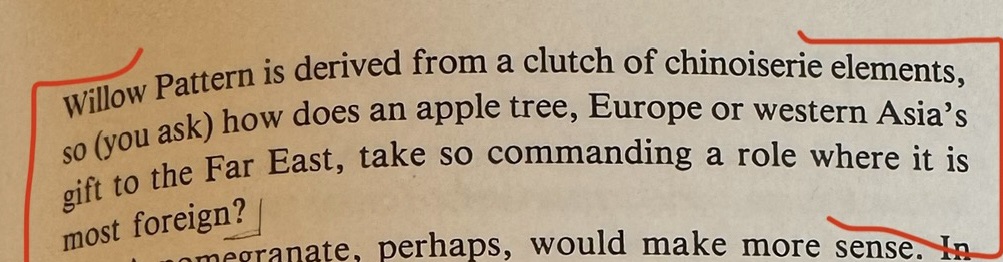
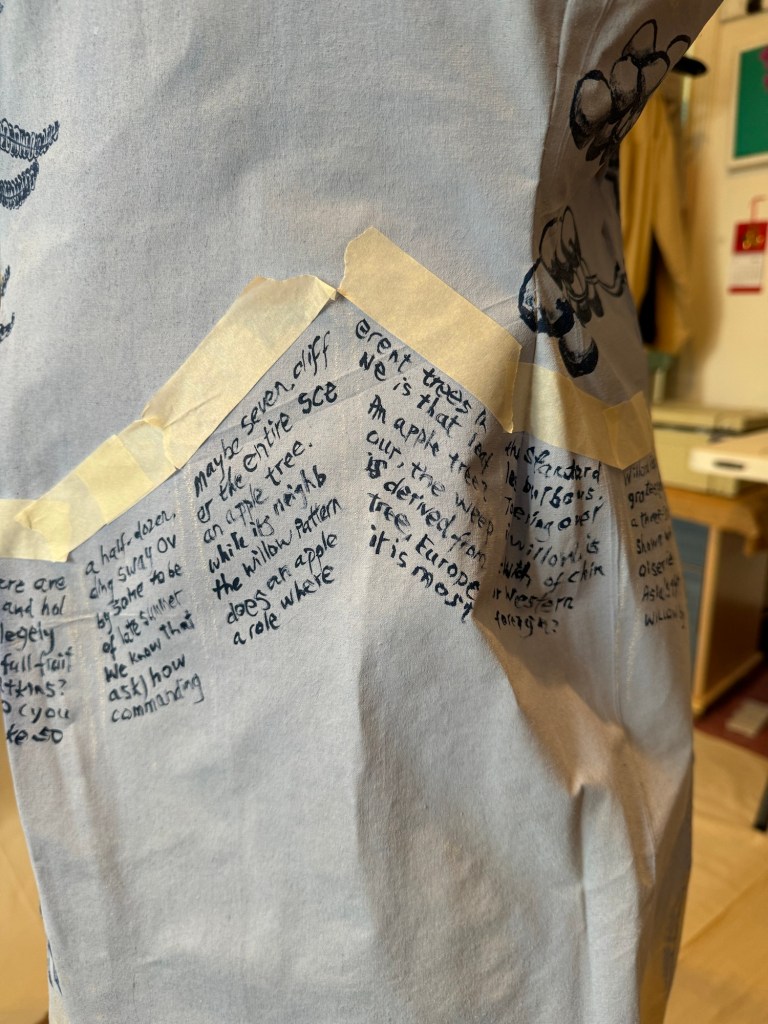
Texts that were added as part of a fence on the painting were copied from the above pages describing the (pine) tree as leafless, bulbous, grotesquely laden… apple tree. Close up of the texts copied are as follows:
–
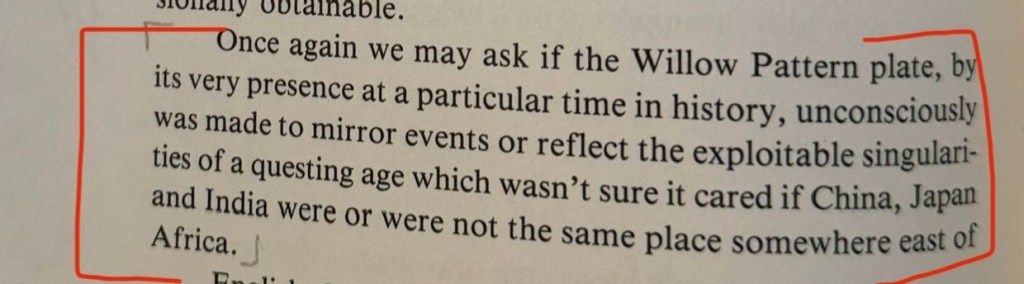
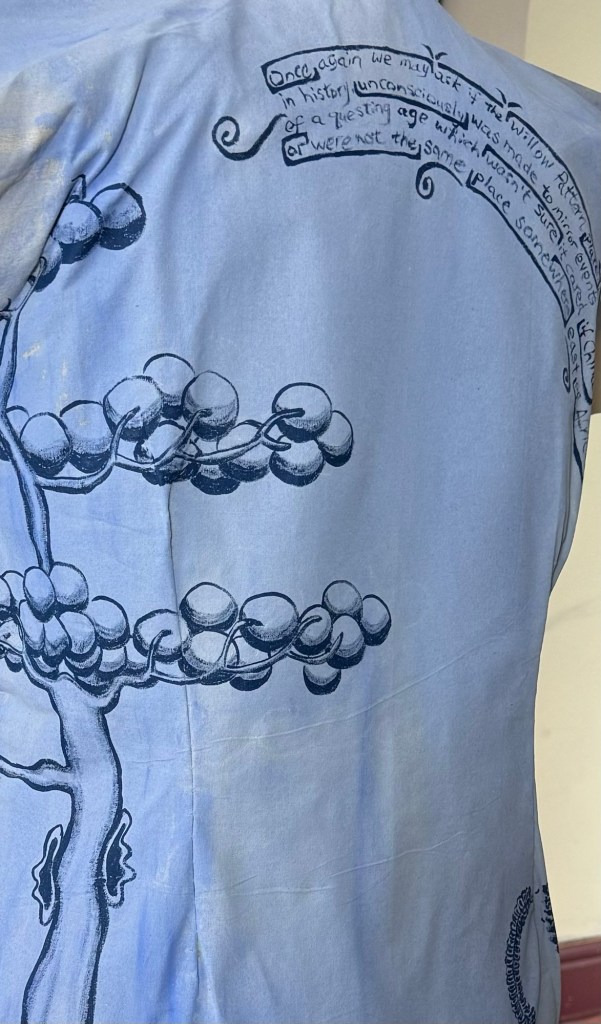
Another paragraph was copied onto my painting which gave insight into the attitude towards Asia during the time when the Willow pattern was designed:
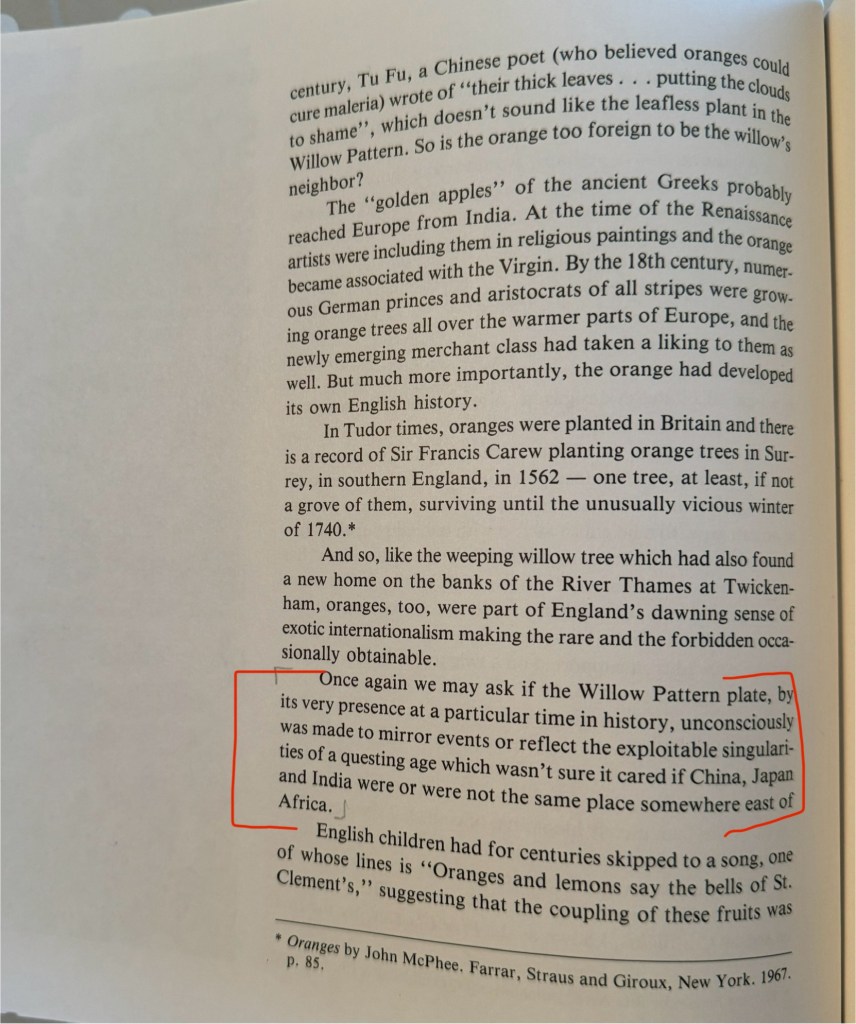
Close up of the texts copied:
–
The ‘bulbous and grotesquely laden fruit tree’ was added to my painting:
–
Masking tape was used to mark out the shape of the fence for the texts:
–
The second set of texts was added on the back of the painting next to the large tree with some ornate borders like those on the edge of some Willow plates:
–
The finished painting:
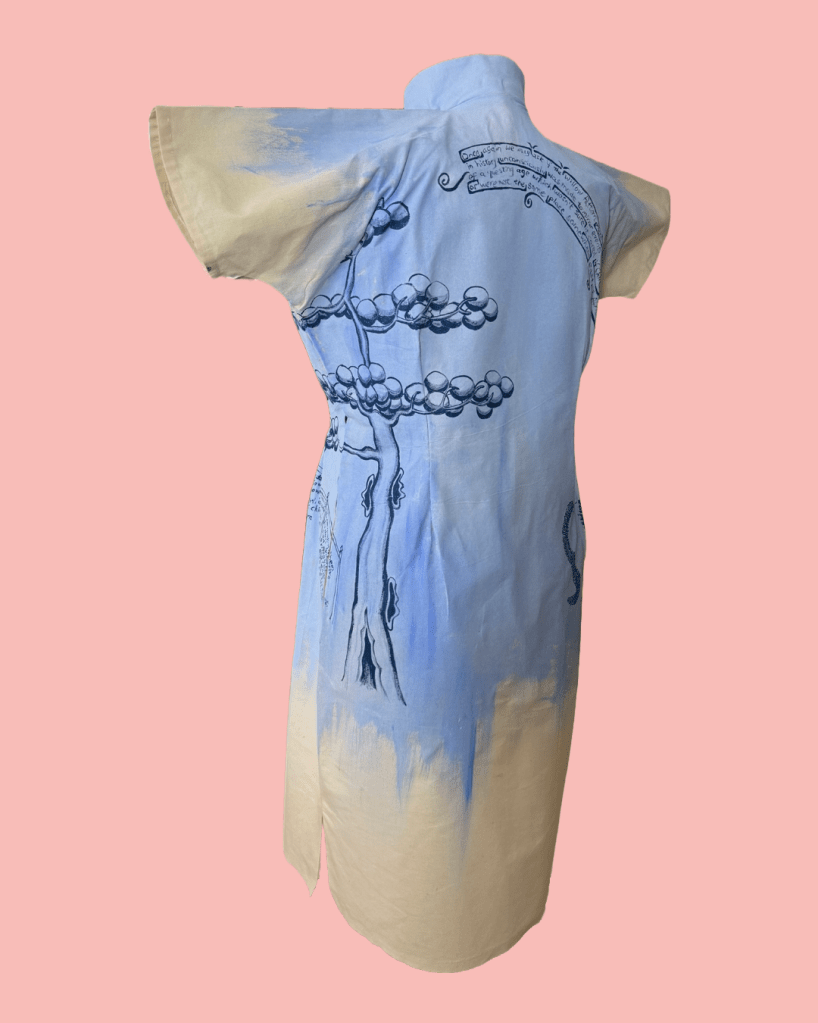
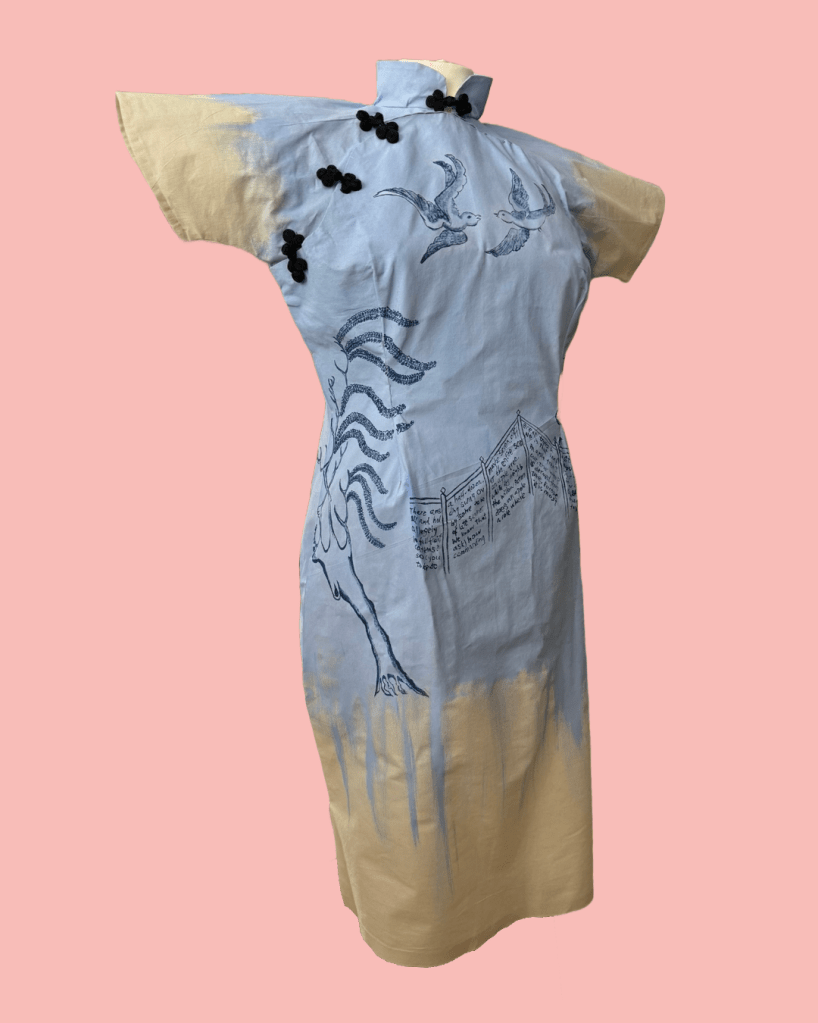
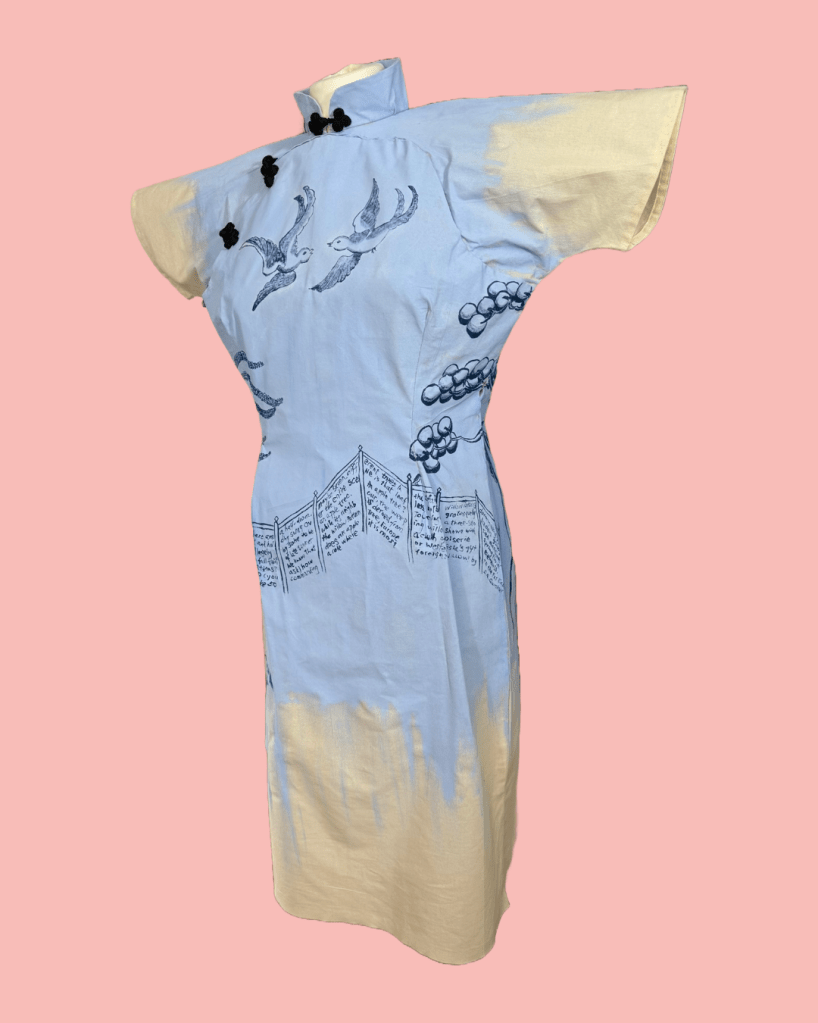
REFLECTIONS
I am pleased that I have reworked this painting because my practice is not just about making work, it is also about examining issues relating to my identity which includes understanding my heritage. In the case of the Willow Pattern, it highlighted the casual and incorrect appropriation of Asian art during the colonial era. My original idea for this piece was always to highlight the mistakes made in the Willow Pattern appropriation. In particular, the pine tree. I have researched numerous design texts about the Willow Pattern and most of them express puzzlement about the disproportionally large ‘fruit tree’ towering over the building. The debate surrounded what kind of fruit it was, apple, pomegranate, peach etc.. All acknowledging that no fruit tree could grow to several storeys high hence description such as ‘grotesquely laden’ was used here. I am certain that if any Chinese artists were asked, they would have said it was a (badly depicted) pine tree.
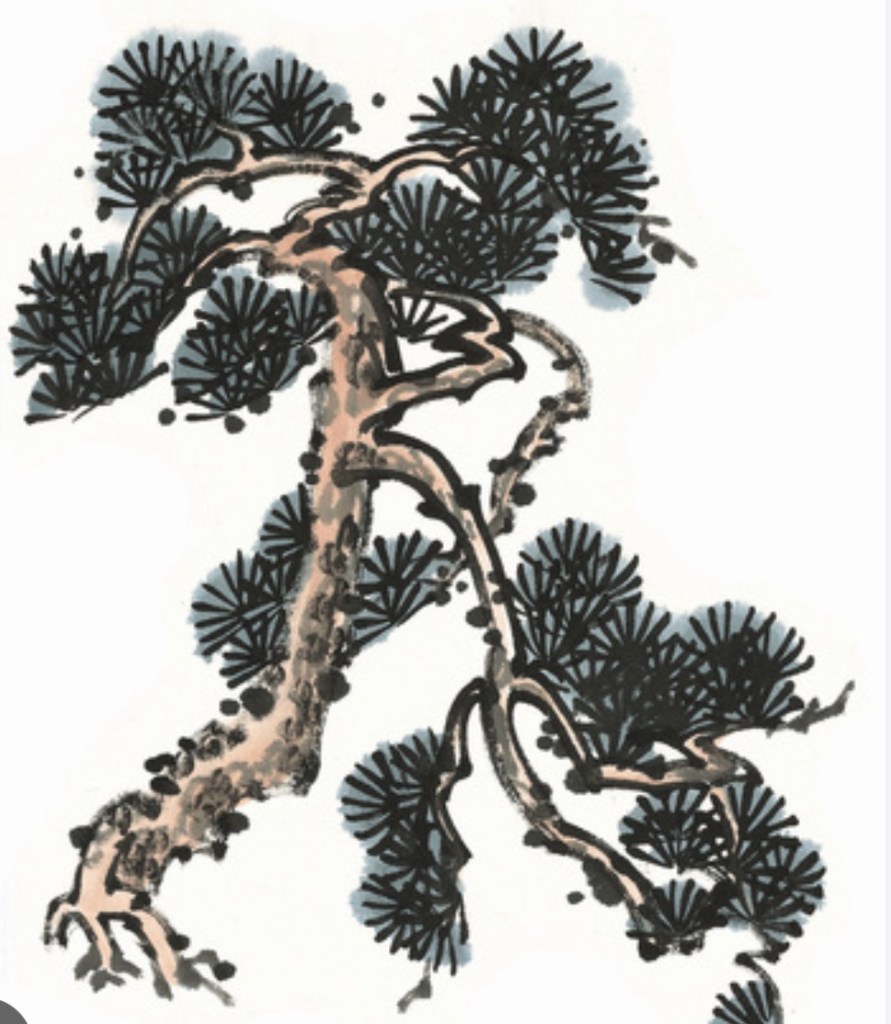
My research shows that there are many species of pine trees in China. Ranging from the common Pinus tabuliformis which can be 20-30 metres tall, to the famous Pinus hwangshanensis (or Huangshan pine) with some being 1,500 years old. Pine trees are often depicted in Chinese paintings. The pine needles are typically formed in dense round clusters:
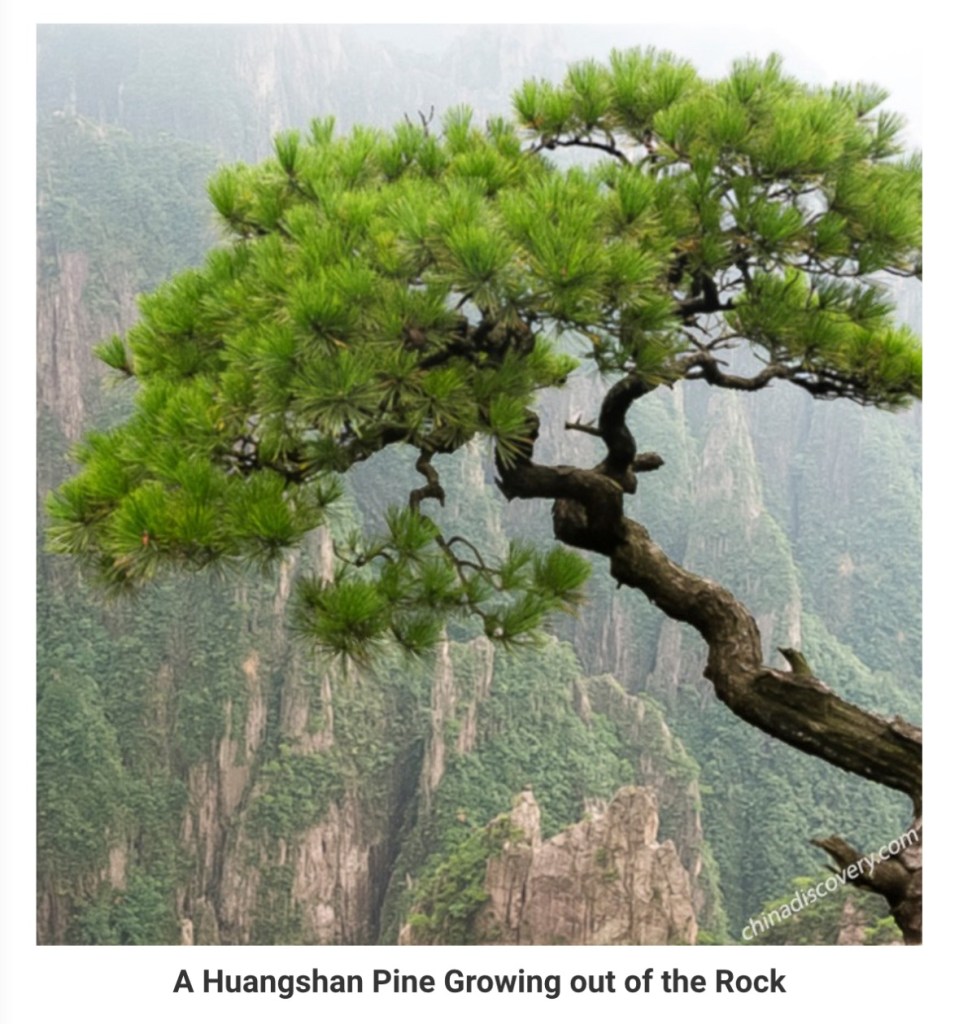
The pine needles are often depicted as below in traditional Chinese paintings with a few needles radiating from the centre of the cluster and a thin wash of colour (usually green) to give a sense of the overall round shape of the cluster of needles.
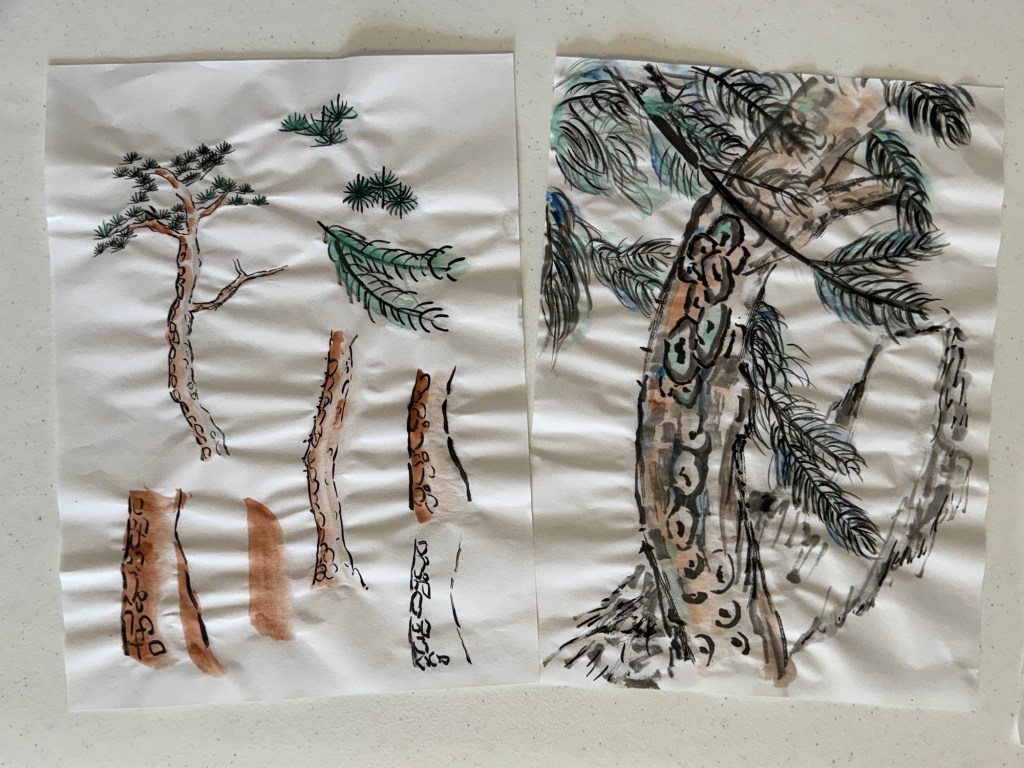
Here are my pine tree paintings that I made in one of my Chinese brush painting lessons, the left hand image shows the round clusters of needles with a green wash:
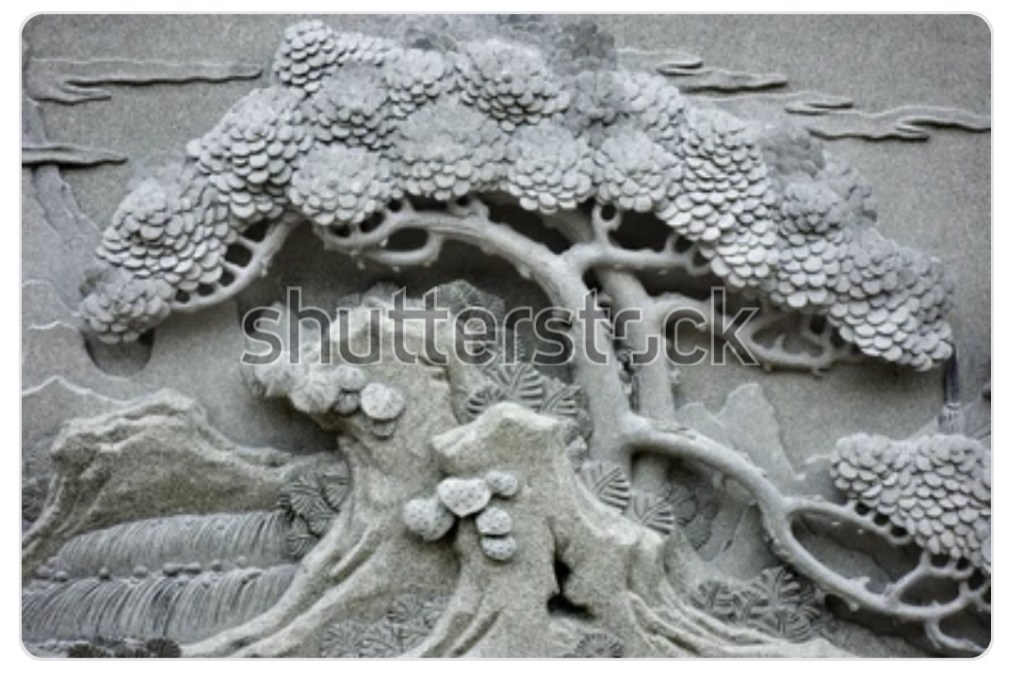
Carvings of pine trees often take on a more accentuated round shape such as this example:
–
The Chinese pine tree was depicted as follows by the Williow Pattern designers:
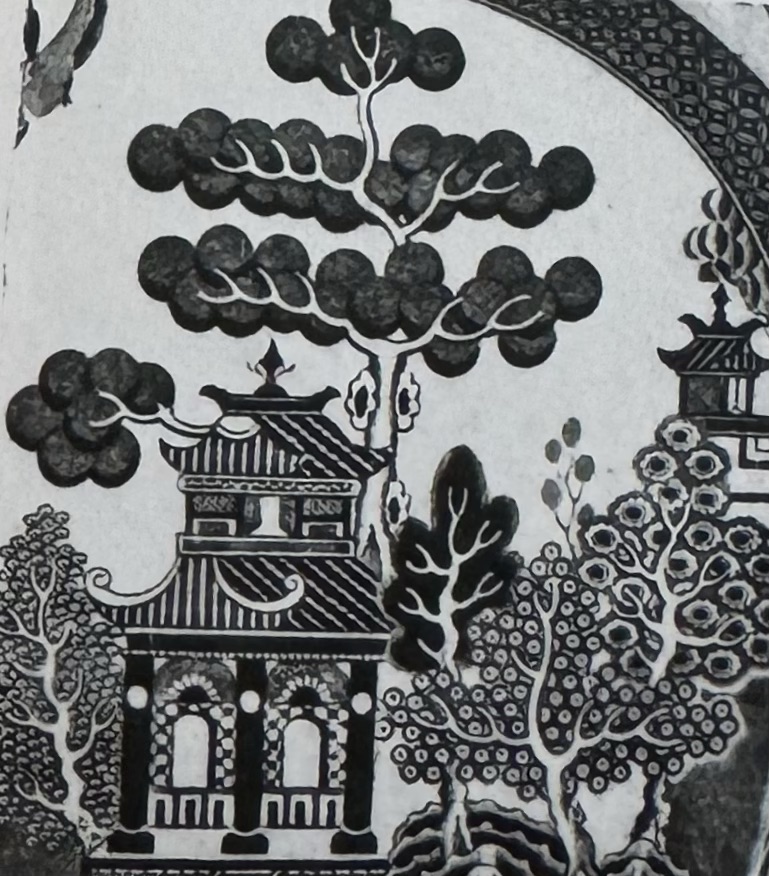
The Willow Pattern became very popular in Britain as a result of demands generated for Chinese artefacts during the British colonial period. Subsequent generations of people who buy or study the Willow Pattern have wondered what tree that was and due to the rounded shapes coming off the branches, they concluded it was a fruit tree of some kind – such as the hypothesis in the ‘Willow!’ book even though they all acknowledged the disproportionate size.
When I made the discovery of the mistaken identity of the tree on so many design documentation, I wanted to do something to capture my findings and expose the lack of research that I have witnessed. I am not a design historian, nor a botanist, nor am I that experienced a Chinese painter, even I could tell that it was meant to be a pine tree. So it shouldn’t have been difficult to deduce. I could only conclude that people just didn’t really care enough to find out. Even those who were writing books or papers on the Willow design didn’t seem to make that extra effort to find out and just accepted that it was a strange fruit tree or badly depicted overly large and grotesque fruit tree. Hence I wanted to make a painting to express this example of our casual laziness towards other people’s culture. The second set of texts that I copied from the book aptly acknowledged the ‘couldn’t care less’ attitude towards Asia at the time.
When I first did the painting, I stopped before putting in the pine tree. This was because I felt the painting was turning out to be a bit ‘twee’. I didn’t like it. In hindsight, what did I expect when I was copying from a design that was a bit twee! So I left the piece at the time and went onto make two other paintings. I am very pleased that I returned to finish this painting because I had spent much time in researching the Willow Pattern, especially the mystery surrounding the pine tree; I really wanted to say something about it. Hence I am pleased that I returned to complete the pine tree as well as copy some texts that confirmed the casual approach taken towards other people’s culture.
LEARNING
I have learnt a lot about the history of the Willow Pattern. That also helped me to understand more about the British Empire and its history at the time. I am not really that offended by the poor appropriation of the design, it amused me more than anything. However, it highlighted how easy it is to poorly appropriate and that is usually out of laziness, ignorance or not being thorough in research. That is good learning for me and has helped to make me more mindful about my work – if I were to borrow ideas from other cultures, or my own culture, I need to pay more attention to get my facts right. It is often not difficult, just takes a little more time to ask or research. Otherwise, I would be just as bad as those that I’m criticising here.
NEXT STEPS
With completing this painting, I have now done three Cheongsam paintings. I have several ideas of other Cheongsam paintings so I will get on and make some more!
–
RESEARCH BACKGROUND – WILLOW PATTERN
Below are some examples of mistaken identification published for the large pine tree in the Blue Willow pattern. The examples shown here assume the tree is a fruit tree.
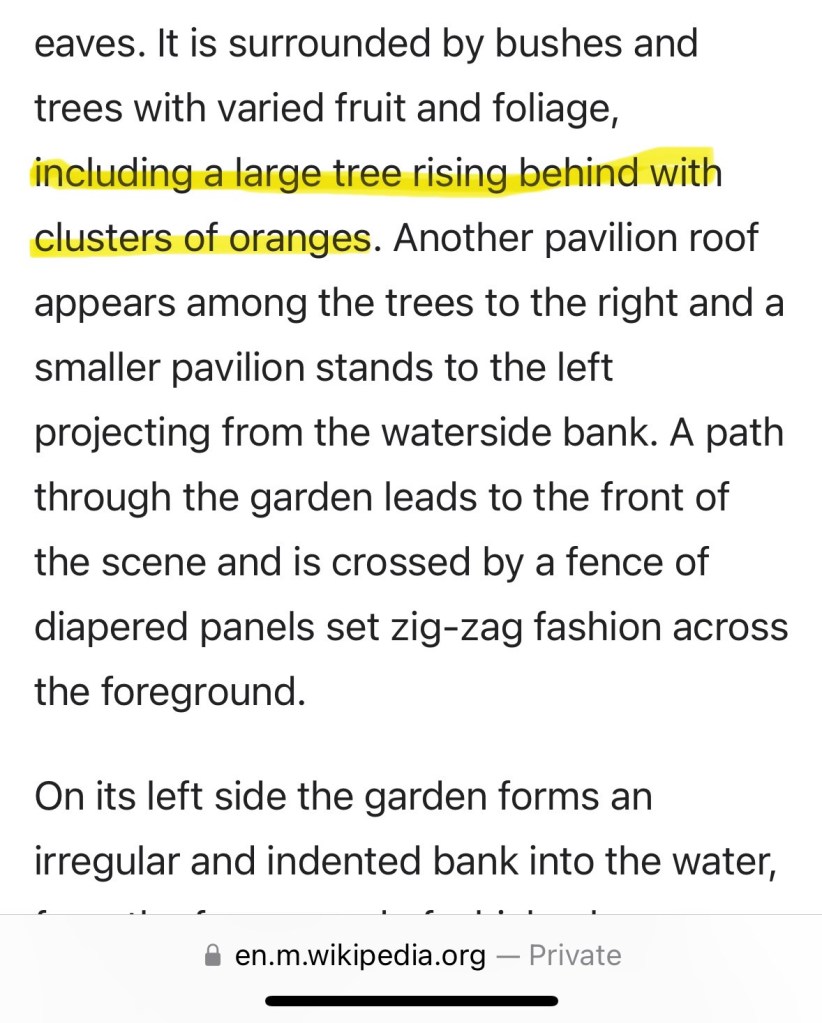
Example 1: Wikipedia
https://en.m.wikipedia.org/wiki/Willow_pattern
Wikipedia describes the tree as an orange tree even though orange trees do not grow that tall and if the round shapes were fruit then it would have been a leafless fruit tree.
–
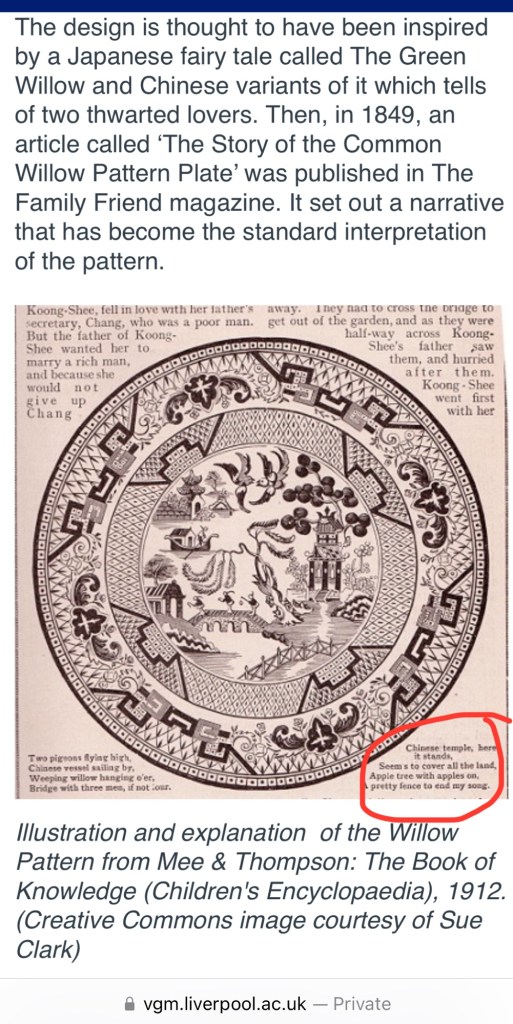
Example 2: Liverpool University – Victoria Gallery and Museum
https://vgm.liverpool.ac.uk/blog/2021/willow-pattern/
Liverpool University’s Victoria Gallery and Museum has a blog dedicated to the Blue Willow design. It details the key elements of the design but does not mention the largest tree depicted. It does, however, include an insert of an illustration stating that the large tree was an apple tree – did they really think that it could be a leafless apple tree that was nearly twice the size of a three storey building?
–
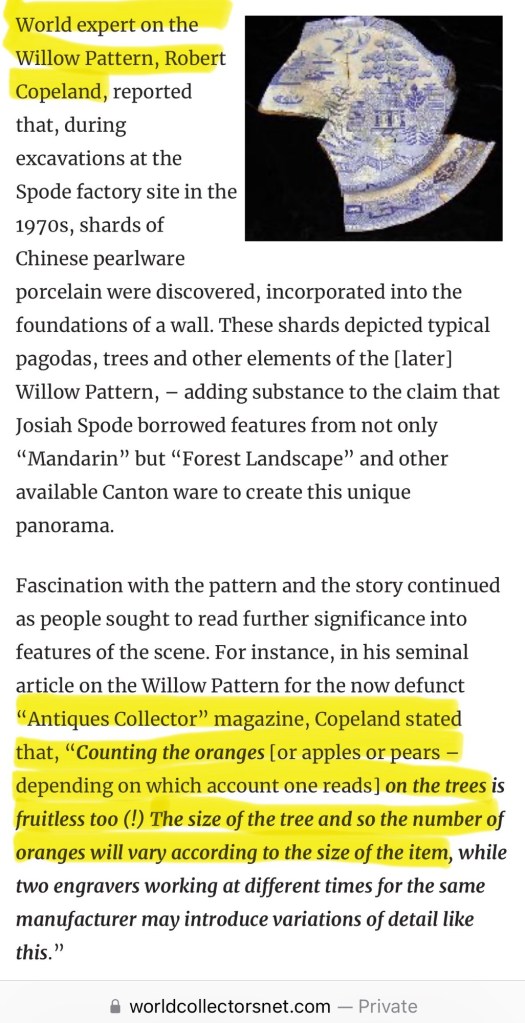
Example 3: Quote from ‘Antiques Collectors’ magazine by ‘World expert on the Willow Pattern’
https://www.worldcollectorsnet.com/articles/willow-pattern/
This article includes a quote from a ‘World expert on the Willow Pattern’ talking about the oranges on the tree, whilst acknowledging that there are accounts of other fruits such as apples or pears being published.
–
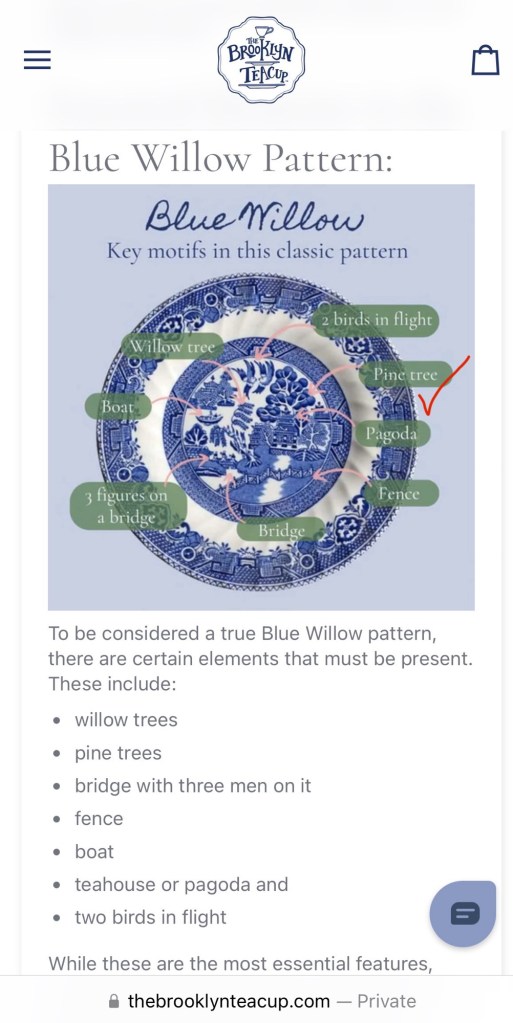
Example of a correct identification!
Finally, the example below correctly identifies the tree as a pine tree:
 elizarawlings