This is the second painting of the Cheongsam Series – Food as metaphor for cultural identity. The blog below is the introduction to the series with background information on my thoughts on this topic as well as some research.
MA Y2 U2: Cheongsam Series – Food as metaphors for cultural identity – Introduction
The blog below is for the painting that responds to this one, called ‘No, I’m an egg.’. I was meant to do the ‘banana’ painting first but due to shortage of green paint at the time, the second ‘egg’ painting was completed first.
MA Y2 U2: Cheongsam Series – Food as metaphors for cultural identity – ‘No, I’m an egg.’
METHOD
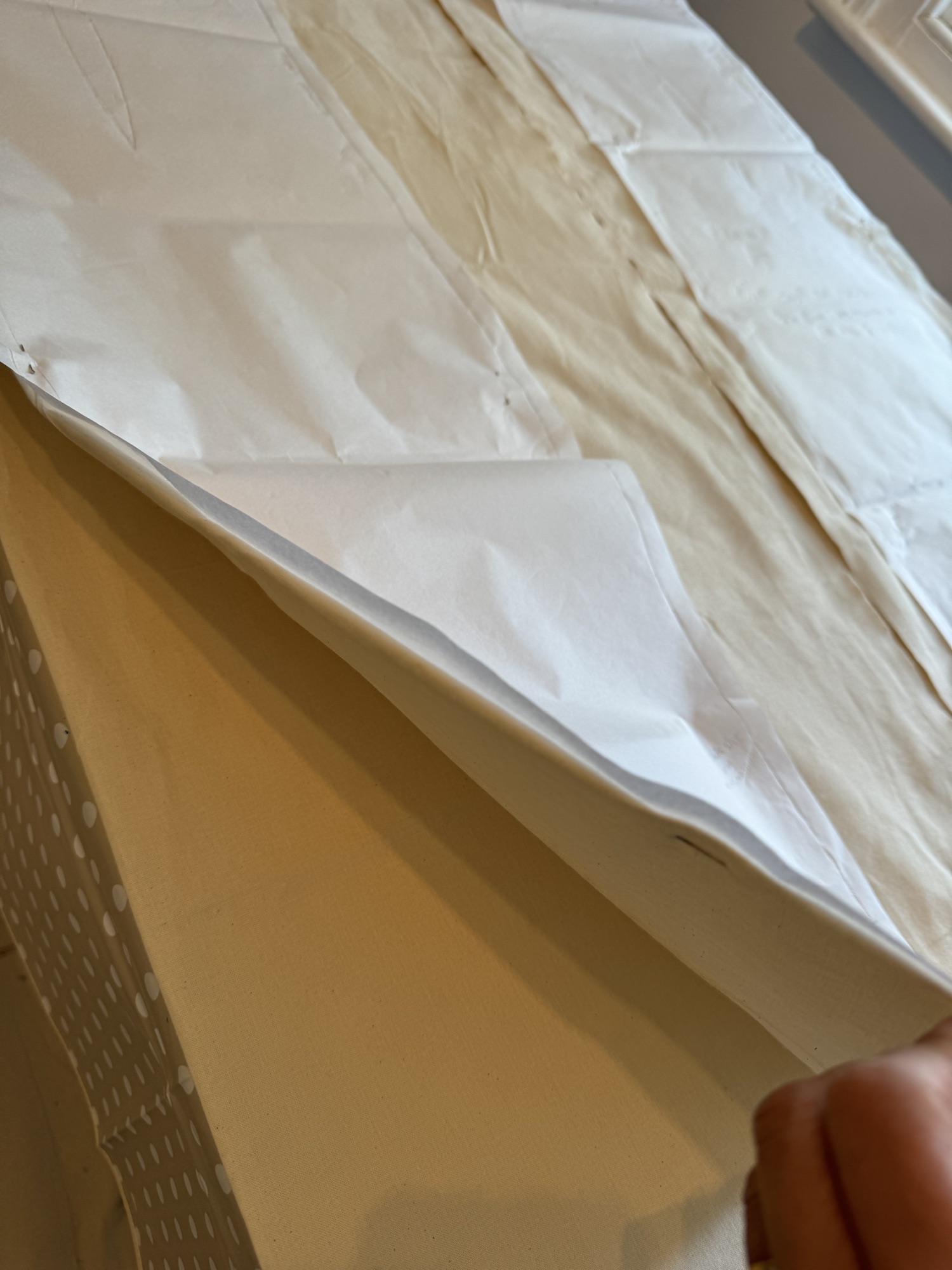
Since I am not an experienced dressmaker, I am rather slow in making the dress canvases. I constantly look for ways to be more efficient in the dressmaking process, so the canvas materials for this dress was cut at the same time as the ‘egg’ painting canvas by doubling up the calico material to save time.
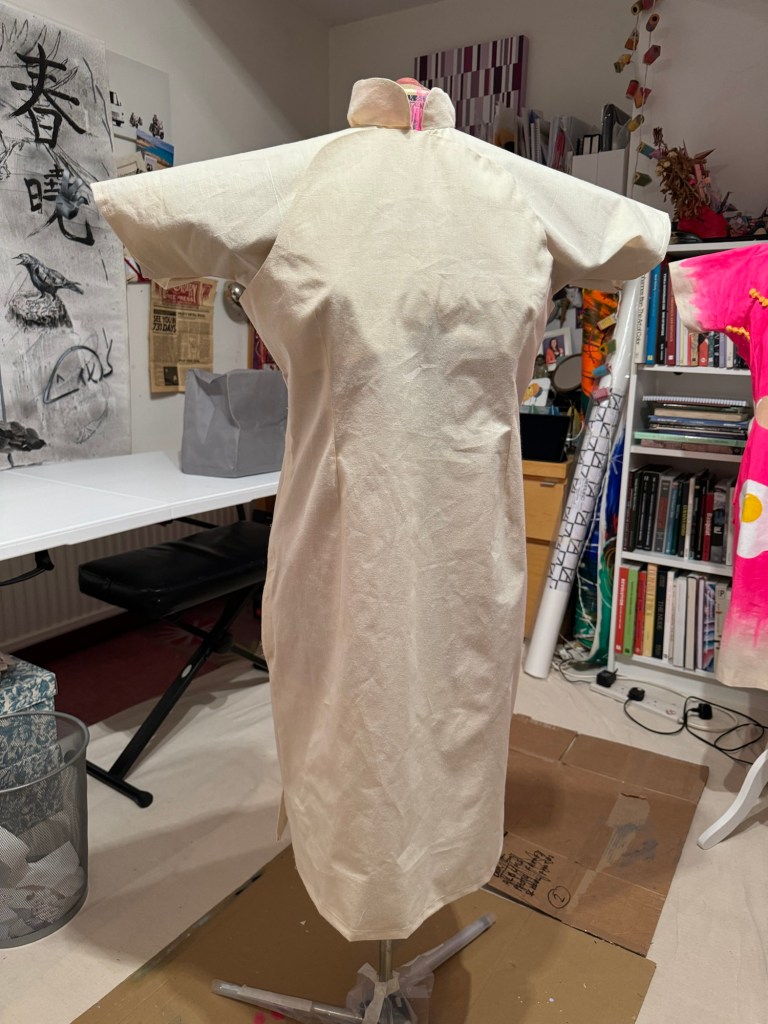
Here is the completed dress canvas ready for the banana painting:
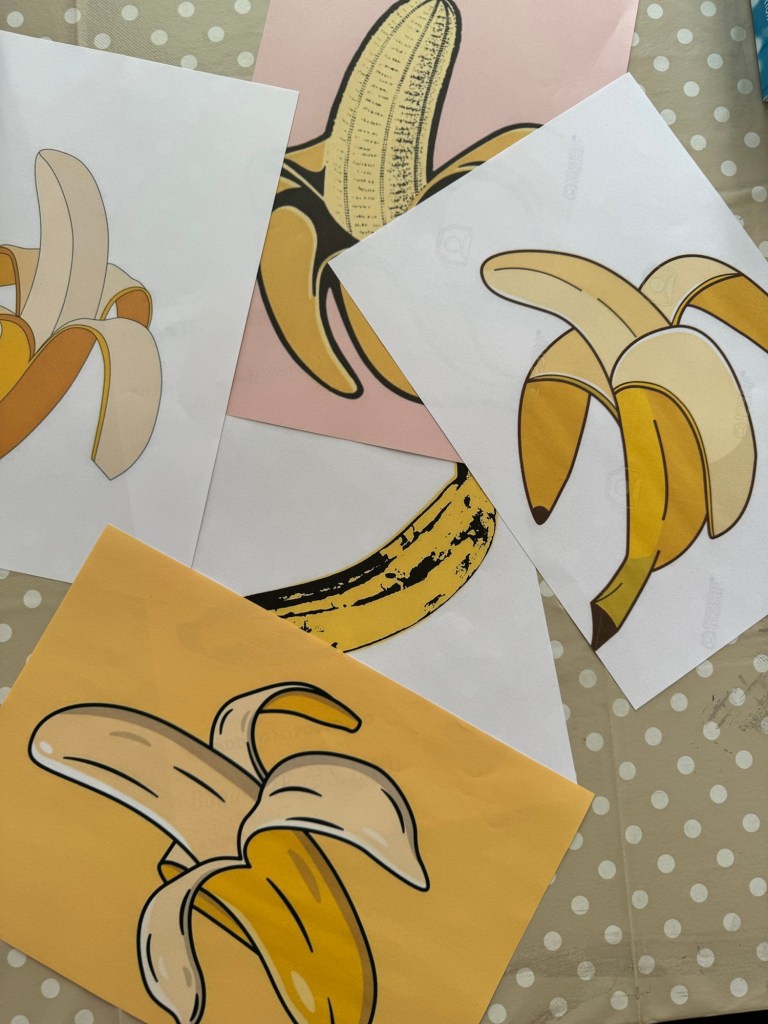
Different banana images were considered for the design. I wanted a ‘closed’ banana and a half peeled banana.
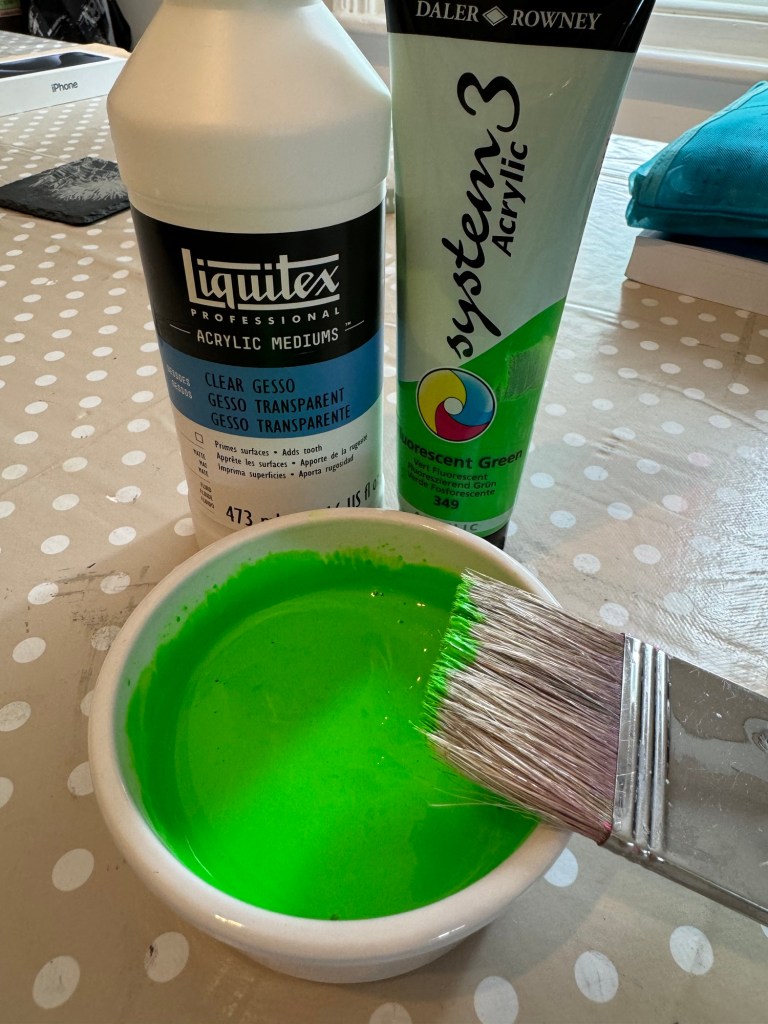
Clear gesso and fluorescent green acrylic paint were used to prime the canvas and for the background:
–
Banana shapes were marked onto the canvas using white chalk to map out the overall composition before painting.
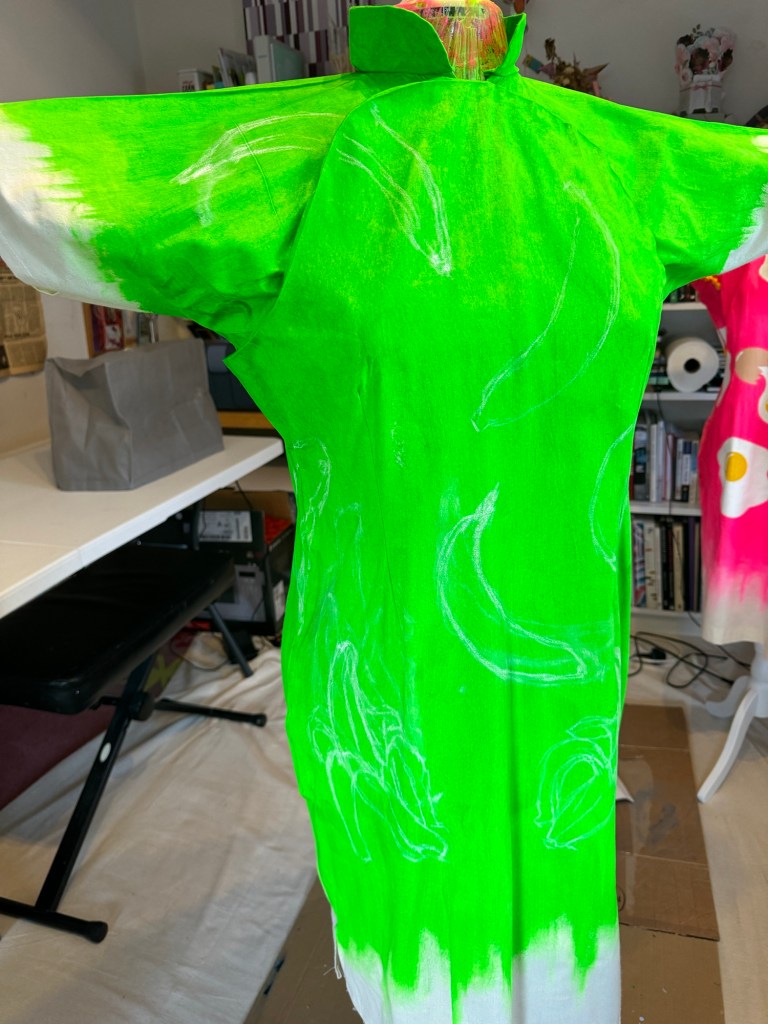
Then initial blocking out of the banana images were made:
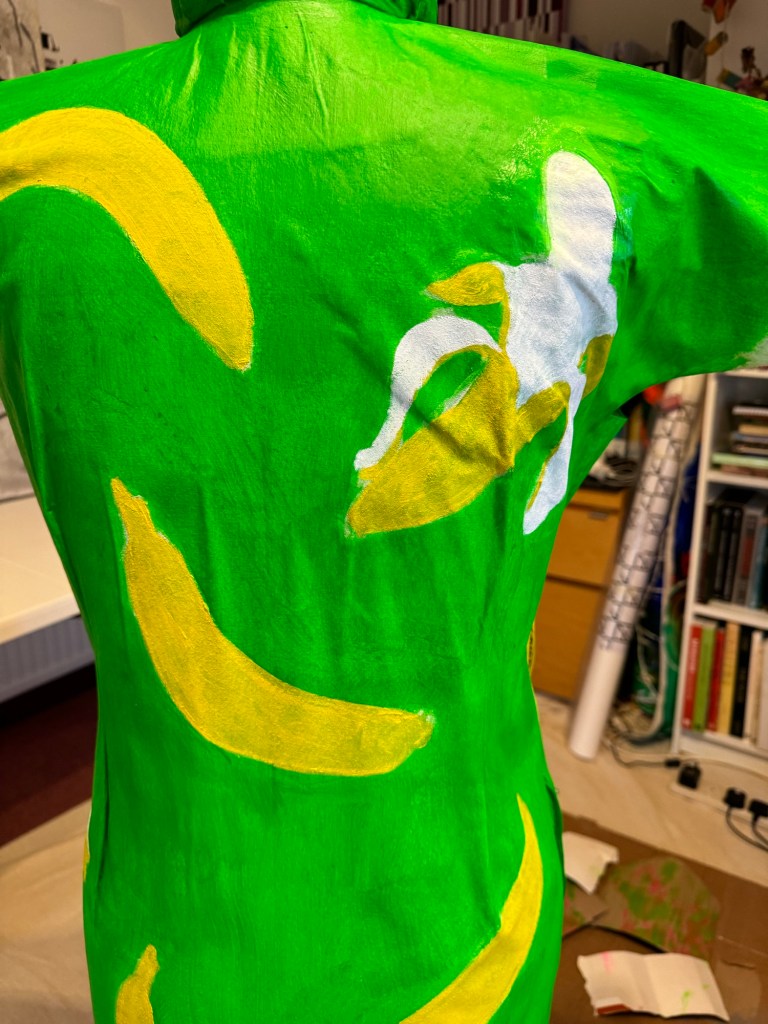
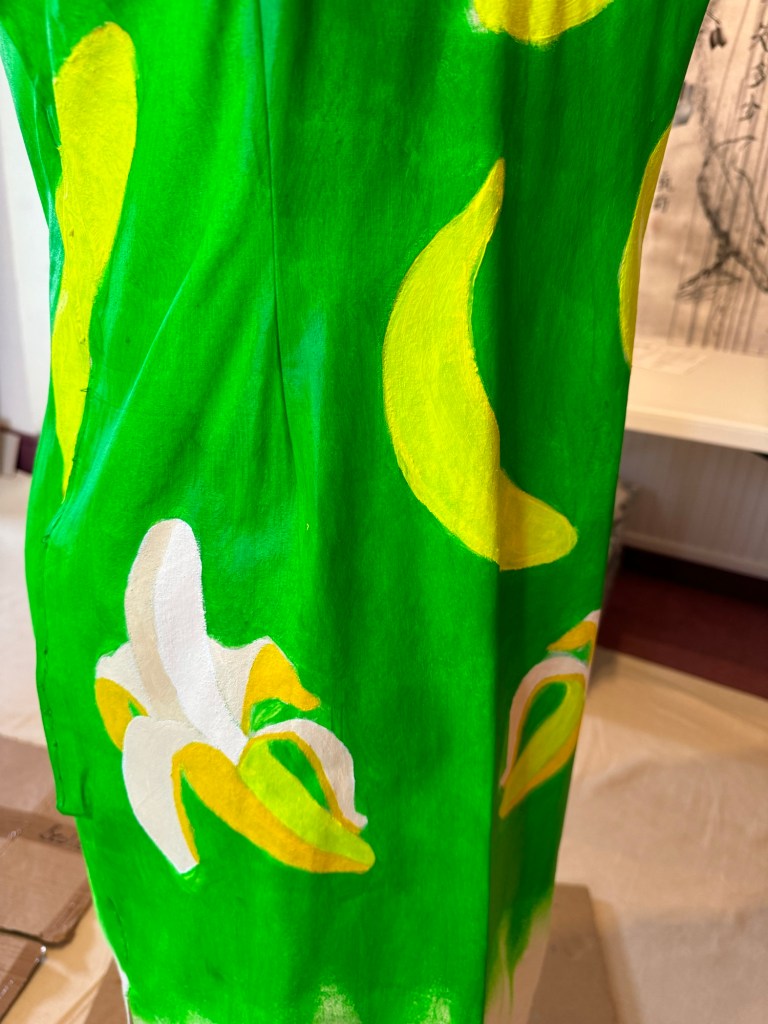
–
I was not satisfied with the Daler Rowney System 3 acrylic fluorescent green colour – it was too dark and dull, I wanted a neon-look. So I bought some brighter paint by Pebeo.
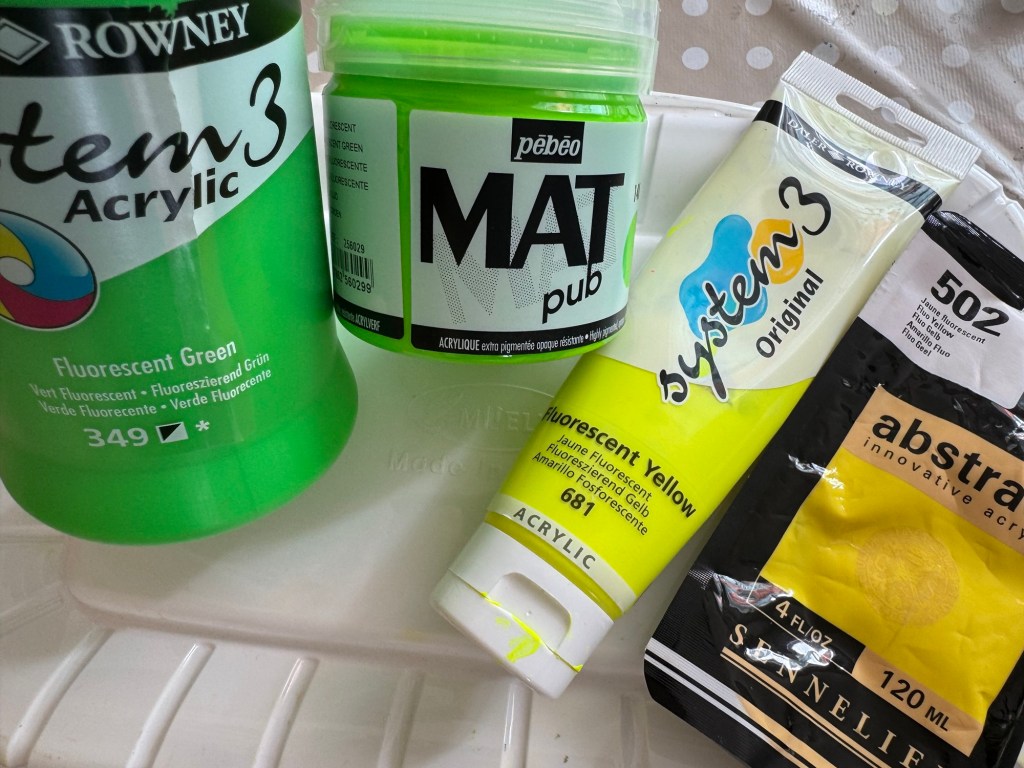
The Pebeo paint looked brighter which was better.
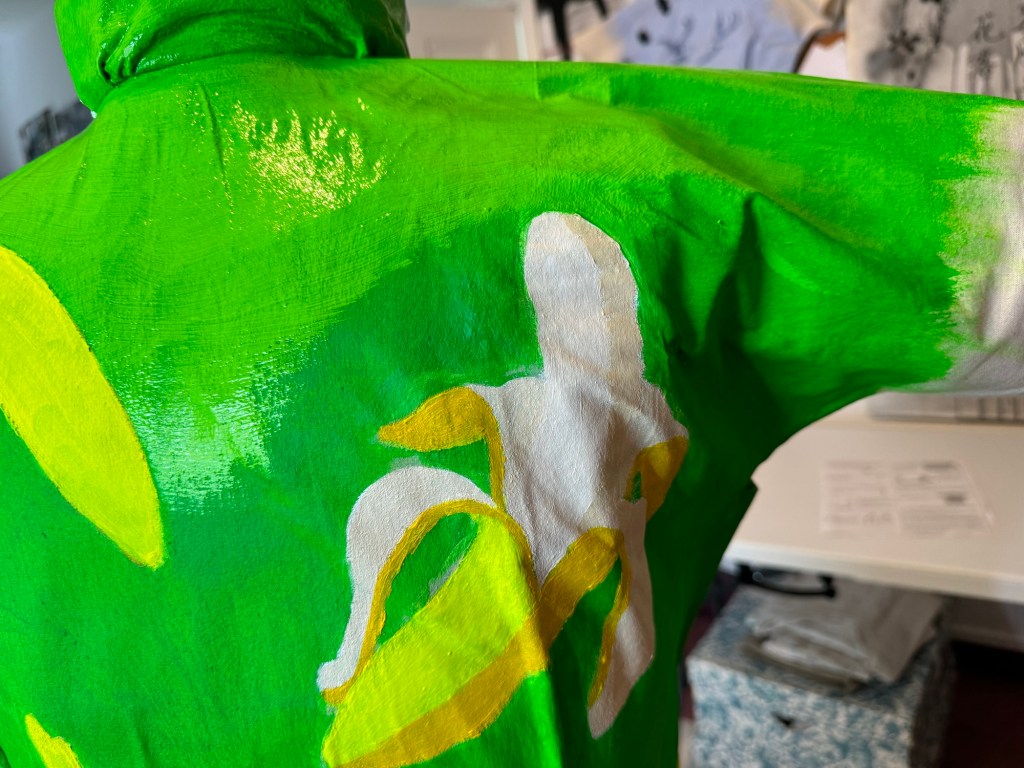
The Pebeo paint dried slightly darker but still brighter than the Daley Rowney System 3 paint.
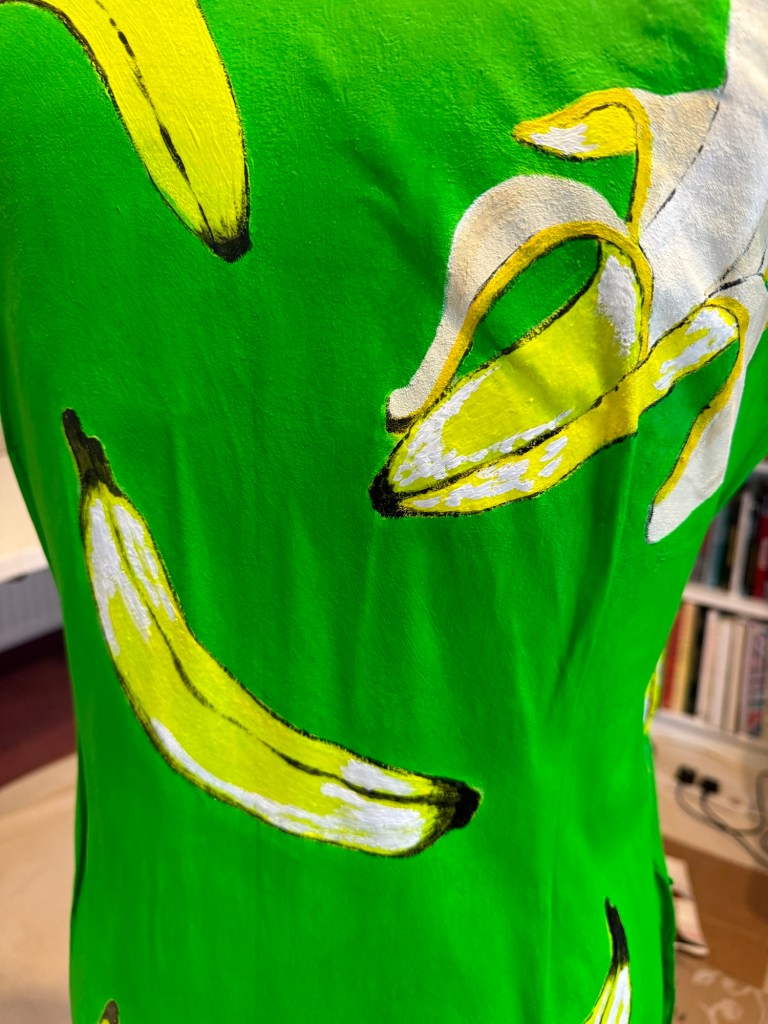
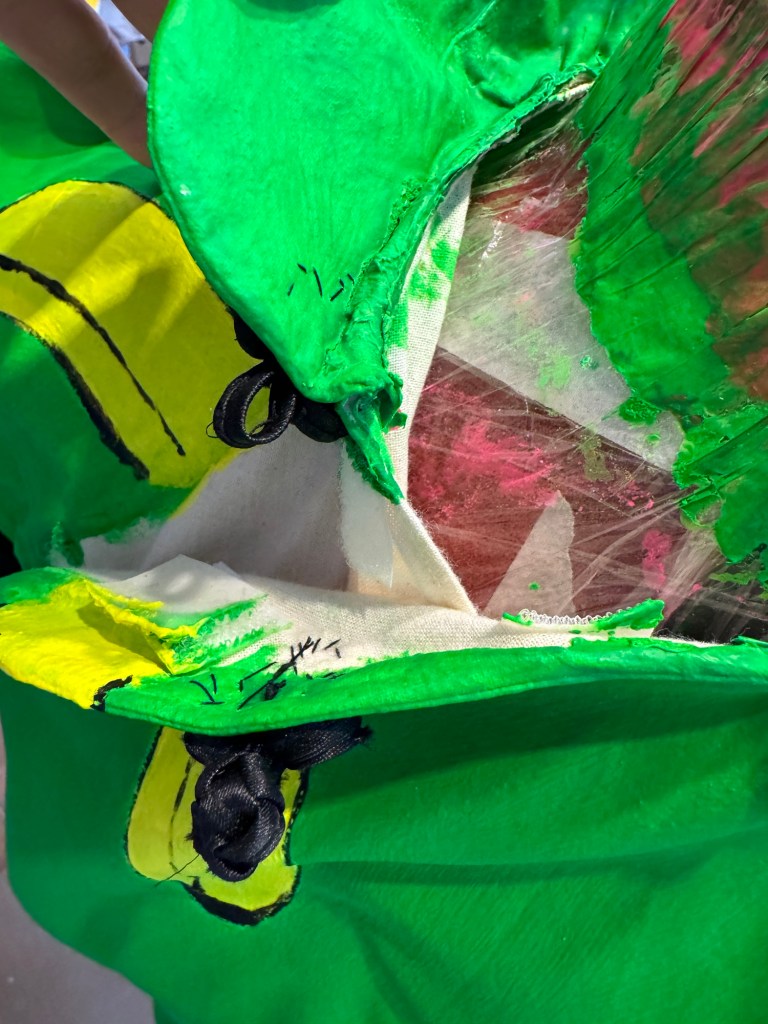
Since the Daley Rowney System 3 acrylic paint is a student grade paint, the pigment density was not great. I had to paint three coats to get a good coverage. Then I changed to the Pebeo paint and a further two coats were added. In total, there was five coats of acrylic paint which made the canvas stiffer than the ‘egg’ dress. This made sewing on the ‘frogs’ (Chinese style fasteners) much harder. See below for the not-so-tidy sewing where I had to just push the needle through wherever I could due to the thick canvas by that stage.
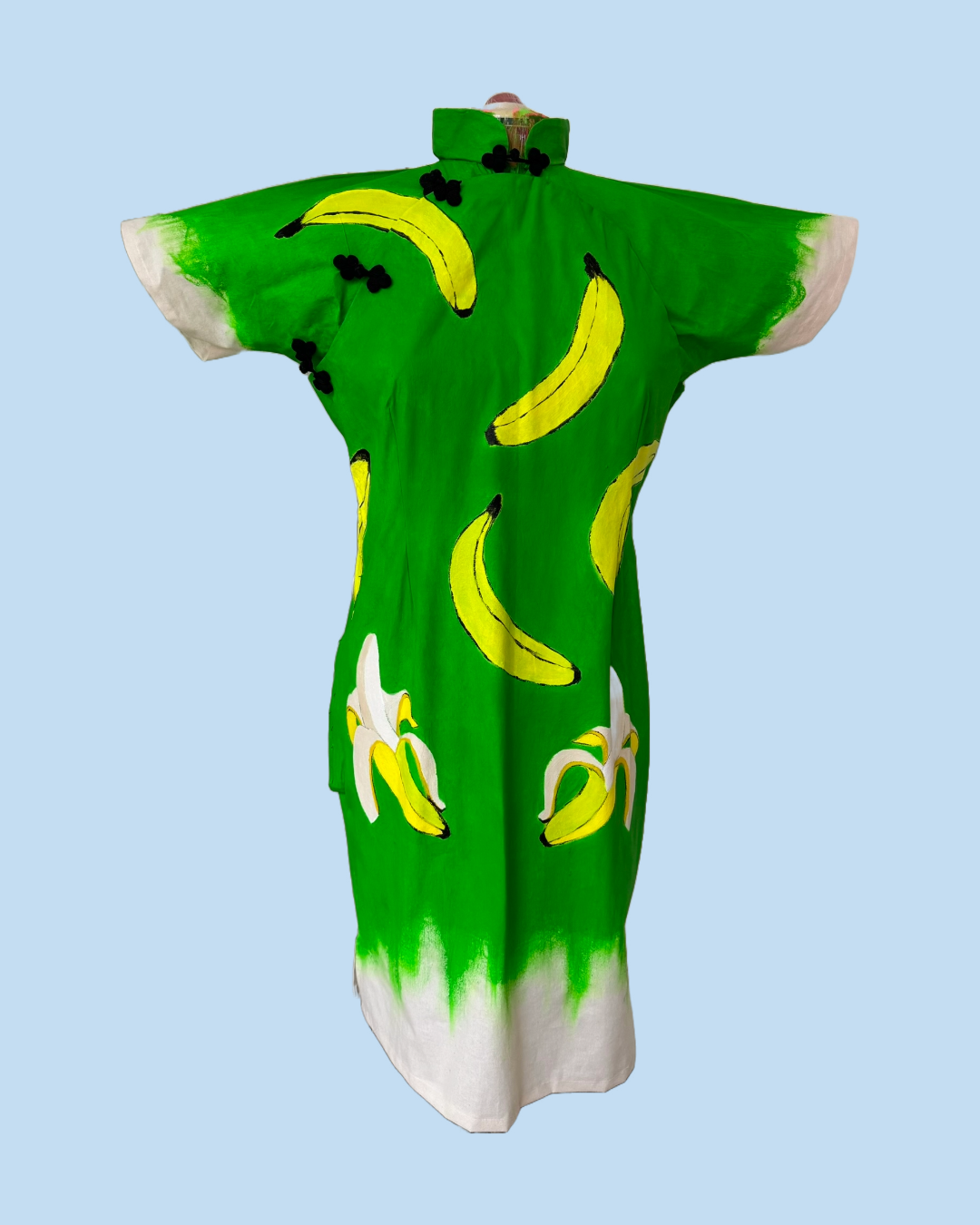
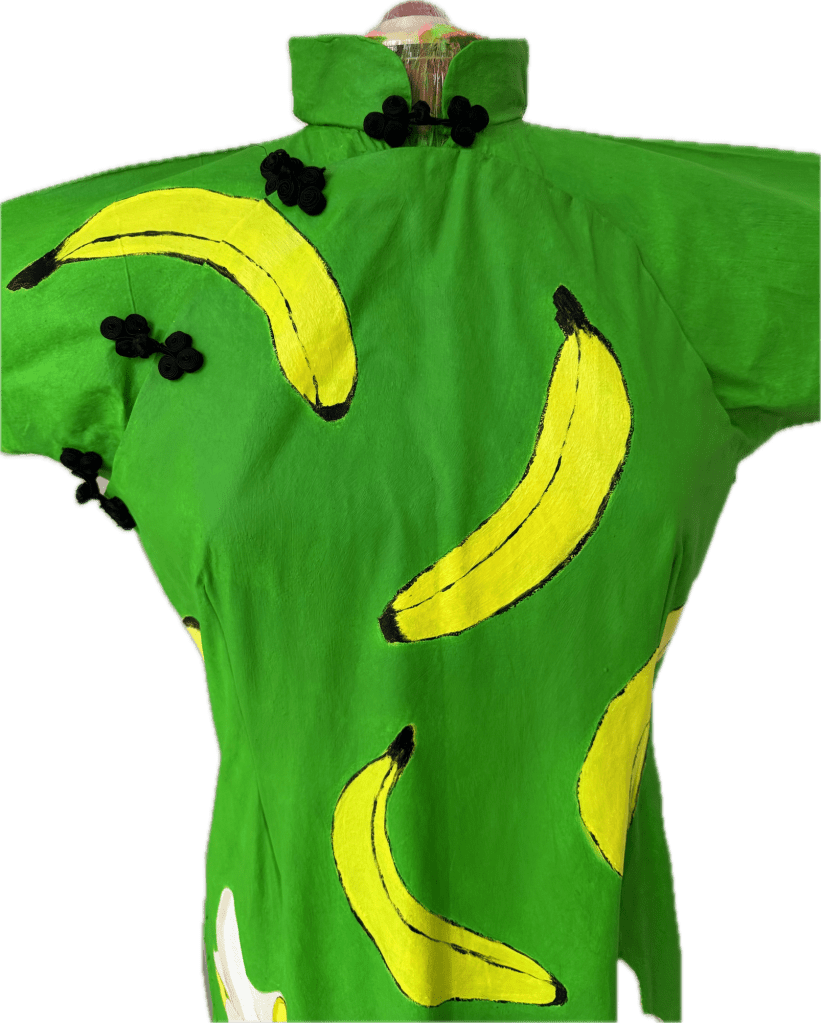
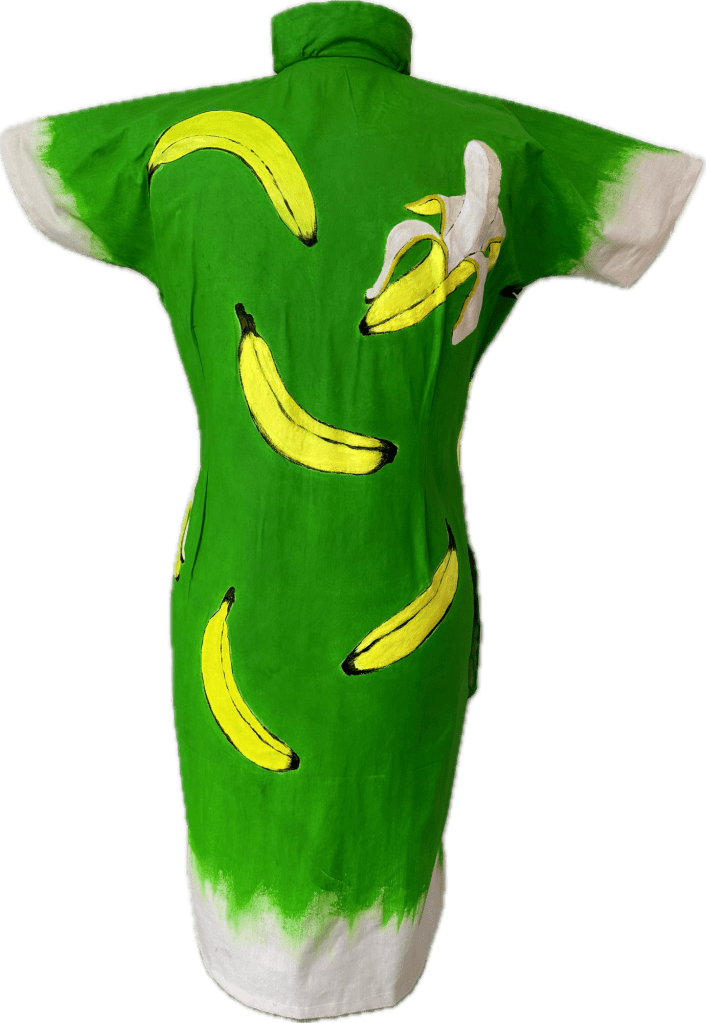
Finished work – ‘You’re a banana!’. Acrylic on handmade Cheongsam dress canvas. L105 x W76 x D30cm.
–
REFLECTIONS
The making of this painting did not go as well as the ‘egg’ painting because of the additional coats of green background colour required making the process more extensive than before. Nonetheless, I am satisfied with the outcome and the way the two dresses respond to each other. I will capture my reflections in full for both dresses in this blog:
MA U2: Cheongsam Series – Food as metaphor for cultural identity – Overall reflections for ‘banana’ and ‘egg’
LEARNING
There are several learning areas from this painting…
1. The Velcro ‘zip’
The learning from the ‘egg’ painting on the making of the Velcro ‘zip’ was very important and I am pleased that it worked out well for this painting.
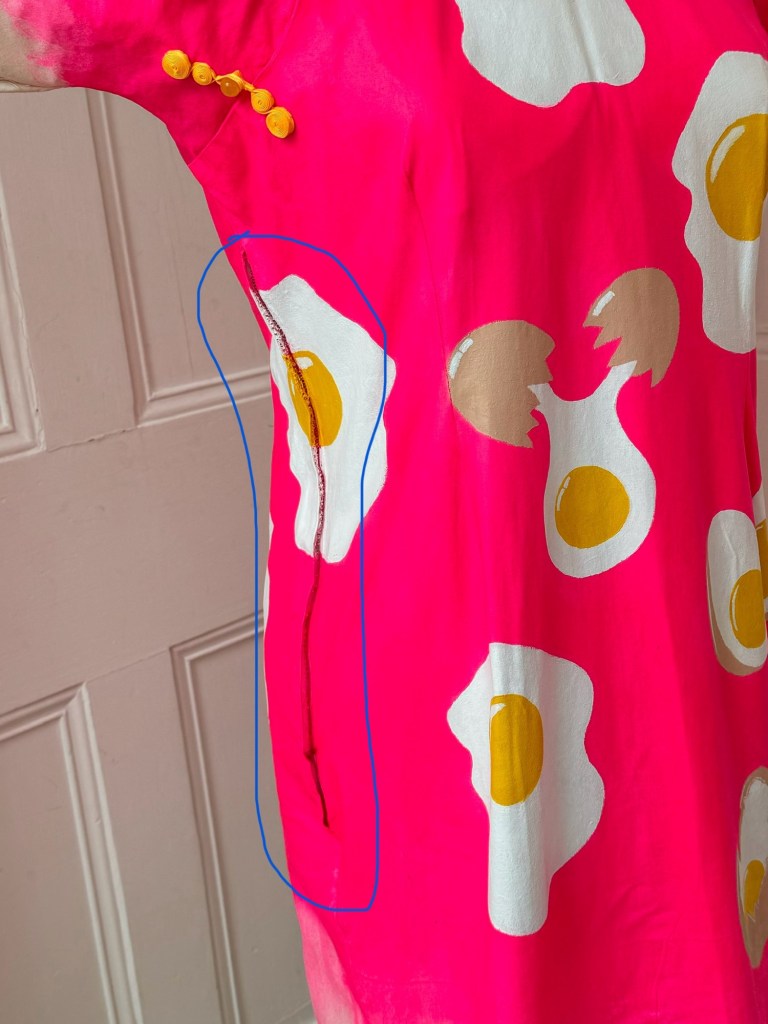
Reminder of the problem on the ‘egg’ dress with the Velcro seam being visible from the front, not ideal aesthetically:
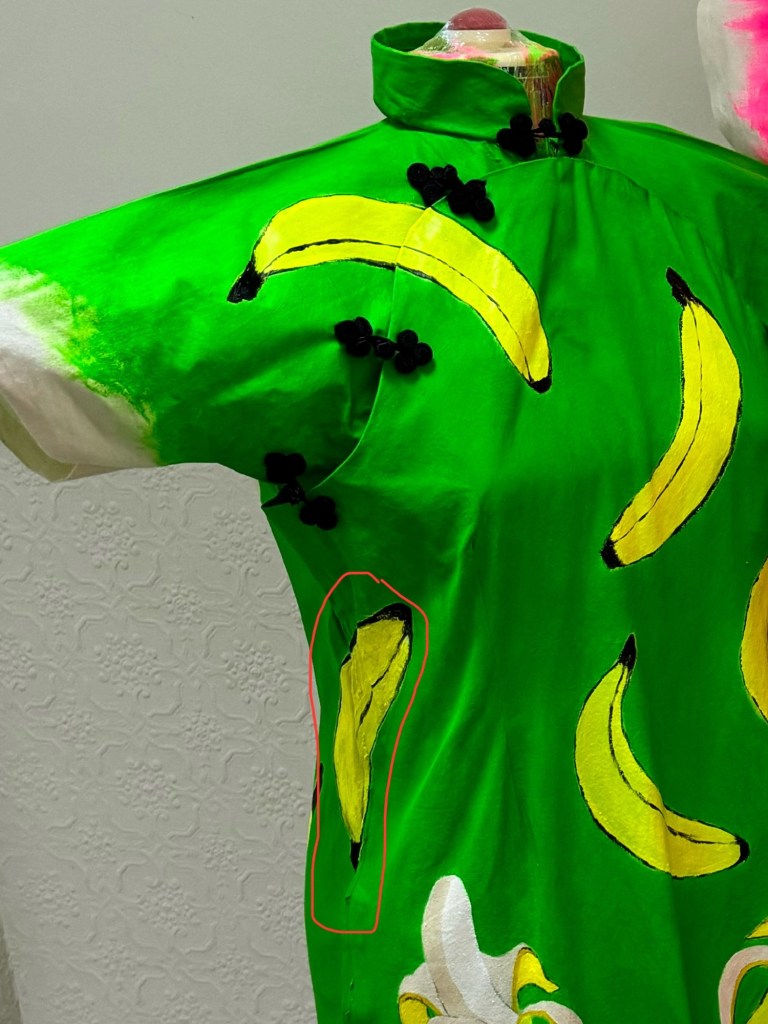
Taking the learning from the above has helped me to improve the Velcro seam for this painting:
–
2. Paint materials
Much time was spent on the many (five) coats of paint required for the background green colour. This was frustrating at times, but it was good learning. I should do more research into the colour and materials before embarking on a large painting. I knew student-grade paint typically has less dense pigment load and I should have been more prepared with this knowledge. The pink background of the ‘egg’ painting was ‘abstract innovative acrylic’ by Sennelier. It was relatively inexpensive with higher pigment load than the Daley Rowney System 3 acrylic. I was very pleased with the Sennelier acrylic and will bear this in mind in future paint materials selection.
3. Time saving methods
Doubling up the calico materials and therefore cutting two dresses together saved time. I will continue to look out for ways to be more efficient in making the dress canvas. I want to continue to make the dress canvases going forward because I enjoy the making process and it is good opportunity to think. However, I don’t want to spend excessive time on that part of the process because I knew I would become impatient and would want to get on with the painting.
4. More research up front
I could spend more time up front to test out materials, colour and composition (e.g. in my sketchbook) before proceeding onto the canvas. I think this will be useful and become more necessary going forward as I expect the next series of paintings to be more complex, both in idea and composition.
NEXT STEPS
After making these two paintings, it is a good point to pause and reflect properly on this series of work. I will capture my overall reflections in a separate blog. After that, I will go onto make more Cheongsam paintings because I am still excited and enthusiastic about this method of art making. I hope to crystalise my thoughts about the topic for the next painting while reflecting on this series.
 elizarawlings