After the first experiment on weaving narratives (see link below), I decided to do a second experiment, this time with two paintings that were more representative of the different cultural narratives that I want to weave together and also very different style of work just to see what happens. Also, an action from the last experiment was to choose smaller paintings to speed up the experiment.
METHOD
The two paintings that I have chosen for this exploration were:
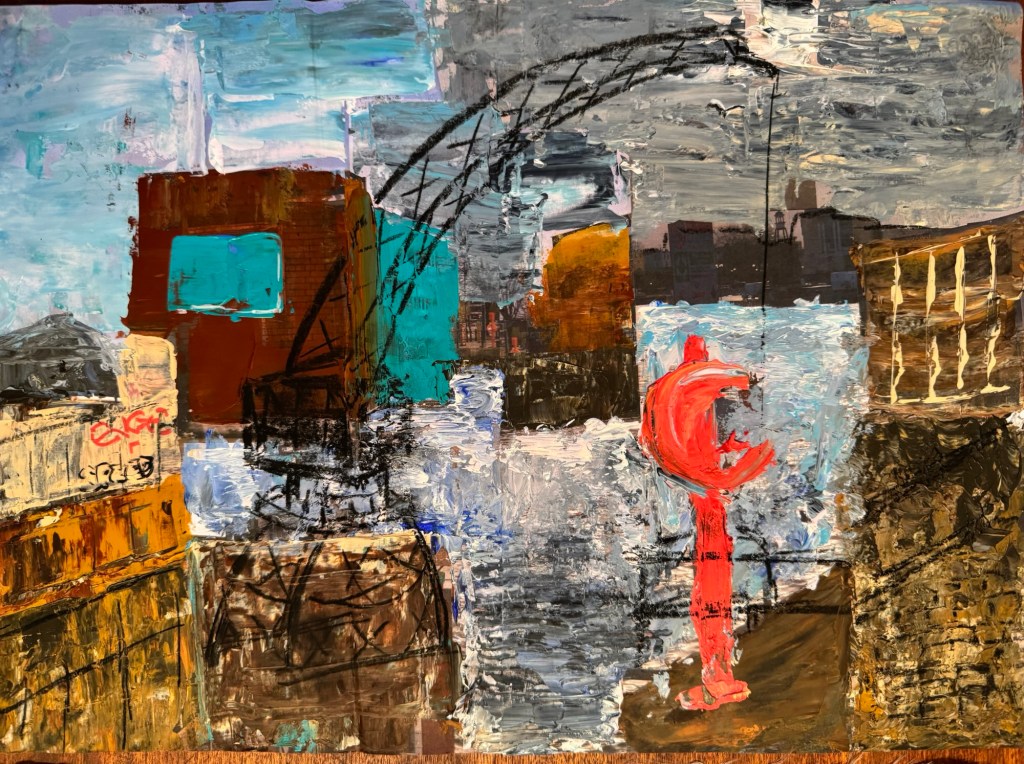
1. Bristol harbour – acrylic on inkjet printed paper, size A3.
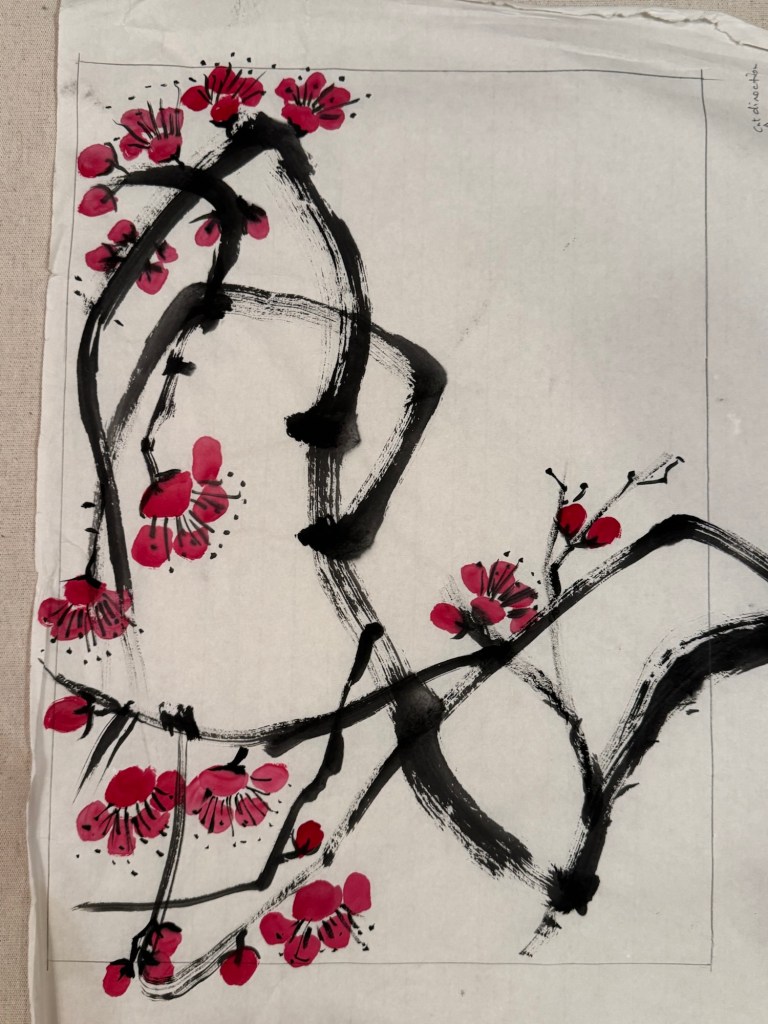
Plum blossoms, Chinese brush painting – ink on rice paper, cut to size A3.
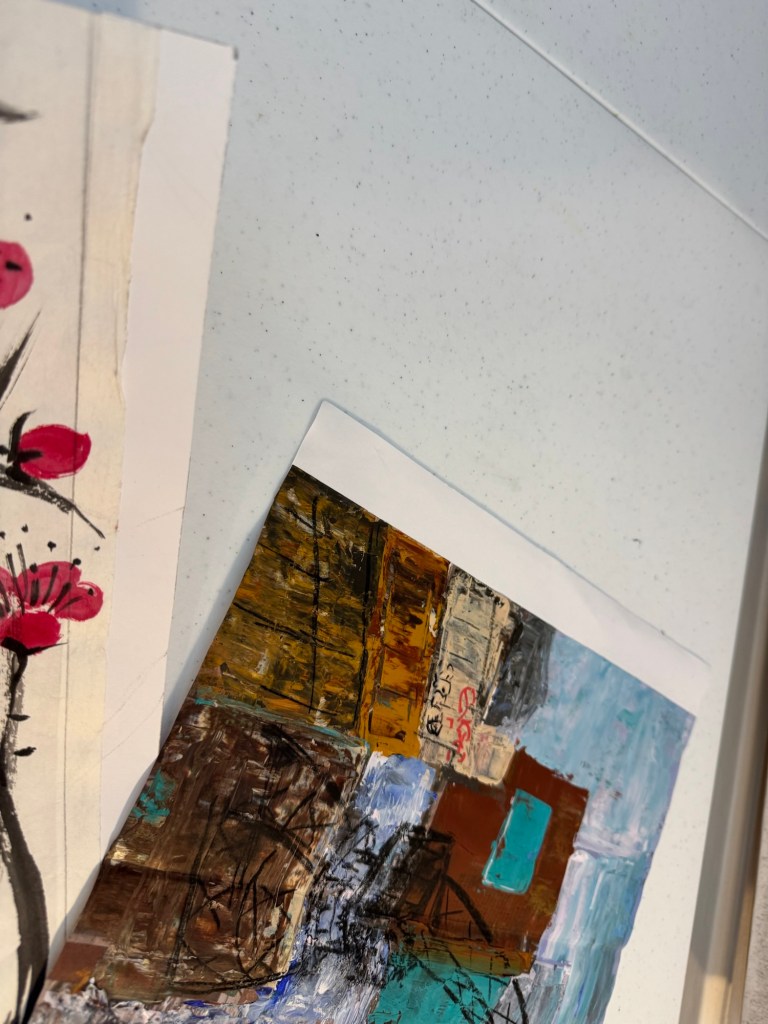
Paper edges were added to both paintings so that the cuts could be made up to the edge of the image whilst keeping all the strips together at one end in a neat order. This makes the weaving process easier.
Video of cutting the acrylic painting which seemed to have attracted more views on my social media than other work. Also, four times more non-followers seemed to have engaged with this clip than usual.
The cut up painting:
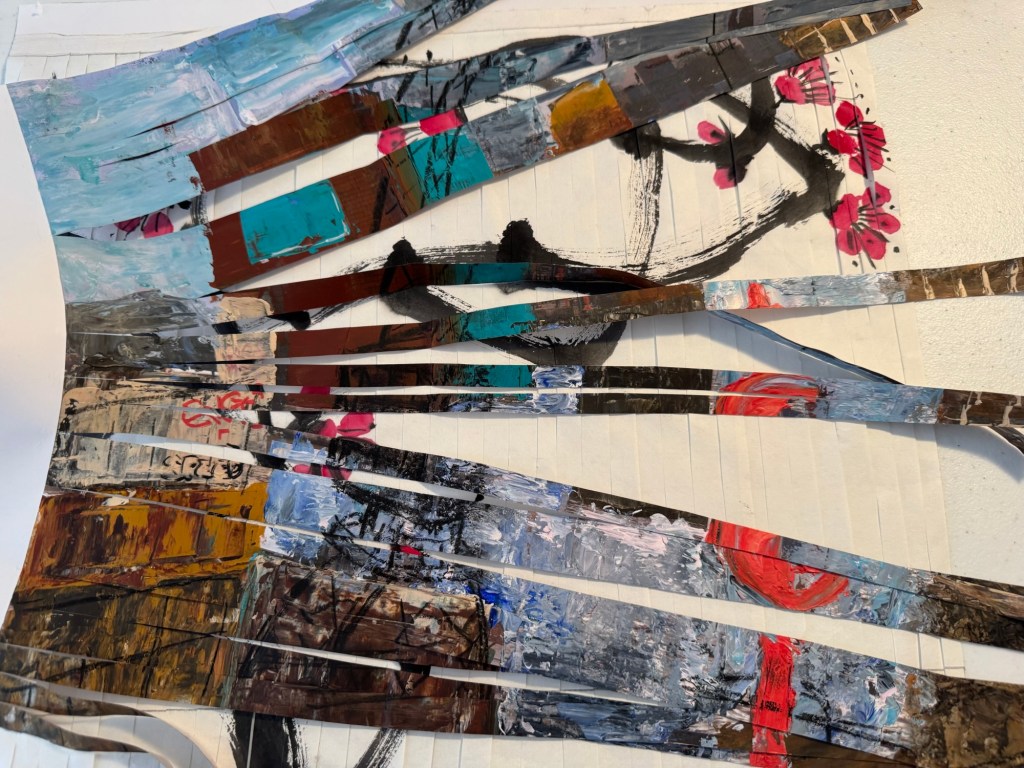
Starting the weaving process:
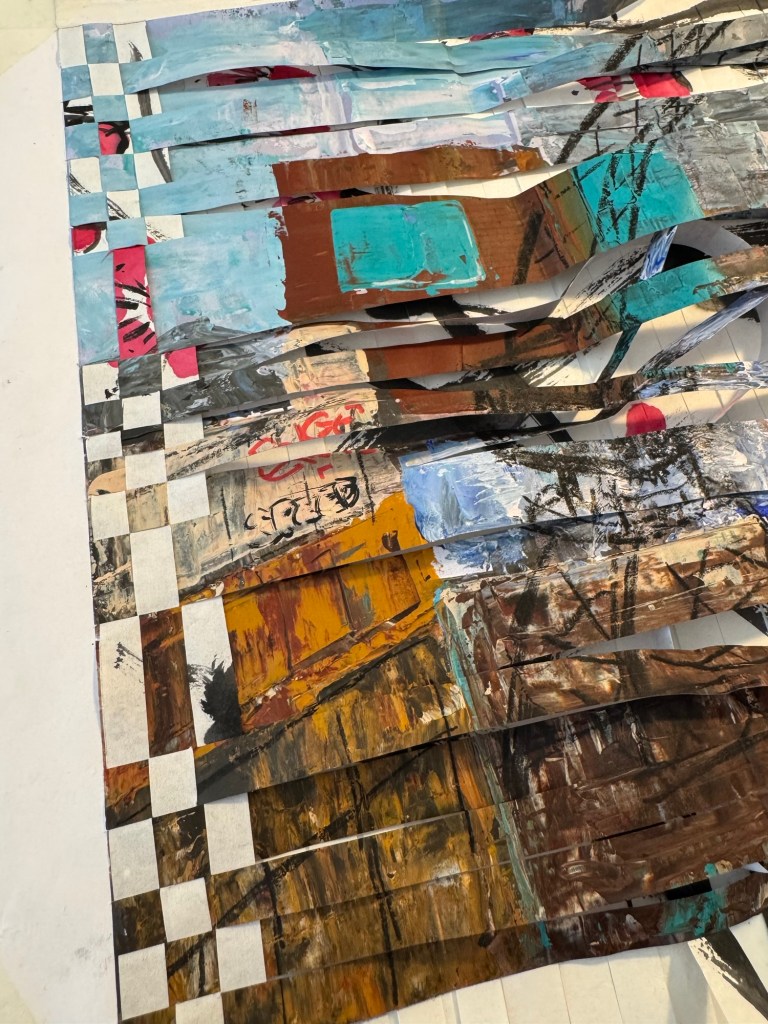
Completed – Woven painting:
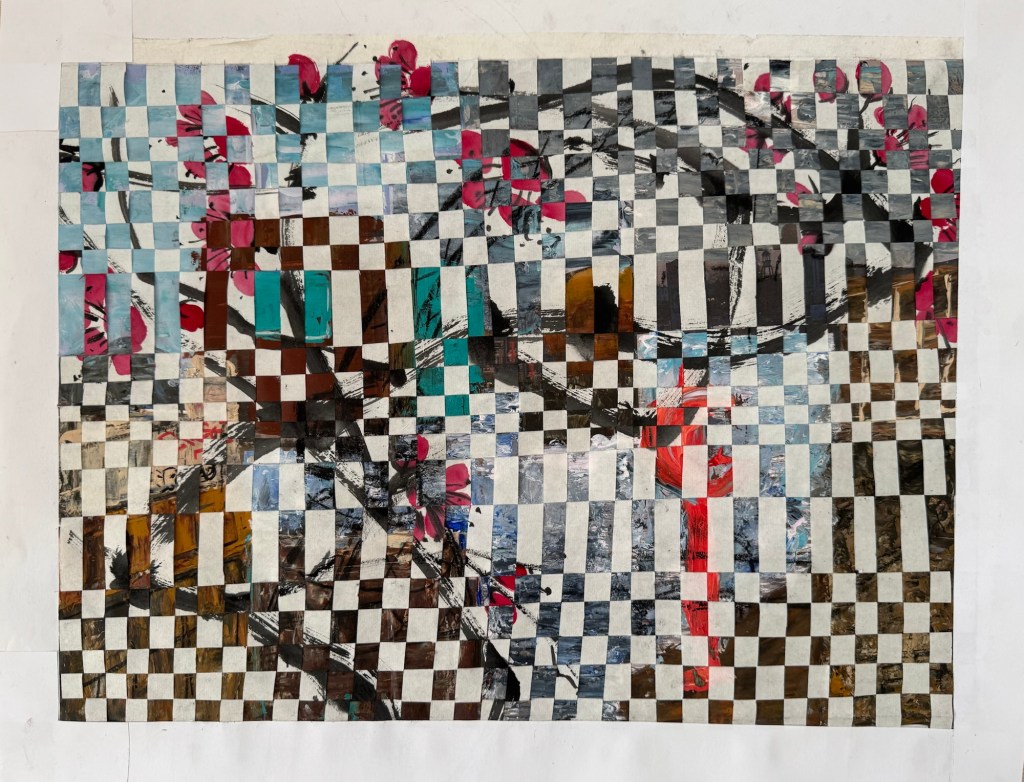
Completed – Woven painting without paper edges:
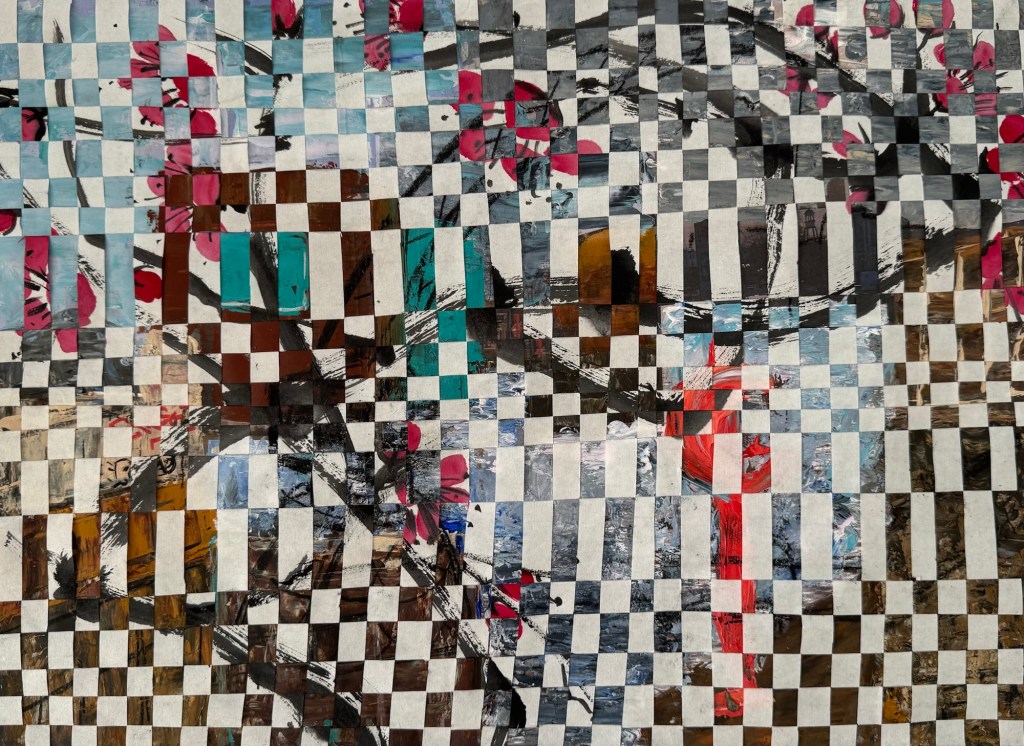
–
REFLECTIONS
I enjoyed the cutting process very much. It felt brutal but energising, liberating and renewing. The weaving process was enjoyable for me as it involved crafting with my hands. The delicate manoeuvring of strips of my painting during the weaving felt very different to the cutting process. It was strange to feel that I had to be very careful during the weaving when I have just taken a big pair of scissors to the work minutes earlier. The juxtaposition of the different feelings was interesting.
I am not too excited about the outcome though. I don’t think the woven painting created the interesting or intriguing effect that I had hoped for. The negative space from the Chinese painting introduced a lot of white into the image and obscured much of the harbour-scape rendering it not recognisable but without introducing intrigue.
Reflecting on this and the previous woven painting experiment, I am not sure if I want to pursue the weaving part much further. To really make something of it, I would need to have a good think about how the two images need to come together, how the negative spaces and colour palettes would combine to create a coherent image – even if it’s not coherent aesthetically, it needs to create intrigue or tension. As it is, I feel the images don’t provide enough to engage me, let alone a viewer. However, I feel there is good potential with the cutting process. It was an exciting process that I would like to explore further.
After cutting the paintings into strips, I played with waving or jangling the strips and they danced on the table. That was fun and I liked the images from the movements. However, once they were woven together, the images became ‘flat’ and ‘too neat’. Perhaps I can explore the dancing of the strips and do something with either just one painting or multiple paintings and then let the strips just fall down together and see what happens. Perhaps I can make videos of them dancing and collapsing together. As a metaphor, from my experience as a transcultural person, bringing together two different cultures is rarely neat and tidy, it requires improvisation and often people and situations are just ‘thrown together’ and one never knows what might happen. So perhaps the neat weaving was not such an appropriate metaphor as it seems too restrictive in hindsight.
LEARNING
It has been a good learning experience to weave together paintings. I learnt that I enjoyed the cutting up process, I enjoyed the weaving process but I am not taken by the outcome. The outcome appeared too neat and restrictive for the subject. Therefore, I don’t think I will do anymore ‘neat’ weaving of cut up paintings. Unless I am stuck for something to do in between projects and want to keep busy because it is a good way of keeping busy to enable some thinking time while making. I find the crafting processes are very enabling in a way to create thinking space and time.
What I will continue to explore is the cutting up process because I find that energising and renewing. I want to explore what else I could do with strips of painting, just play and explore and let them dance. I could do some video of their movements and create images from that. E.g. I can pile several paintings together and see how they fall together, or let each strip free-fall individually from height and film their movements in slow motion. It would be good to just to explore without any prior agenda. That can be liberating. I can try a filming project with an already cut up painting (to save cutting up another painting for the moment), I can un-weave one of the woven paintings then letting the strips free-fall, like untangling narratives and then setting them free. I can think about a narration to accompany the video or pair with music.
Think about using the green satin bamboo painting because the soft and light materials could float nicely onto the ground. Think about what background – white cube or outdoors? Perhaps an industrial background from the old Bristol docks? The delicate satin materials could be a good juxtaposition with the old heavy duty cranes by the harbour. The strips could fall inside the intricate metal structure of the cranes.
NEXT STEPS
Pause the ‘neat’ weaving of paintings for now, unless I want to use the process to enable thinking time.
Untangle a woven painting, set the strips (narratives) free in a free-falling way. Film their falling and piling up on the ground, if possible, do outdoors e.g. by the old Bristol dock.
Continue to explore cutting of paintings and see what that could add to my practice.
 elizarawlings