Further to my blog on the Cheongsam series where I introduced the idea of using food as metaphor for racial or cultural identity, I want to capture more of my thoughts, ideas and research on this subject to document the meaning behind this series of work. Here is my earlier blog with some background and where I had generated a preliminary design digitally:
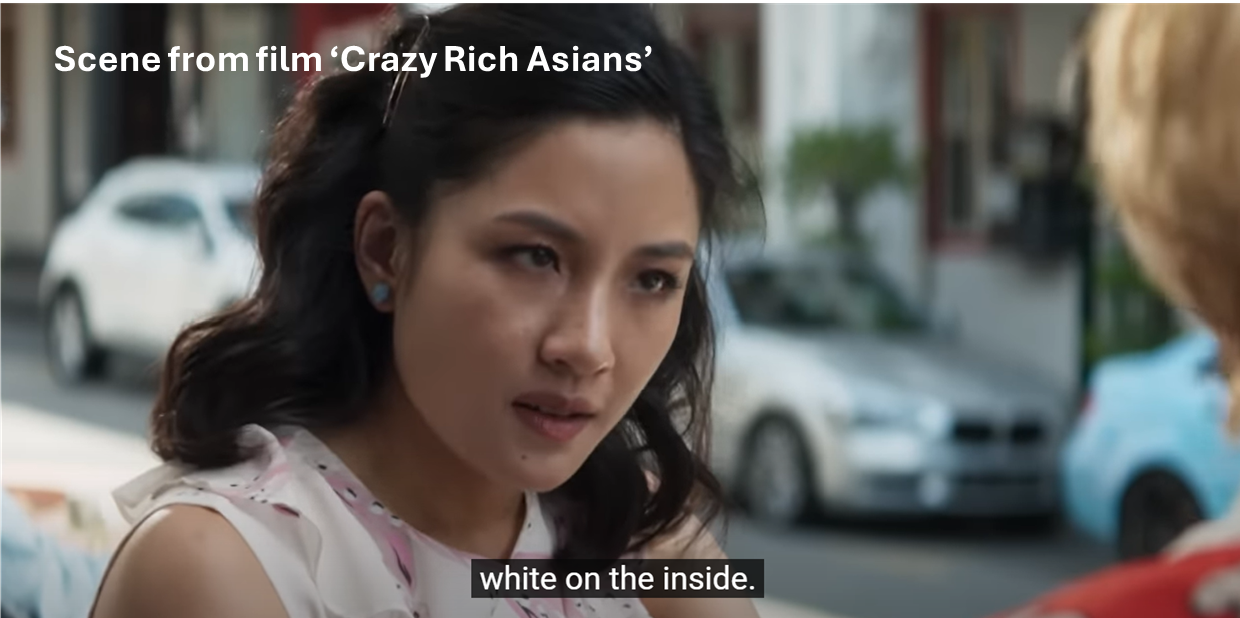
In the above blog, I referred to the Hollywood film Crazy Rich Asians where the American-born Chinese protagonist was referred to as ‘a banana’ by her best friend because the protagonist was perceived by her future mother-in-law (a traditional Chinese woman living in Asia) to be ‘yellow’ on the outside but ‘white’ on the inside.
In my earlier blog, I mentioned that I remember being called a banana, too, because I moved to the UK as a young teenager and have lived here for decades, hence I have inevitably adopted much of the British culture. As a result, I consider myself a transcultural person and have based my art practice on this subject. I personally do not consider the description of ‘banana’ an insult, it is very widely used within Chinese communities and its meaning is widely known. Also, there is the legacy of colonialism where being considered ‘westernised’ is not necessary a bad thing (reference The Location of Culture by Homi K Bhabha, chapter ‘Of mimicry and man: The ambivalence of colonial discourse’) if one wants to get on in ‘the west’ and avoid being treated as ‘an outsider’. This point deserves to be explored in a dedicated blog so it will not be covered here. All I will say here is that I feel neutral about the term ‘banana’. In fact, I think it is a clever metaphor and a good seeding idea for making art!
In my research, I also found this article which summarises how different types of food are used as metaphors in the context of race and culture identity:
Although I acknowledge that reducing a race or culture to a colour can be problematic as described at the end of the article, I remain undisturbed by the use of food metaphors for myself because it helps me to start a thinking process. The point about ‘overthinking’ in the article refers to ‘an egg’ which means a person that is yellow in the core but with a white outer layer. As someone who is prone to overthinking, I liked the egg metaphor immensely. Yes, I have a ‘yellow’ shell and much of my core has become ‘white’ due to living in Britain most of my life, but I was born in Hong Kong to Chinese parents and lived there until I was a teenager. The very rich culture and heritage in the Hong Kong Chinese society are deeply rooted within me and will always be part of my core. It is not something that can be erased and also not something that I want to change. So, after much overthinking, I have decided that my response would be, ‘No, I am an egg’ to anyone who thinks I am a banana. Of course, it would be a boiled egg to be precise, but that would be really over thinking it.
NEXT STEPS
In my earlier blog, I had planned to make a Cheongsam painting with bananas as part of the process to explore my transcultural identity. After this research, I want to make two paintings, one with bananas and one with eggs as a response to the former.
ADDITIONAL READING
Here is a list of interesting articles about the ‘banana’ metaphor for East Asians living in ‘the west’ with different points of view and lived experiences:
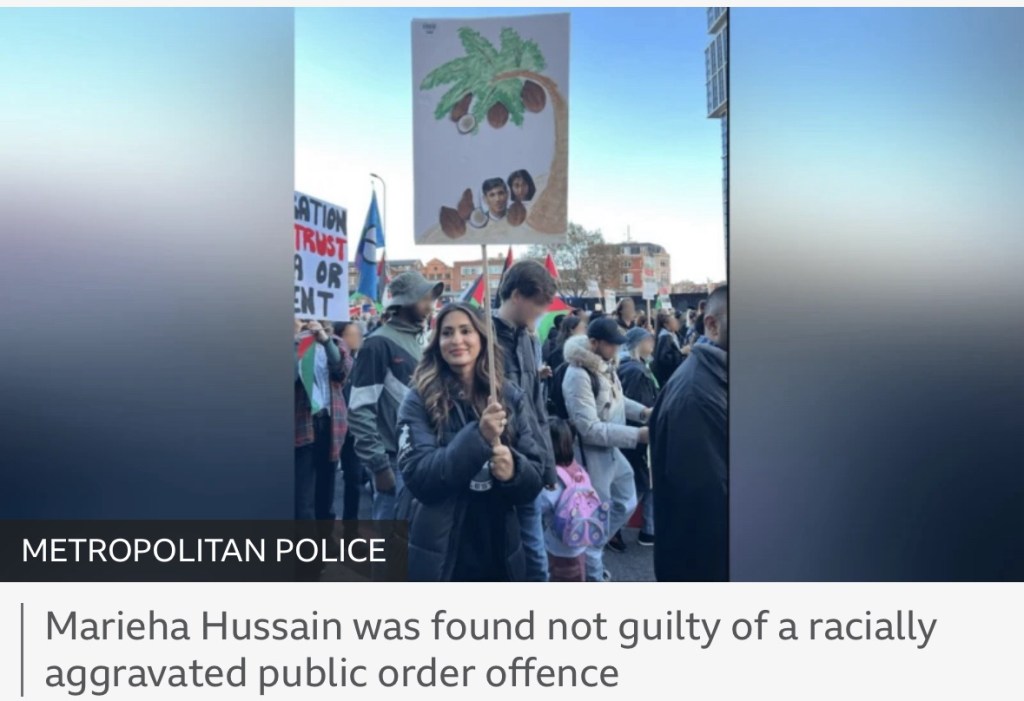
Since publishing this blog and making the Cheongsam paintings, there has been a trial where a teacher went to a protest march holding a placard referring to the then Prime Minister Sunak and Home Secretary Braverman as coconuts. The teacher was trialled and found not guilty.
Her lawyer told the court the placard was “a pictorial attempt” at “political criticism” of Mr Sunak and Ms Braverman.
After a two-day trial, the judge ruled that the placard was “part of the genre of political satire”.
Using ‘coconut’ to describe a person who is ‘brown on the outside but white on the inside’ is equally common as using ‘banana’ to describe an East Asian person.
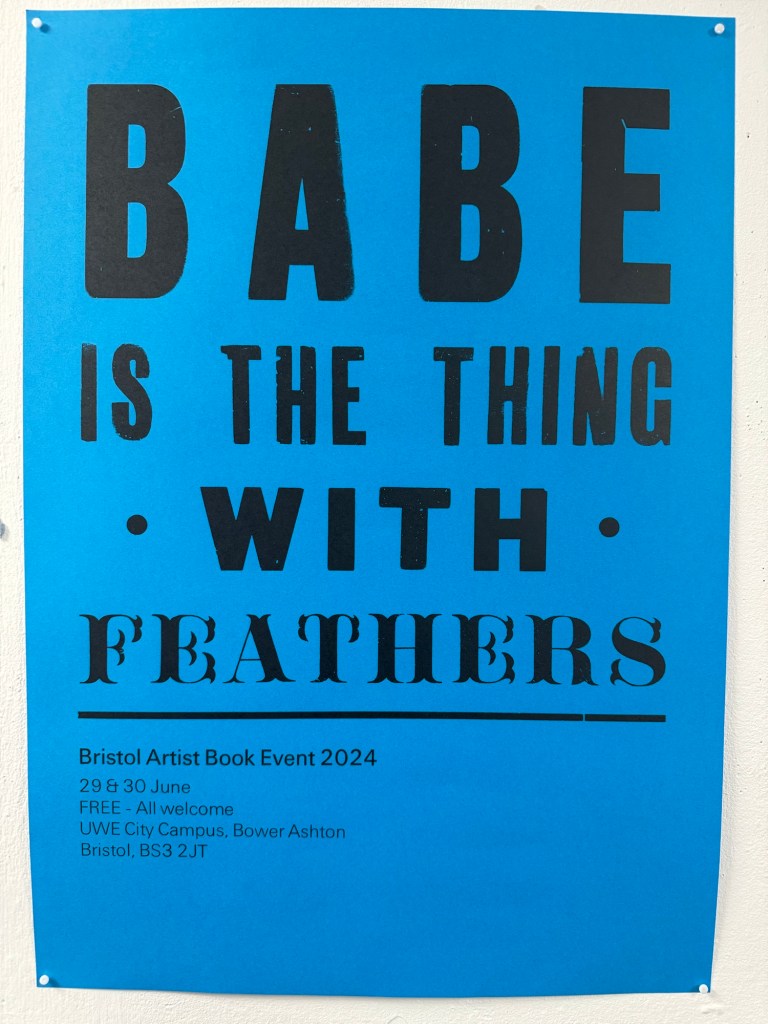
During the MA low residency at CSM in March 2024, we had a book art workshop where we learnt to make zines and some simple book. The artist hosting the session mentioned a book art event that takes place in Bristol once every few years. I was delighted to find that it was on this year and I attended the fair.
–
There were nearly 100 stands; it was a great opportunity to talk to and learn from experienced book artists. I came away feeling enthusiastic to try this beautiful art form.
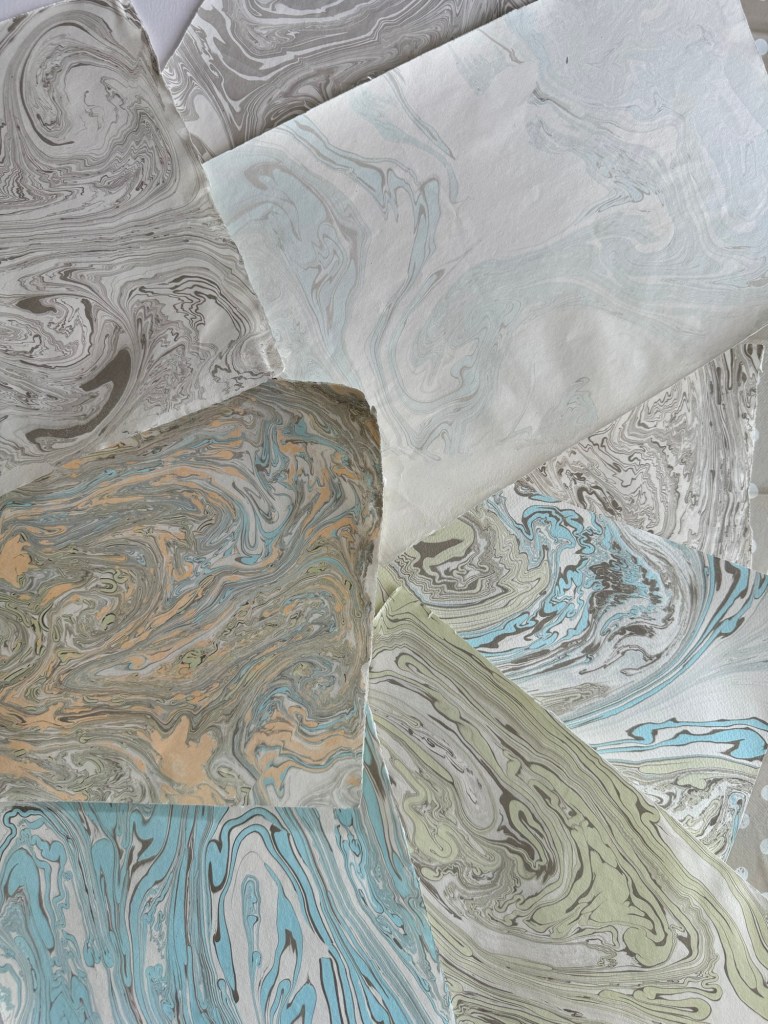
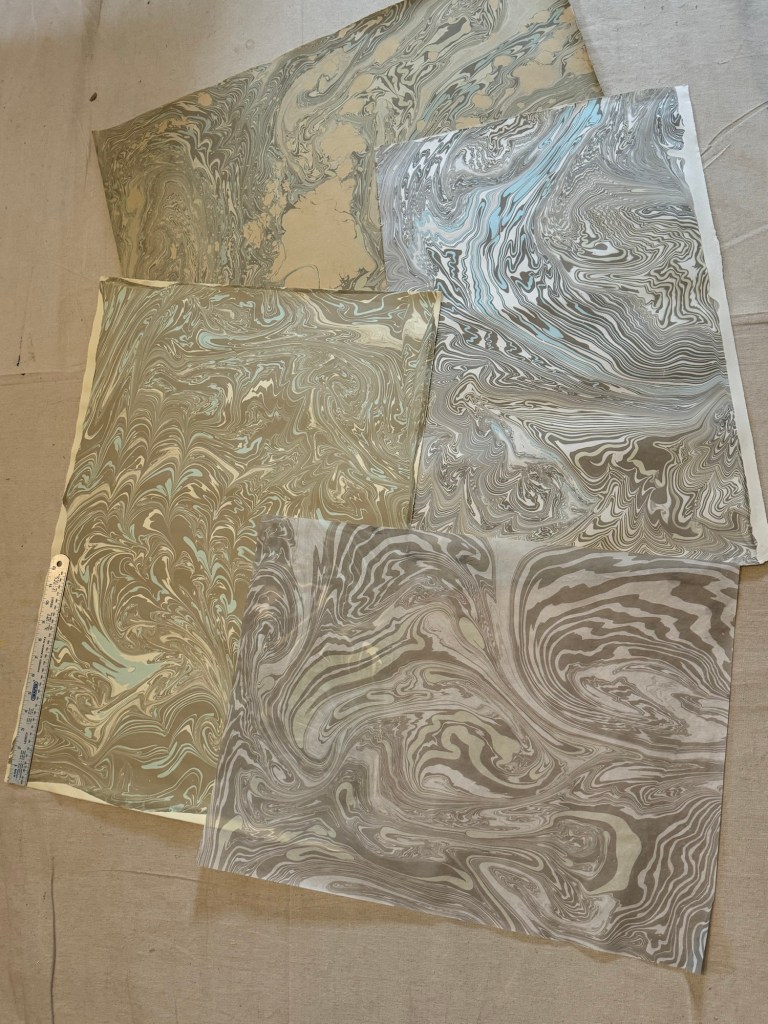
Another reason for my enthusiasm was that I recently attended a Suminagashi workshop. Suminagashi is an ancient Japanese technique of making handmade marble paper and washi by floating water-based inks on water, then laying the paper on top to absorb the ink and water pattern. See post:
Here are some of the Suminagashi paper that I made during the workshop:
Small A4 size sheetsLarger A2 size sheets
METHOD
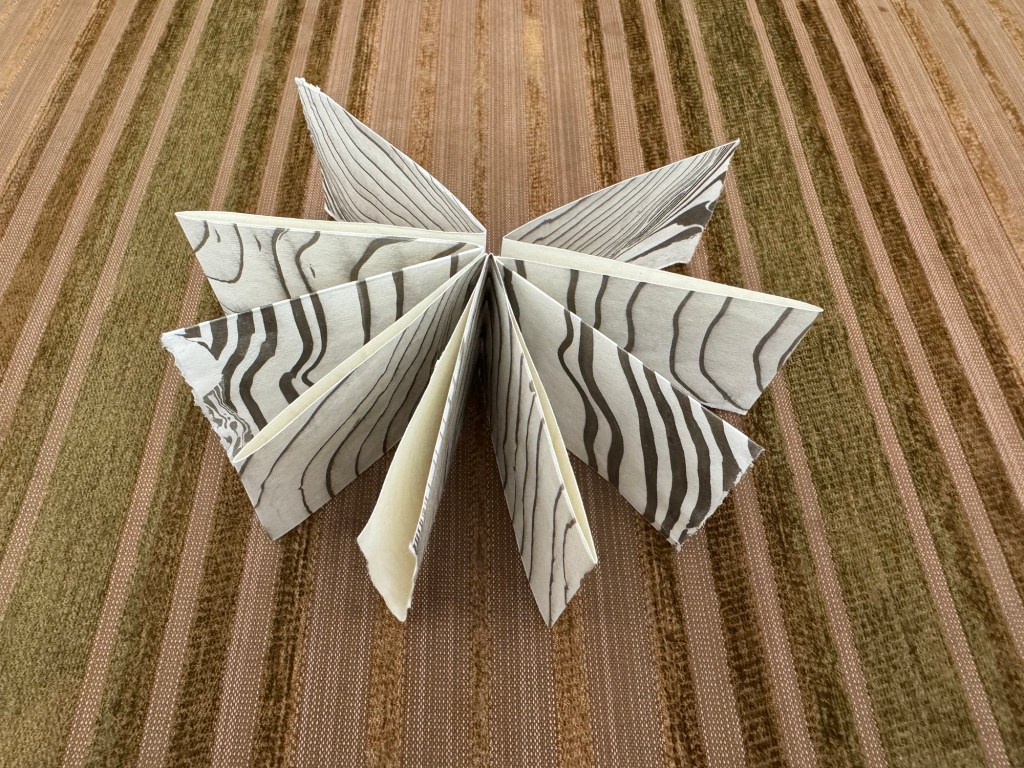
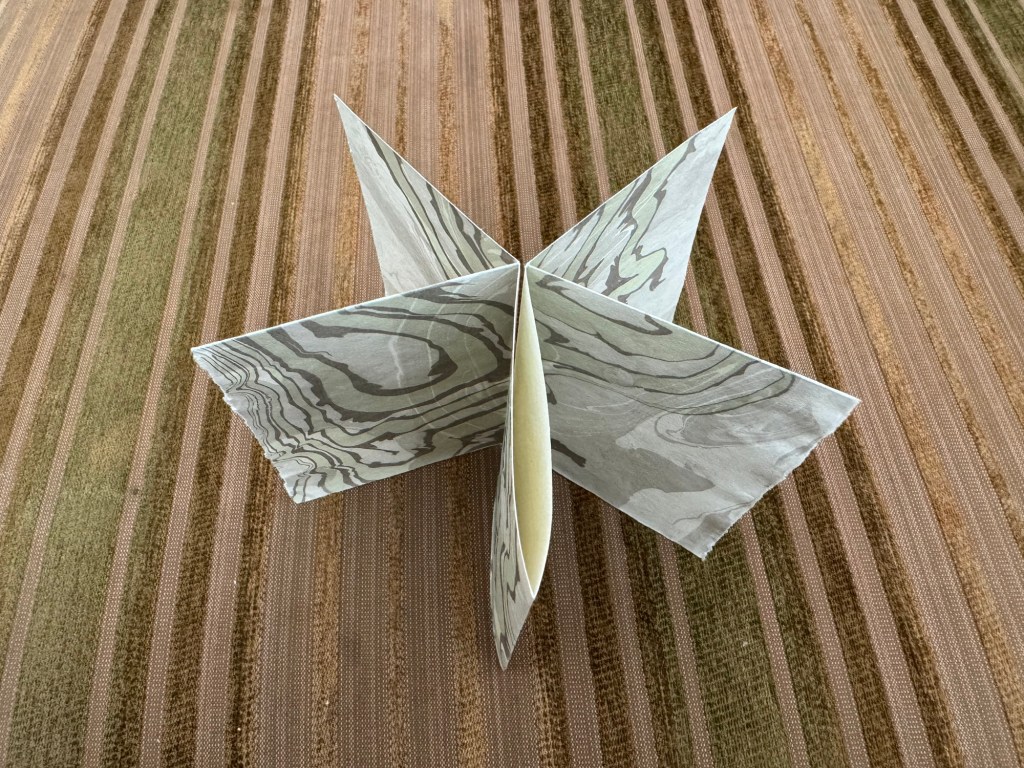
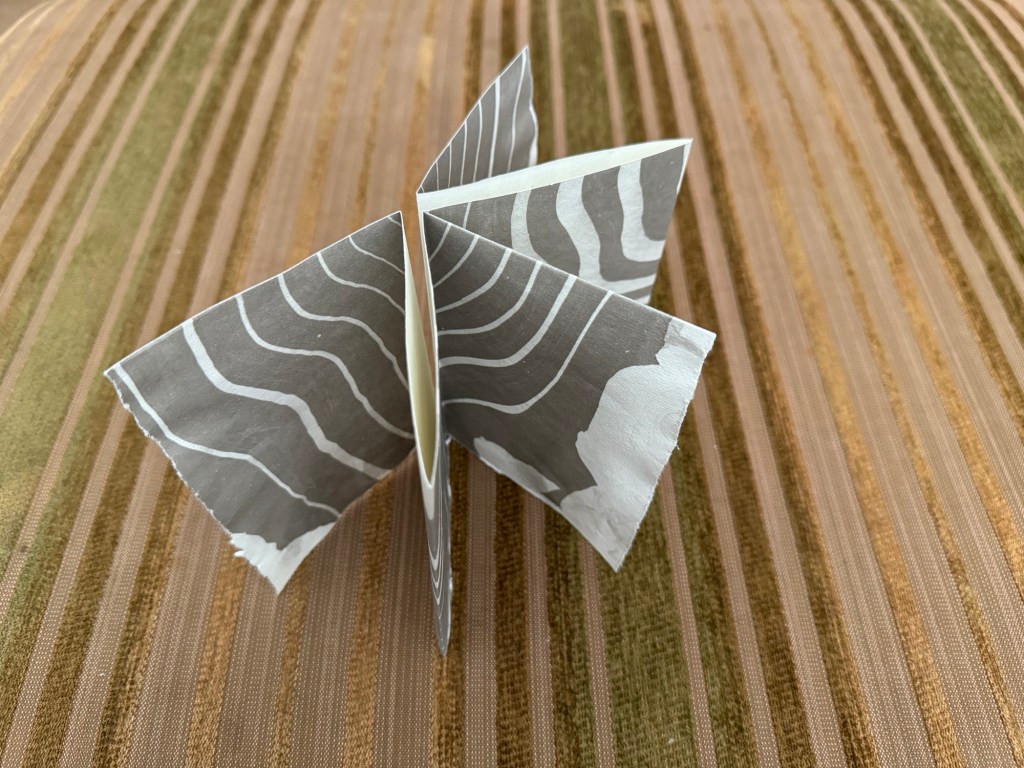
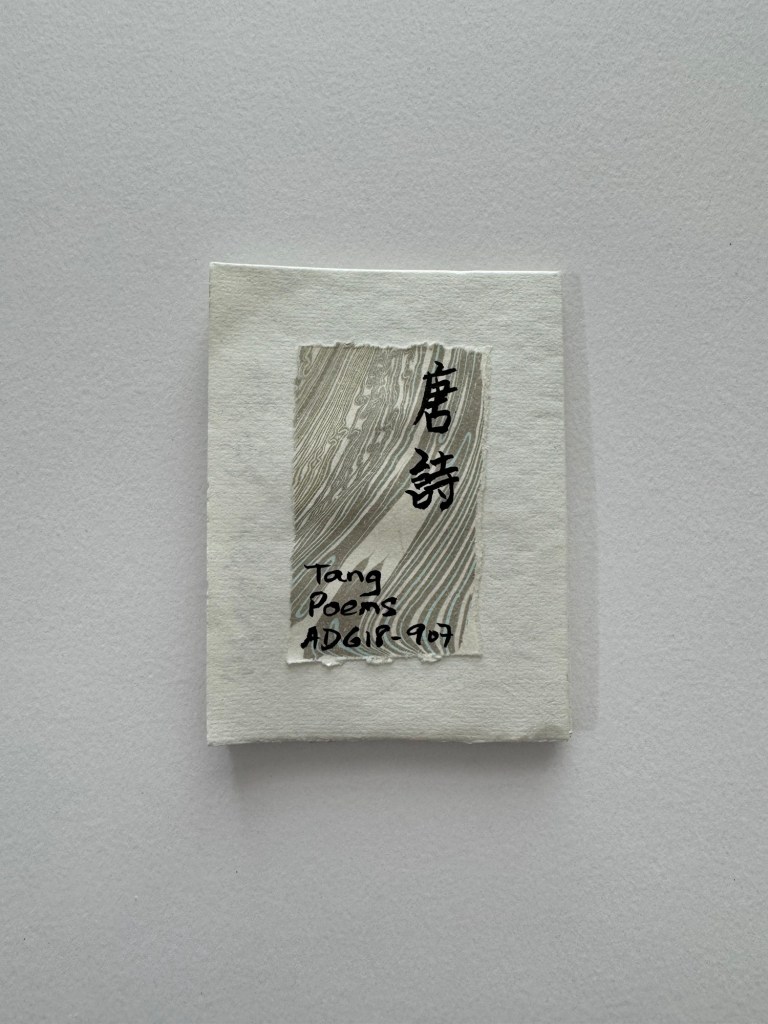
From the techniques learnt during the low residency workshop at CSM, I made a few different types of simple books using the smaller sheets of Suminagashi paper:
–
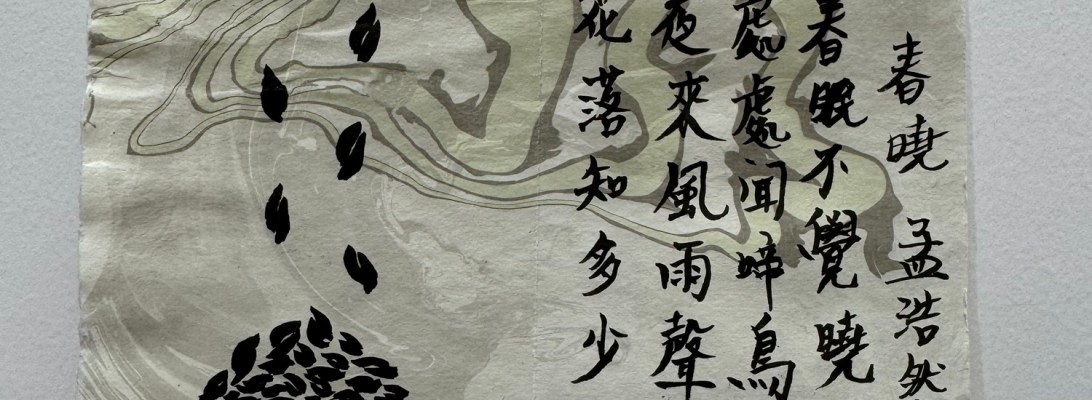
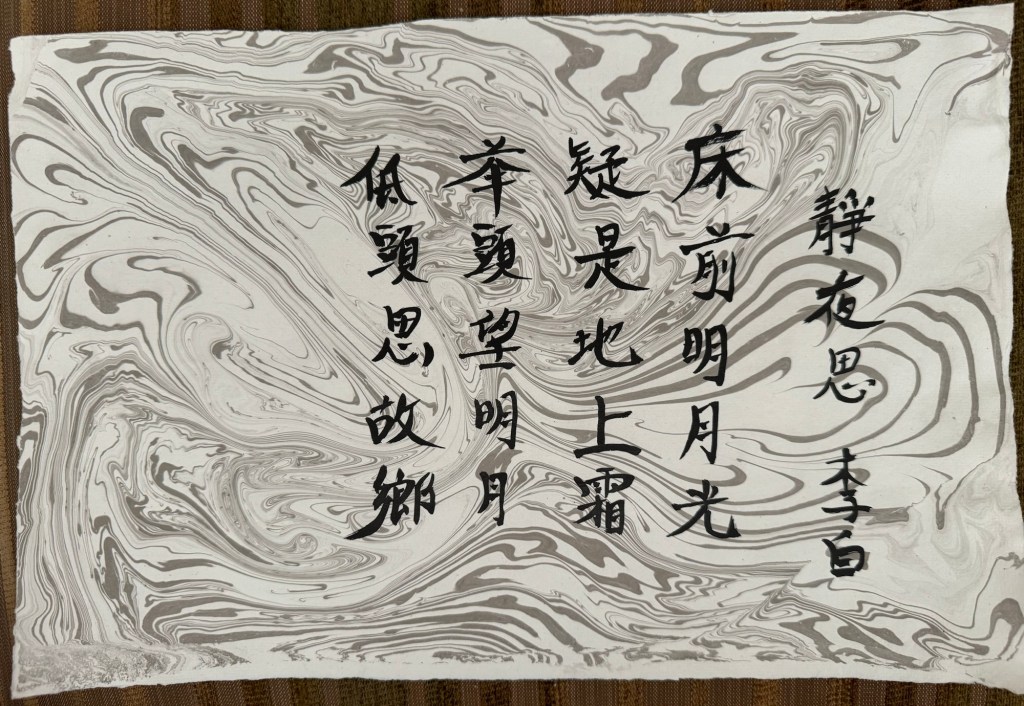
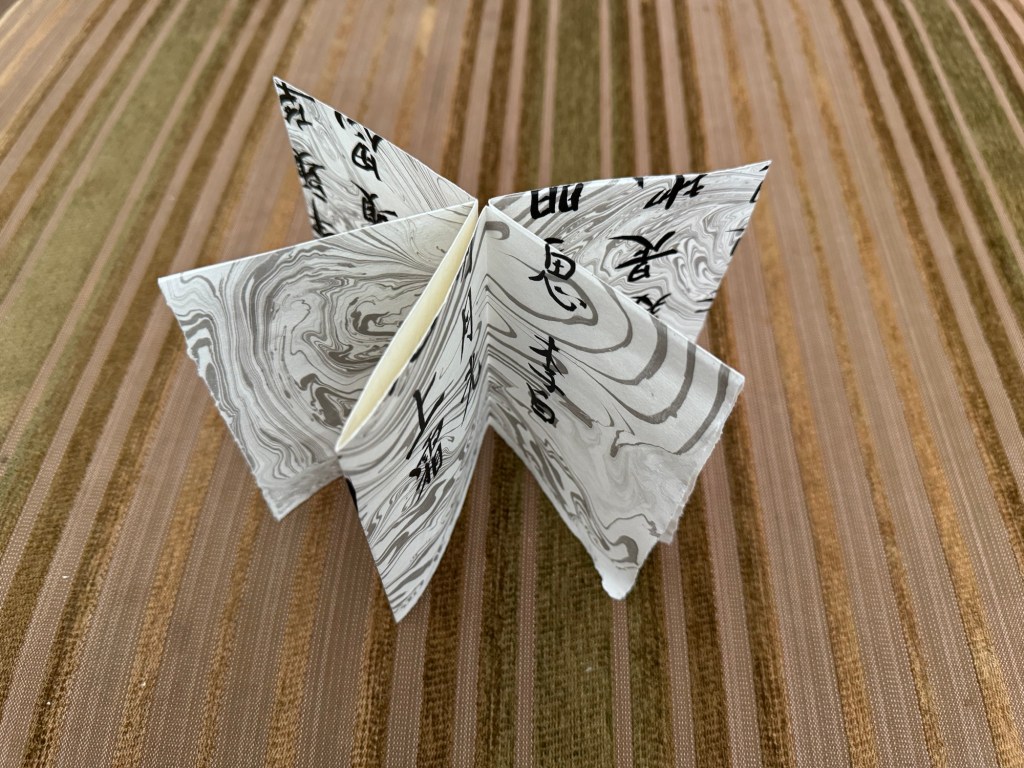
I experimented with some Chinese ink calligraphy on one sheet of paper, then folded it into a simple book:
–
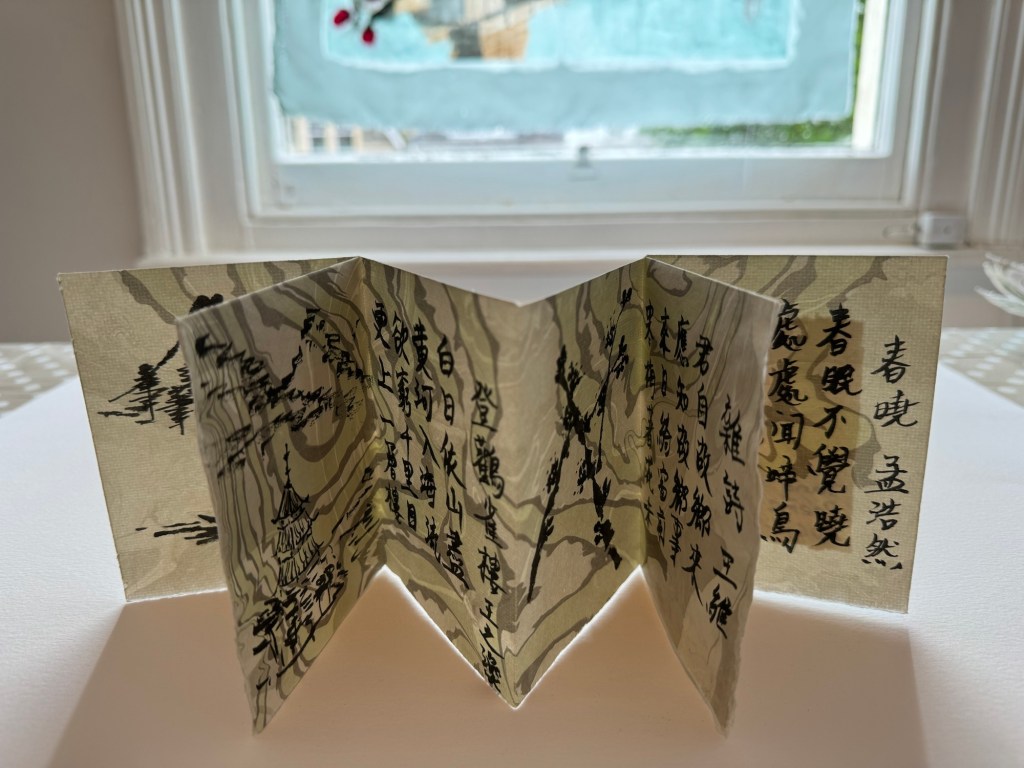
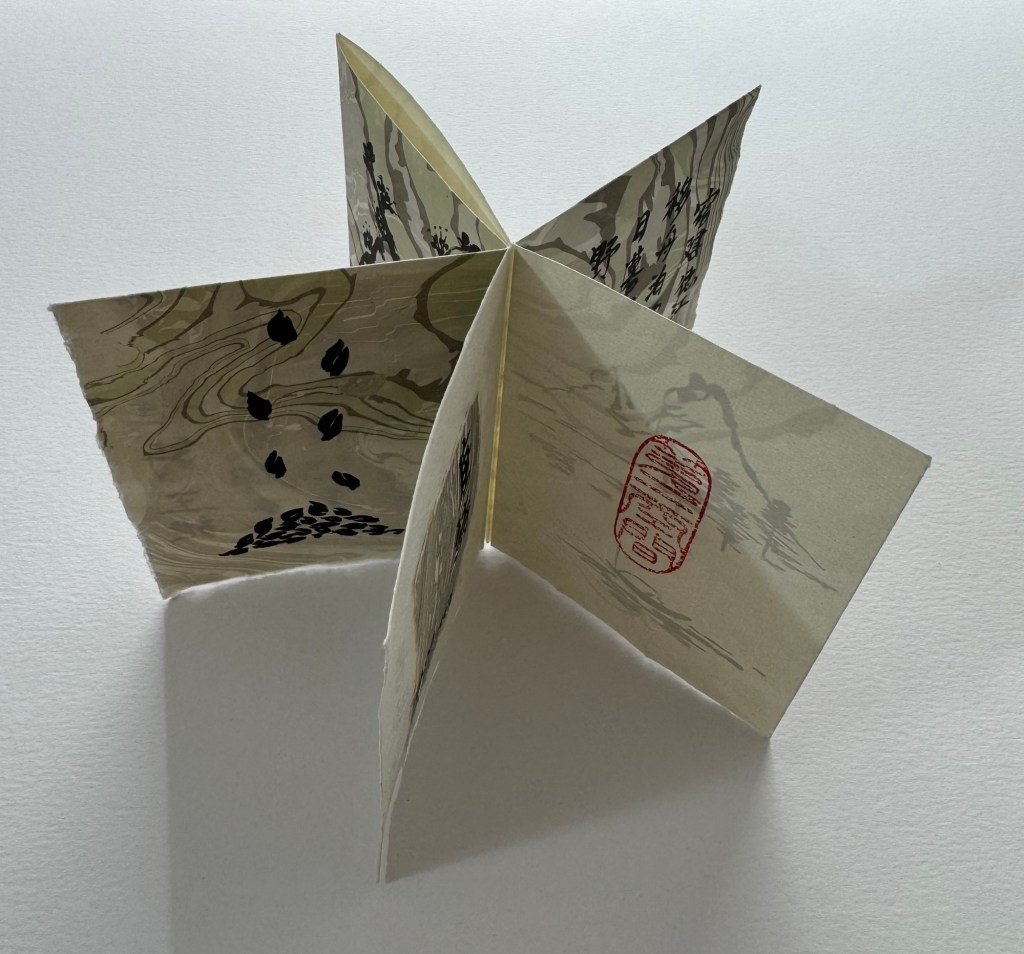
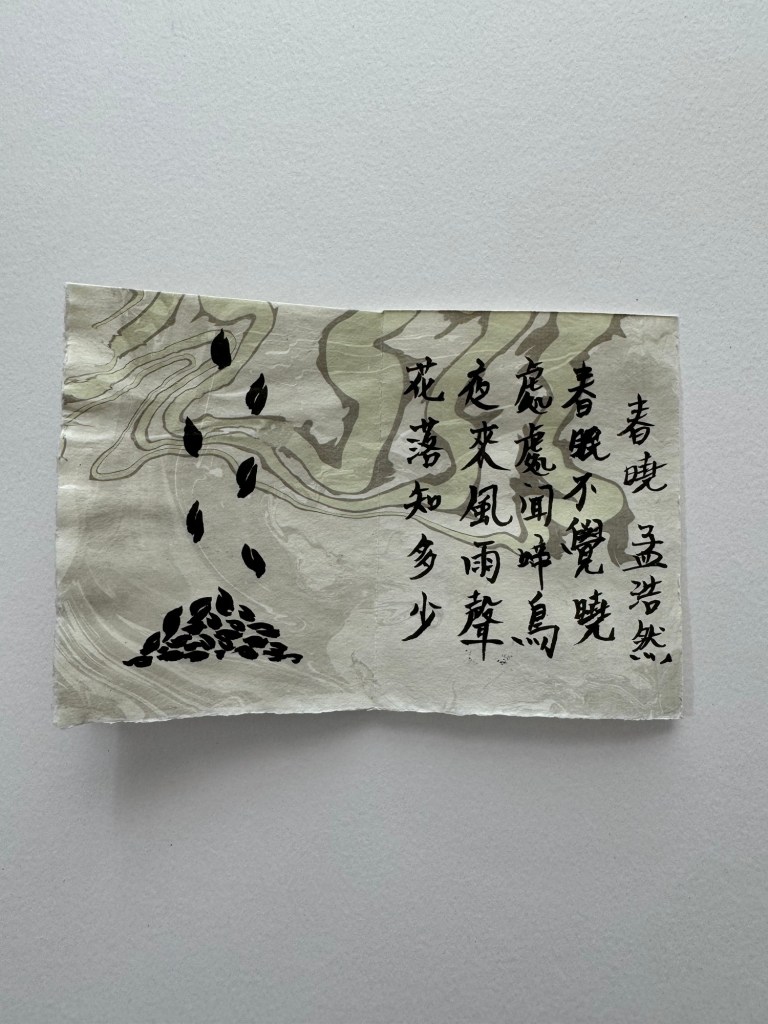
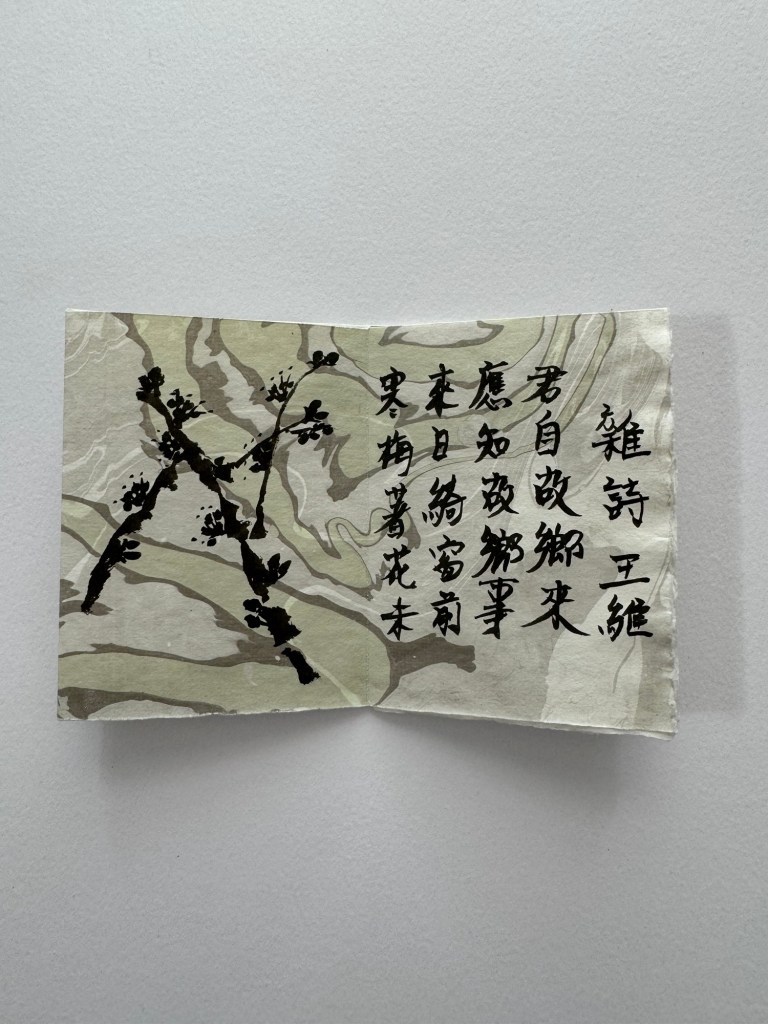
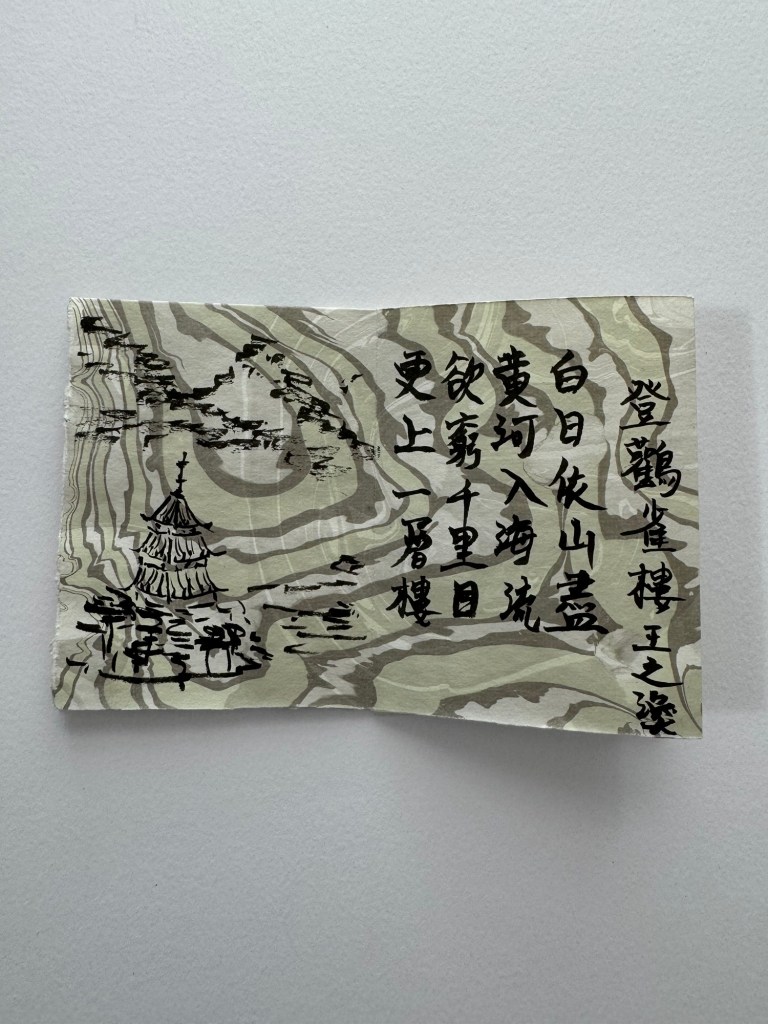
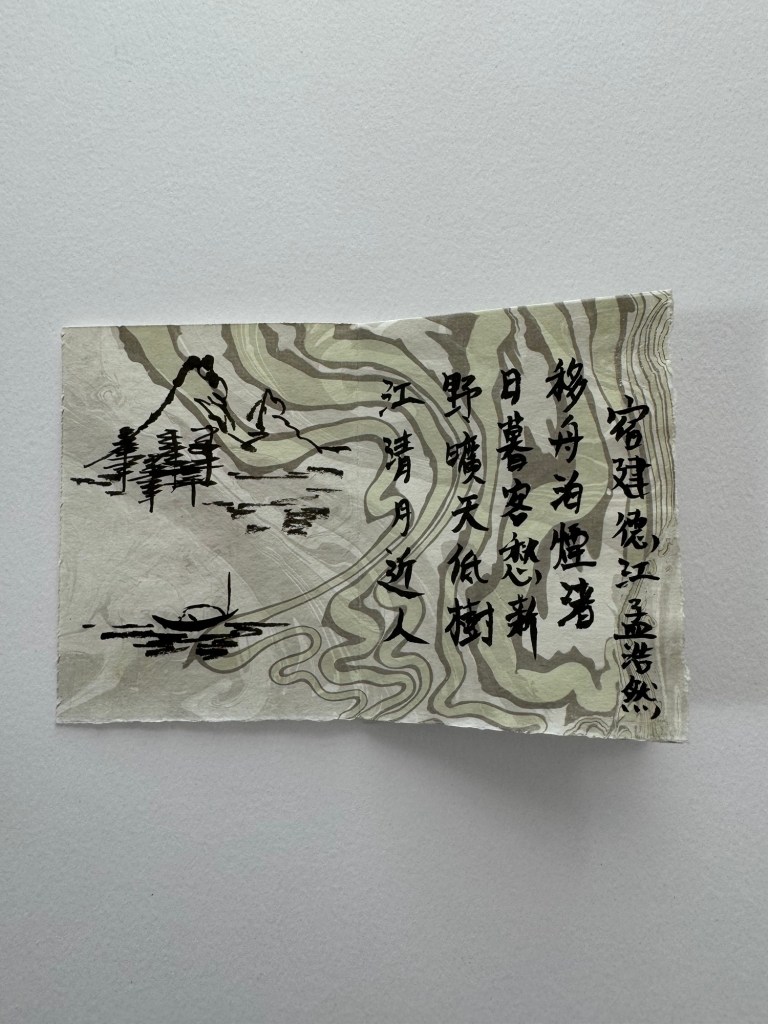
On another Suminagashi book that I made, I chose four Tang Dynasty poems and wrote them in the book using Chinese ink calligraphy, each paired with a small painting:
–
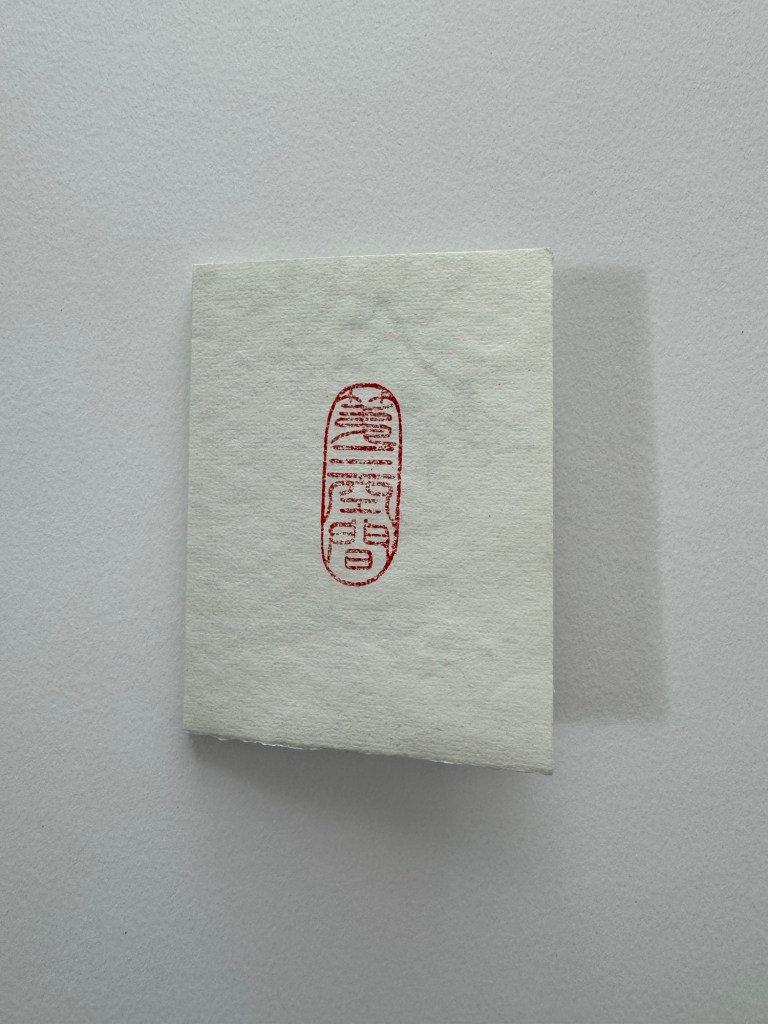
The seal on the last page of the book is a new Chinese stone seal that I designed. I managed to have it carved in Hong Kong and brought back to the UK by my Chinese painting tutor. The phrase on the seal means ‘The Third Space’, a concept that my art practice is based on so I will use it like my artist’s signature. The seal is carved in an ancient Chinese font.
Below is a video with my narration, reading out the English translation of the poems. Note that traditional Chinese books open from the opposite direction to English, Romance or Germanic language books:
–
REFLECTIONS
I was really inspired by the visit to the book art fair. It helped me to understand how broad the scope of this art form can be. I knew very little about book art until the low res workshop earlier this year and I am excited by it. I enjoyed making the simple books in this exploration, especially using the Suminagashi paper. Here is a summary of what I enjoyed about this exploration:
– I enjoyed the quiet pleasure in the act of folding paper carefully, especially with beautiful paper such as the Suminagashi paper. The feel of the material surface, the edges and creases all added to the meditative effect that this art form has to offer.
– I enjoyed learning a new skill in making books. Although I am only making very simple ones at the moment, I am excited by the potential complexity and scope that book making can offer. It is new knowledge and a new challenge for me.
– Once a book is made, it is like having a new canvas calling out for creativity that requires a new way of thinking compared to my other work.
For me, it is a two stage process: (1) Think about how I want ‘the canvas’ to be and realising that idea through physical making; then (2) express my art on the made canvas. The stages are similar to the Cheongsam (Chinese dress) canvases that I have been making for painting. That approach also requires creating a 3D canvas first through a step-by-step ‘technical’ process before any drawing or painting can take place.
The similarities between my book-making and dress-making to create canvases only occurred to me during the writing of the above reflections. I was beginning to feel concerned that I might be going from one thing to another too soon in my practice. I am not dropping the dress-making work, in fact, far from it – I have planned many other projects based on Cheongsam canvases. But I also want to explore book art and I now realise the similarities between the two in the context of my practice. I believe it can be explained as follows:
– The book-making or dress-making processes start by my following some guided steps, this way of making gives me a structured approach to starting a project. Meaning, it is unlike just getting out a plain sheet of paper or a pre-made blank canvas where you are immediately faced with having to decide what to paint. Through the structural and systematic start of the creative process (i.e. making a book or a dress), I can proceed to create ‘productively’ and while I am making the ‘complex canvas’, I can think about what to paint on the canvas or to finalise the ideas in my head. The process of making the canvas (which in the case of a dress can take several days) gives me quality thinking time whilst doing something productive and not just sat in front of a blank canvas feeling bad that nothing was happening.
LEARNING
Attending the book art fair taught me a lot about the scope that this art form can offer. In my own experiments, I have learnt more about the art of making books from a technical perspective – I am at a very early stage right now but I definitely want to learn more to make more complex or larger books.
My reflections above made me realise that the process of making the canvas myself (e.g. a book or a dress) has been a key part to my enjoyment in making art recently because I have been using the canvas making time and process to aid my thinking and to finalise my creative ideas. I have been doing this without consciously knowing it. I value the fact that making items such as a book or a dress are established processes and therefore give me a secure and stable route to start each piece of work. On the contrary, if I were to create a completely free-form assemblage from found items as a starting point, I would be inhibited by such an open and abstract process at the beginning of a piece of work – I would not know where to start and therefore it would be like sitting in front of a blank canvas again. This realisation is very important and useful for me because I can now think about other potential canvases that I can make from an established method in order to expand my practice.
NEXT STEPS
– Continue to make books and learn about book making to expand my knowledge.
– Think about other canvases that I can create in addition to books and dresses that would enable me to have the quality thinking time as part of my creative process and to avoid the ‘starring at a blank canvas’ problem.
UPDATE:
I made another book using a piece of Suminagashi paper folded into a small long book. In it, I wrote four short Tang Dynasty poems in Chinese calligraphy and coloured some areas using Chinese painting colour.
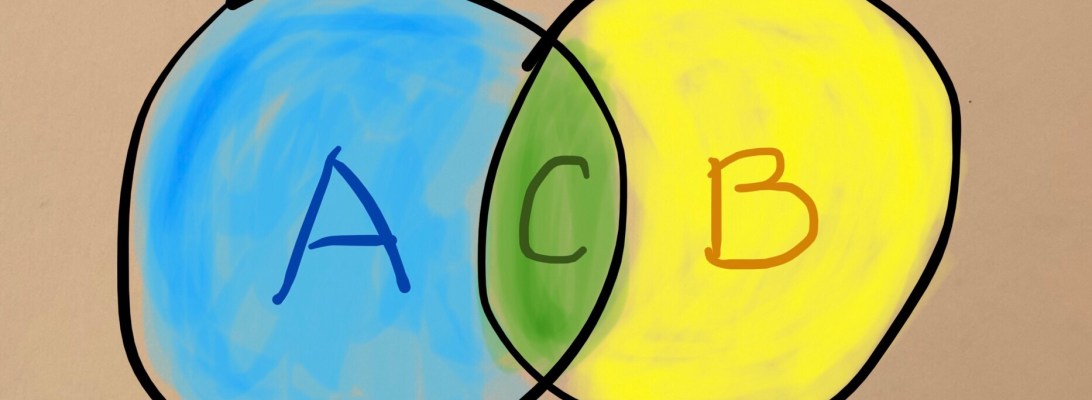
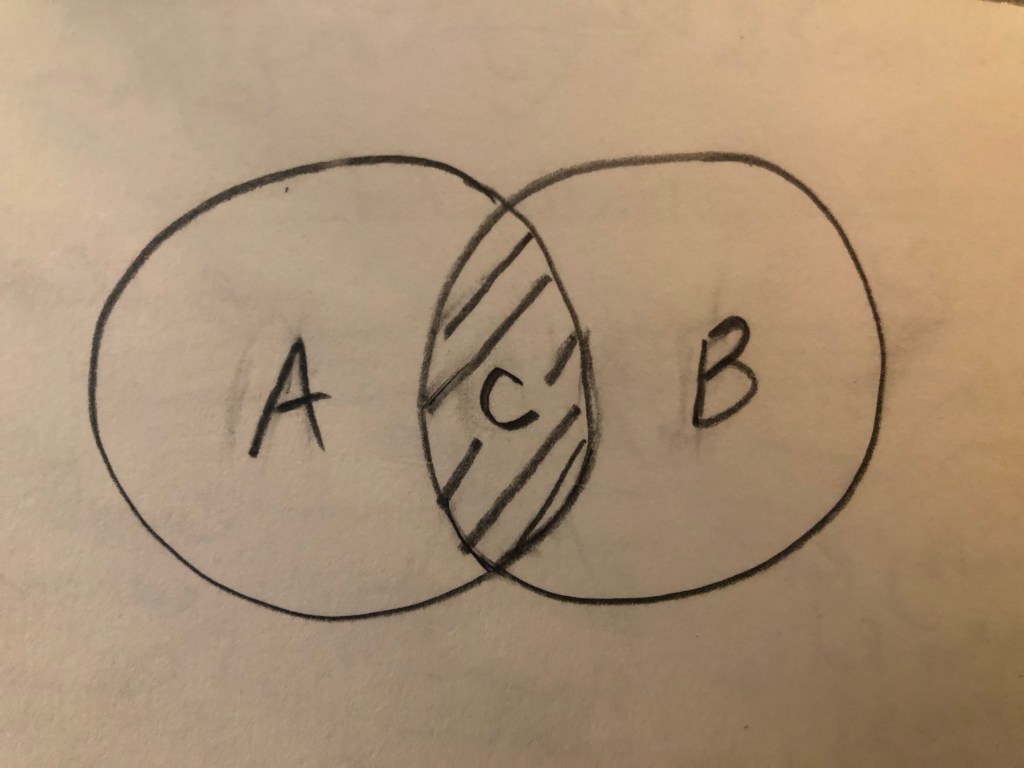
I talk and think about The Third Space a lot. From the first moment I came across this concept in a lecture by Nigerian-born American visual artist Njideka Akunyili Crosby, I found resonance and understood exactly what she meant. Then I started to research the original text about The Third Space in The Location of Culture by Homi K Bhabha. My understanding was further cemented. It is straightforward on the surface. When two cultures (let’s call them A and B) come together like in a Venn diagram, the overlap (let’s call it C) is The Third Space where something completely new emerges. It is neither one nor the other but has the characteristics of both of the original cultures. It is also alive and constantly evolving according to Bhabha.
Here is the Venn diagram:
–
Alternatively, if we use a mathematical formula to represent the concept, it will be:
A + B -> C
Meaning A and B giving rise to or leading to C. Not to be confused with:
A + B = C
because it is not a straightforward linear summation, it is a fluid concept. It is Art after all and not Maths. Maths would have been easy… In my experience, once a Mathematical problem is solved, you could sleep at night. But problems in art are rarely ‘neatly’ solved, or an answer often leads to the next question and I have spent many sleepless hours thinking about this. I get the Third Space concept in theory, but how do I locate myself in this context and express it in my art? This has been keeping me awake, a lot!
EXPERIENCE
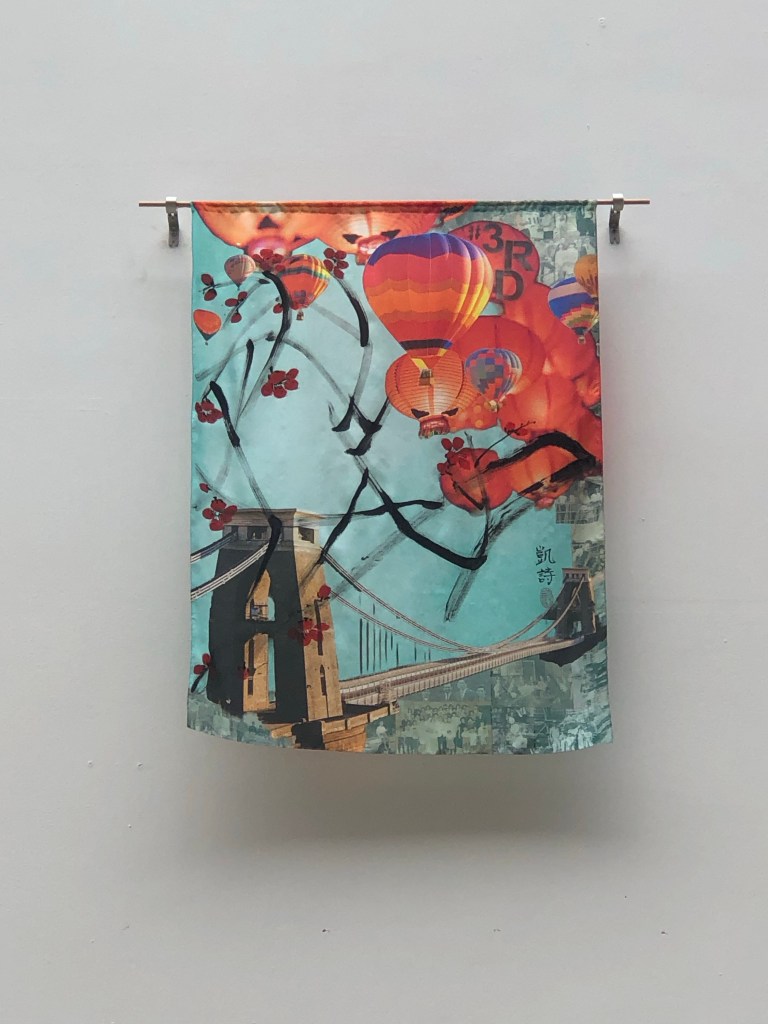
I recently exhibited at the MA Interim Show at Central Saint Martins, the making of my work was captured in this blog:
Making the work presented certain challenges. E.g. it was the largest Chinese brush painting that I have ever done (in A0) and painting on silk was very challenging (without a proper stretcher frame). Overall I was pleased with the outcome and it was an example of my transcultural layering work, however, I knew there was something lacking. I wanted it to represent something about my third space; but I have only created layers of A and B components, there was no C.
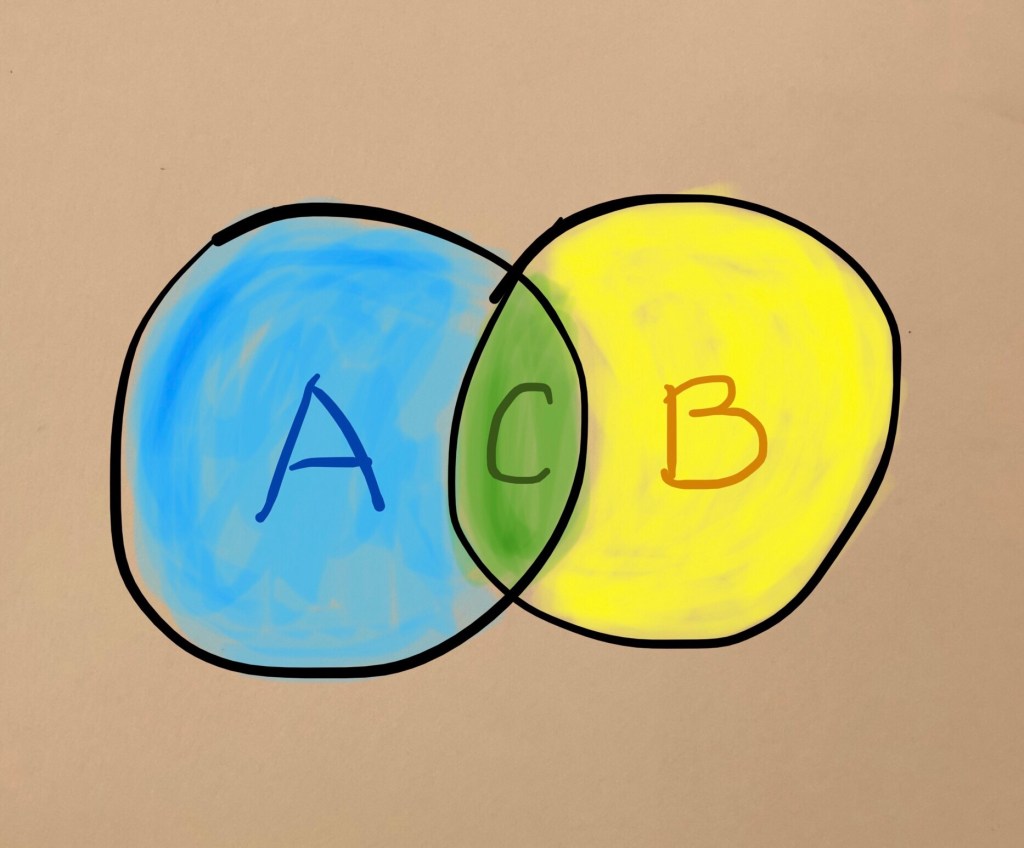
To explain this further, I have to introduce colours… If A is blue and B is yellow, then mixing the two gives green. Meaning C is green in this analogy.
–
What I had created in my silk piece for the show was equivalent to patches of blue and yellow, there was no green.
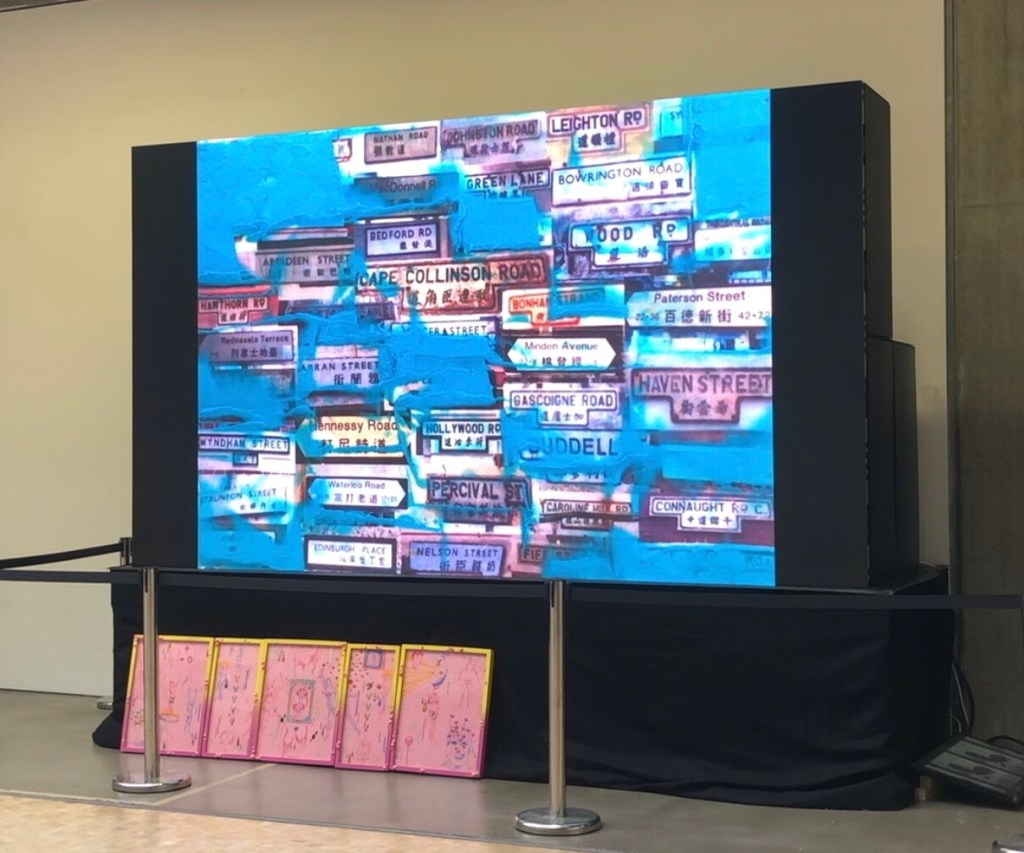
I always knew pinpointing my third space was going to be challenging and I have studied various transcultural artists’ work to learn from them – this is part of my ongoing research. I also tried to find other third space phenomena to help me in my understanding. The strongest example I have found so far was the street names in Hong Kong. It is explained in this blog and the video of me making the painting was also shown at the MA Interim Show:
I still have not managed to find how to truly express my C/green/third space… so where do I go from here?
I recently received some feedback from my tutor at the end of my MA Unit One, which followed by a discussion with him on this topic and my reflections are as follows:
– Some of my images are prone to being too illustrative. Meaning they are obvious elements of A and B; I know that just putting them together doesn’t automatically make C. I had hoped that layering those images might gradually yield C for me but it hasn’t happened yet and I haven’t found a way of making it happen.
– I was advised to just make work. Don’t overthink it, just keep making – images, painting, objects, anything. It’s ok to leave it vague and unresolved.
– I wonder – does ‘just make work’ actually work? If I don’t think it through in advance, would it work out? I acknowledge that years of institutionalised corporate strategic thinking means that I am programmed to always ‘start something with the end goal in mind’, then just keep working towards that goal with absolute focus. I know this approach is counterproductive in my art practice to the extent that it can be a barrier for creativity. Therefore I need to try harder to free myself to ‘just make’.
LEARNING
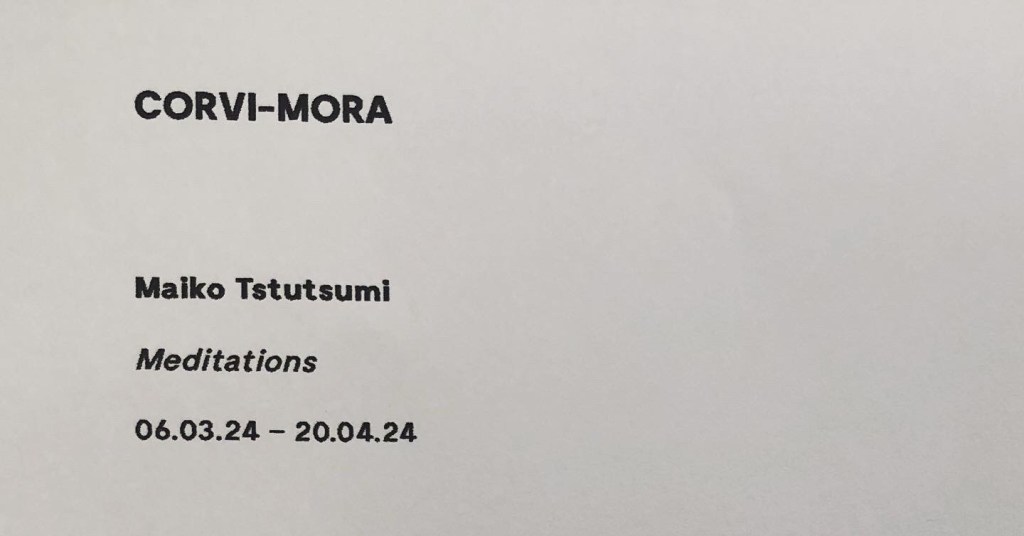
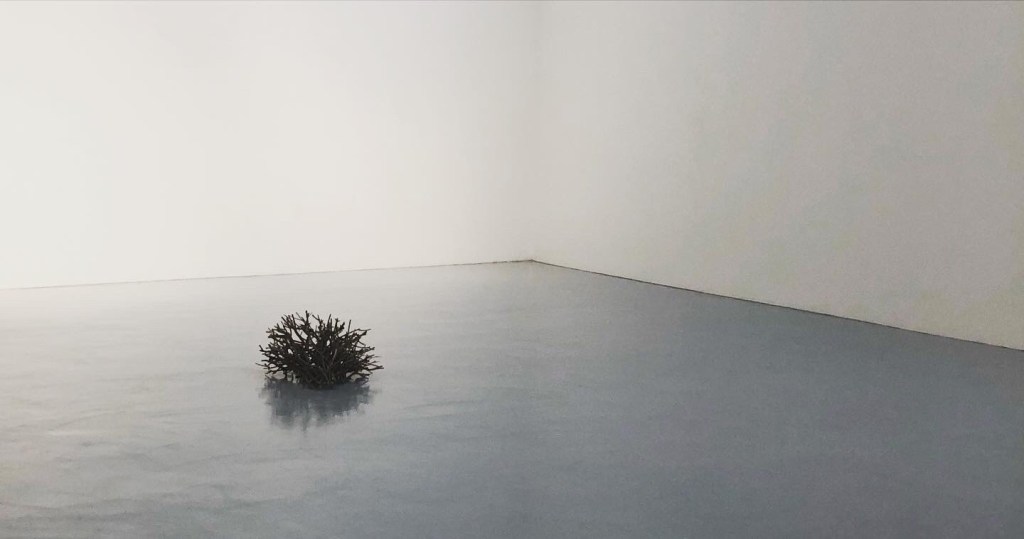
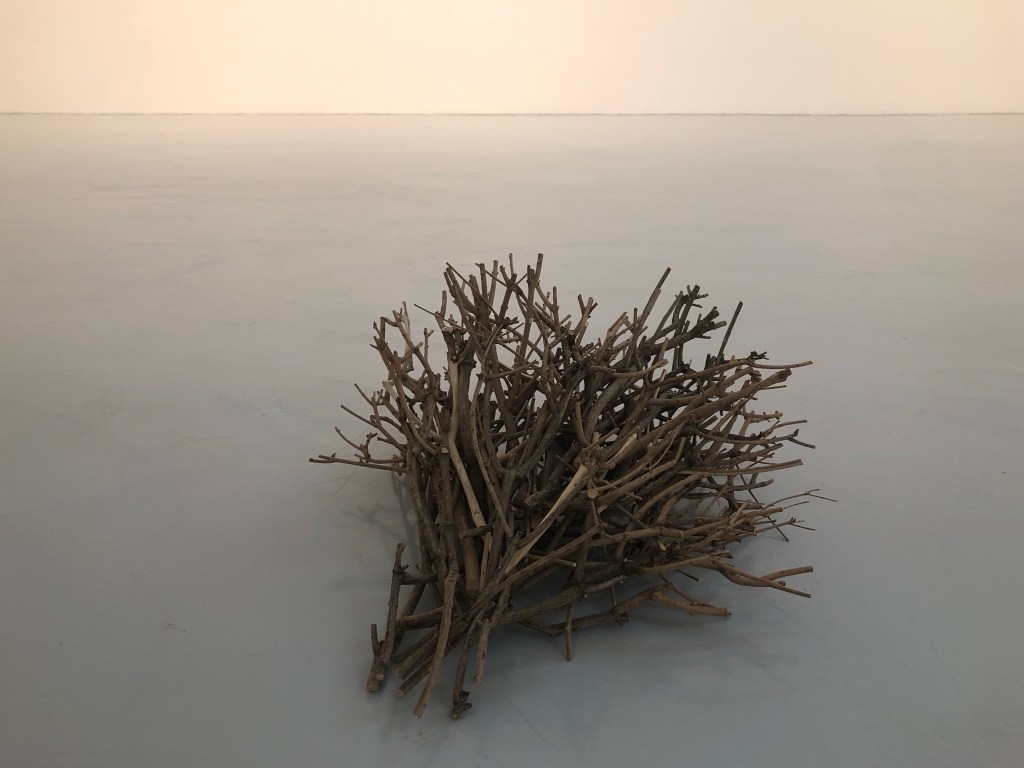
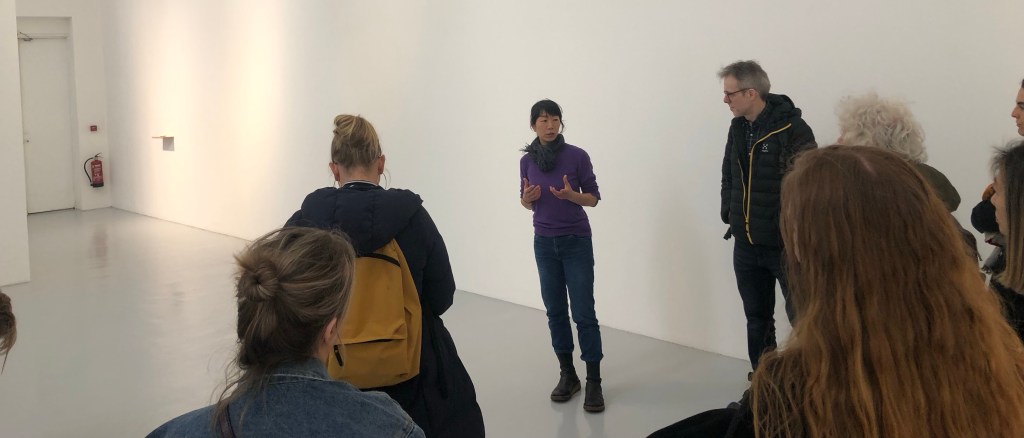
– I need to learn to trust myself to ‘just make’. My faith in this approach was reinforced by a gallery visit as part of the recent Low Residency week, where we visited an exhibition by the artist Maiko Tstutsumi:
–
We were very fortunate to meet the artist where she explained her practice. Having listened to her to understand her background and way of working, I started to see ‘her’ clearly in all her work. It was the strongest sense of the artist that I have felt in their work for some time. The last time I felt so strongly was at Paula Rego’s exhibition at Tate Britain in 2021. Rego’s work was vibrant, energetic and sometimes even violent (e.g. depicting victims of structural violence) which is a complete contrast to Tstutsumi’s serene exhibition. Despite the contrast, I could sense the artists in their work equally strongly. I believe that is because their work was ‘them’. To learn from these great artists, I need to make my work more ‘me’. I am the transcultural being, if I can work out how to make my work ‘me’ then I will have a better chance of locating C and creating my colour ‘green’.
– Prior to the show, I had started to explore a more abstract approach combined with symbols (inspired by Fiona Rae) to express my third space. I believe abstraction could help me to avoid being overly illustrative. Now that the interim show and the Low Residency is over, I am going to return to pick up that strand of exploration.
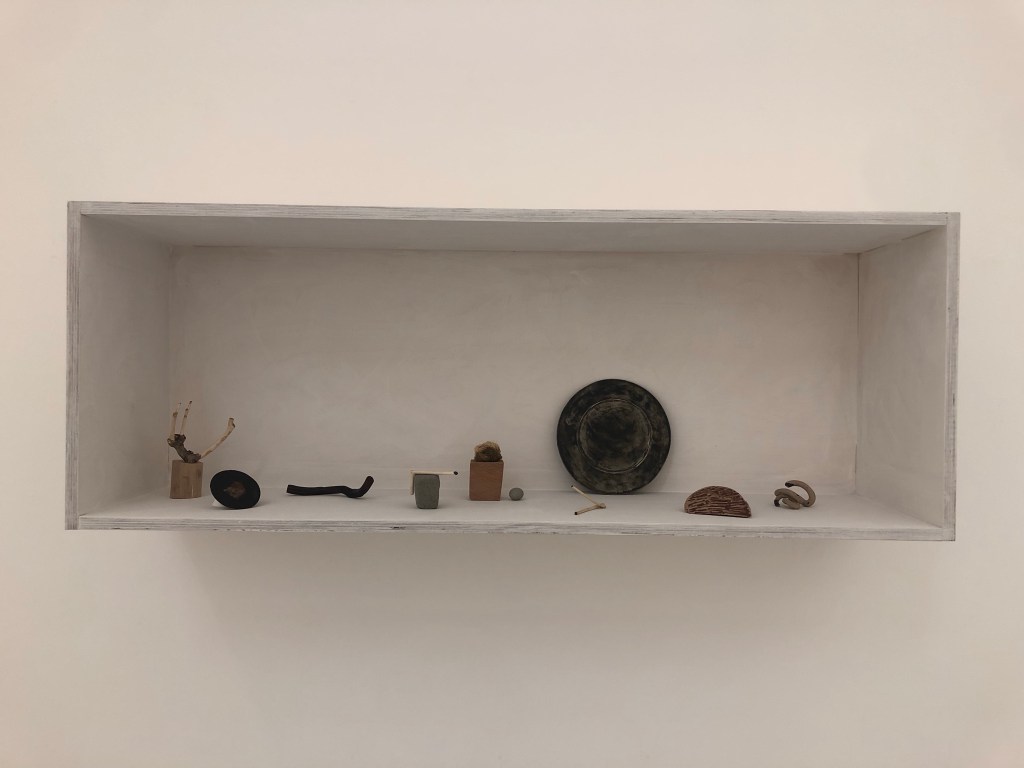
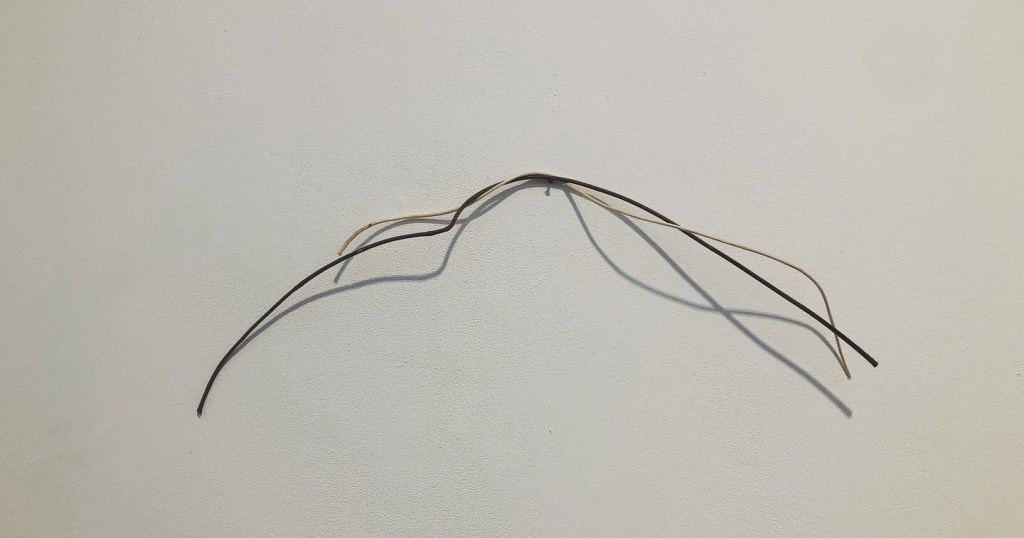
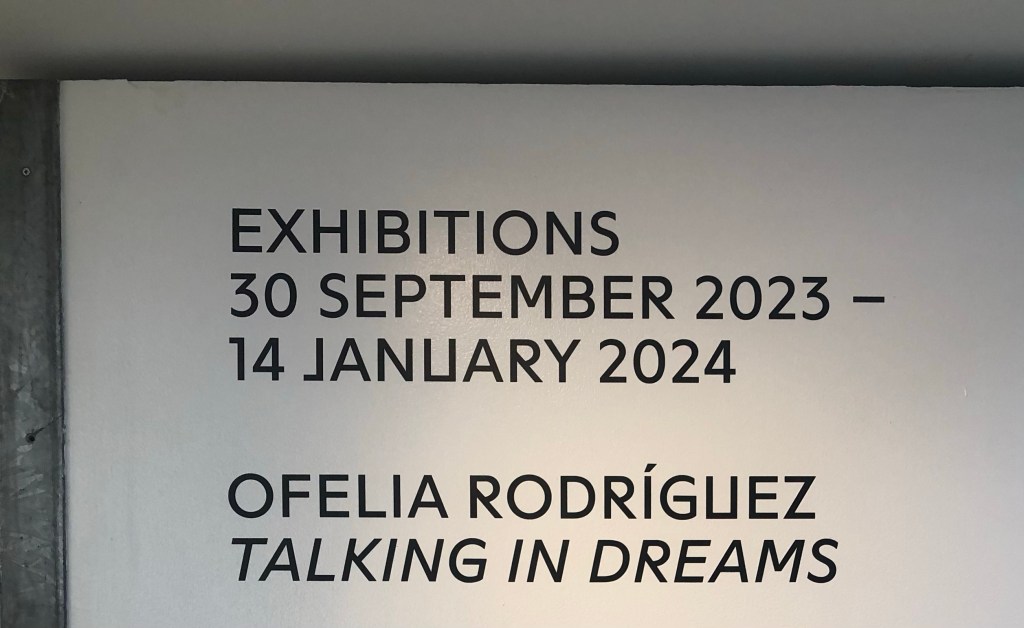
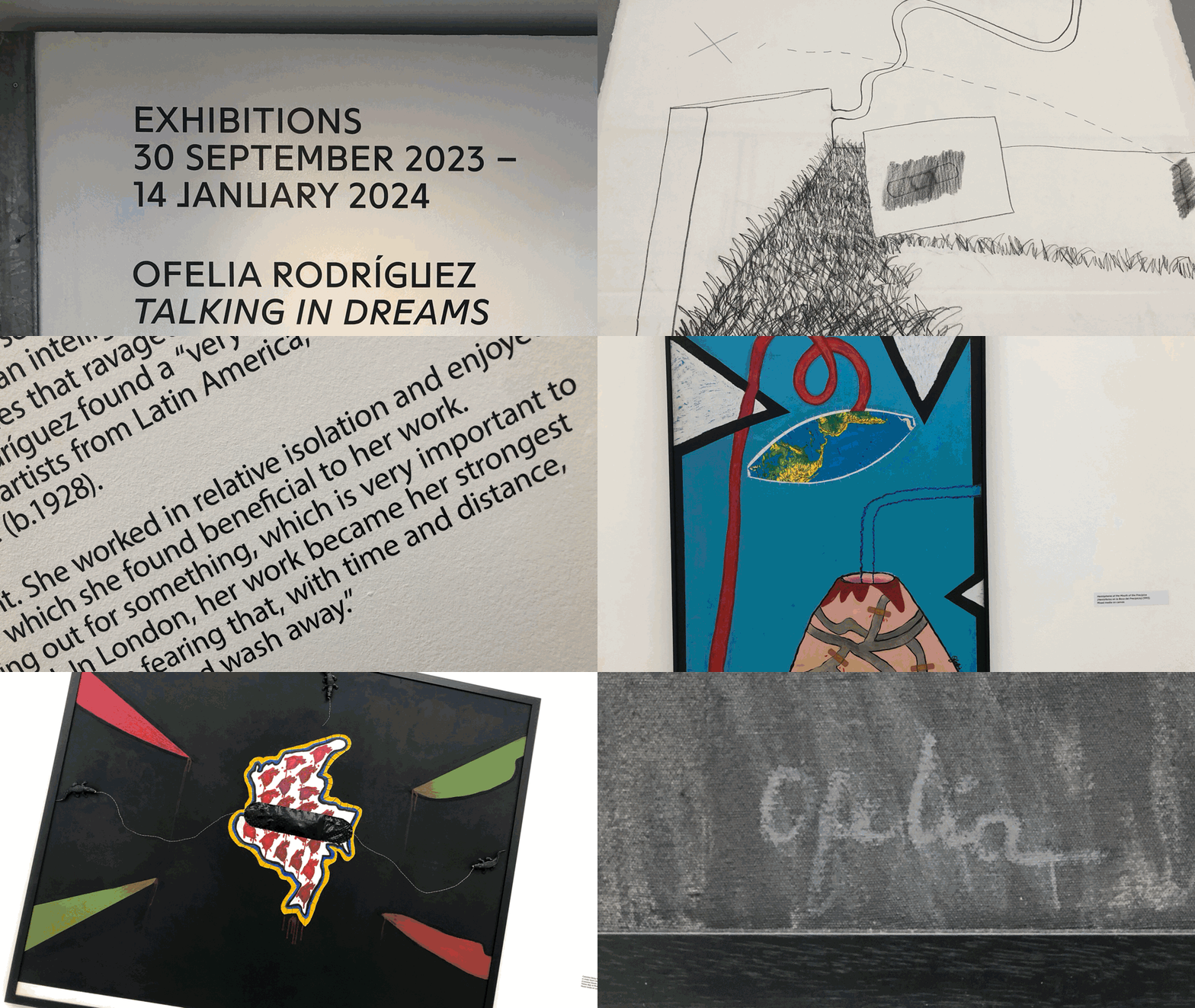
I visited Ofelia Rodriguez’s exhibition Talking in Dreams at Spike Island, Bristol. Below is a video summary of the visit compiled using the iMotion App. I learnt to use this app at a CSM online workshop and I wanted to experiment summarising a gallery or exhibition visit in this way:
REFLECTIONS
– Rodriguez’s work has really inspired me because I can relate to her work as someone who makes art about her homeland while living far away. In particular, I like her work with the bright colours and her chosen palette gave me a sense of the place she was describing. I feel I should explore a colour palette that describes my childhood home city of Hong Kong, this might help me when I am stuck on ideas about work to make.
– I was also inspired by the textiles used and the stitching in her work. Stitching into my paintings is not something that I have considered before but I have often thought about using fabric in my work. So this is an area that I will explore.
– Another thought arising from the above point… I have in the past made expanded paintings where I had eradicated the traditional canvas. I could make paint-based fabric to incorporate into my work.
– Rodriguez used a lot of found objects in her work which is fascinating to look at. However, right now, it is not an area that I am interested in because I already have several strands of enquiries going on and I feel I should make some progress before adding more variables. But I wouldn’t rule it out and I may come back to this at a later stage.
LEARNING
– Technically, I am happy with using iMotion in this way because in the past I often ended up uploading many photos from a show making the blog unnecessarily long. So I’m happy with this new discovery. Things to remember are to export the file as a GIF from iMotion to my Photos app to minimise file size and to upload the GIF to WordPress as an image and not a video. Also to give it time to upload.
– Other learning have been captured above under reflections.
– Record my thought processes and inspiration. Ideas lab, how I get from A to B in my ideas and making process.
– Like a journal.
– Record the process of making. Record my journey of getting there.
– The most important aspect of my work is me. Sketchbook helps tell the story.
– Sketchbooks are meant to be messy. Not meant to be perfect.
– Process and heritage are key in the making process.
– Sketchbooks teach us discipline. Say, everyday or every other day, put something in the sketchbook.
– Pandora (jewellery) video showing the process, how it’s made by hand, starting with a sketch. Part of their corporate story telling.
– Same for Dior – video showing making process again started with a design sketch.
How to digitise the sketchbook:
Photograph or scanning
Photograph:
– Use natural flat light like daylight and shoot from above. Avoid ceiling lights.
– Can use mobile phone.
– Can use ring light from Amazon. Creates an even spread.
– Place the sketchbook on unique background to create interest. Add prop but do not distract from content e.g. put a pencil next to a pencil sketch. Try different styles.
Photographing emphasises the 3D aspect of the book instead of scanning, giving more creative approach.
Scanning:
– Easy to do, flat 2D look.
Basic Photoshop
– use spot healing tool to remove blemishes.
– Photoshop help available 9am to 6pm Mon to Fri. Go to Collaborate:
– Adobe Acrobat DC can add, delete or move pages around.
Flipbook software
– Issuu / Yumpu
– Cam make a magazine
– Can email speaker for help with Flipbook.
Basic Copyright:
– Fair Use/Dealing law
– Do not fear showing your work.
– Use (c) Copyright – Name – Date if you want to copyright.
– Can use watermark in PDF. Can add Metadata copyright into photoshop or PDF file.
Where to start?
– Look online, YouTube to get ideas. Start somewhere then be disciplined, say one sketch a day.
– Example of sketchbook entry – take a photo of something on TV or when you’re out that you like, record voice note about what you like about it. Then put in sketchbook.
For further info:
z.chaudhri@arts.ac.uk
REFLECTIONS
It was a very useful session. I have bought a new sketchbook for the MA course but hadn’t used it yet. I have been capturing my ideas in an Ideals Lab blog. The blog is a good way to quickly note down ideas while they are fresh in my mind but I feel it does not offer the creative and ideas evolution ability in a way that a sketchbook does. So I know I need to make better use of my sketchbook and make it a meaningful part of my creative process. I must admit that I often used my sketchbook because I knew I was meant to, but I didn’t always find it useful. Hence I tended to go from ideas in my head straight to the canvas. I appreciate that approach does not enable me to maximise the ideas exploration part of my process and it’s something that I need to improve on.
It was useful to hear about the options for digitalising the sketchbook.
LEARNING
It was a good refresher to remind me of the usefulness of a sketchbook. But it’s only useful if I make it part of my process. A key learning is to find meaning in the sketchbook process, not just to use it, but use it to add value to the creative process. The only way is to start using it, keep experimenting, find enjoyment in using it and go from there.
NEXT STEPS
Use the new sketchbook to explore ideas for my next painting.
UPDATE
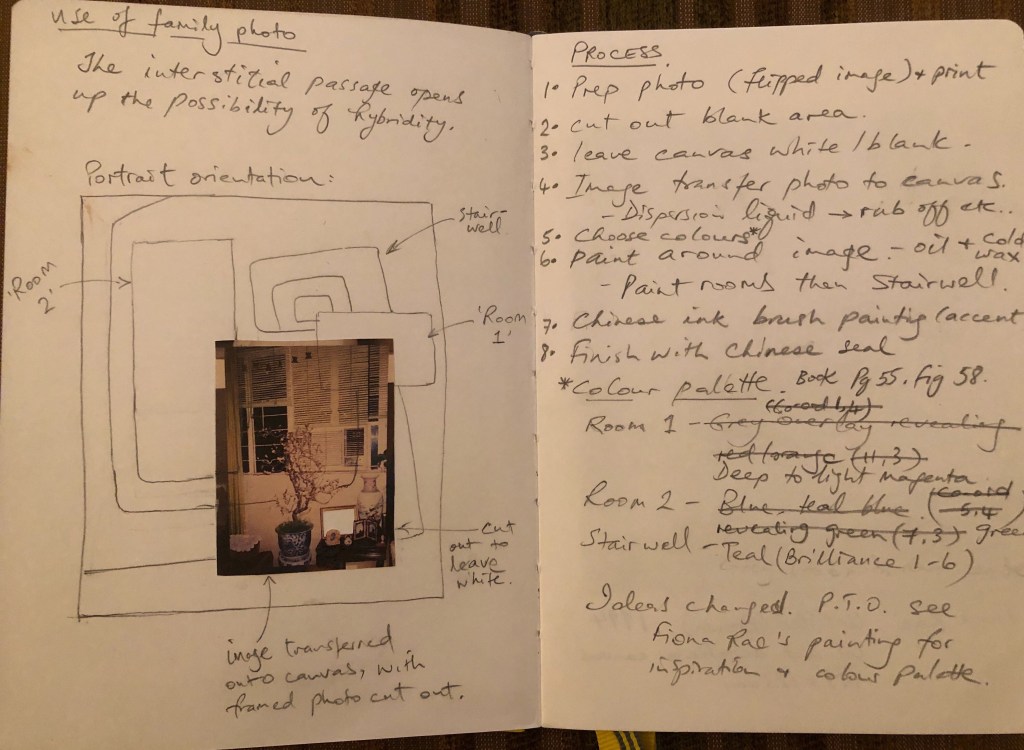
Using the sketchbook to develop ideas and process for the latest painting:
I’m happy with how the sketchbook helped me in the latest painting, but I need to continue to make it a natural part of my process.
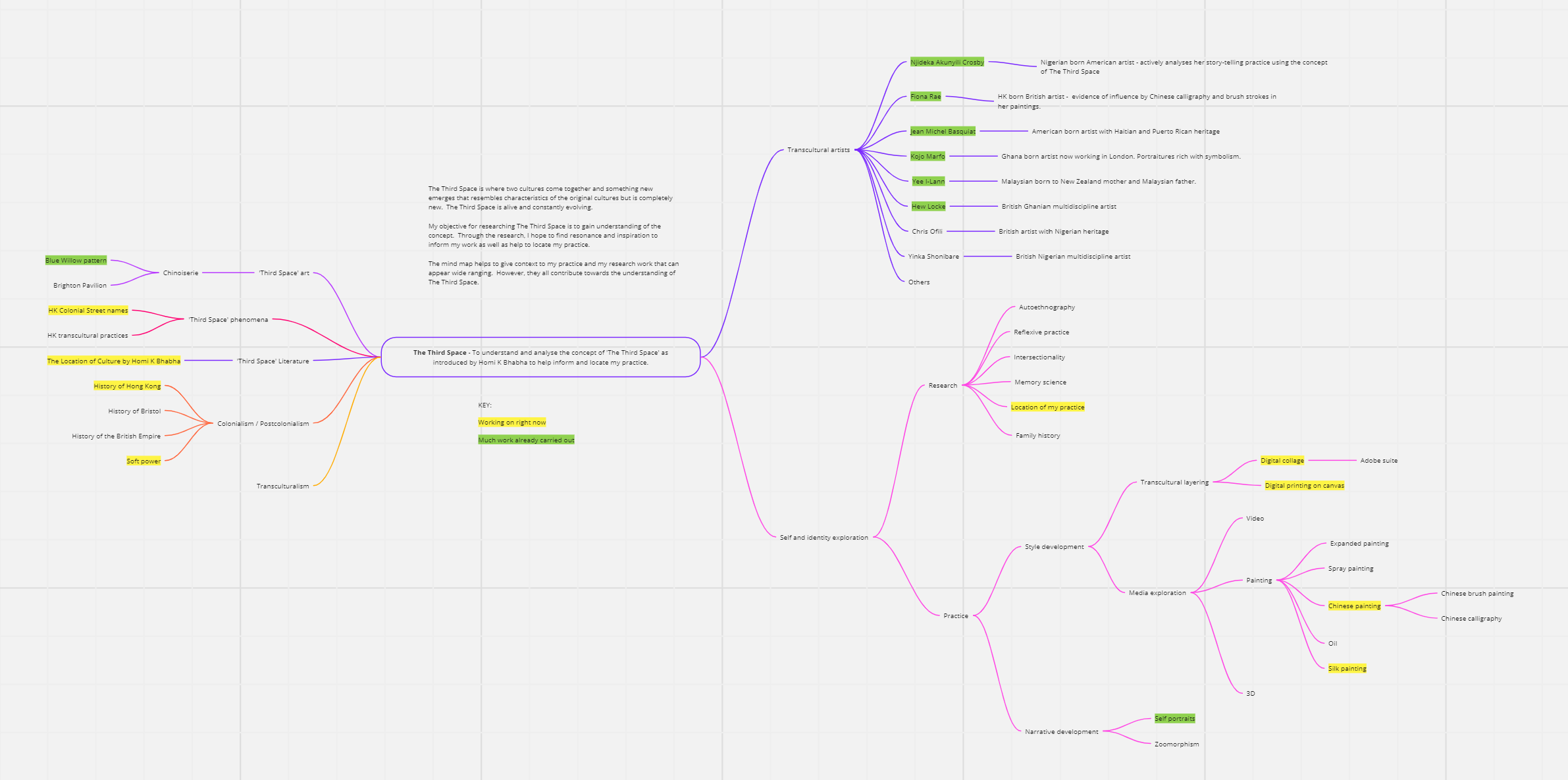
The mind map – whether The Third Space or Self-exploration should be the centre is something that could change over time. Just because I have decided on the former now doesn’t mean that the latter might not emerge as the centre at a later stage.
Reflections: I found the mind mapping process very useful in bringing clarity to my thoughts and practice. However, I recognise that it is important to avoid being too rigid. Need to make sure I give myself the space to think freely and not to bind myself to a fixed structure which could hinder my scope of exploration.
The extended-brain system of note taking – zettlekasten, can use this method to help me organise my thoughts when reading and researching about The Third Space as this book is so foundational to my practice at the moment. Obsidian software is an useful tool for this.
Reflections: I have found reading The Third Space very useful but have felt that I needed a better way to make notes and capture my thoughts so that I can build on what I read and make sense of it in the context of my practice. I am always worried about useful thoughts escaping me. So this part of the discussion was very helpful and I will research about the zettlekasten concept as well as try the Obsidian software.
Chinese painting – we discussed why not blogged until now and related discoveries.
Reflections: It was useful to delve deeper about the Chinese painting part of my practice. To talk out loud about where it has been and where it is going was helpful. Not only is the Chinese painting a skills-learning opportunity, it is helping me to discover my heritage and my personal history. It has led me to explore a range of topics such as Chinese philosophy and poetry as well as art. I was surprised to find that there was so much of that culture inherent within me despite leaving HK and my family when I was a young teenager many decades ago. I do feel blessed that I have a lot of material to ‘mine’ because so far that content has been largely untouched. However, among my excitement there is much hesitancy because of the uncertainty of what I might find. Also I am mindful of managing the challenges of vulnerability, detachment and self-preservation. Nonetheless, I am excited overall but I will take my time to ‘mine’ like an archaeologist doing an ancient monument dig because of the fragility.
The real challenges in my practice – Aside from the technical challenges such as digital printing on canvas, what are the real challenges for me in my practice?
Reflections: In this discussion, I reminded myself of a key part of my practice that I have been struggling with for some time – expressing my transculturalism. It was in this search that I came across The Third Space and I have been hoping that its research would help me with this challenge. I feel I am still at the beginning of that discovery. I have also been researching into other transcultural artists (as listed on my mind map) to gain insight into how they express their transculturalism. To explore my third space, I have been working on layering images from cultures that have influenced me. My challenge is to discover that something ‘new’ or unique to me. Right now, I feel my images are layers of culturally distinct images rather than a coherent whole – this remains my challenge to explore how to achieve that aesthetic coherence that uniquely describes my third space.
My creative ecosystem – we discussed this and how I have been building an ecosystem for my creative practice. I was asked to think about ‘working at my best – what is it like?’
Reflections: Referring to my search for a way to express my third space, I need to be more mindful about the ‘practice based research’ part of my work and make it an integral part of my day-to-day discovery. I will work on this and also consider the posed question carefully.
My prep questions requesting help – all answers captured under original questions below.
Next steps:
Be mindful to not let the structure that I build into my practice hinder my creative exploration.
Research zettlekasten and try out the Obsidian software to support my reading of The Location of Culture and research on The Third Space.
Although I said that I was not ready to ‘dig too deeply’ into my family history yet due to the fragility of the process, I will explore using some recently found family photo images for my forthcoming work.
Consider the question ‘working at my best – what is it like?’
My response to the question ‘working at my best – what is it like?’:
When I am working at my best, what is it like?
The environment –
In my home studio, alone. The room is warm but not hot; relatively orderly; quiet outside, with the radio or a podcast on; materials available and accessible.
My state of mind, how I feel –
I have lots of time, not in a rush, no pressure to be elsewhere. Free from interruptions.
My mind is free from worry.
I am doing the work for myself, not for anyone else.
I feel completely free and anonymous. The work doesn’t matter, it is not for show. That is when I can be truly liberated in my thinking and making.
Dance like no one is watching; sing like nobody’s listening; paint like no one will ever see your work and you will never have to explain.
Preparation for Tutorial:
I have been working on several strands to develop my research-led practice. To bring clarity to my thinking, I have created a mind map to capture the different topics that I have been working on or plan to work on in order to show their relationships to each other and their context within my overall practice. This map also shows the areas that I am currently working on.
To plan for Unit 1, I want to consider these two questions:
1. What are my aims?
2. What do I want to discover?
Unit 1 timescale – Two terms from Oct 2023 to End March 2024, approximately six months.
What are my aims?
For Unit 1, I want to continue the two strands of my practice exploration – developing my style as well as my narrative. I am hoping that at some point, the two strands will converge in a way where my narrative work would feed ideas into the layering style work thereby forming a more coherent practice overall. However, I don’t feel that will happen in the next six months.
The aims for developing my style:
– Digital Printing: A key priority is to resolve the difficulties I have been having in digital printing onto canvas. I have contacted CSM Digital Printing lab to find out my options. After receiving some helpful info, I am preparing a series of experiments to evaluate my digital printing options. My aim is to come to some conclusions on this point by the end of Unit 1. Progress so far is captured in this blog:
– Chinese Painting: I have been learning Chinese brush painting and I am enjoying it. Despite learning for nearly two years, I have not written any blogs about this work because I didn’t know where I was going with it. I have now decided that I will continue this path of learning and hope to incorporate more of this genre into my main practice. As a result, I aim to start to blog regularly about my Chinese painting work and I hope to explore how best to incorporate it coherently into my practice through the reflective blogging process. Below is my first blog on this subject:
– Research canvas background images: I aim to do more research and make digital image collages that reflect my lived experience to form the canvas background for my style development work. Once I have compiled my latest collages, I will use the CSM digital printing lab for printing on canvas. Then I will use the printed canvases to make the next series of work.
– The Third Space: I am reading The Location of Culture and I am finding resonance for my practice. I have started a blog on my reading, I aim to use it to capture my reflections and thinking as I go along. I also want to research more transcultural artists to explore how they have interpreted and expressed their third space. Reading progress is slow because of the thinking and reflecting involved. Blog for this work so far:
– Make work freely and reflect: I don’t have as defined a plan here as I have for my style development work. Here, I want to just make work, leaving it as free and unstructured as possible to make whatever comes to mind. My aim is to use the reflective process on the work that I make to explore my thoughts and narrative. Below is a blog on my latest narrative work – Self-portrait #3:
– An improved process for my multimedia layering work: with better canvas materials and using the CSM printing facilities.
– My Third Space: through my reading and making, I want to research and reflect on the meaning of The Third Space for me. I expect this exploration to last a long time and long beyond Unit 1 but I want to make some concrete progress in the next six months.
– My narrative: this is in fact part of the Third Space exploration, but I have not made sense of how they fit together yet. So for the time being, I will continue to discover my narrative through free making. My research into other transcultural artists will hopefully give me some helpful insights.
What do I need help with?
1. Digital printing and painting on large silk canvases – where can I get help if I struggle?
Discussed.
2. Feedback on whether having such a mind map helps or hinders the creative process.
Discussed.
3. Question – will there be any essay writing assignments?
Yes, in Unit 2. 3,000 to 4,000 piece of writing. More info in April.
4. Any other general feedback would be appreciated.
Discussed.
5. Can I access free Adobe suite software and stock photos library as UAL student?
A painting based on reflections from the ‘risk-taking’ drawing exercise and the Chinese painting blog – creating a loose painting background using the left-hand and eyes-closed approach, then adding Chinese brush painting style symbols as an experiment.
Third Space/soft power – HK Colonial street names – I want to make something about this topic that I have been giving a lot of thoughts to over the last few years, maybe experiment as part of the above painting to start with to see where it takes me.
A narrative painting from memory – childhood story in HK about a lawn bowling green incident reflecting the colonial era.
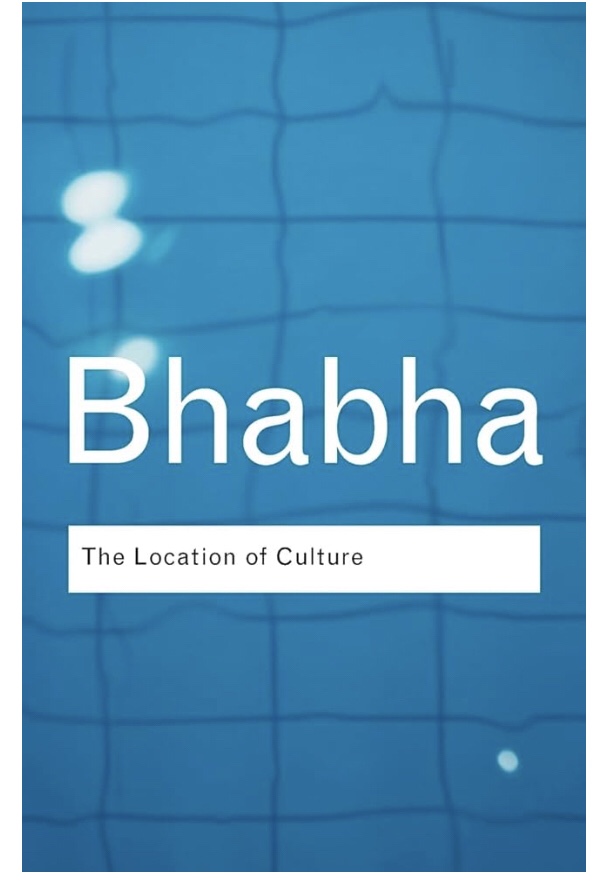
This blog captures my notes and reflections as I read this book. I found much resonance in Bhabha’s text and I hope this blog will be a treasure trove of inspiration for me to make work through exploring my Third Space.
This is an ongoing blog that I plan to update as I go along as I expect to take time digesting the text and is likely to involve much re-reading over time.
Notes and reflections:
Introduction refers to novels by VS Naipaul drawing out essence to position Bhabha’s notion of ‘vernacular cosmopolitanism’ which asserts measuring global progress from the minority perspective.
The right to difference in equality.
A dual economy is not a developed economy.
‘Symbolic citizenship’ (Avishai Margalit) – surveillance culture of security… how do we tell the good migrant from the bad migrant? Which cultures are safe and unsafe?
Minority affiliations or solidarities arise in response to the failures and limits of democratic representation, creating new modes of agency, new strategies of recognition.
Poem by Adrienne Rich – An Atlas of the Difficult World (1991) has powerful images. To do: research for images
Adrienne Rich struggles to find ways to establish narrative of what lies in-between the distinct moments that allows the characters to become affiliated in the spirit of ‘right to difference in equality’.
Rich places herself at the intersections of these narratives as a cultural re-visioning of a particular history ‘of one’s own’.
No name is yours until you speak it. Your personhood cannot be denied.
The borderline engagement of cultural differences may as often be consensual as conflictual. They have confound our definitions of tradition and modernity. Realign the customers boundaries between the private and the public.
Using architecture as a metaphor with stairwell connecting rooms – this interstitial passage between fixed identifications opens up the possibility of a cultural hybridity that entertains differences without an assumed or imposed hierarchy.
Useful links on Homi Bhabha’s work
Short lecture on Bhabha’s work:
Someone reviewing the book:
1.5 hours long lecture by Bhabha:
In-betweenness by Dr. Masood Raja
Chad A Haag review series on whole book:
Update 14th Dec 2023
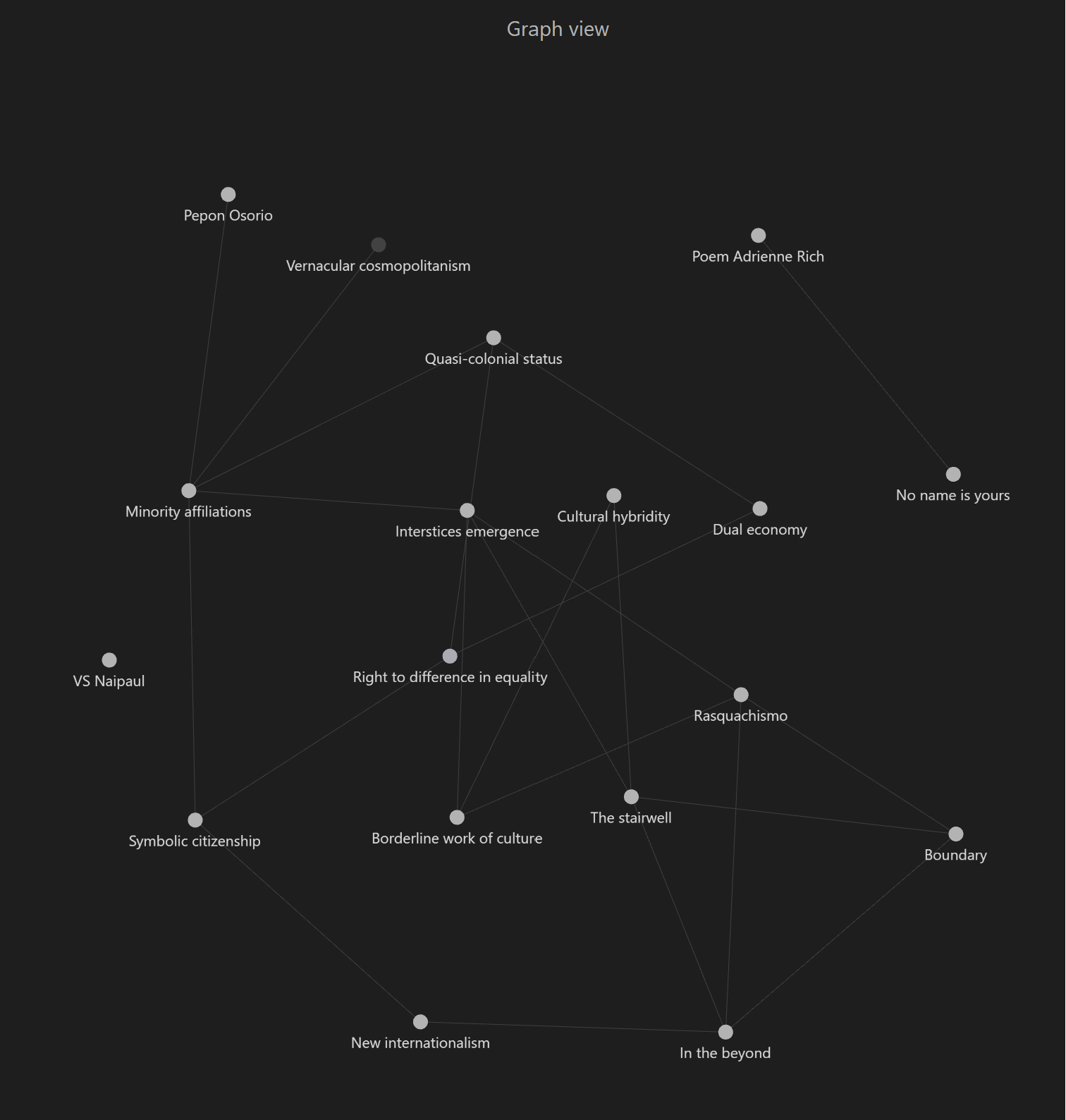
At the Unit 1 tutorial, I was introduced to a note taking tool called Obsidian. It is based on the Zettelkasten method of note taking. I have since started using Obsidian and I have found it to be very useful and powerful. It will be very helpful for me because I was starting to struggle with just capturing my notes and thoughts on a list here. I needed to structure my thoughts and the data in a better way. So from now on, I will capture my notes on The Location of Culture in Obsidian instead of listing them in this blog.
Example of the graph view of notes so far taken with Obsidian:
I have also watched all five of the Chad A Haag study notes videos on YouTube – they are excellent and have helped me to quickly get a sense of the ideas by Homi K Bhabha. It is a book that requires time to study and digest. I will continue to read the book and will really take my time to understand it because it forms the foundation of my research in my art practice.
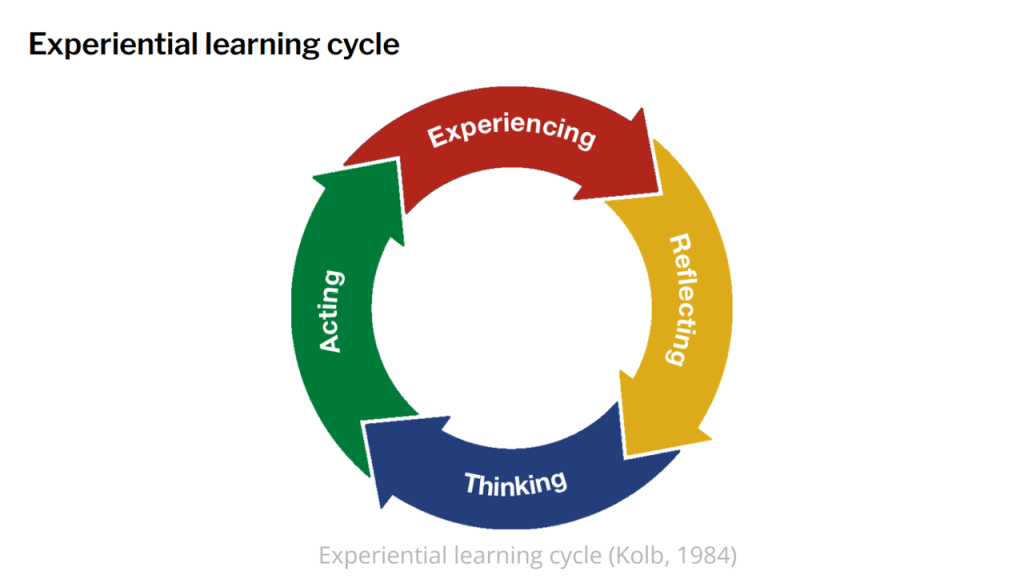
I plan to structure my blogs based on Kolb’s learning cycle. This is because I find the format helpful in guiding my thinking and learning process. The meaning of each stage is adapted with my personal interpretations to suit my practice development.
EXPERIENCING: What did I do?
– Under METHOD, I will capture my methods and decisions during the making process.
REFLECTING: How did I feel?
– Under REFLECTIONS, I will capture my feelings and thoughts throughout and after the making process. The intention is to be as broad and uninhibited as possible to include feelings about the creative process as well as any personal insight.
THINKING: What did I learn?
– Under LEARNING, I will bring the focus back to the context of my practice after being as broad as possible in my reflection. Here, I will capture my learning after analysing the insights gained in the reflecting stage.
ACTING: What will I do next?
– Under NEXT STEPS, I will capture my next actions that could be about making, research or any relevant activities in order to develop myself or my practice.
Categories
I will use WordPress for my blogs. I am planning to use the following categories to organise my blogs:
– Thoughts
– My Projects
– My Work
– My Writing
– Research
– Tutorials CSM MA FA
– Course notes CSM MA FA
Tags
I am planning the following tags for my blogs to start with. I expect to add to the list as my research deepens during the course.


 elizarawlings