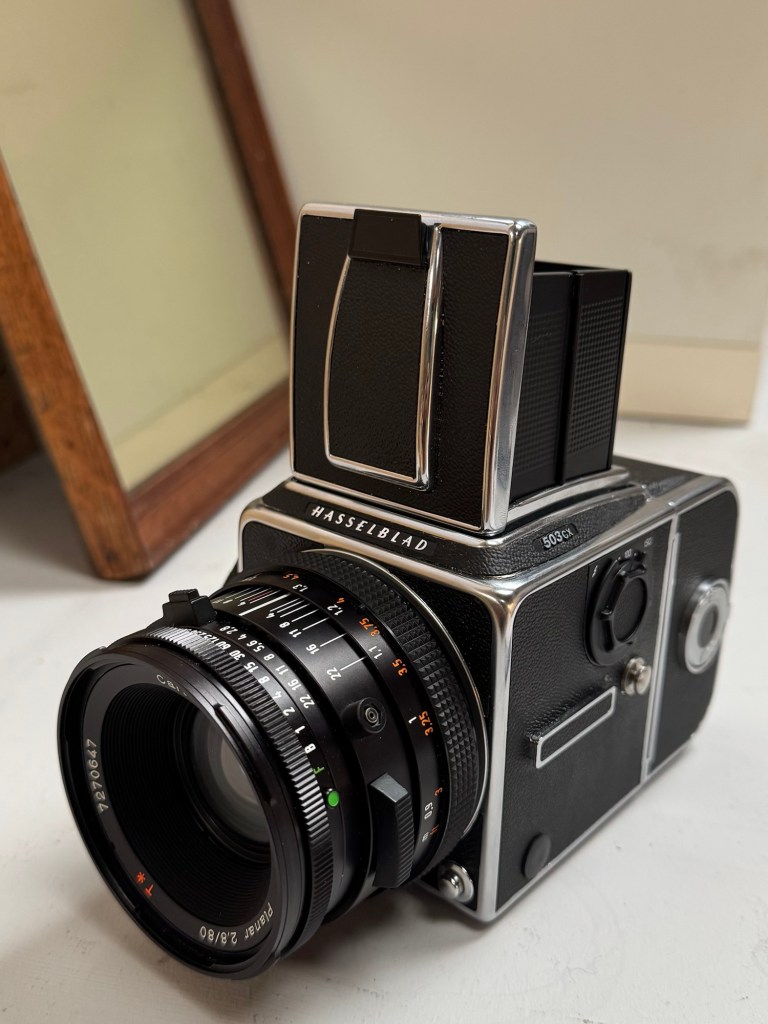
A few months ago, I was given a Hasselblad 503CW medium format camera by my late father-in-law. He was a keen photographer and this camera was his pride and joy. So it is very meaningful for me to have this beautiful and iconic camera. I have recently started to explore incorporating photography into my practice, hence I decided to attend a one day workshop in Bristol to learn how to use this camera properly to make the most of it.
EXPERIENCE
This is the Hasselblad 503CW film camera:
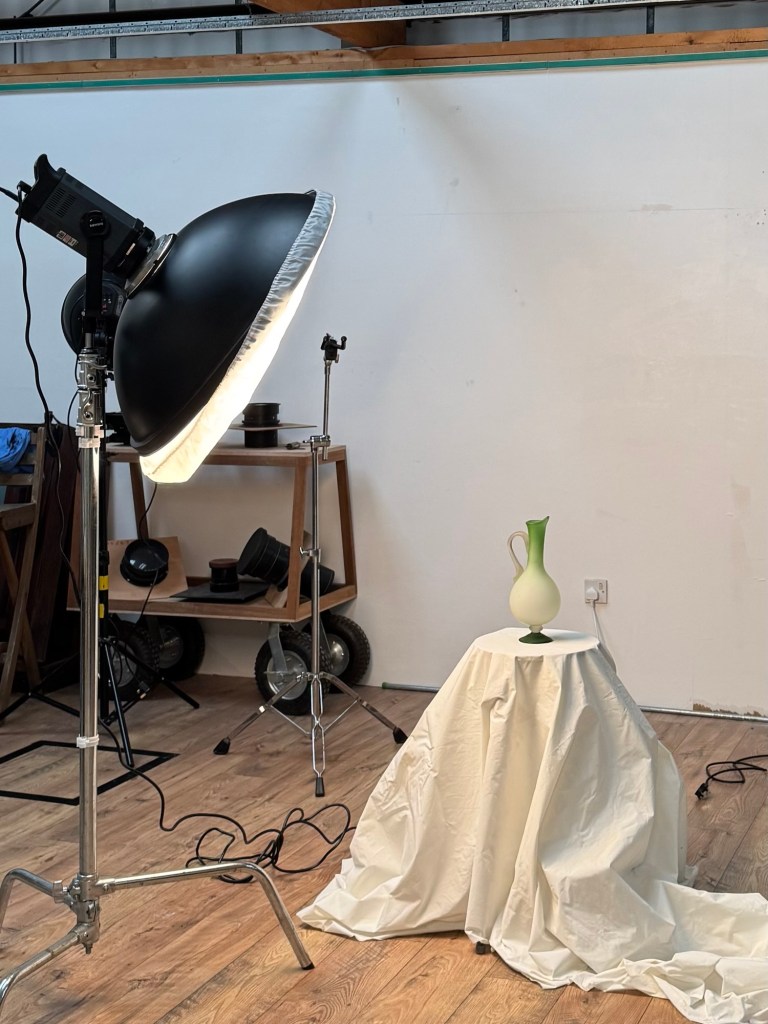
The workshop started with some indoor still life work in the studio.
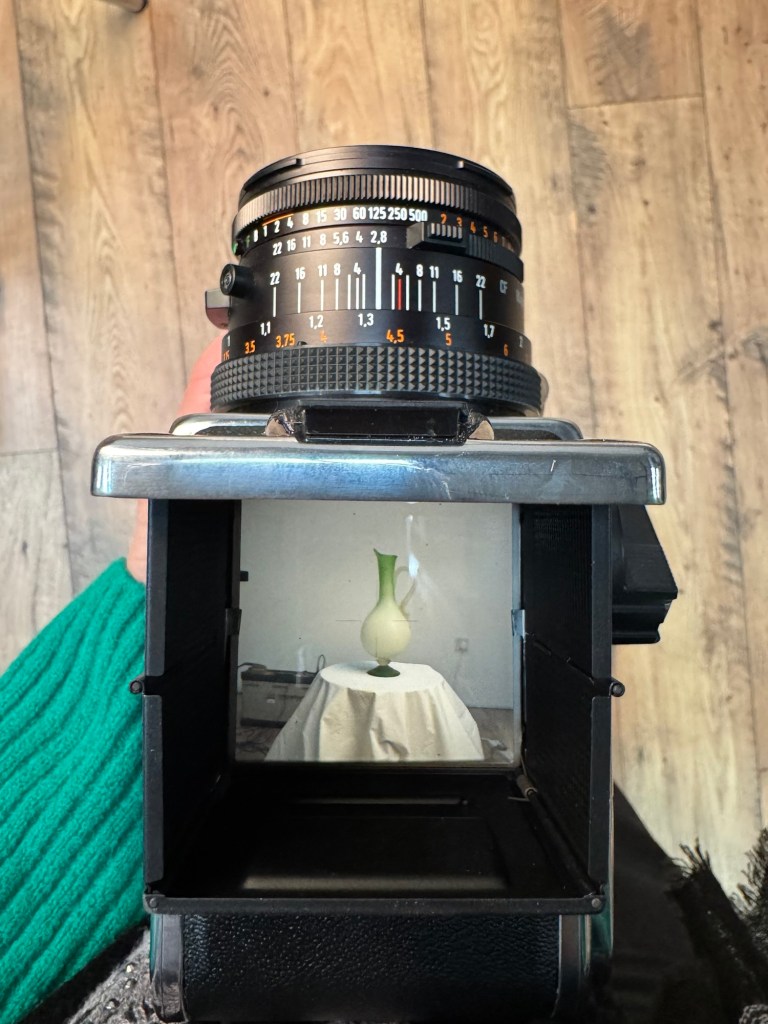
The camera has a default waist level view finder. It also came with an eye view finder and I experimented with both. I was very interested in the waist level view finding approach as it’s unique to this type of cameras.
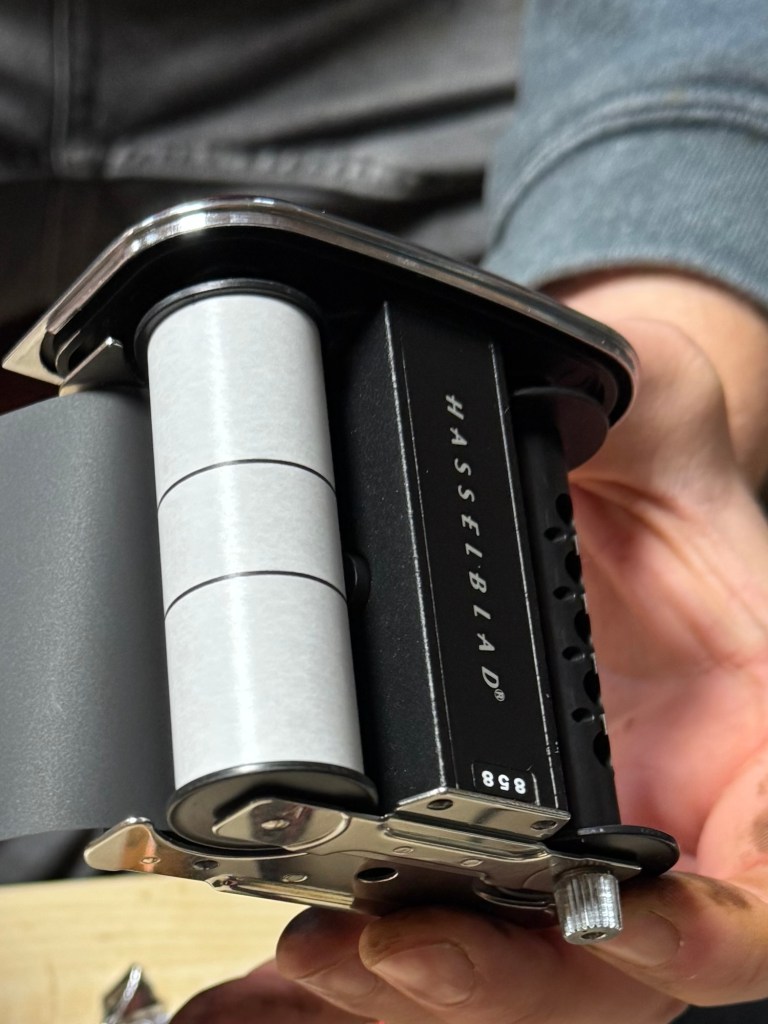
Learning to load the film was very important because I have not loaded a film for decades since I started using digital cameras.
The afternoon started with a walk about in the nearby area to take some outdoor streetscape photos. The studio was in the backstreet of an industrial area. The kind of ‘forgotten’ streetscape that really appeals to me. I took 12 photos (the film was a 120 with 12 exposures per film). Below are a few photos and a video showing all 12 that I compiled paired with a soundtrack ‘London calling’ by The Clash that particularly resonates with me at the moment with what’s going on in the world.
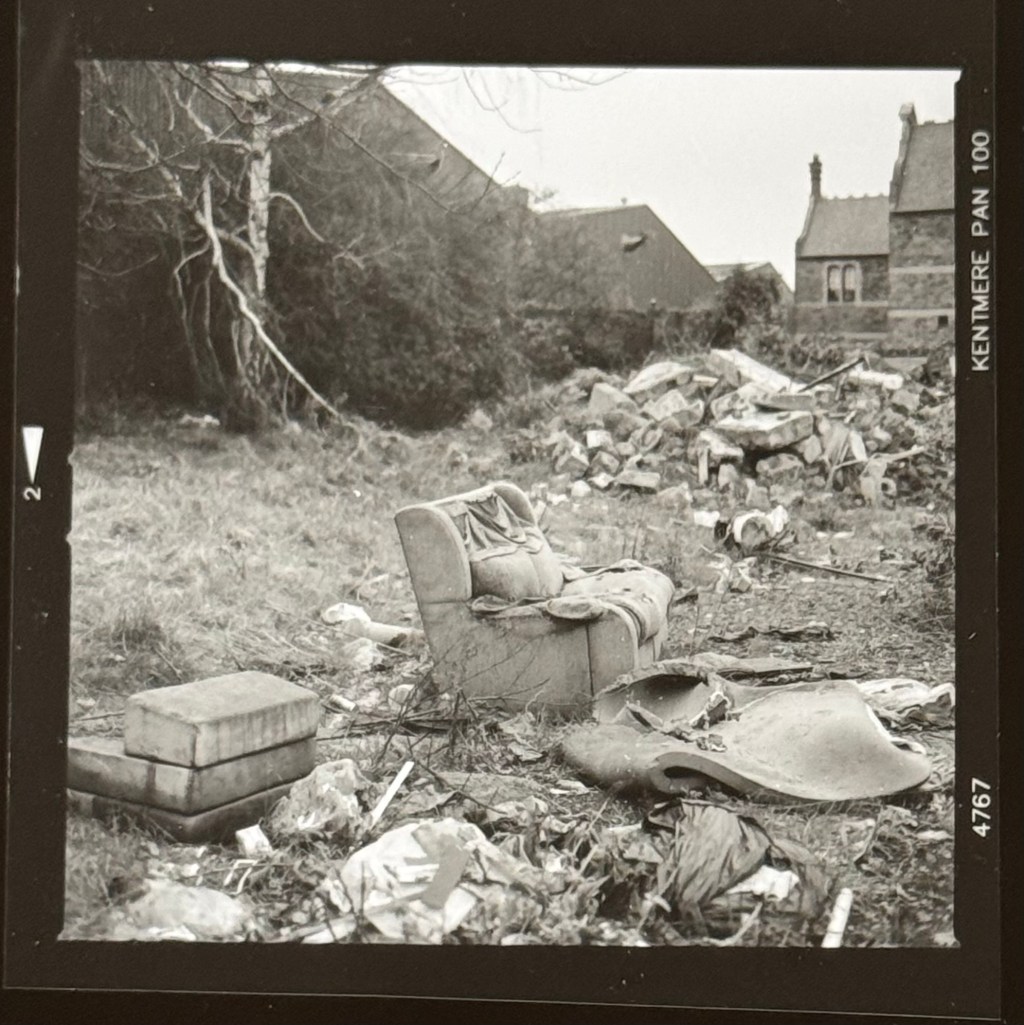
The first shot was an abandoned sofa. The studio is based in a warehouse that was previously a large furniture shop/warehouse and I have been there many years ago looking for a low cost sofa when my husband and I were young. So I was excited to see this sofa and I had to take a shot. Was it a left over from the warehouse or just coincidence that it’s there? Was someone trying to make a home there?
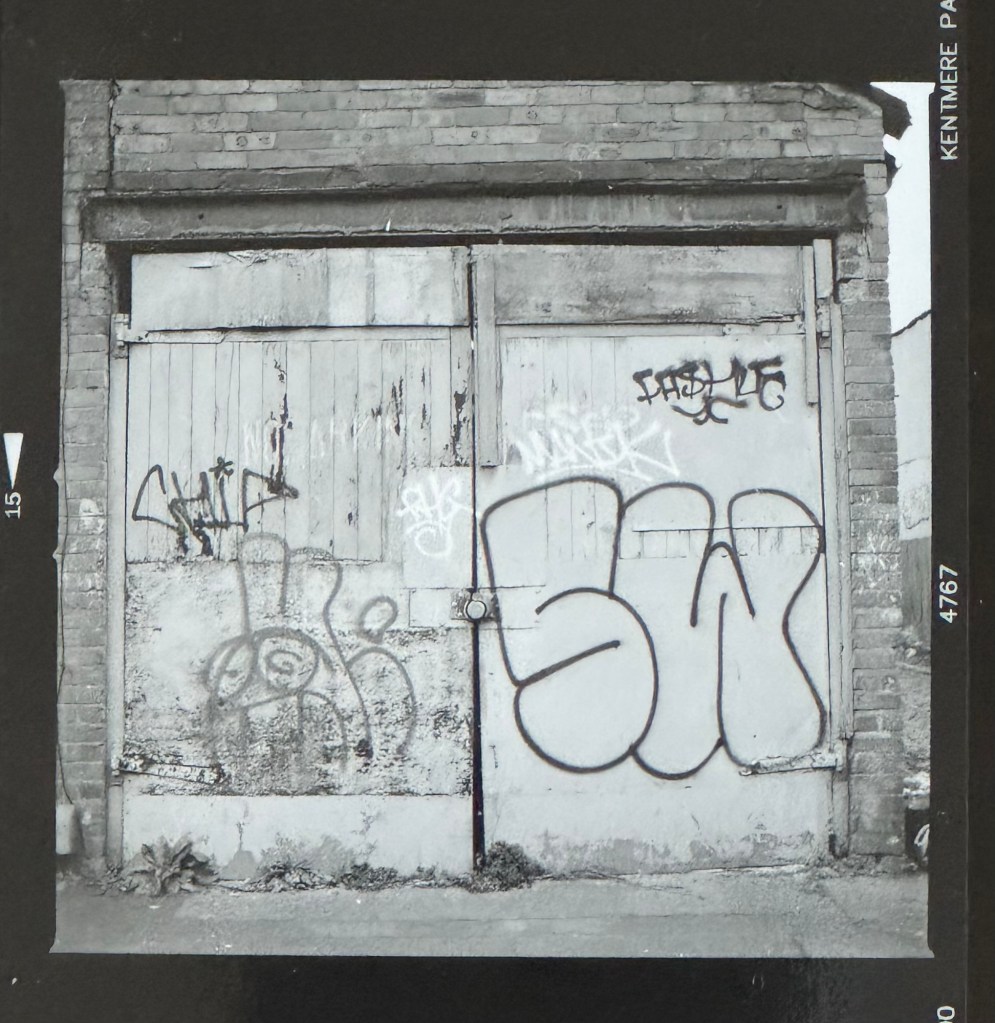
Graffiti on a door. Graffiti is such a large part of the Bristol street culture and I have always had a thing about doors, I love doors:
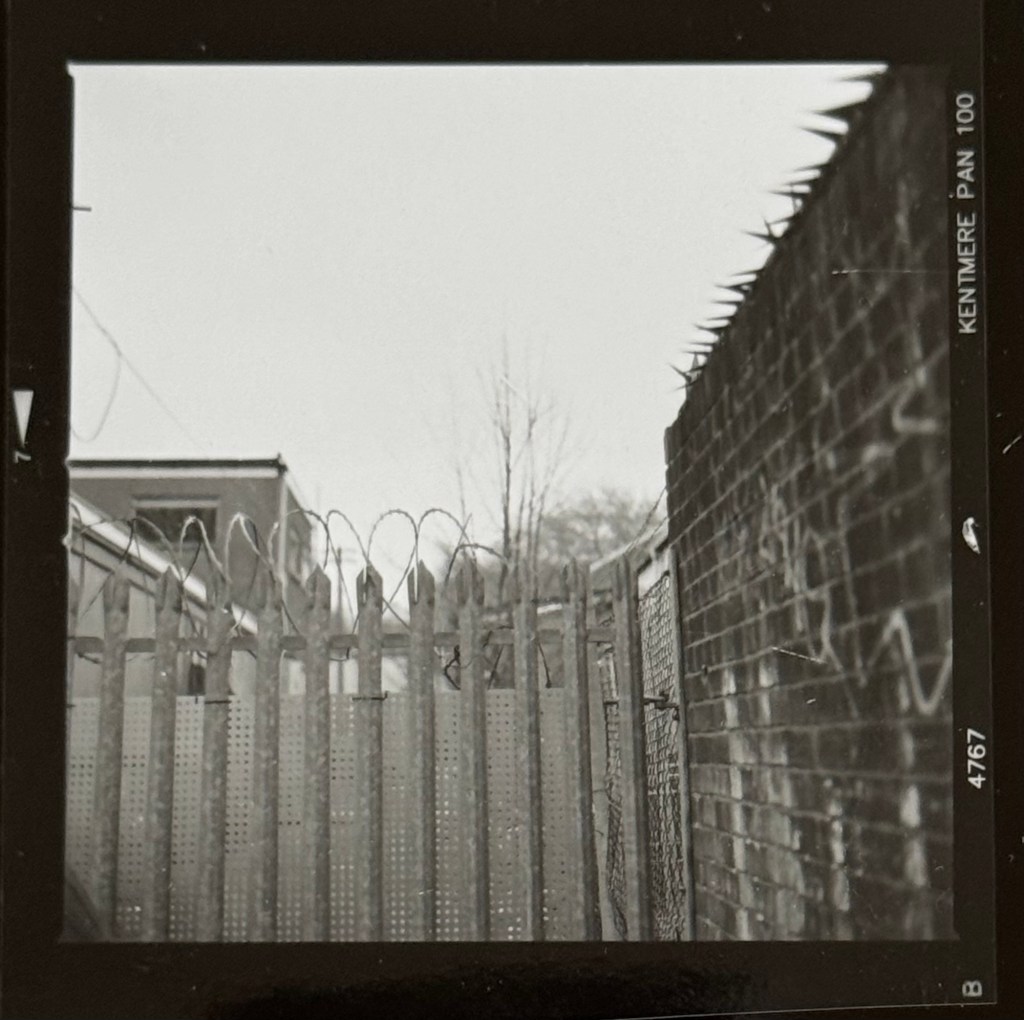
There are three different types of barb wire in this shot. What kind of world needs three types of barb wire in one place?
Video of all 12 shots:
–
REFLECTIONS
I was very happy with the workshop and felt confident to use the camera as a result. It was a great studio run by an enthusiastic couple and there are excellent dark room facilities that I can use in the future for developing and printing photos. I can also print photos onto canvas there which is great.
I loved going around the industrial area in Bristol. It reminded me of my love for industrial heritage landscapes – that was my passion before I started exploring transcultural art. I think it relates to my engineering background. I have lived my life in industry and engineering for 30+ years and my history is equally deeply rooted in industry as it is in my transculturality.
Doing the ‘forgotten’ streetscape photography reminded me of projects that I had done in 2018 when I first started learning to paint. I particularly like and am fascinated by late 19th/early 20th century disused power stations – for me, they are monumental industrial cathedrals. Seeing them or any industrial sites especially power stations make my heart sing.
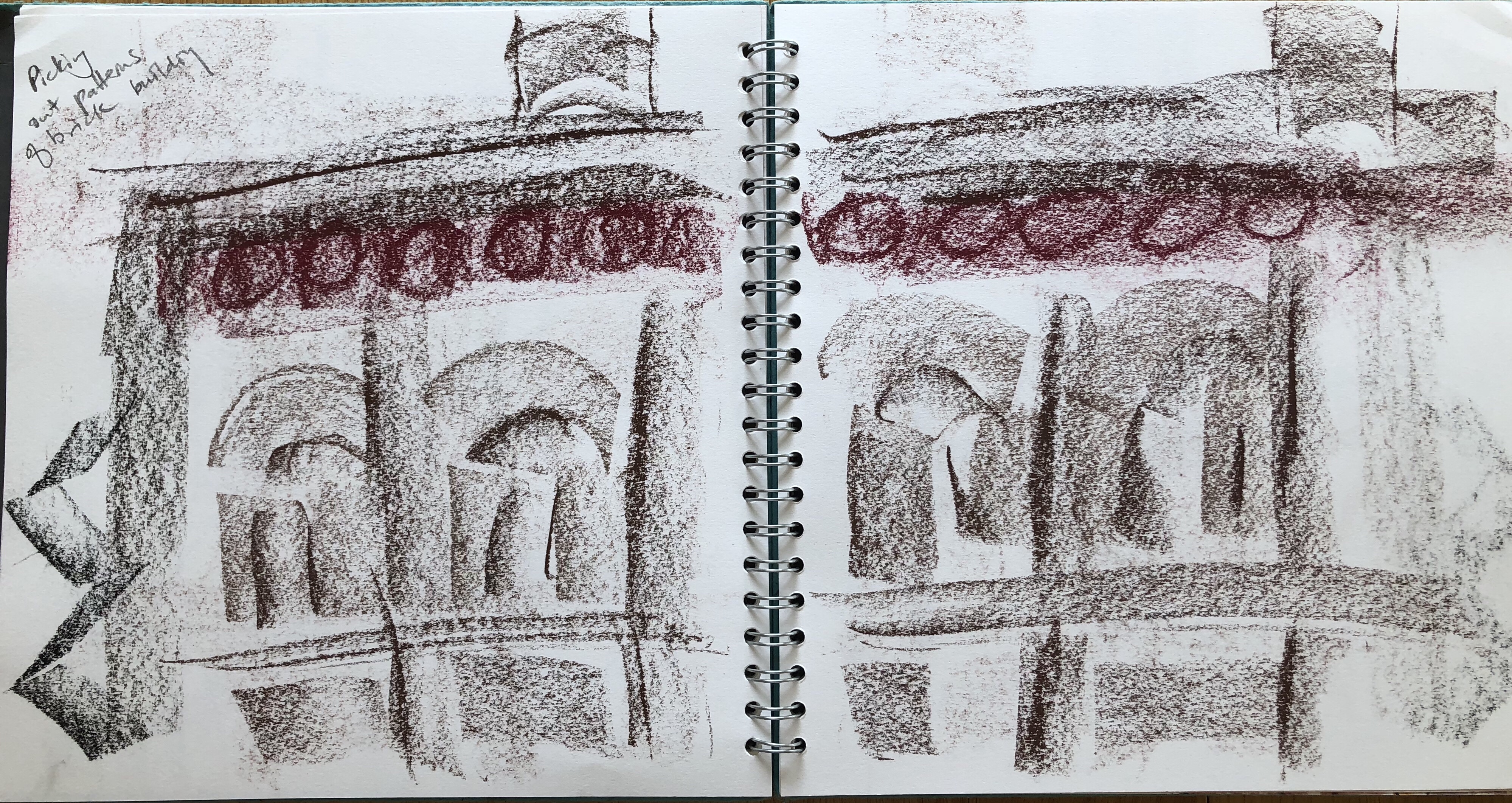
My 2018 drawings study of Battersea Power station:
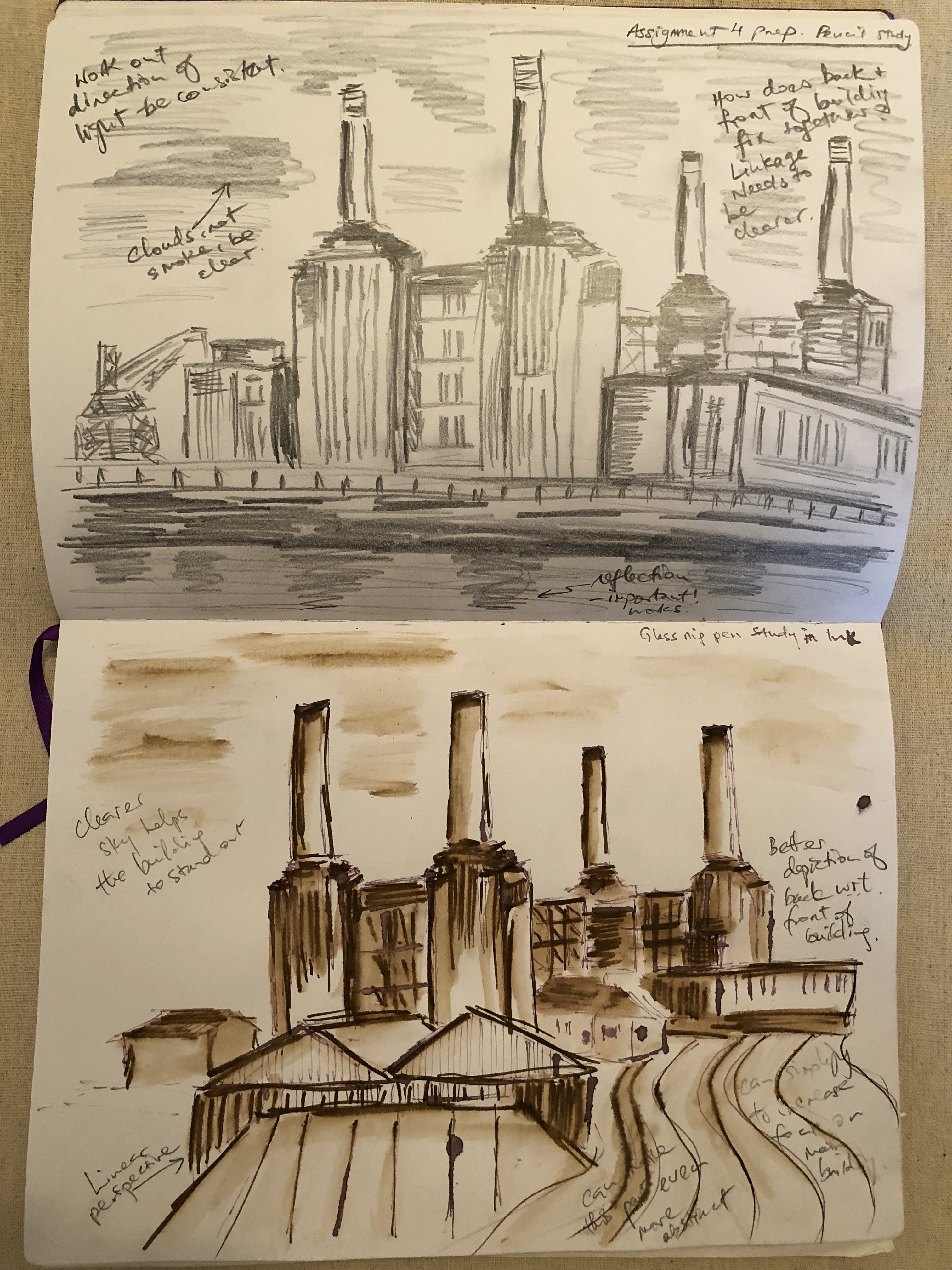
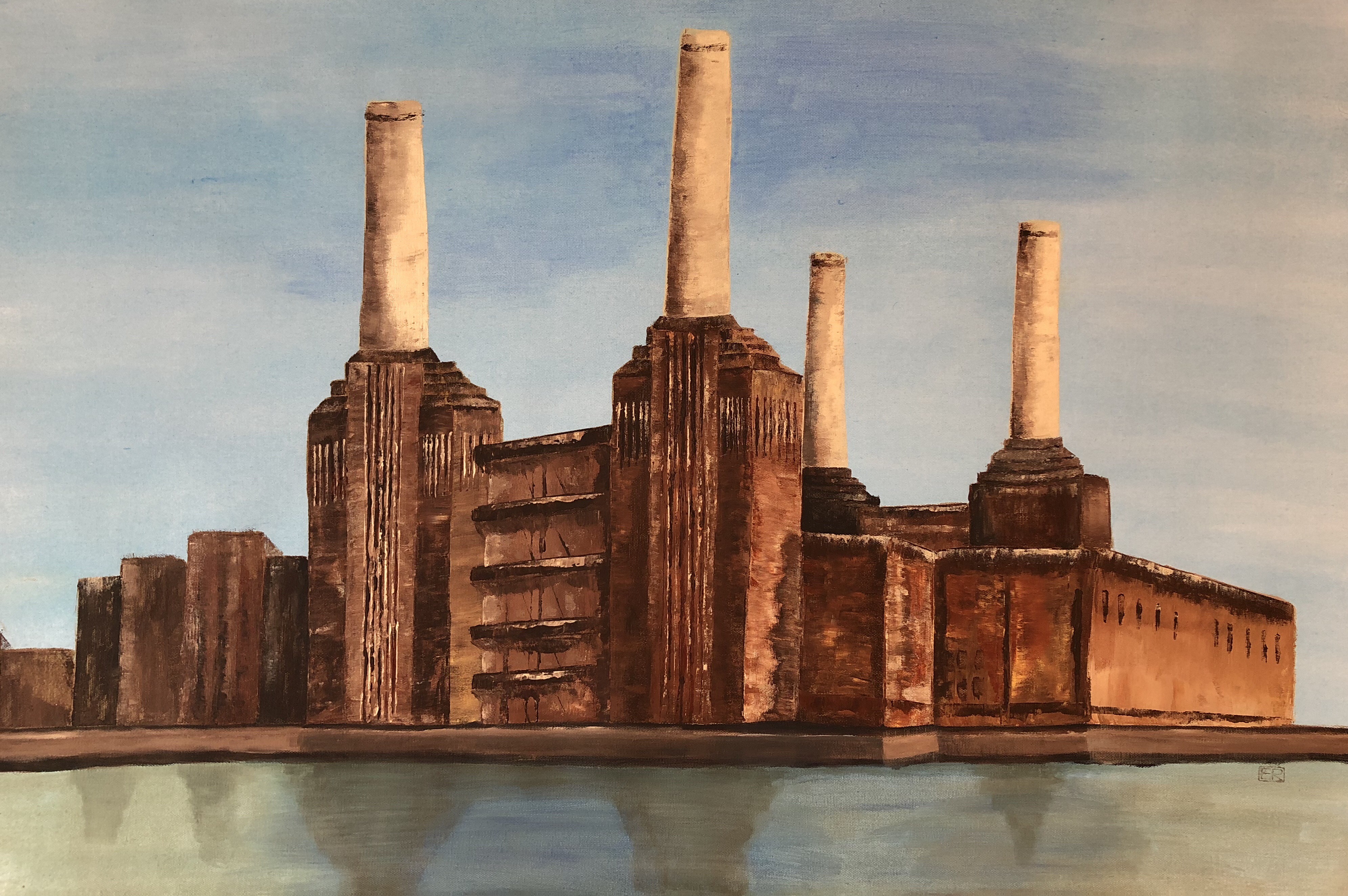
A study of Battersea Power Station (before all the recent year’s’ development). Acrylic on canvas:
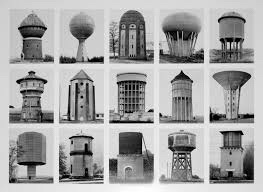
My work in this area was inspired by two German photographers, Bernd and Hilla Becher, of the Düsseldorf photography school. I admire their New Objectivity style:
https://www.tate.org.uk/art/artists/bernd-becher-and-hilla-becher-718/who-are-bechers
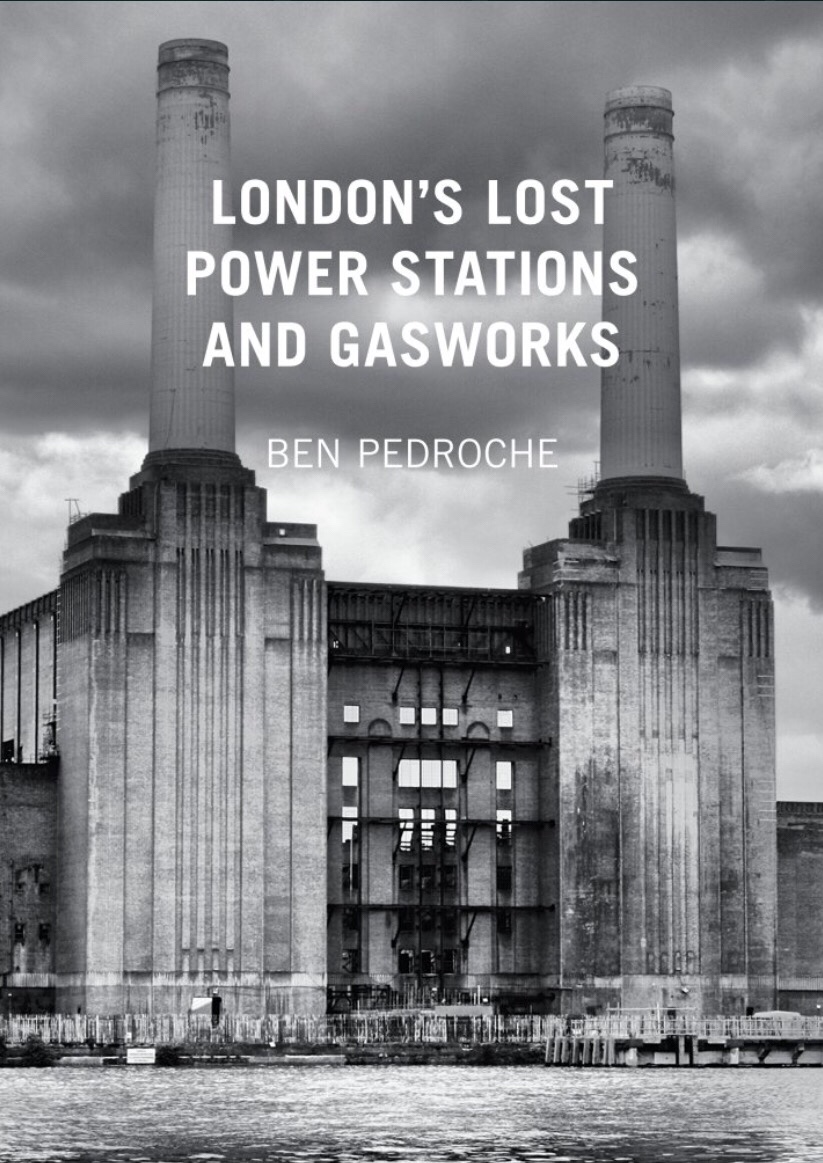
This book was also very useful to help me in historical insights and locating sites in the UK:
After reading the book, I visited Lots Road Power Station in Chelsea, London. It was originally built to power the whole of the London Underground and subsequently decommissioned. My on site study drawings:
My 2018 painting of a partly boarded up frontage of the Lots Road power station:
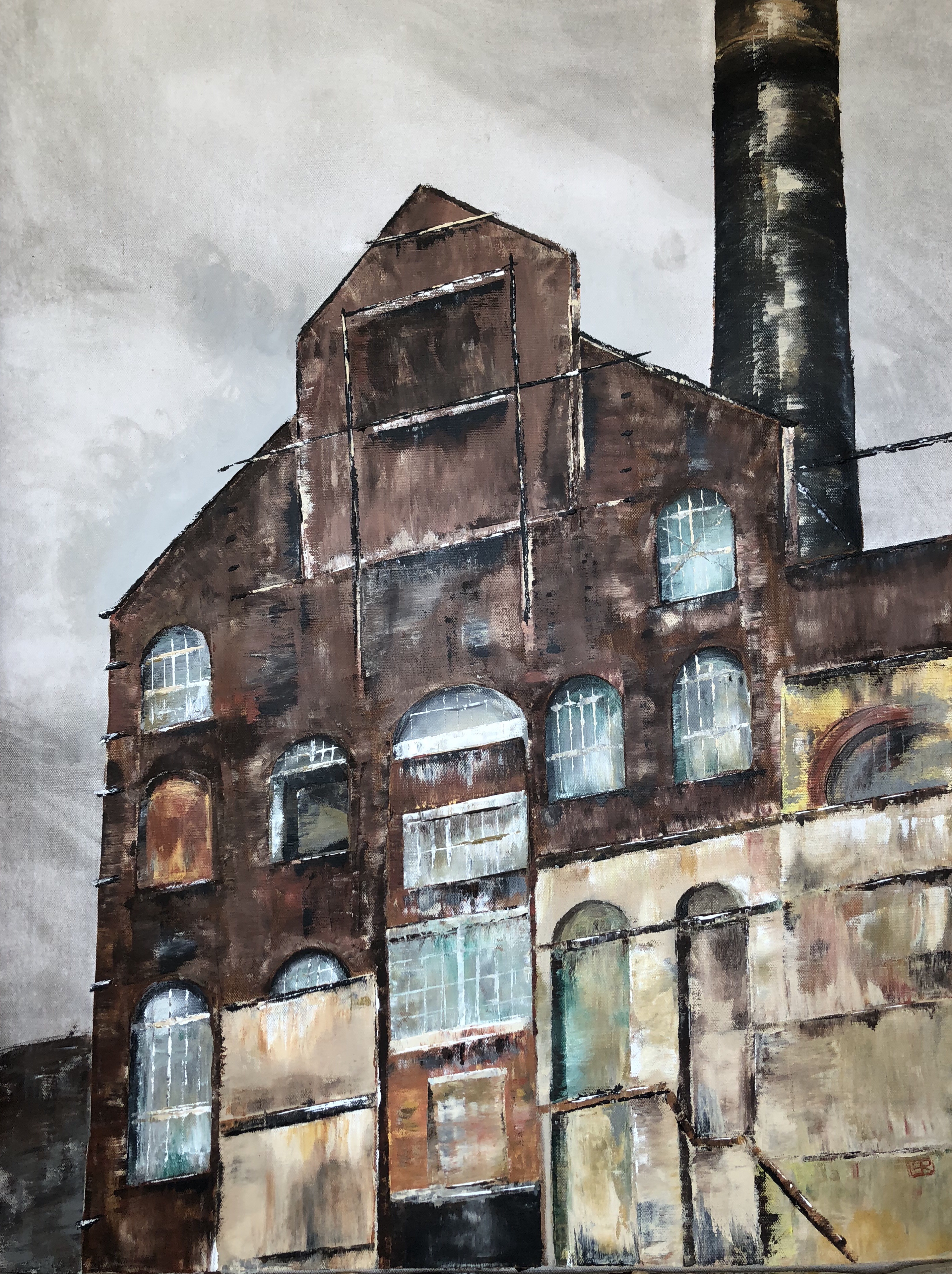
Through a work trip, I had the chance to visit the Rotweil power station in southern Germany. It powered the gun powder manufacturing locally.
Here is an acrylic painting of a door at Rotweil:
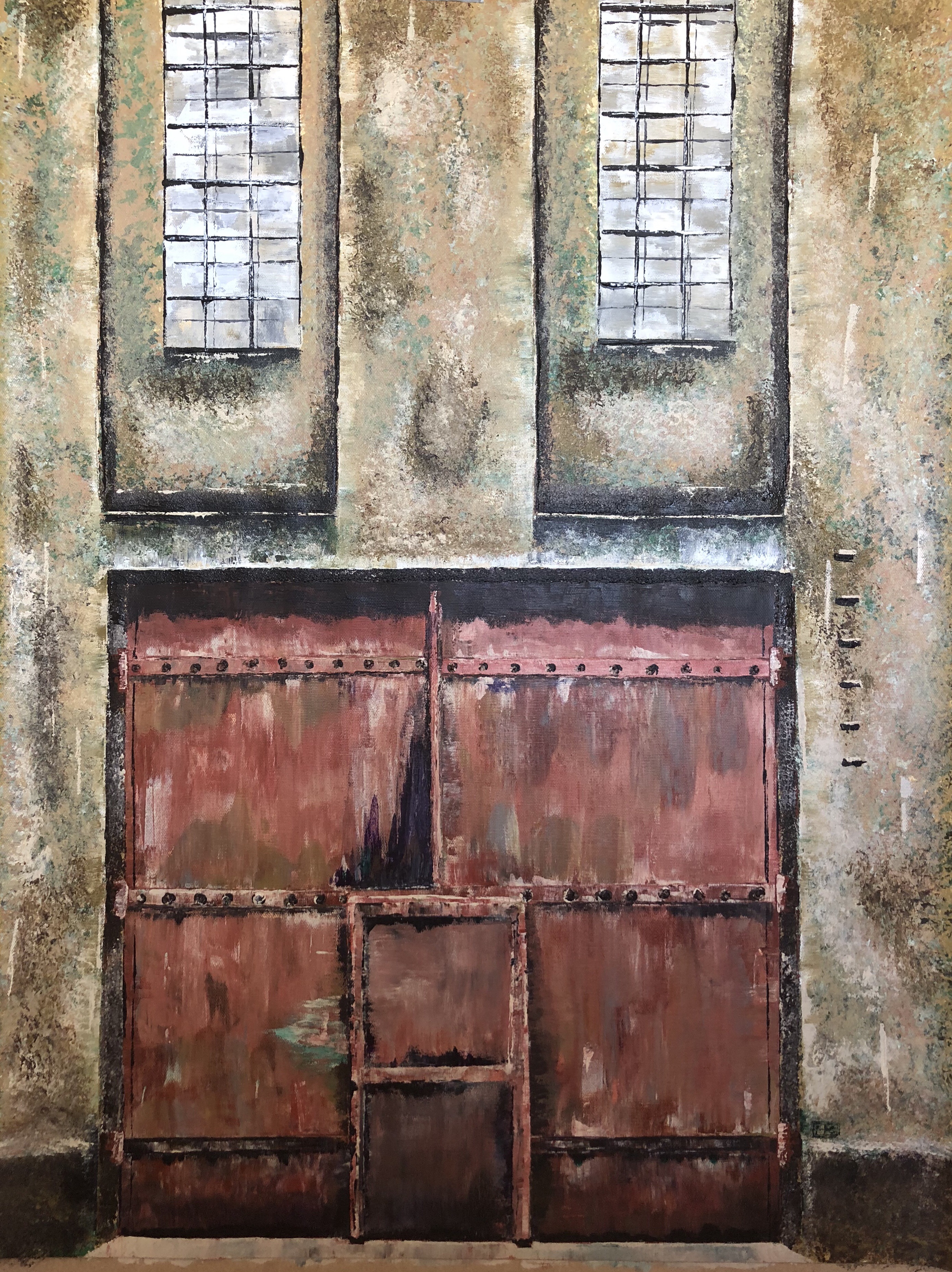
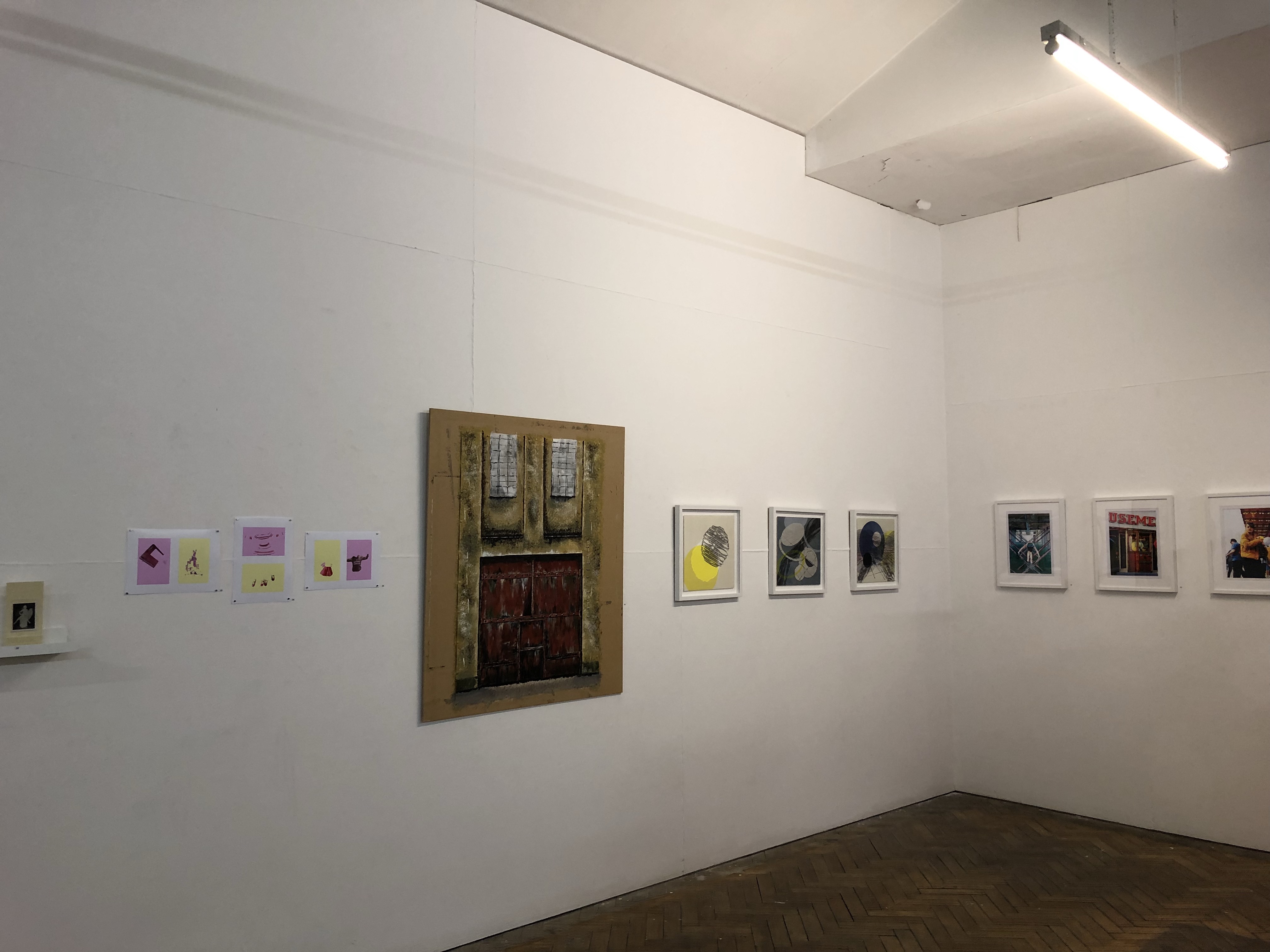
This painting was subsequently part of a group exhibition:
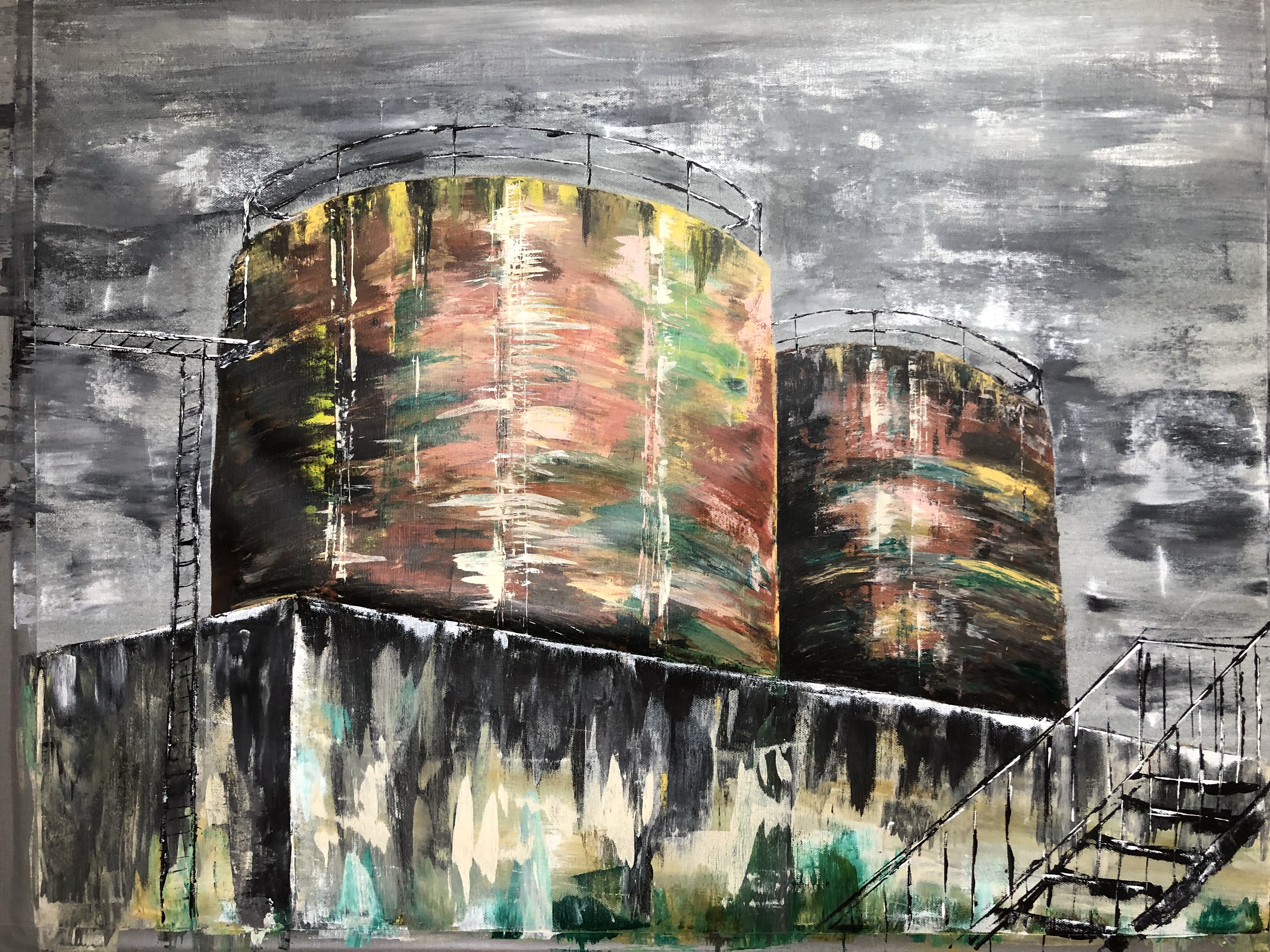
The tanks at Rotweil power station:
FURTHER REFLECTIONS
I have been reflecting on what made me reconnect with my ‘forgotten’ industrial landscapes work. I think it’s because:
– Having done several Cheongsam paintings where I have used bright colours to depict food as cultural metaphors and childhood family dinners based on memory, I am right now not feeling in the right state of mind to paint more colourful paintings. They seem frivolous given what’s happening in the world.
– I have been enjoying painting in bright colours – not sure whether I naturally have a preference or I purposely chose bright colours to mask unpleasant childhood memories. Bright colours and humour are great ways to put a certain slant to the story and perhaps it’s my way of taking control of the narrative. However, exercising that control and the way of storytelling take a lot of energy. It can be energising and draining at the same time. Perhaps it’s a form of renewal like a snake shedding its skin.
– However, I have recently been feeling angry and despair with global politics drastically changing our world order and I don’t think I can do cheerfully bright colours right now.
– Perhaps forgotten and industrial streetscapes somehow make me feel secure. There is no pretending – it is what it is, there is nothing to hide. The anti-aesthetic approach really appeals – just like the photos from the Düsseldorf photography school of New Objectivity. I find those images comforting. Bernd and Hilla Becher’s work are described as ‘focusing on precise, methodical documentation of industrial structures, often using a detached and objective approach’.
– Perhaps I am right now looking for detachment and objectivity. I can’t take anymore unsubstantiated claims, confusion and uncertainties – I need facts. The world needs facts.
– I am ranting.
LEARNING
I appear to be at another junction in my practice. This one I hadn’t planned for as I believe it has arisen due to recent world events. I don’t know exactly how or where I want to take my thinking here. I want to somehow incorporate this ‘no frills’ approach with my transcultural work, but how? I definitely want to do more with the film photography and I need to think how to incorporate that into my practice.
I need to discuss this with my tutor.
NEXT STEPS
Continue to think about where to go from here for my practice. Discuss with my tutor.
Do more streetscapes with the Hasselblad camera and think about how to incorporate photography into my practice to expand my visual arts ‘tool kit’.
 elizarawlings