BACKGROUND
At my monthly Chinese painting class, we have started to learn Sumi-e painting. Sumi-e means ‘water ink’ and water ink painting originated in China around 300AD. Zen Buddhist monks from China introduced this style of ink art to Japan in the 14th century where over time the brush strokes were reduced in number and simplified forming the Japanese Sumi-e style painting of today.
At a previous lesson, we started to paint leaves by copying from worksheets and this lesson we practiced some more.
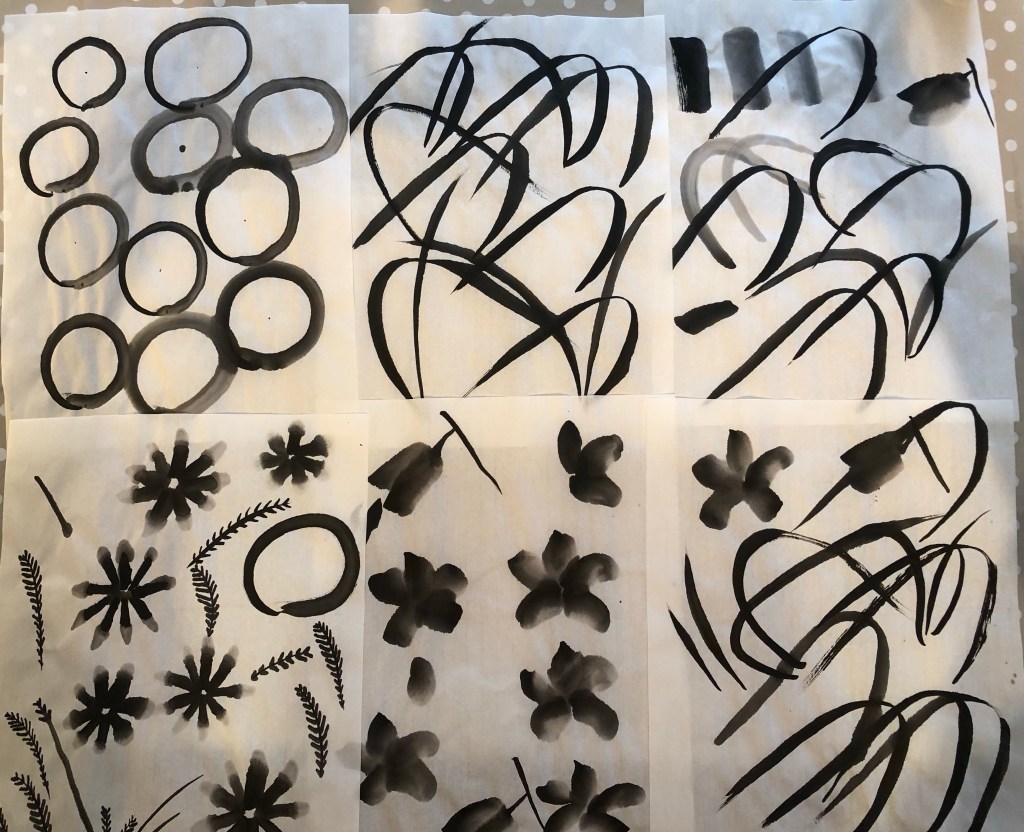
The homework this month was to paint an animal such as our pet. No worksheets were given and we had to work out how to create our simplified style Sumi-e animal painting (without looking online for hints). This blog records the method I used for the homework.
METHOD
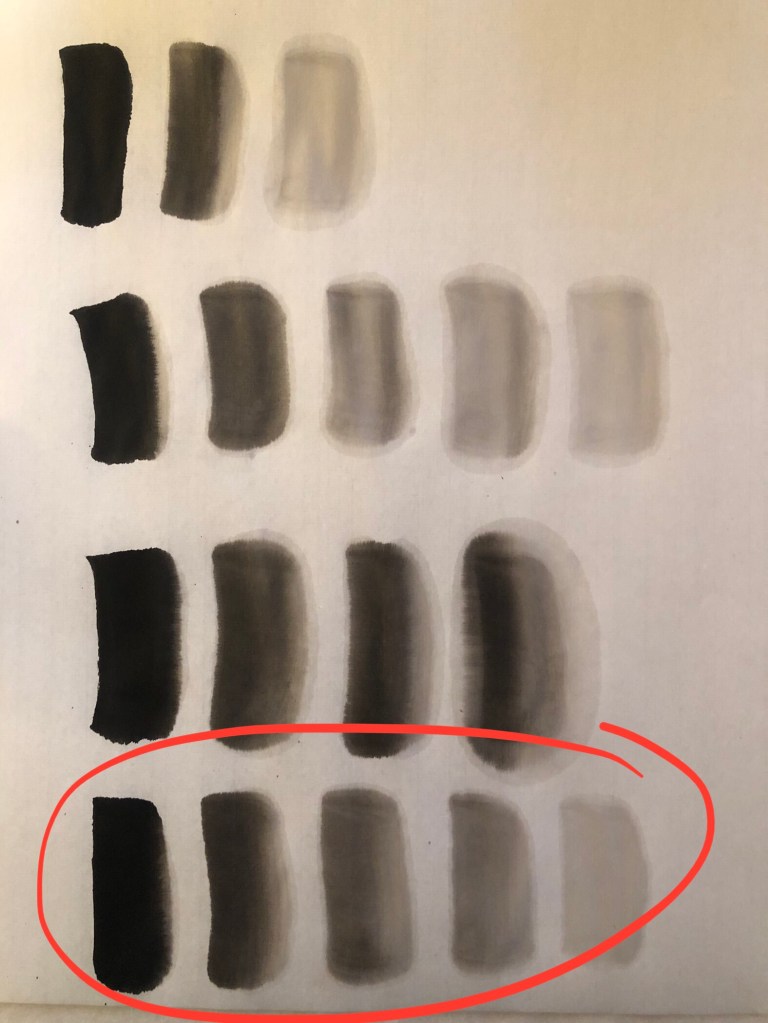
As a warm up exercise, I mixed the Chinese ink with water to ‘find’ the five shades that would be needed to depict tone in the painting. It took a few attempts to get the right result.
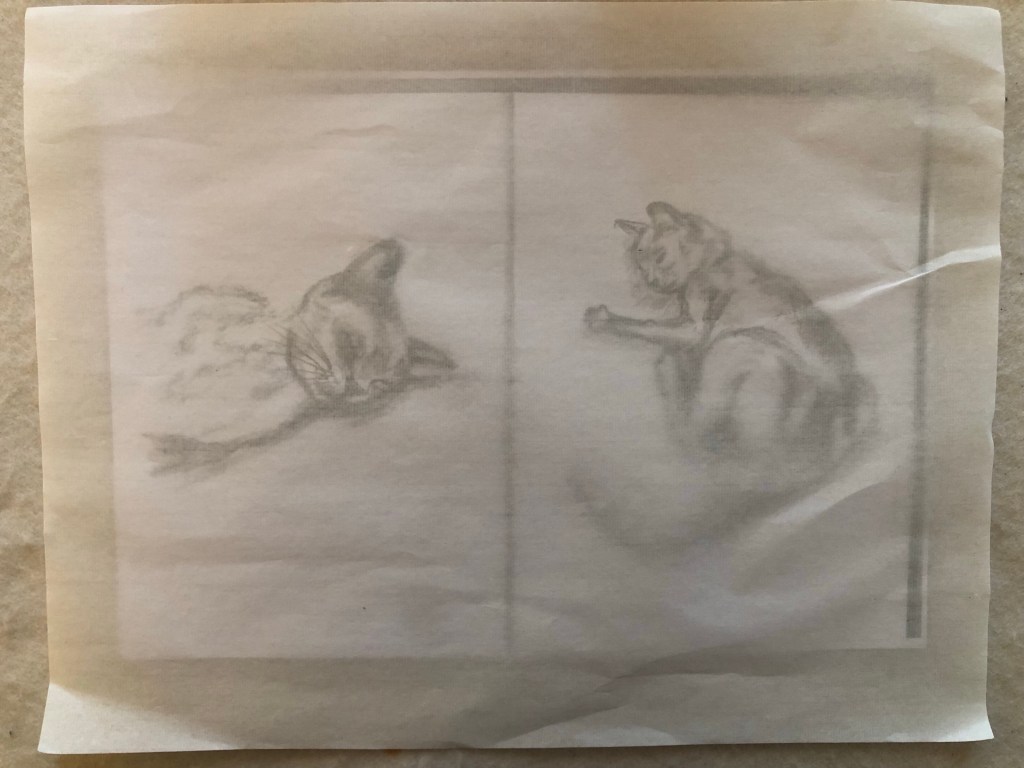
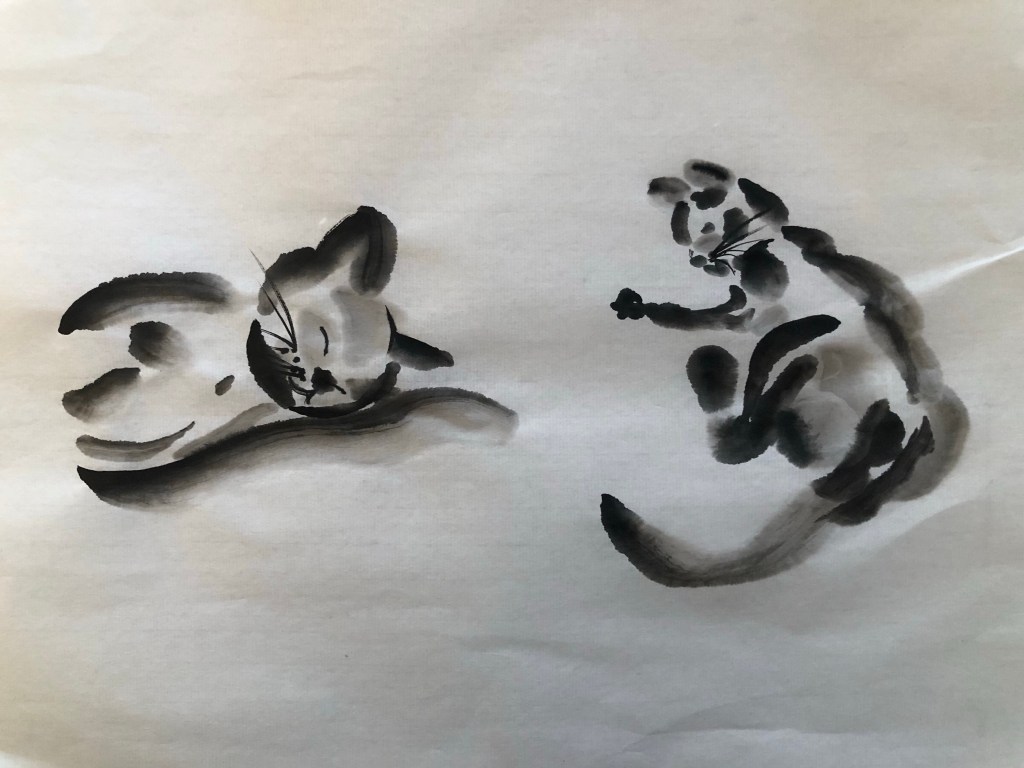
I made some pencil tonal sketches from photos of my sadly departed cats. Then overlaid the Xuan (rice) paper on top for painting.
Result:
Using the same method, a few close up portraits were painted:
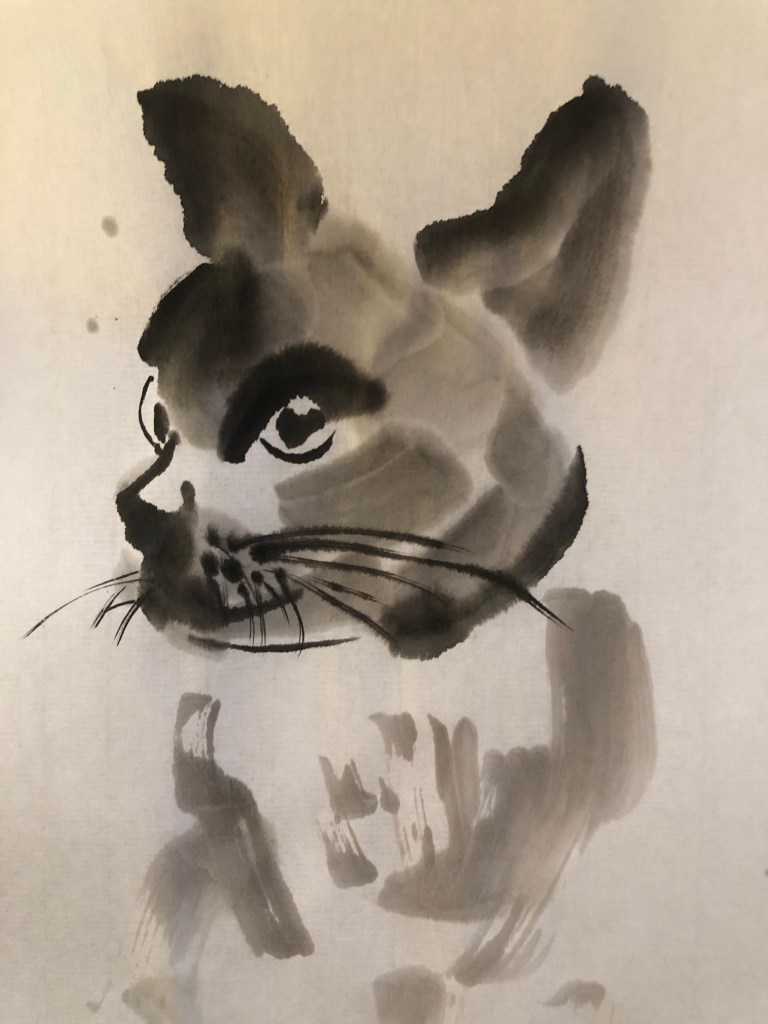
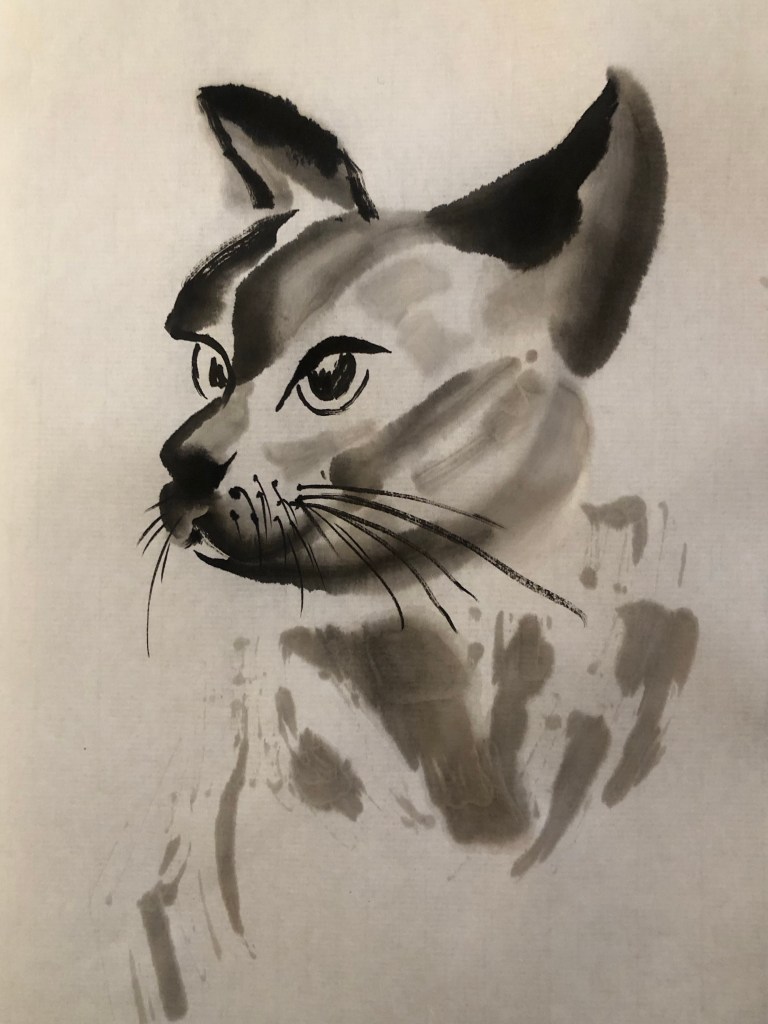
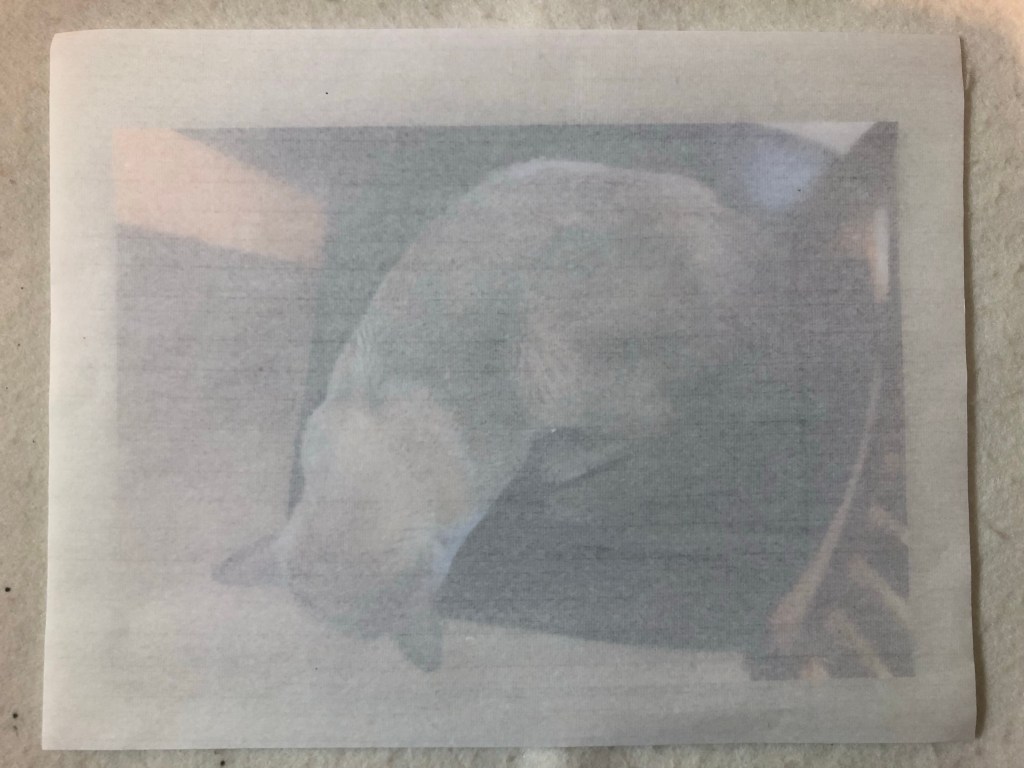
Then I used a photograph and overlaid the Xuan paper on top to paint/trace the tonal areas:
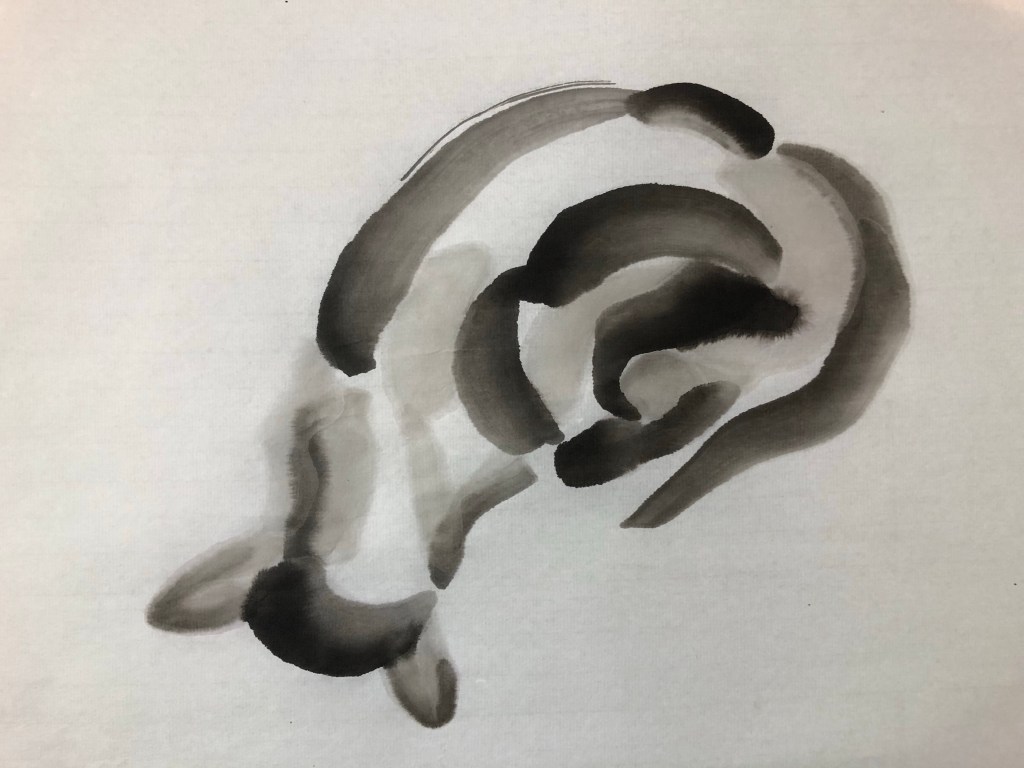
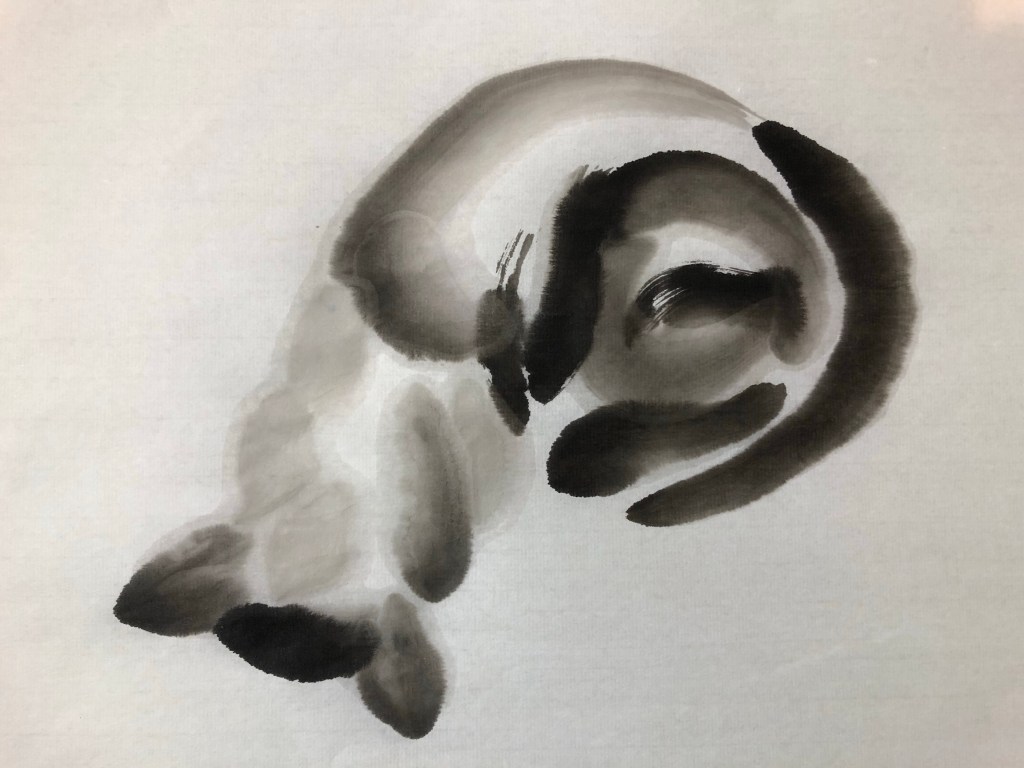
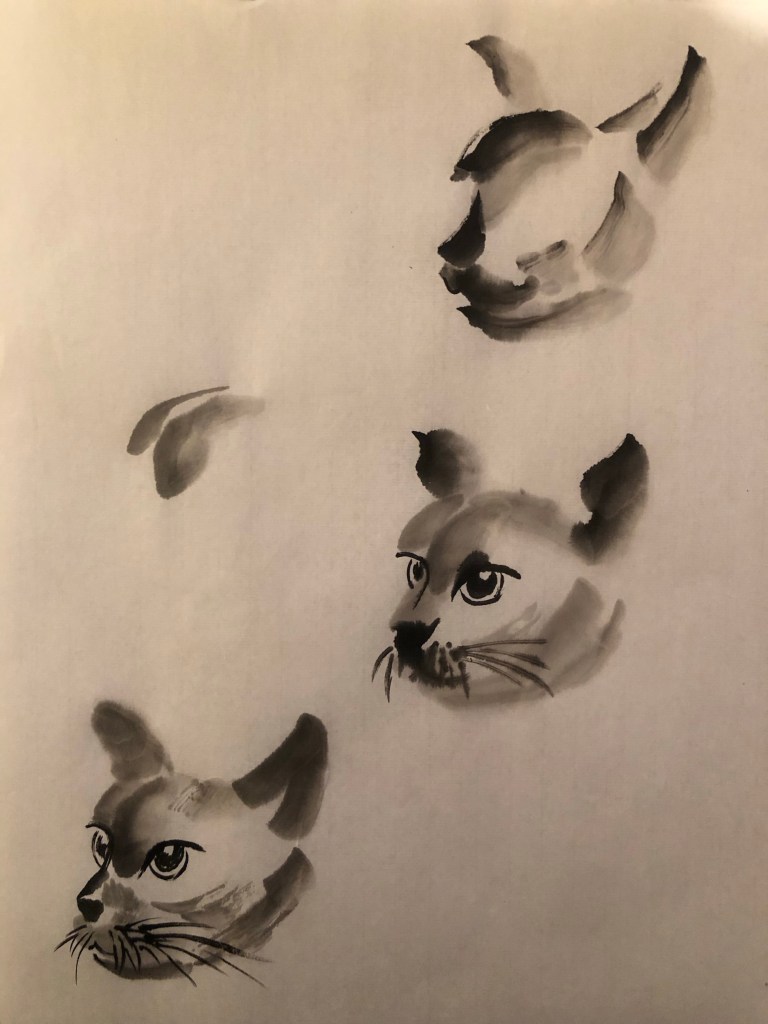
Then I started painting freehand without tracing. I had seven attempts and each time reducing the number of brushstrokes and simplifying the image.
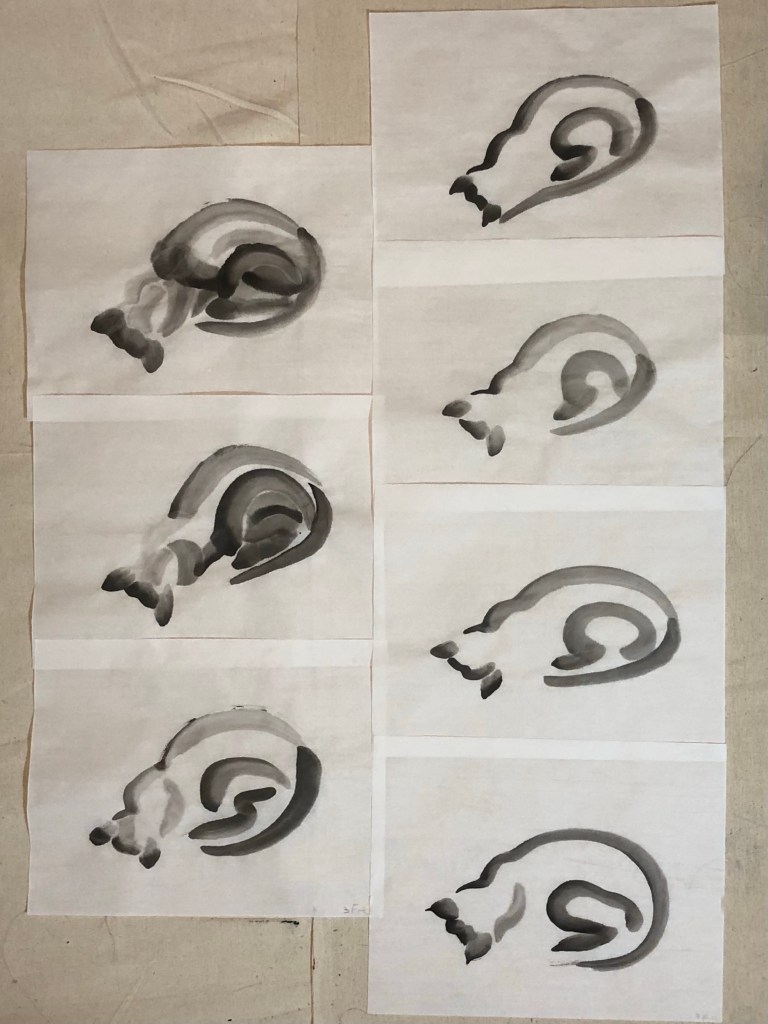
Close up of the seventh and final attempt:

–
REFLECTIONS
I have been wanting to learn Sumi-e painting because I see it as a way towards semi-abstraction in Chinese brush painting which is something that I’m interested in. I enjoy the thinking that is involved in this making process.
I enjoyed the exercise and was pleased with the outcomes as early attempts. I do find Chinese water-ink or Sumi-e painting very challenging. It is the most unforgiving style and painting medium that I have used. With oil and acrylic, one can correct mistakes by wiping off or painting over. Even watercolour can be corrected to a certain extent. Since the depiction in Sumi-e is done by one stroke and going over a stroke makes it look clumsy, therefore everything has to be as perfect as possible for each stroke, such as:
– Water/ink pigment balance for the tone.
– Amount of water/ink on the brush (and depending on the type of hair for the brush) to match the absorbency of the type of Xuan paper used for each stroke. The paper or silk is usually highly absorbent which makes it challenging.
– Placement of each stroke and the pressure along the travel.
It is very challenging and I love it. I feel the tension within myself in a way that is unlike any other painting media. I expect it’s also because I am so new to this and I need a lot more practice. The process of simplifying was also challenging like solving a puzzle which added to the pleasure of this way of making.
LEARNING
– Mixing the five tonal shades at the start and having plenty of ink of each shade made up really helped. However, I still find myself mixing as I went along especially for the ‘double loading’ technique.
– Tracing over tonal drawings or photos helped to give confidence at the practicing stage. Practicing in this way helped me to progress onto freestyle painting.
– Understanding the structure or anatomy of the subject is essential for the simplification process to work.
NEXT STEPS
– Keep practicing to build knowledge of the materials and process.
– Try other animals or objects.
– Start to think about how to incorporate this approach into my transcultural style development work.
UPDATE
Below is an update on Sumi-e painting progress since the session detailed above.
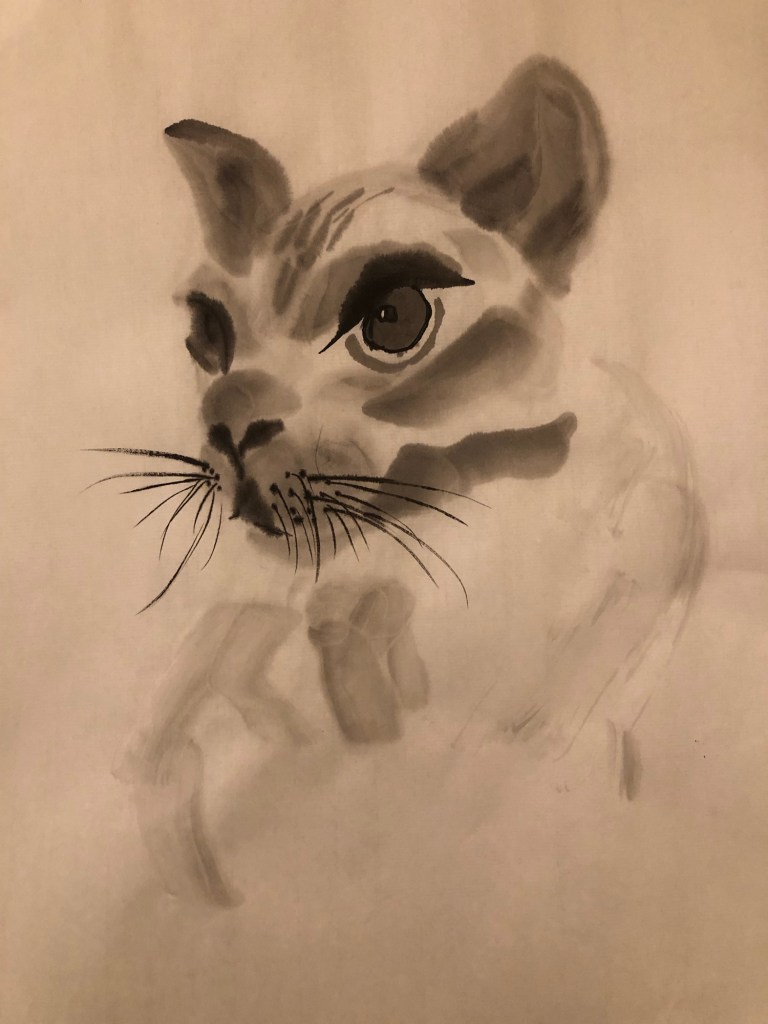
My tutor asked me to do a free-hand cat portrait without using any pencil drawings as guide under the Xuan paper. Below are the outcomes:
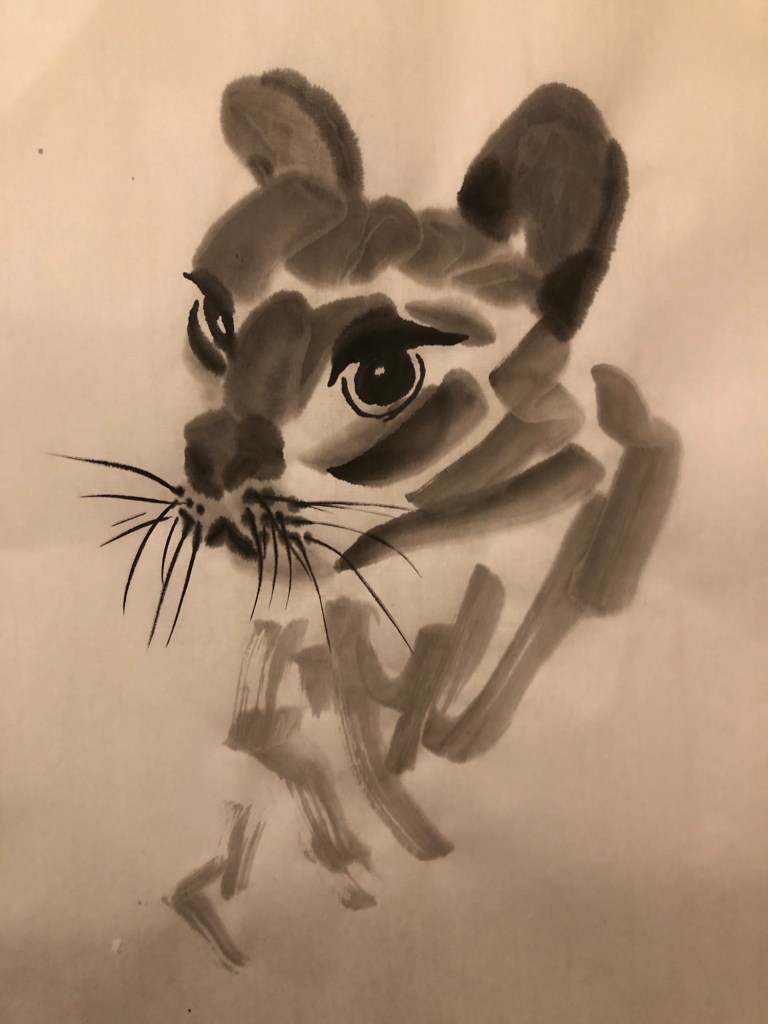
–
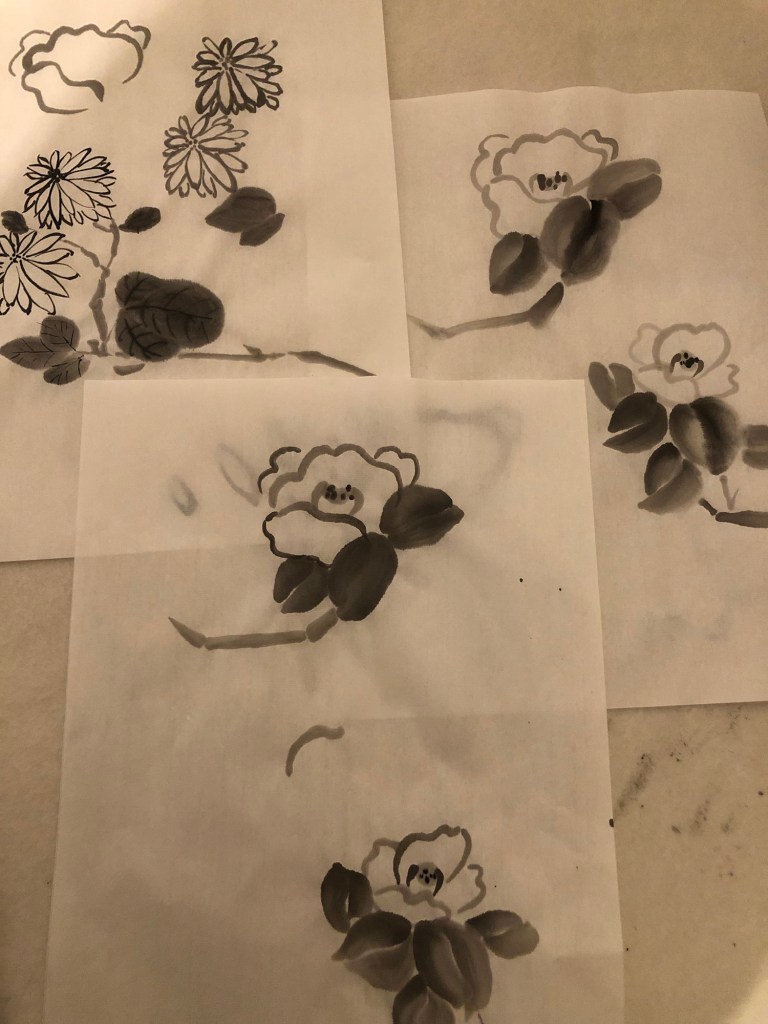
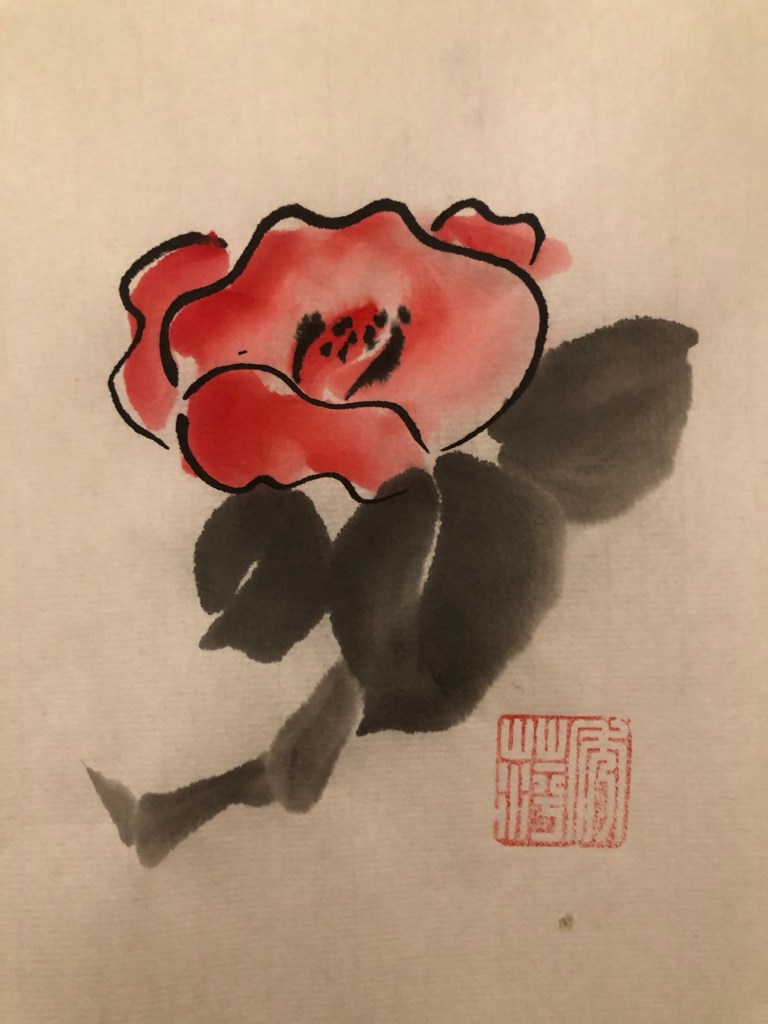
The following lesson was on Sumi-e flowers:
–
REFLECTIONS
I have enjoyed Sumi-e painting because I am more interested in free style Chinese painting (techniques are akin to Sumi-e) than the meticulous style. So these paintings have been good practice for me. The key is to keep practicing in order to master the skills required in applying paint having understood how the materials work together with the painter.
 elizarawlings