During one of my visits to Hong Kong some 30 years ago when my mother was still alive, she gave me four dresses as keepsakes – two hand tailor-made silk Cheongsams (traditional Chinese dress) from when she was a young woman and two evening dresses that she made herself for dinner balls that she went to with my father. One of the cheongsams was my favourite, it had a distinctive and memorable pattern. I remember very clearly that I used to open her wardrobe as a little girl to admire it and I was mesmerised by the pattern. Everything about it said ‘my mum’ to me. So I was very happy when she gave it to me to keep as it was very precious and had so much history.
Then in 2001 when I moved house (in Bristol, UK), I cleared lots of old things into a skip. As the skip was driven away, I remembered a small suitcase containing the precious dresses was accidentally thrown into the skip but it was too late. It was one of the things that I have regretted all these years.
That was some 22 years ago. Then earlier this year, I was clearing out the loft and found a box containing some old items, inside which was a plastic carrier bag contain the four dresses. It was as close to a miracle as I could image. I hadn’t thrown away those dresses after all! To find them again after all these years was an emotional moment for me.
Here is the distinctive Cheongsam that I adored. It is a traditional Chinese dress made with a contemporary western style abstract patterned fabric of the time (late 1960s). It is a good example of a piece of transcultural garment. It has some deep creases from being folded for so many years but I am unsure of how best to iron or care for it, so until I find out, I decided to refold it for safe keeping. Below are some photos I took before putting it away.
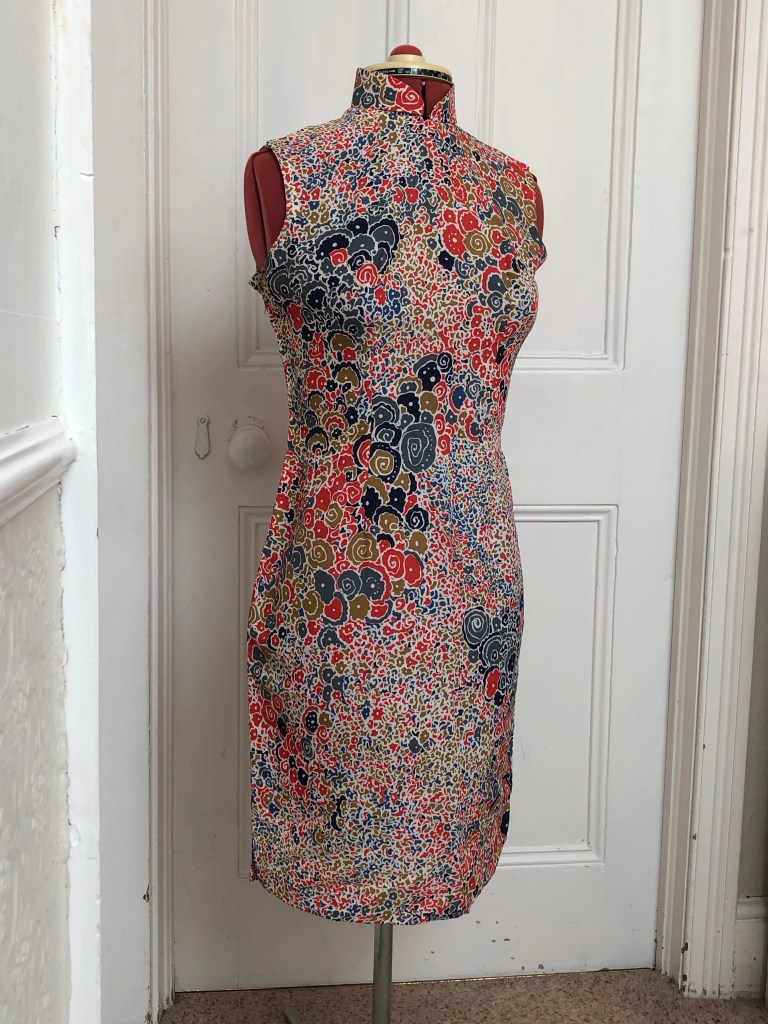
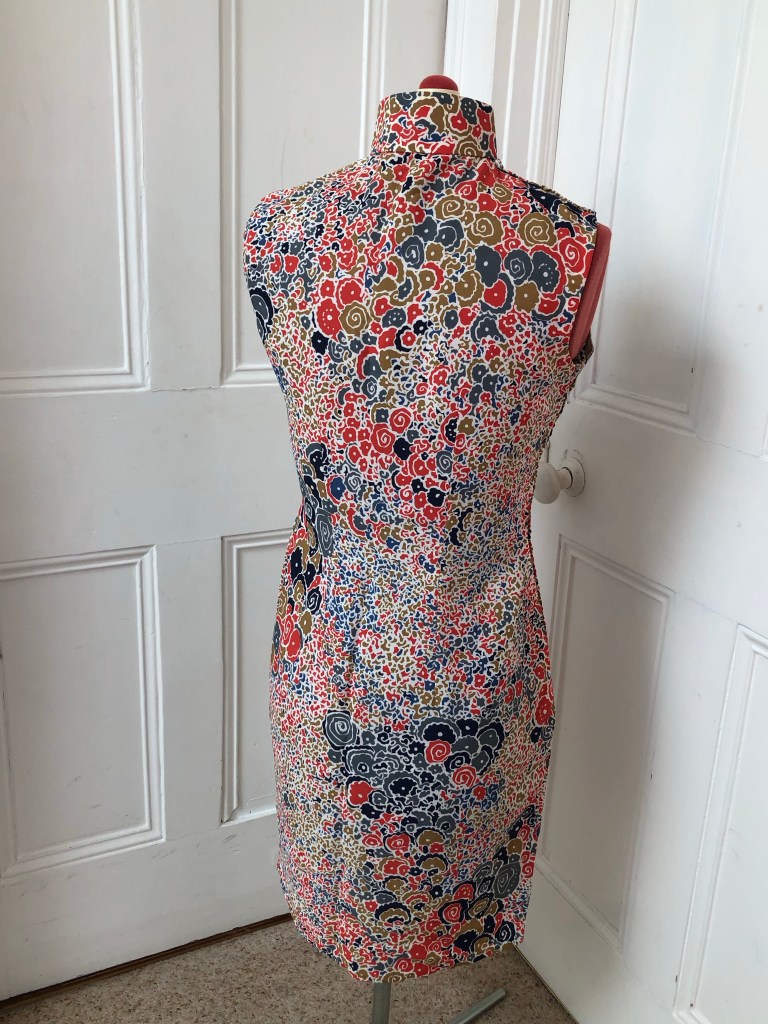
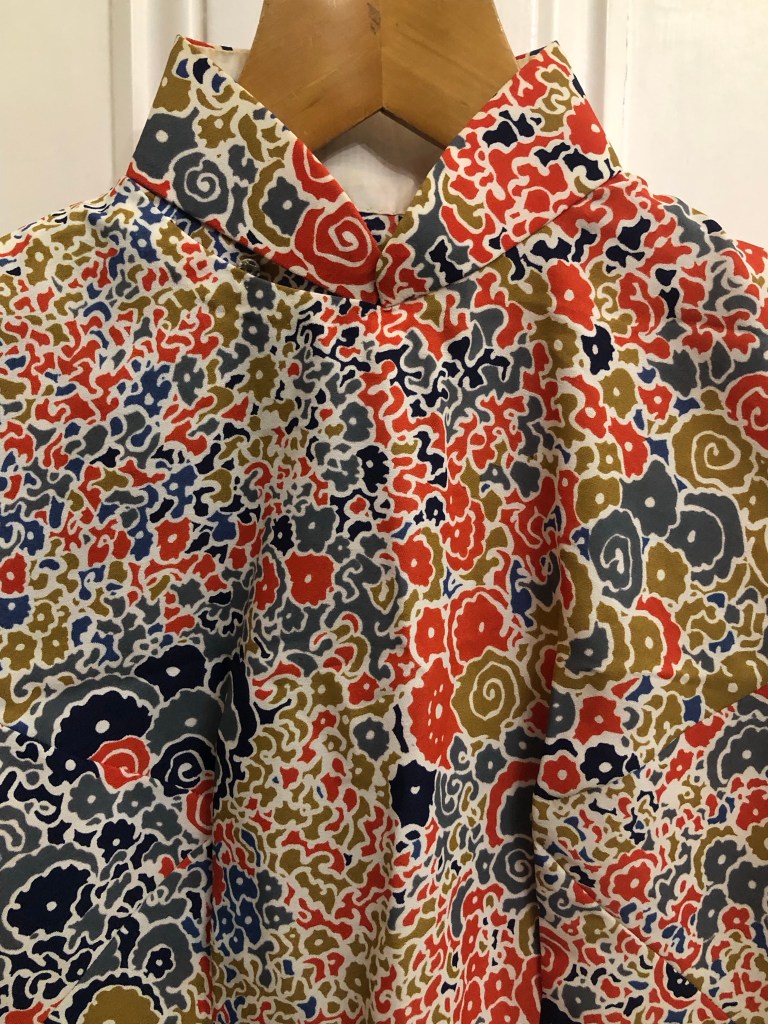
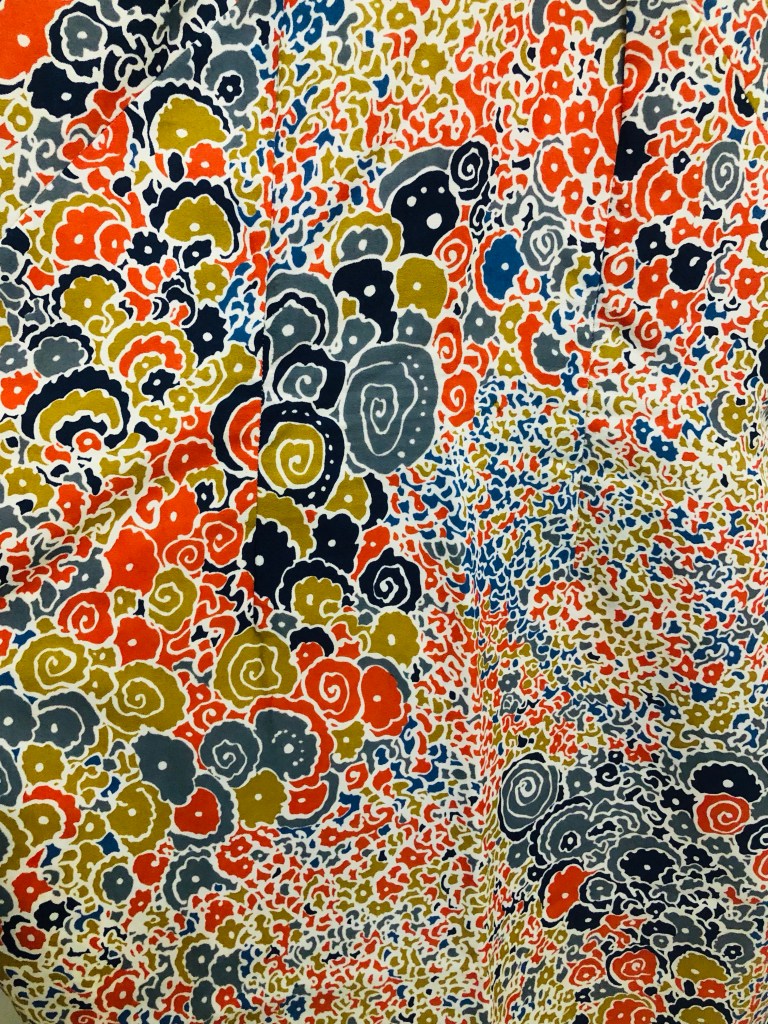
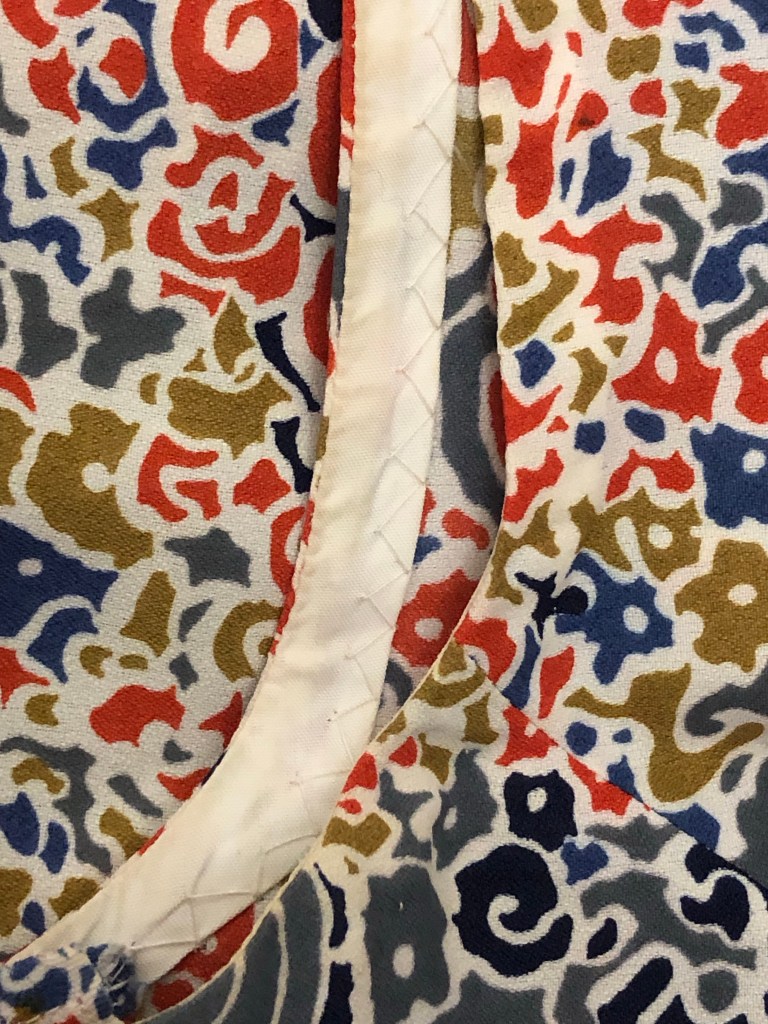
There is so much history to this interesting dress, its rich features and heritage make it very precious and can provide inspiration for my art making. However, I was unsure of what to do and where to start.
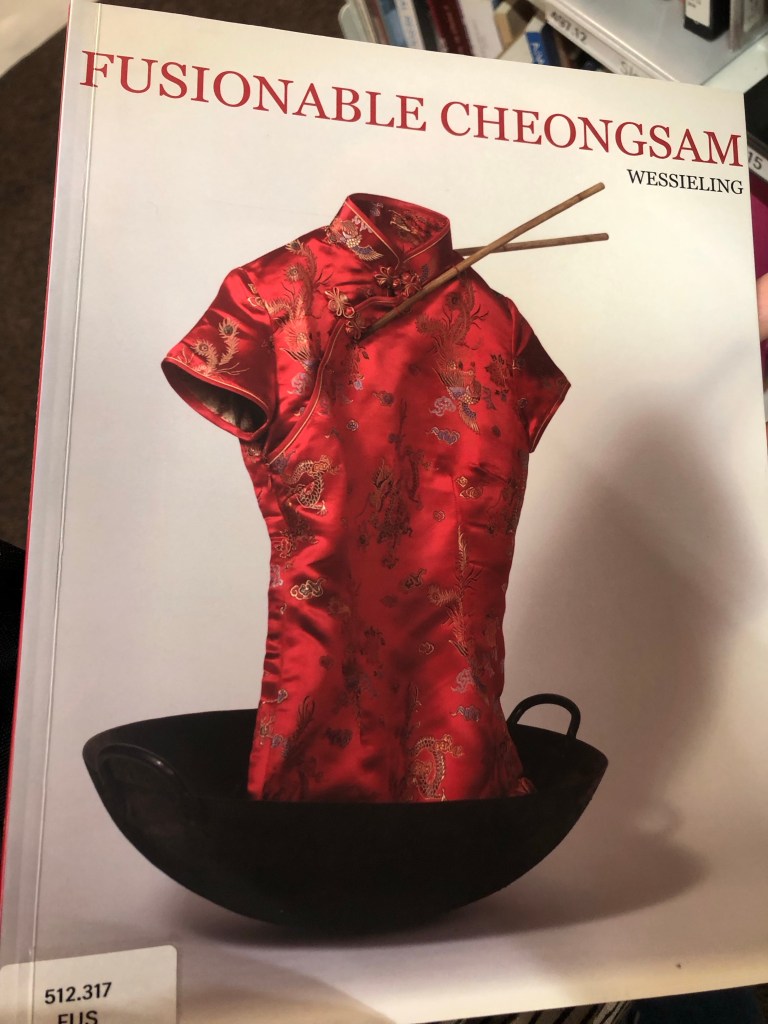
When I recently visited the Stuart Hall Library in London as part of my MA Fine Art course Low Residency at CSM, I saw the book called Fusionable Cheongsam. I was unable to spend too much time there because we were on a tight schedule for the day and I hope to return soon to have a good read of the book. However, I had seen enough to convince me that the Cheongsam could be a good focus for my art making. I decided to start with a painting.
METHOD
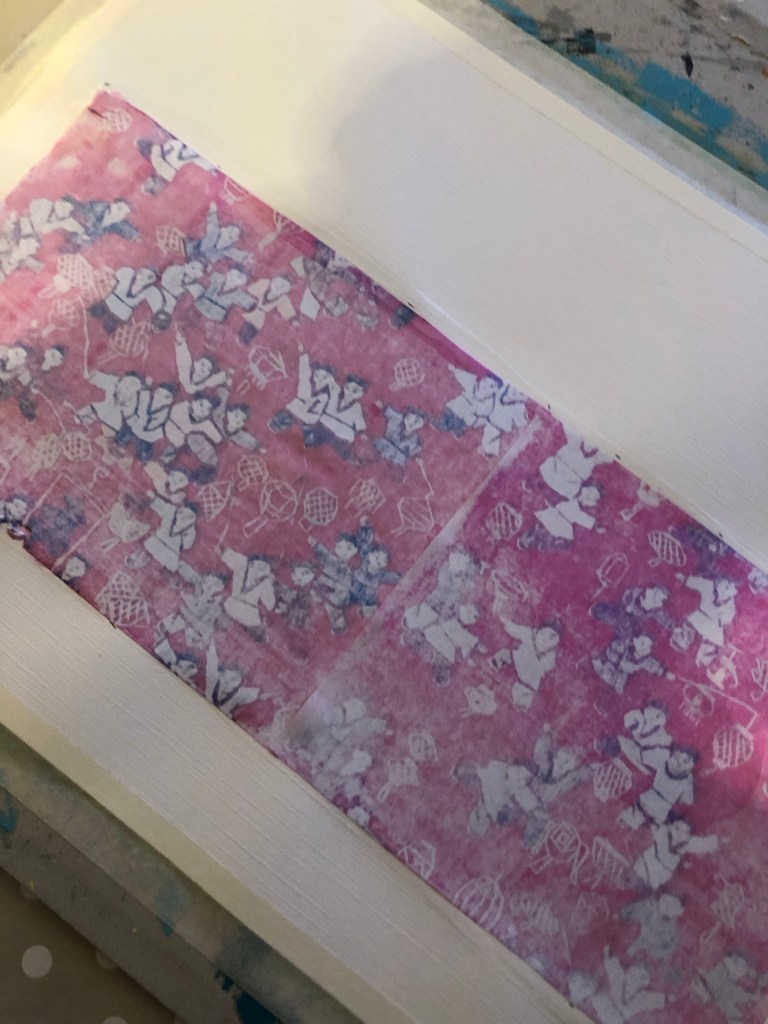
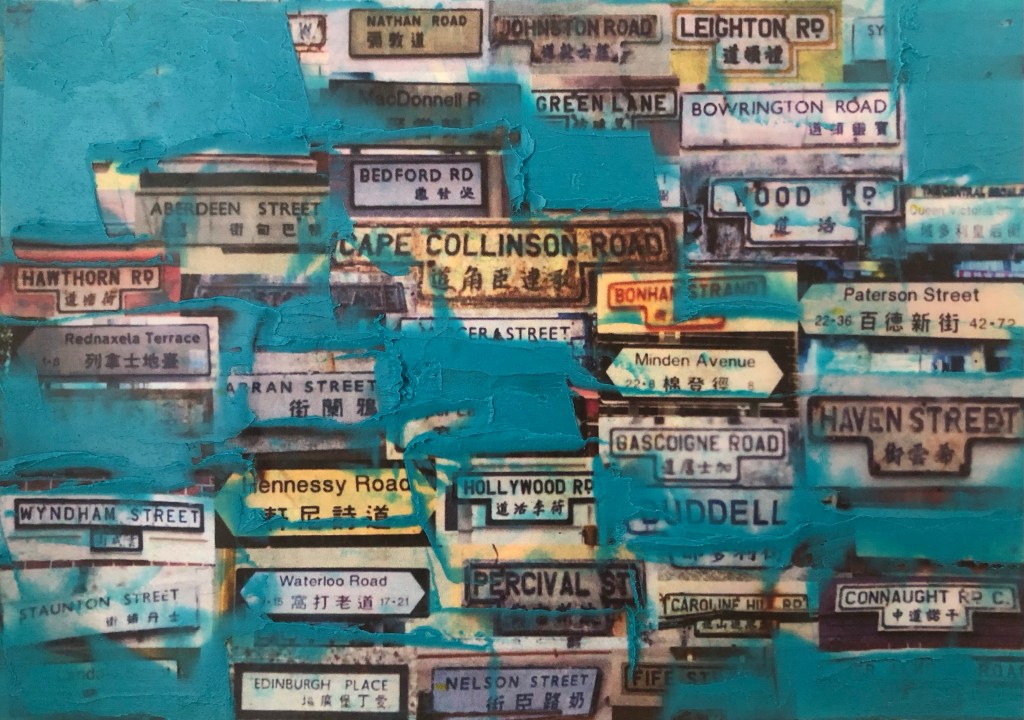
Photographs of various parts of the Cheongsam fabric pattern were taken and printed on an EPSON EcoTank ET2860 inkjet printer.
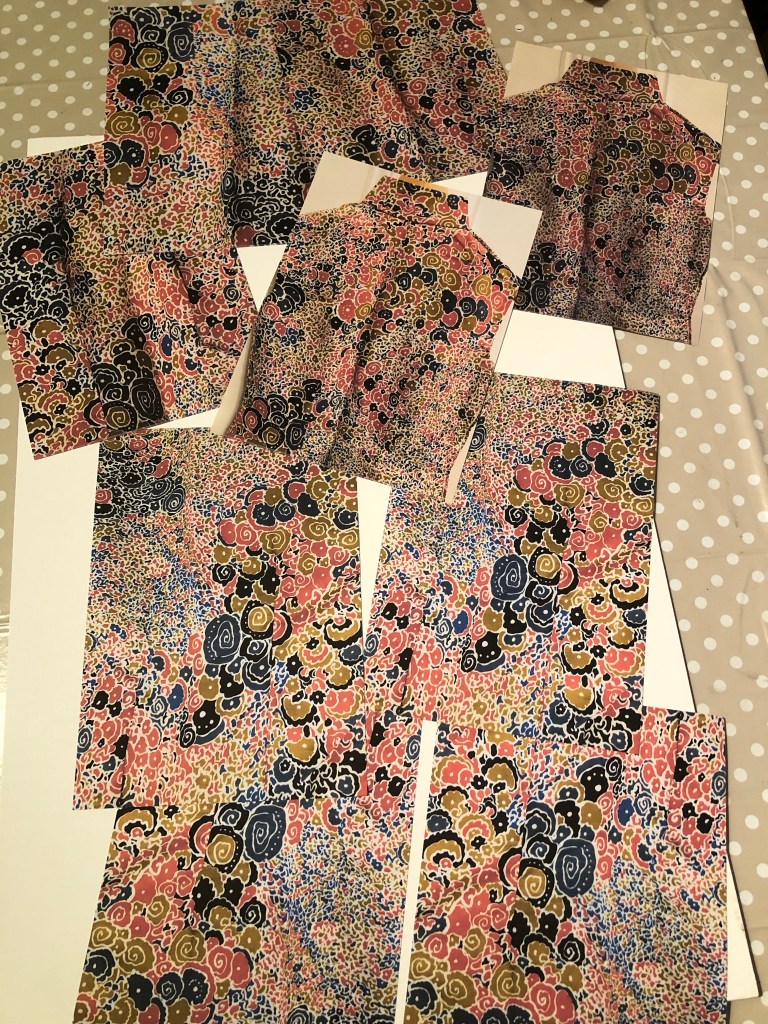
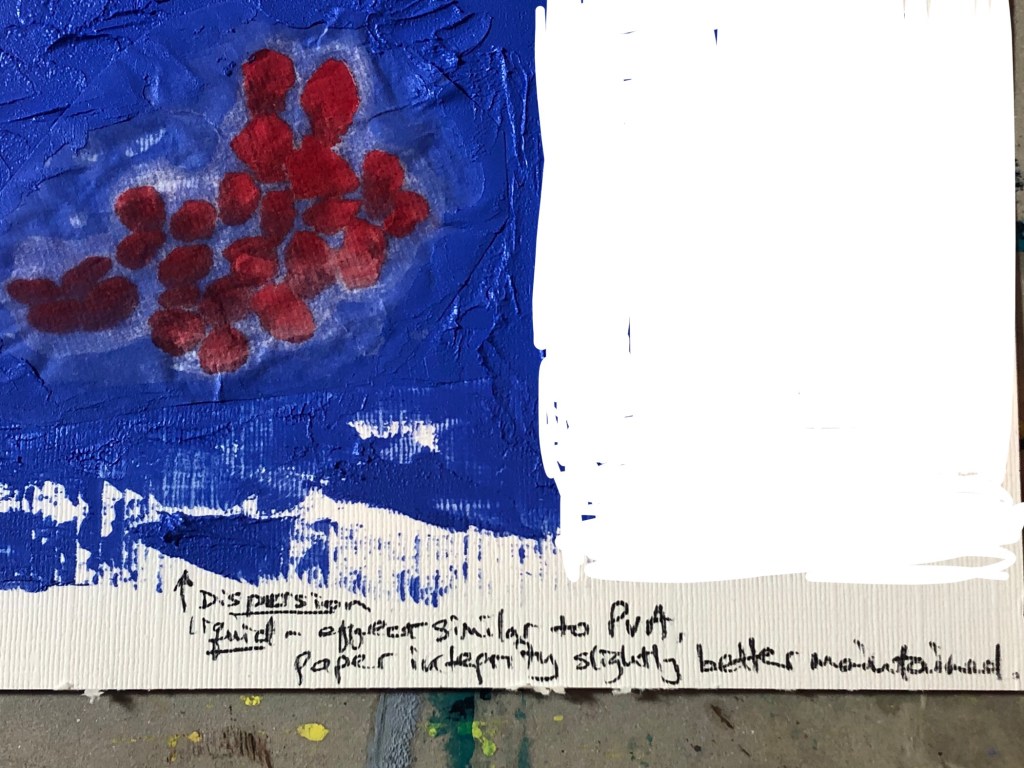
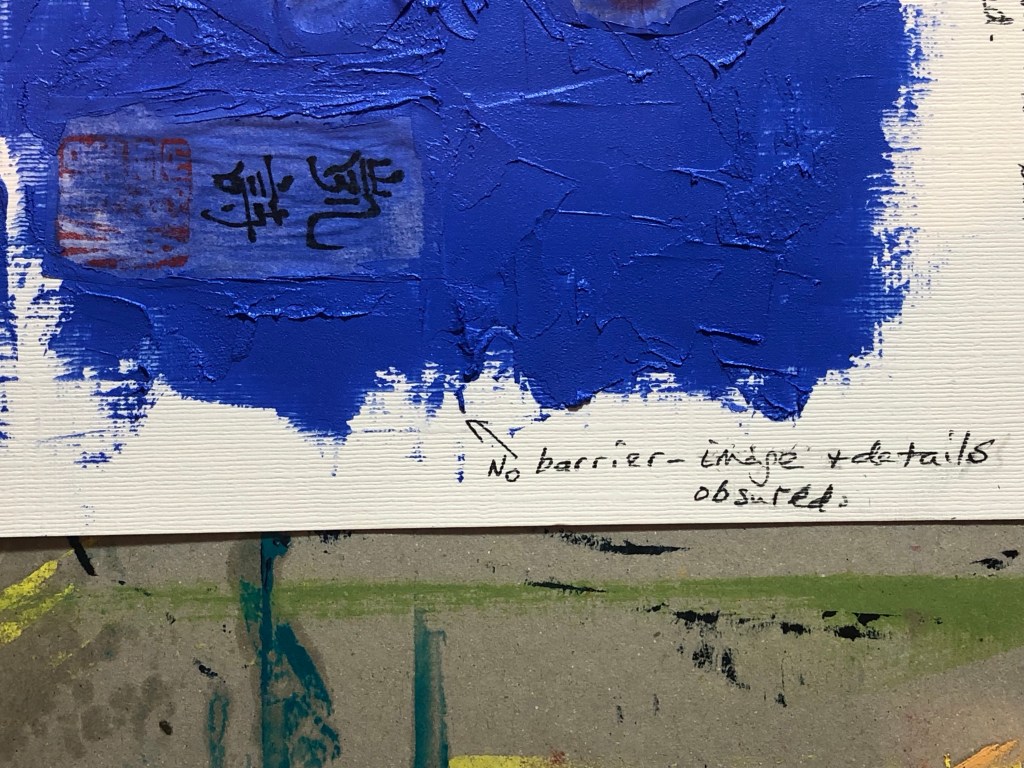
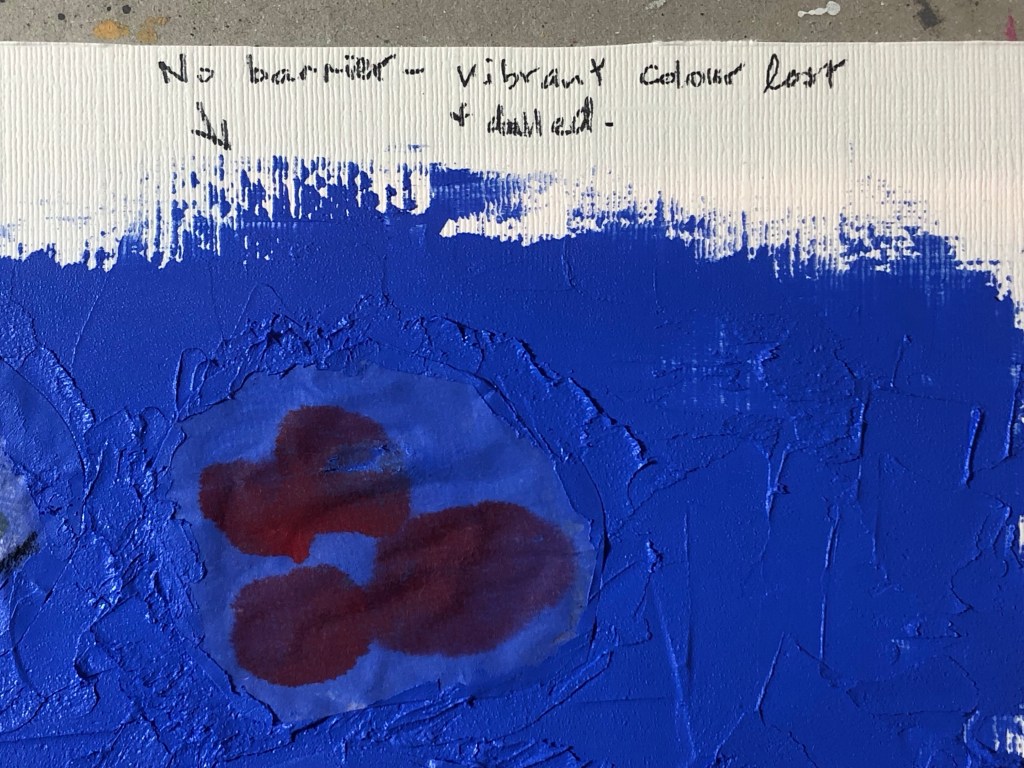
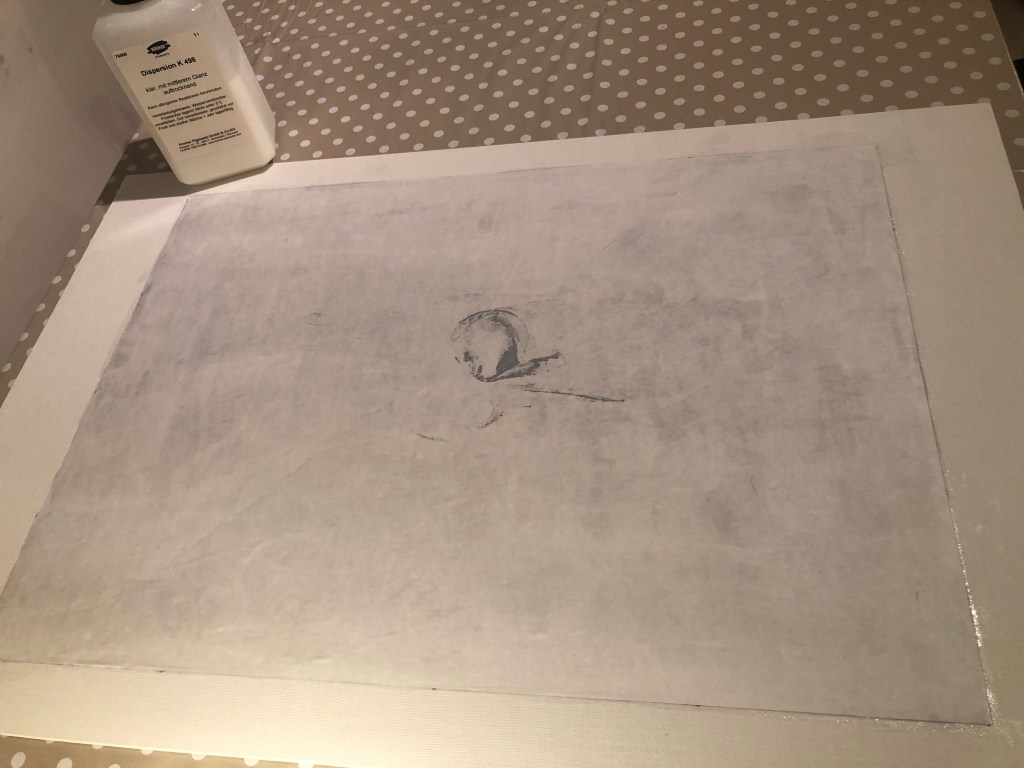
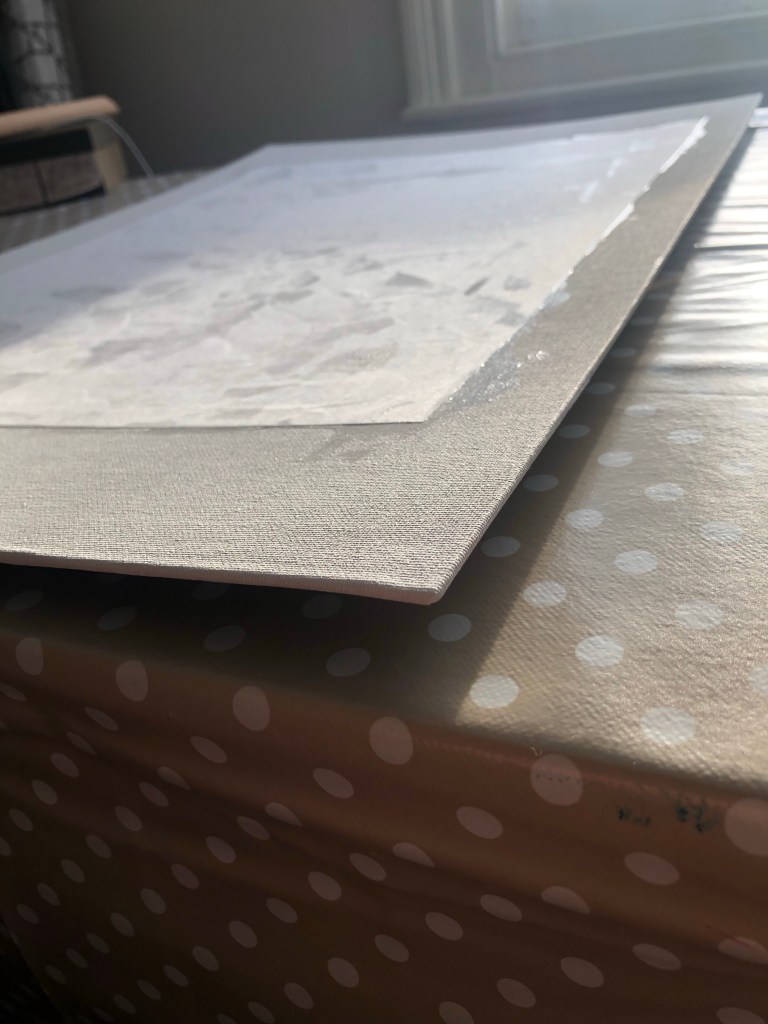
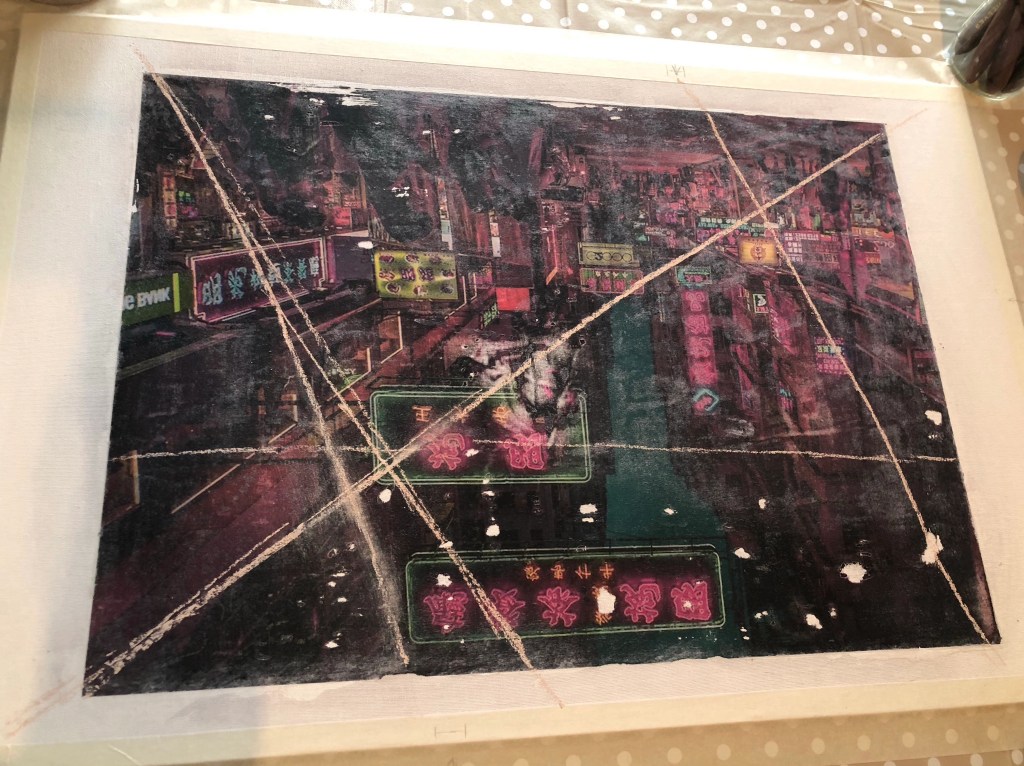
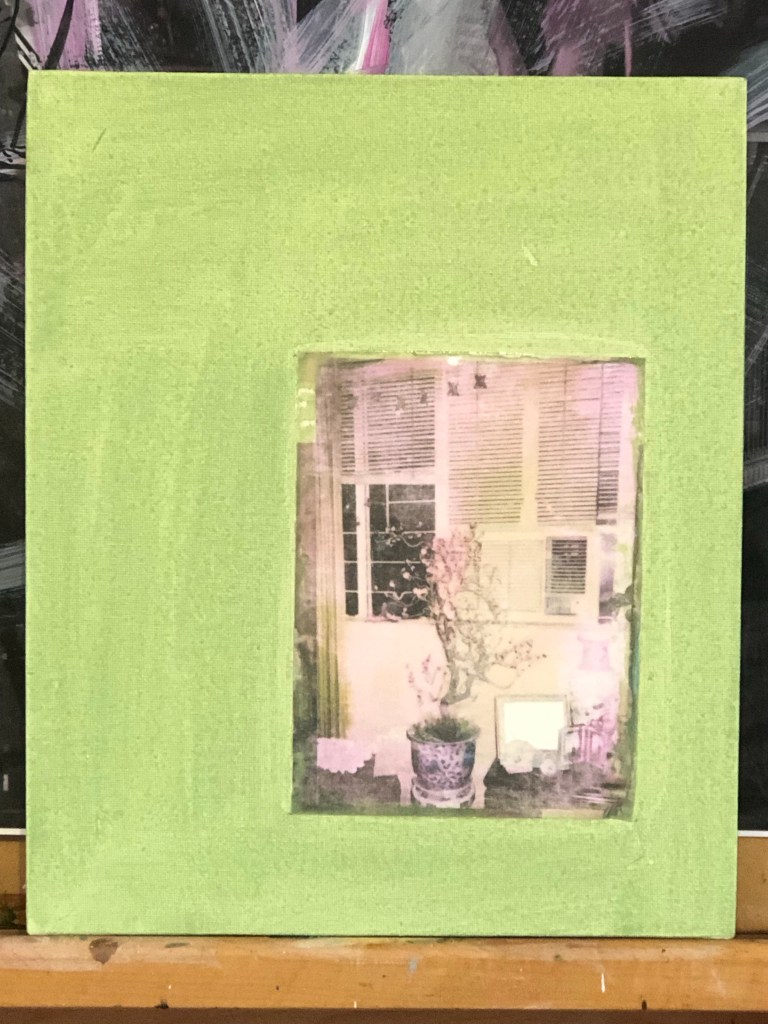
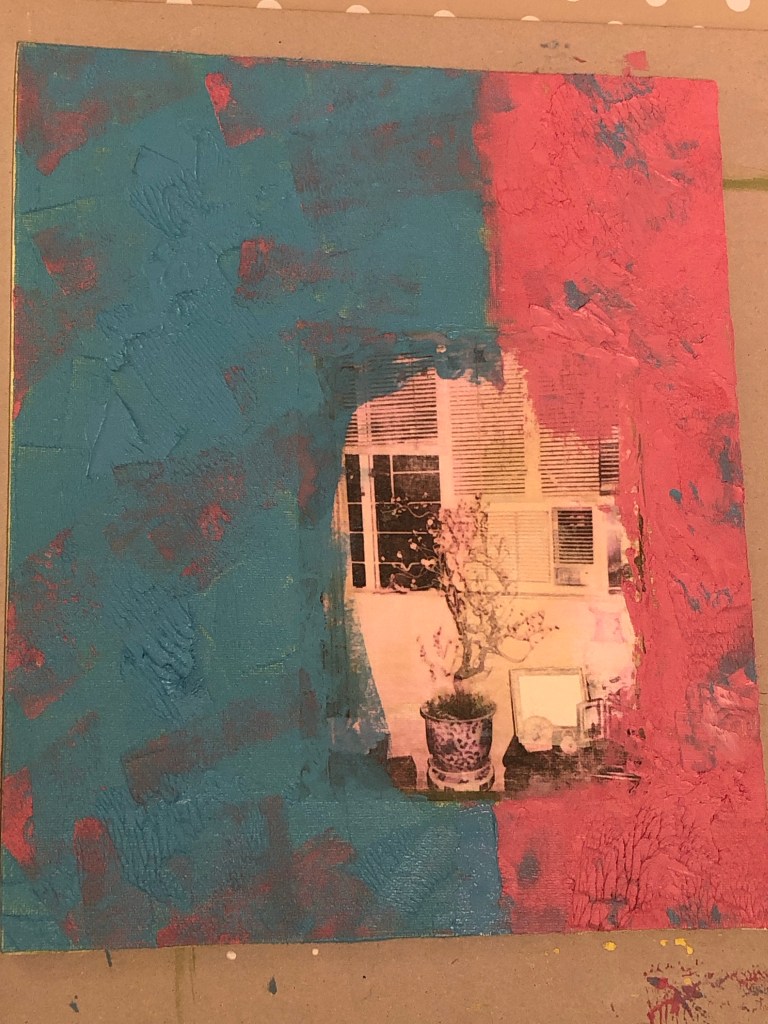
Images were selected to fully cover a 30×20 inch canvas board. Dispersion liquid was used to transfer the printed images onto the canvas and left to dry overnight.
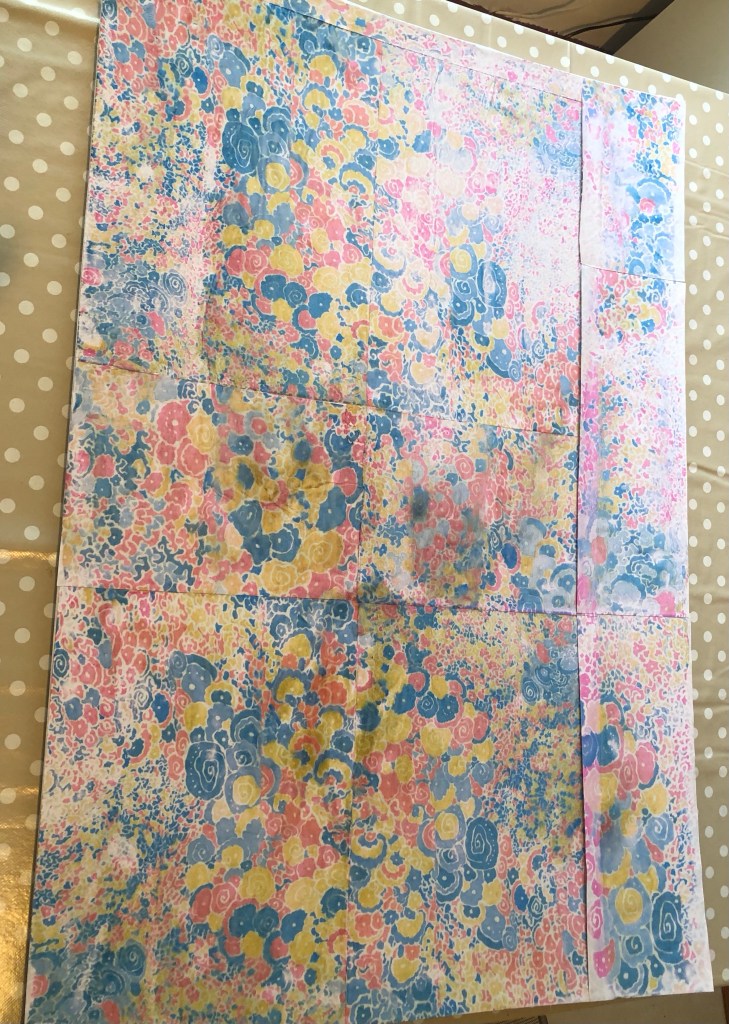
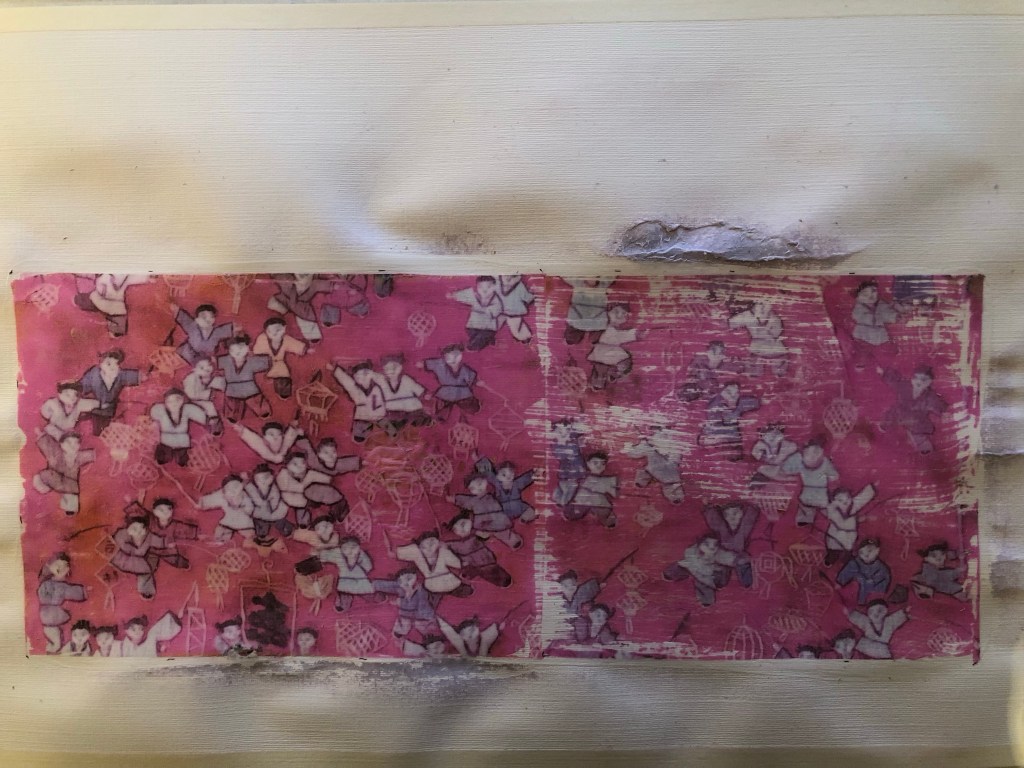
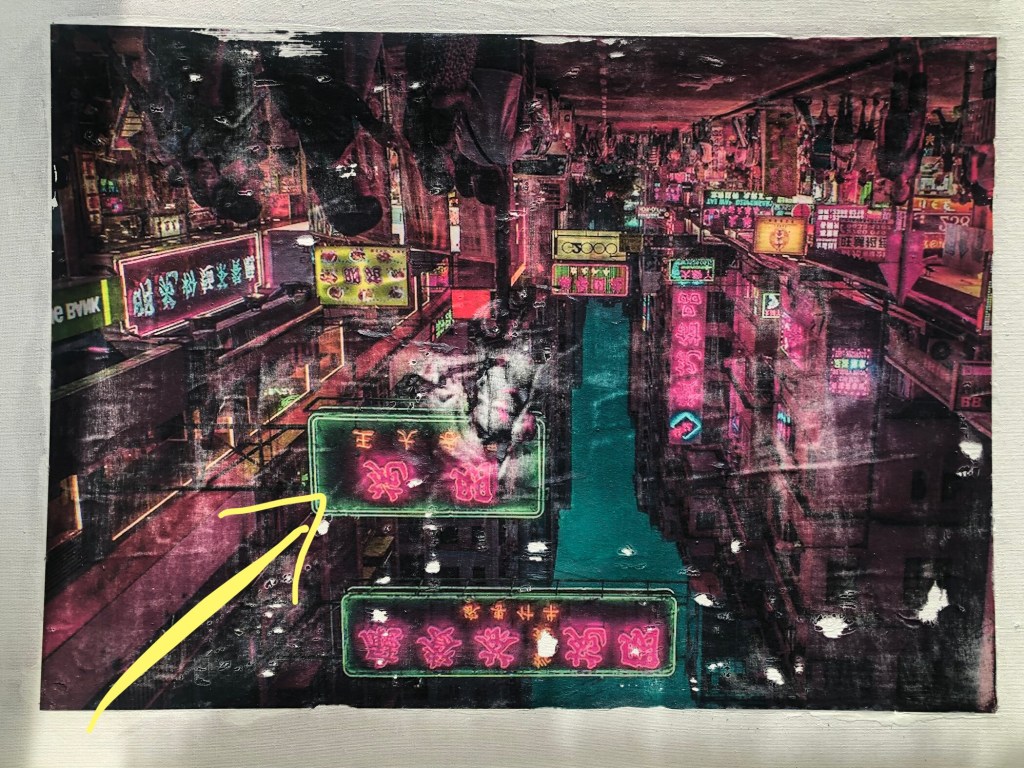
The paper was rubbed off leaving the transferred image on the canvas. As expected, the process usually leaves blank patches as it had done here:
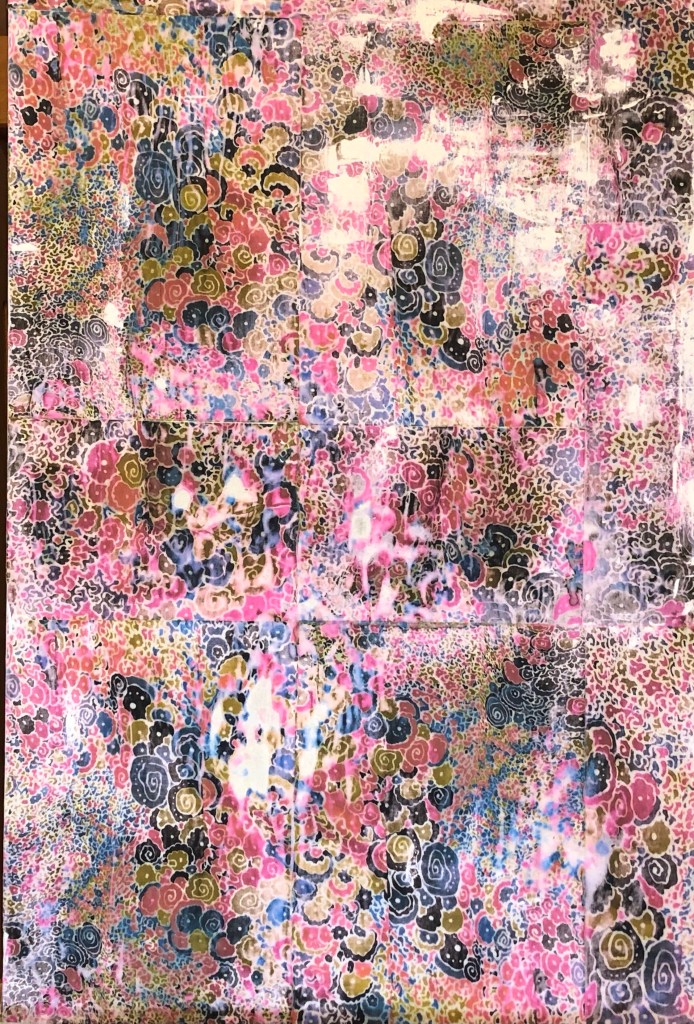
Where there were blank spaces, the outline of the abstract shapes were drawn in using a 0.2mm black fine liner pen.
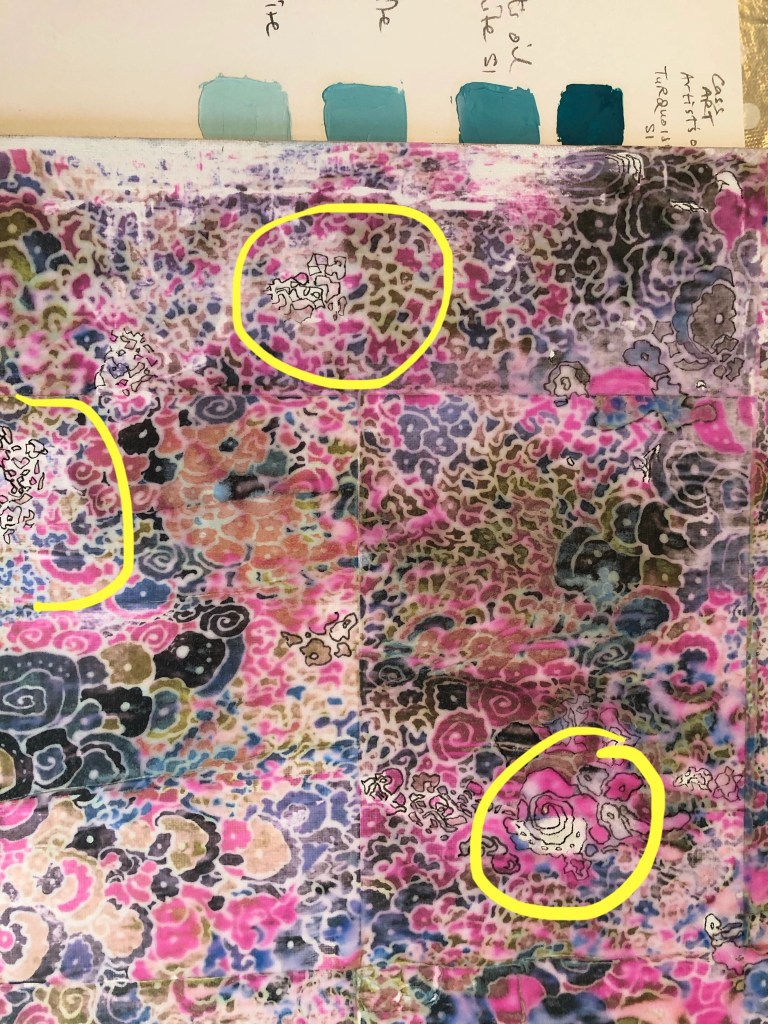
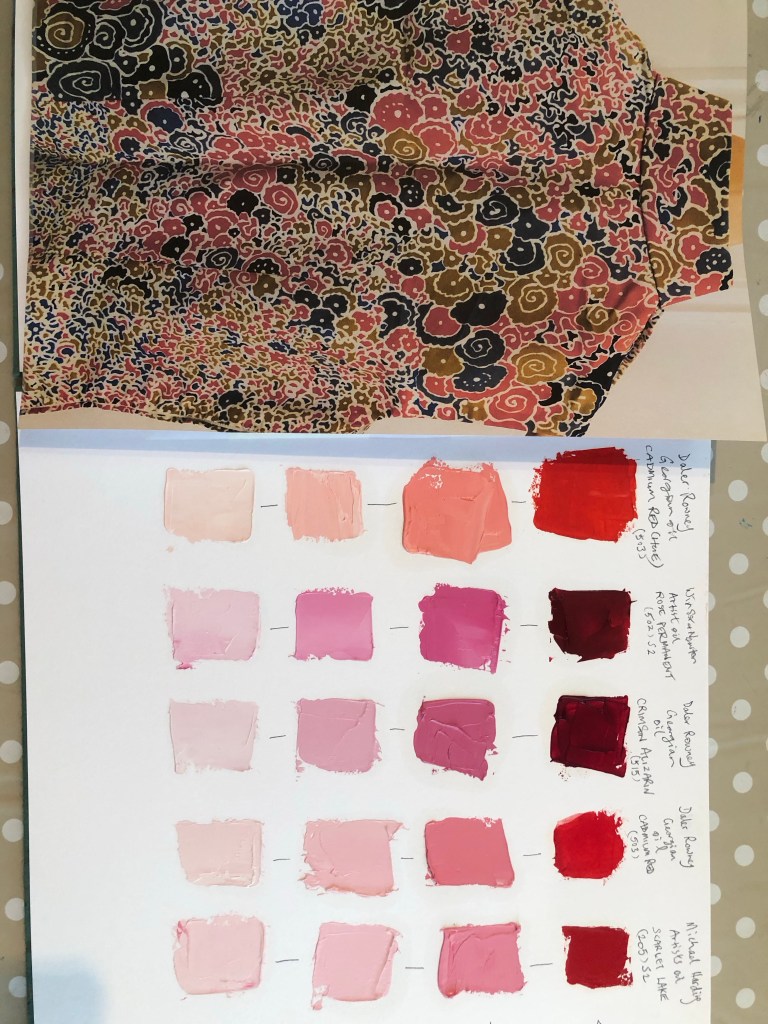
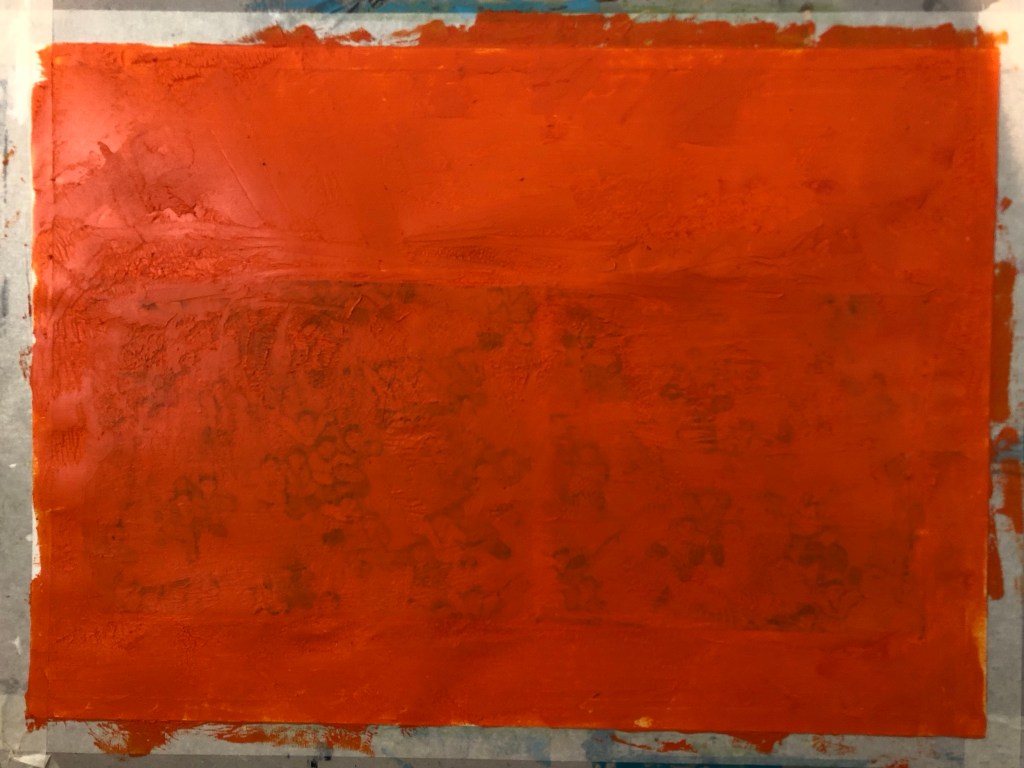
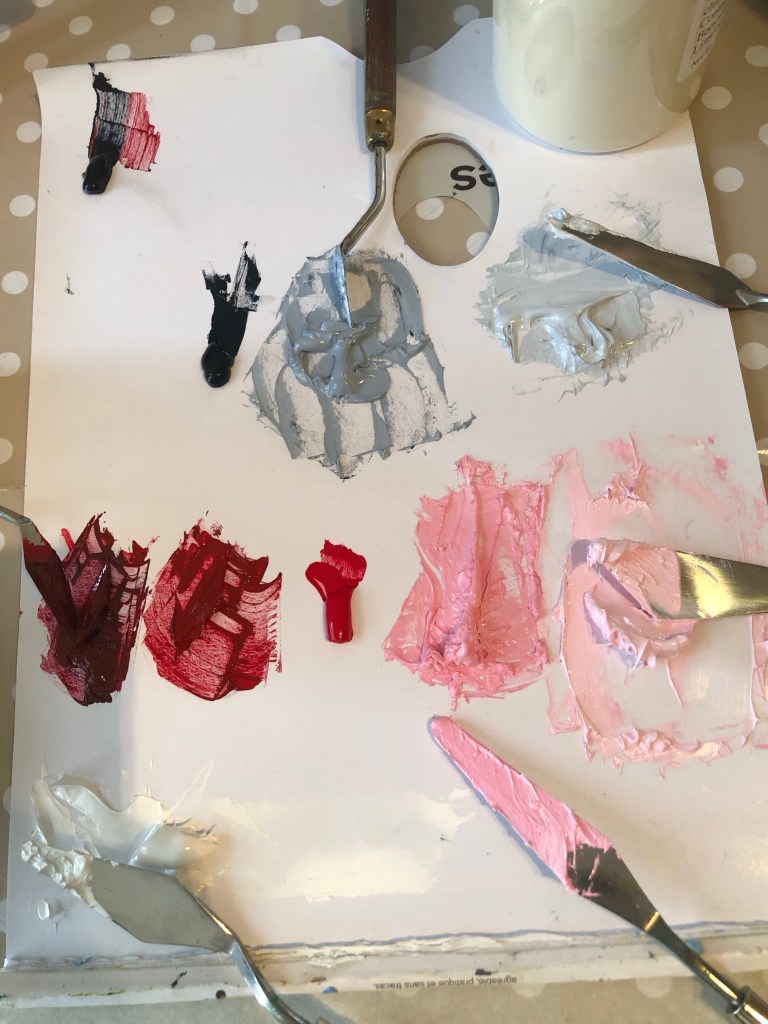
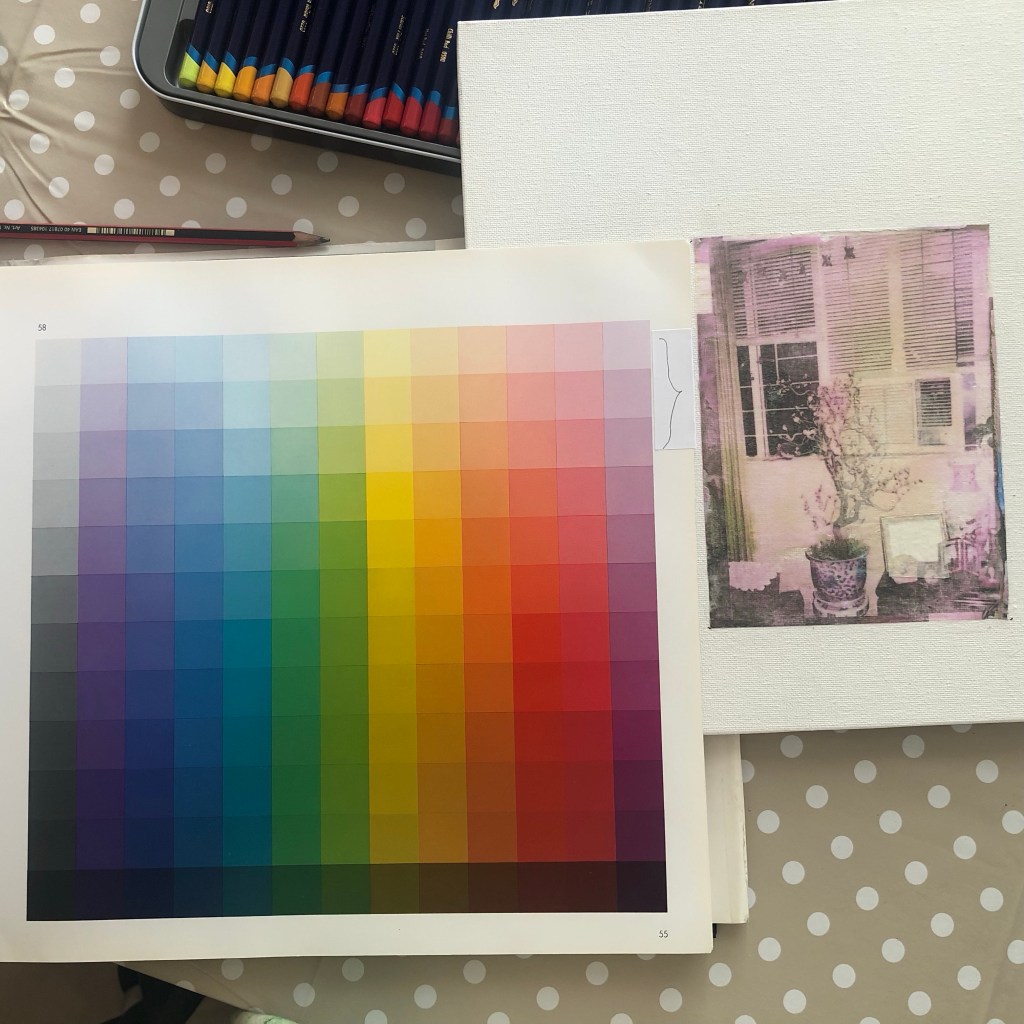
Using the colour charts I prepared a few weeks ago, various colour shades were chosen for the top layer oil and cold wax painting. The oil and cold wax were mixed in 50/50 ratio.
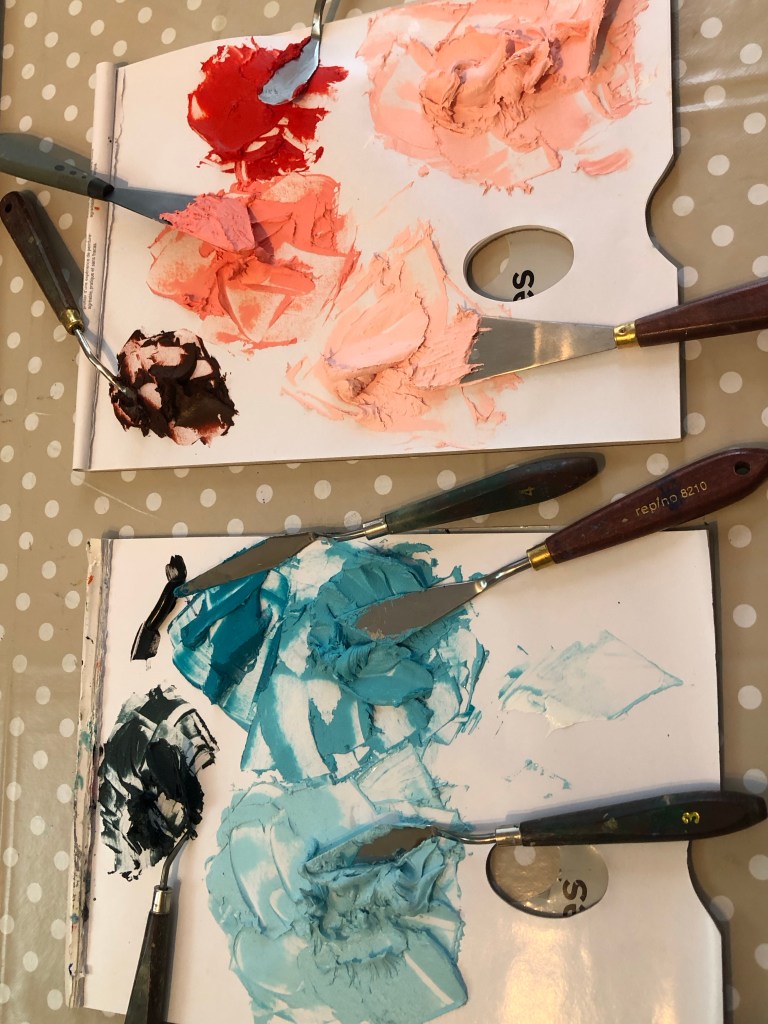
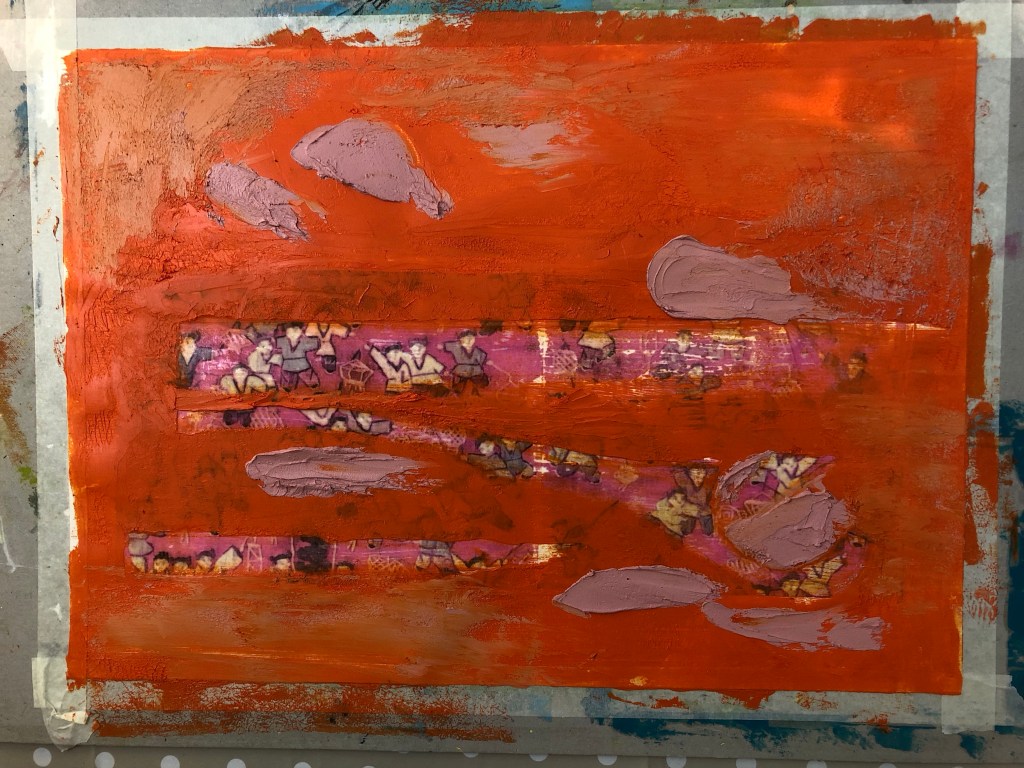
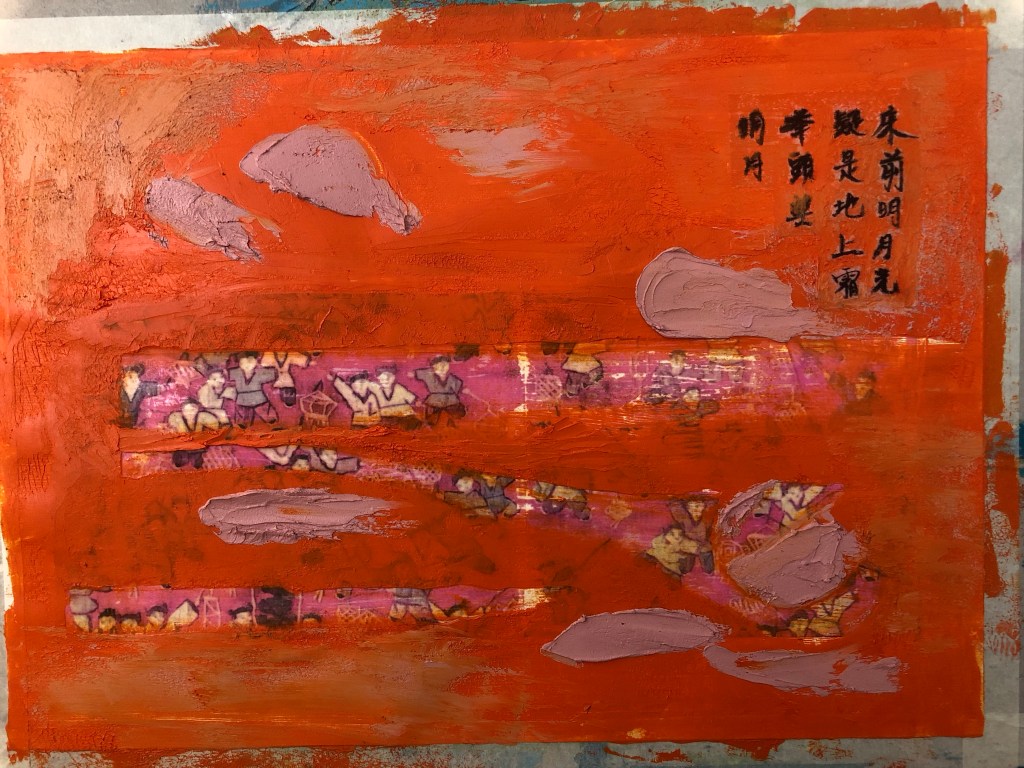
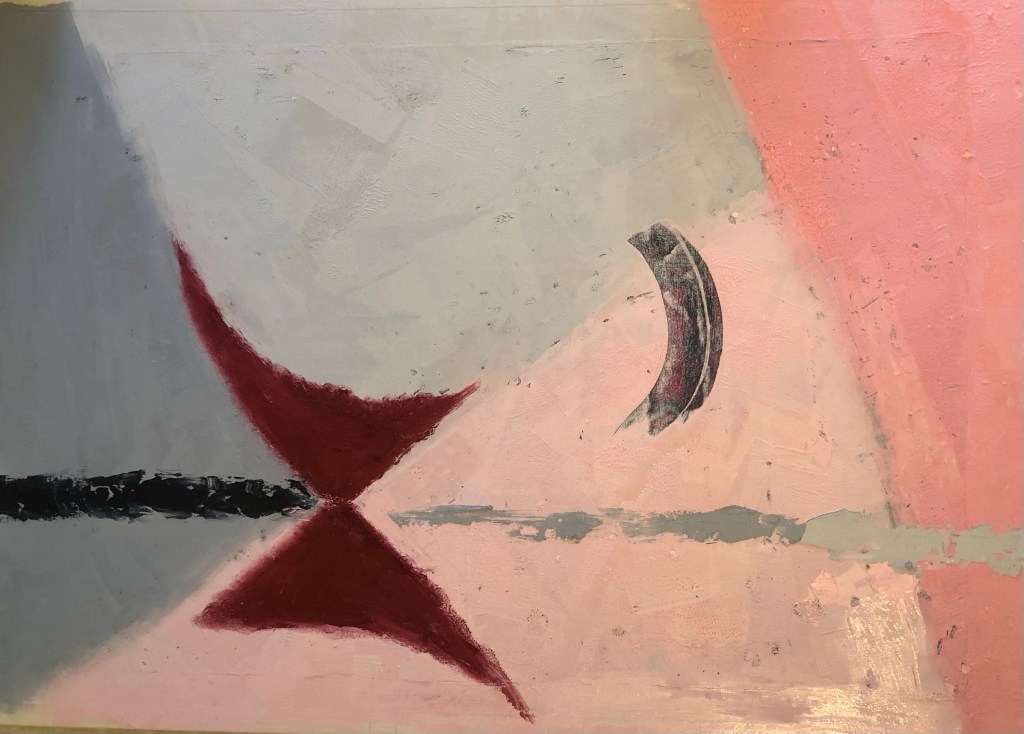
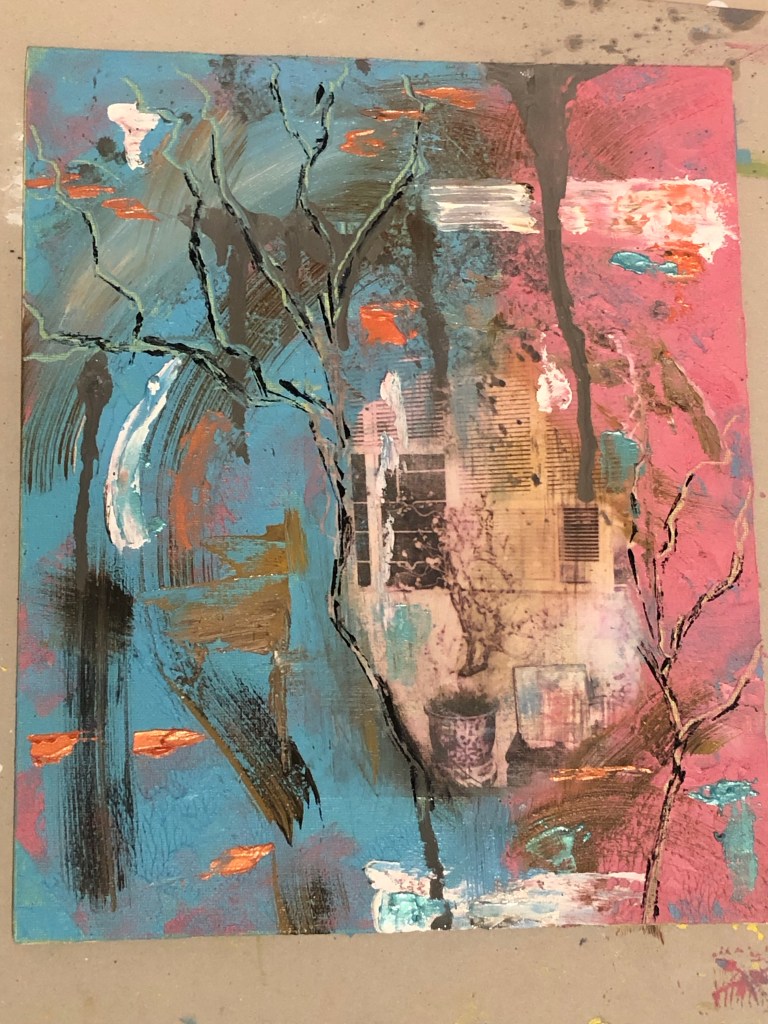
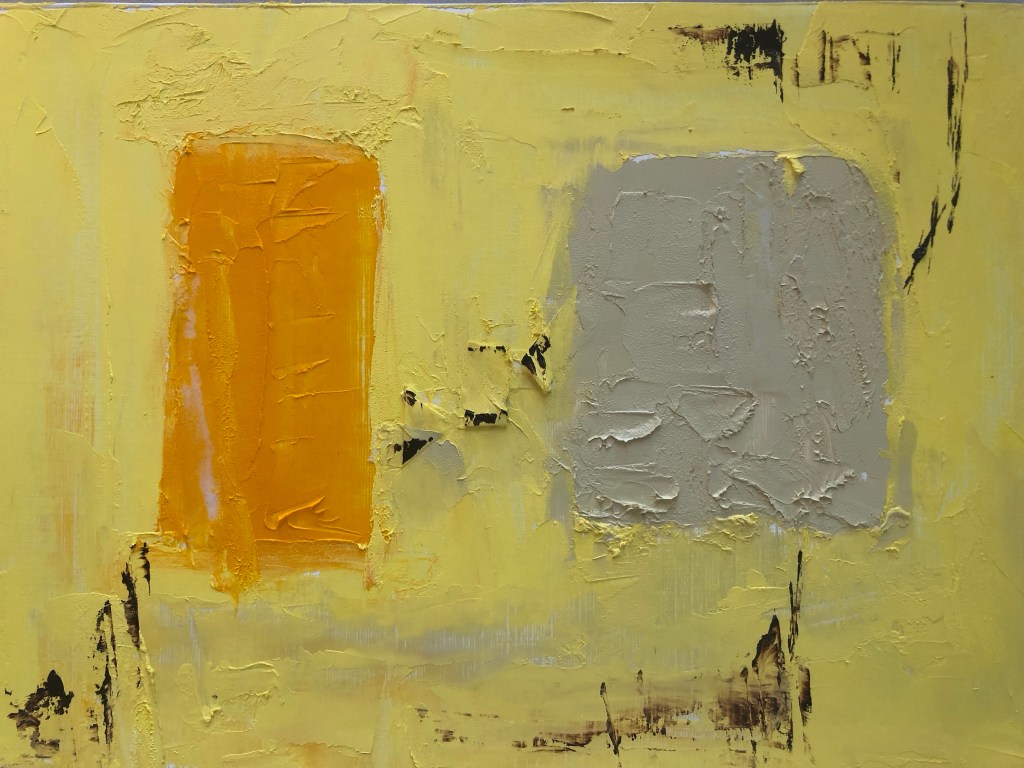
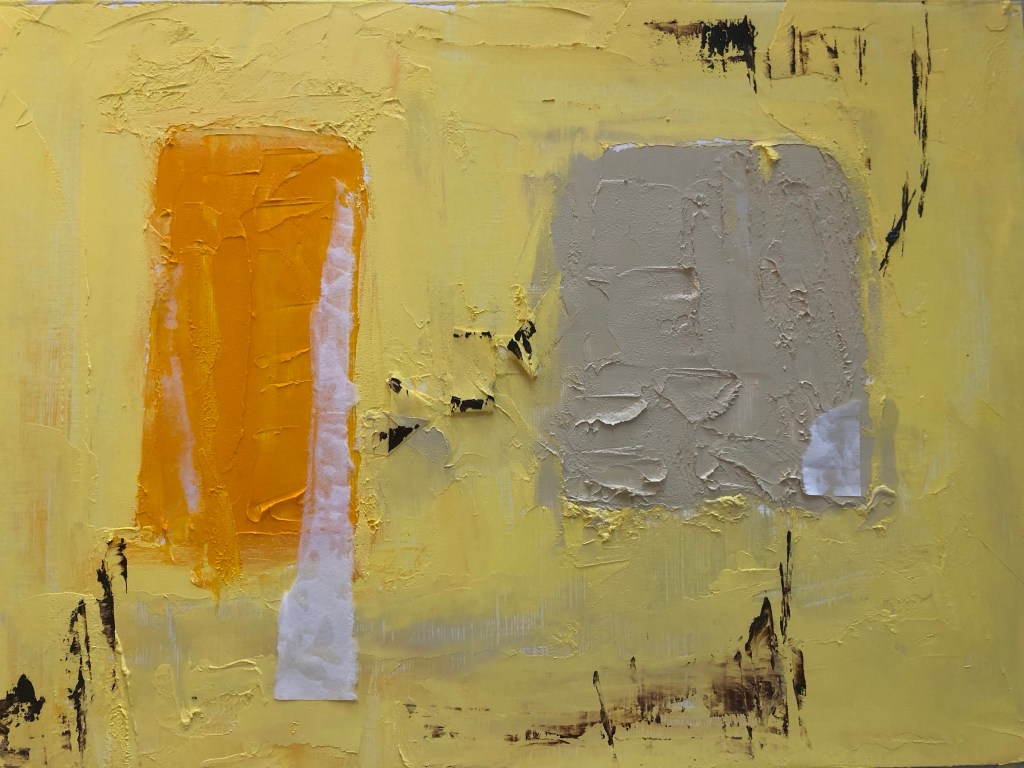
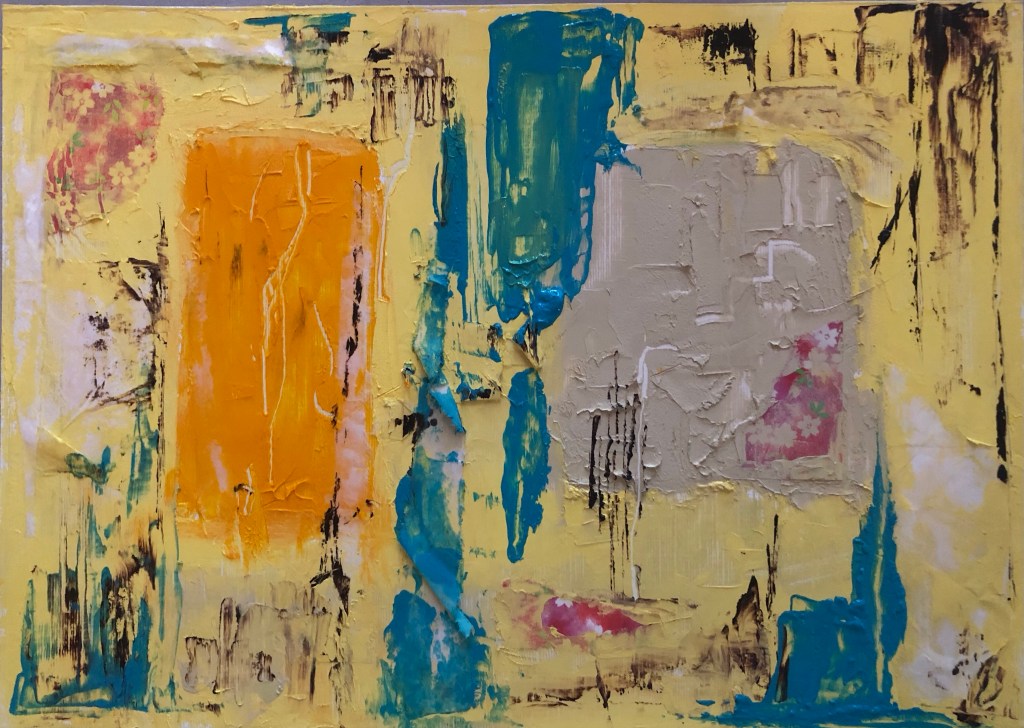
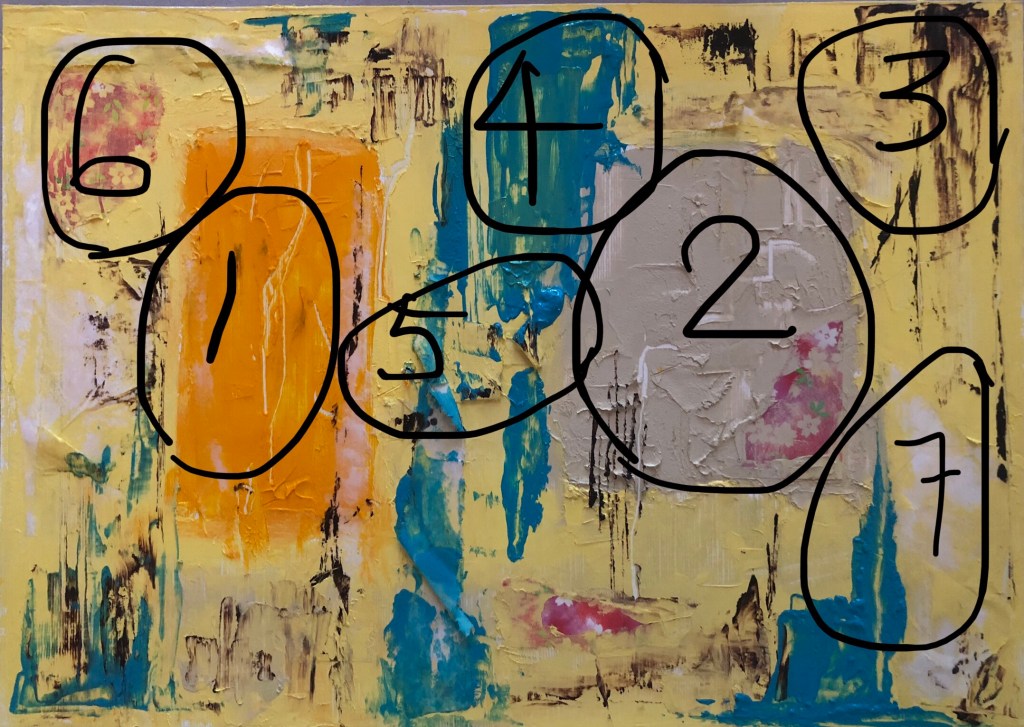
Blocks of colour were painted onto the canvas. The approach was abstract and without pre-planning, I was just responding to the canvas. Towards the bottom centre area, I wanted to paint a dark red triangle, what came out was part of a mouth or lips. The lips led me to start painting an abstract face:
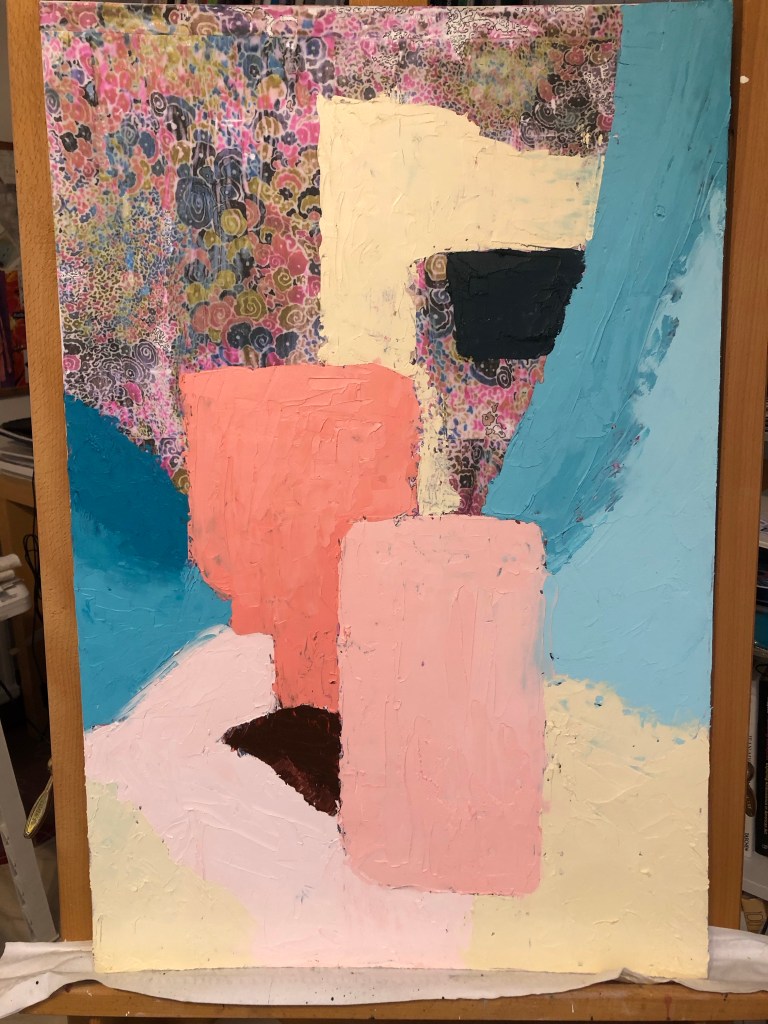
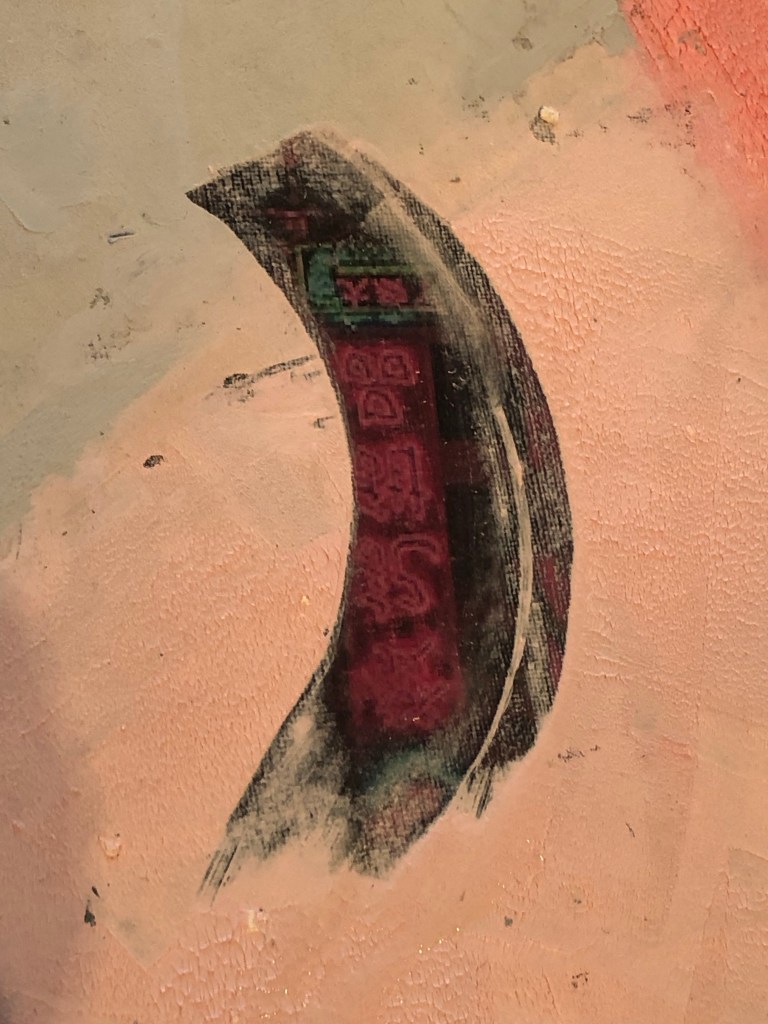
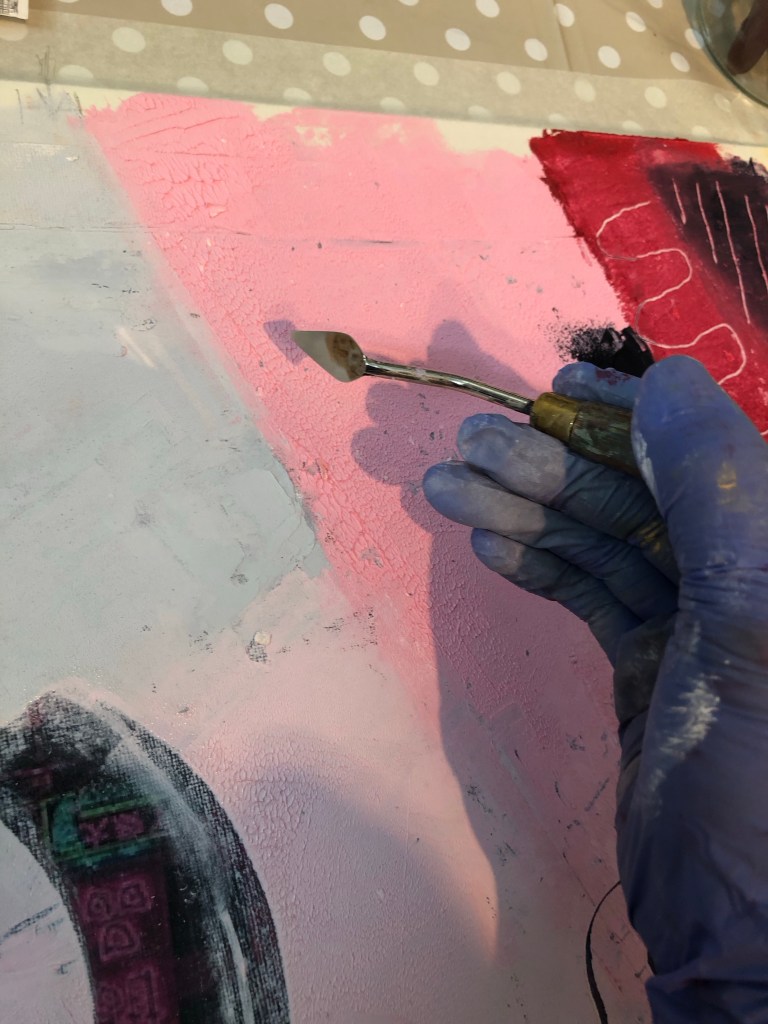
Once the top layer painting was completed, I started to scratch off the paint, firstly in the shape of a small cheongsam.
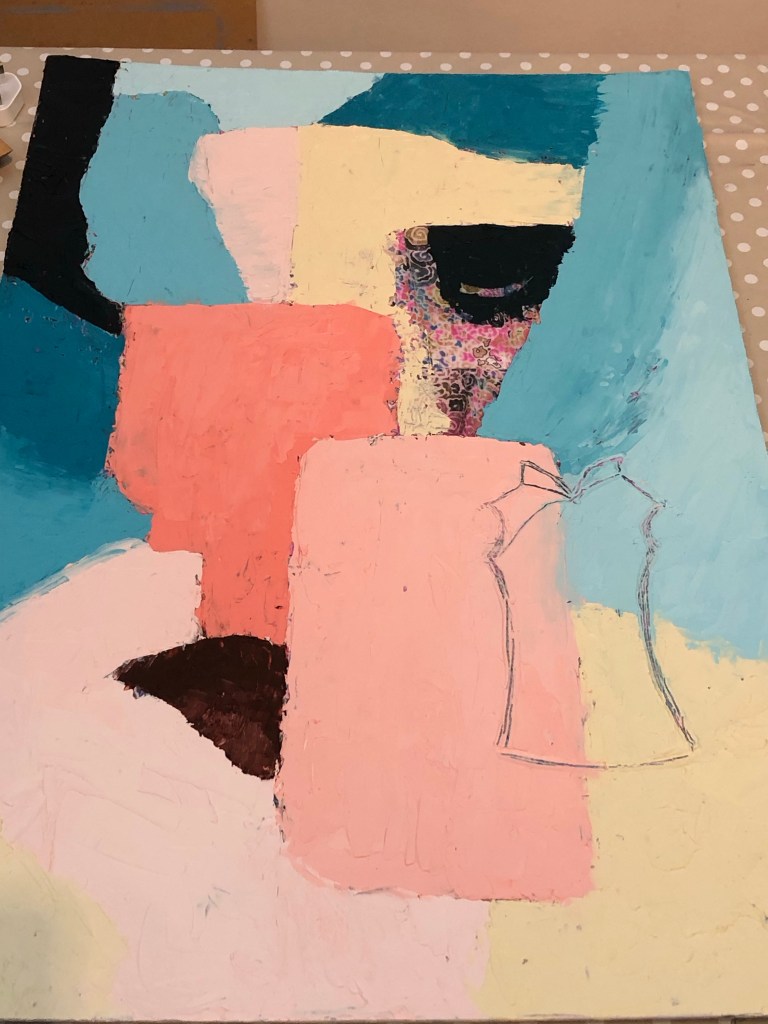
Then the paint was scraped off and the area cleaned with environmentally friendly solvent:
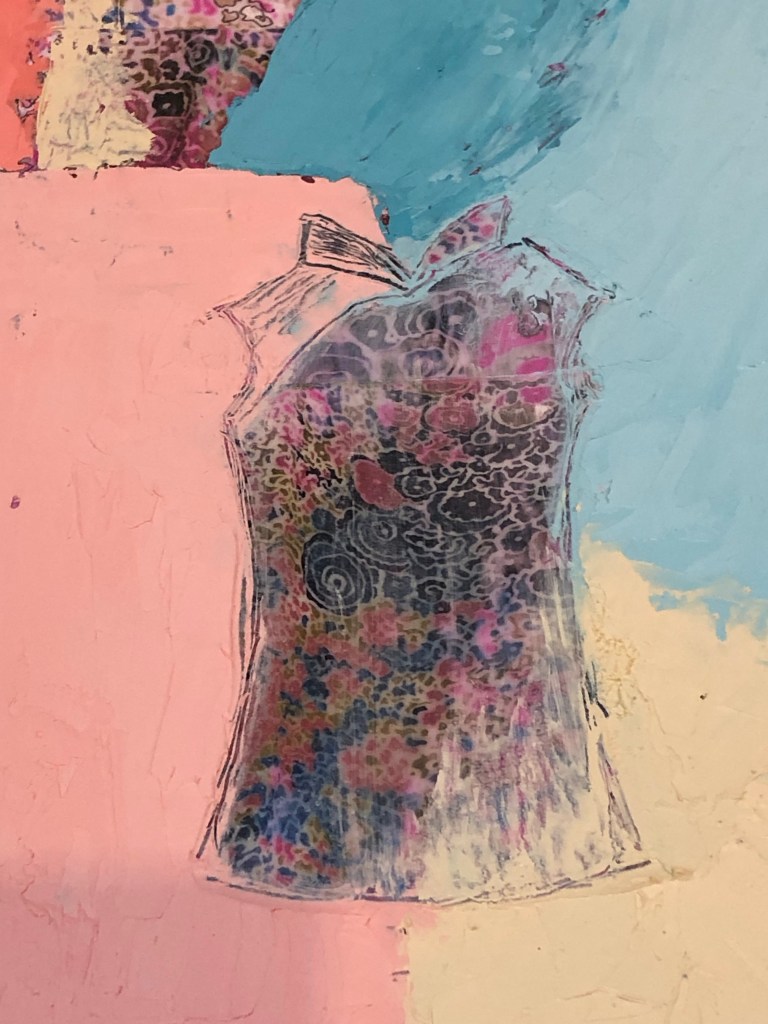
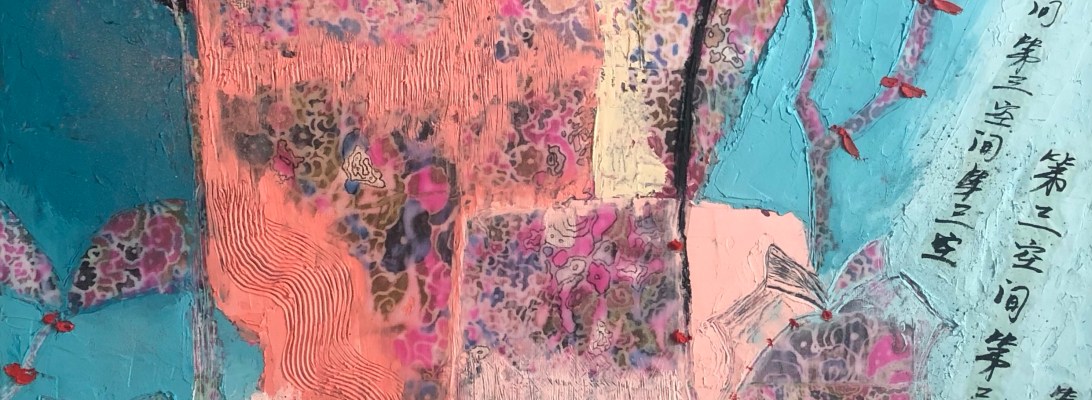
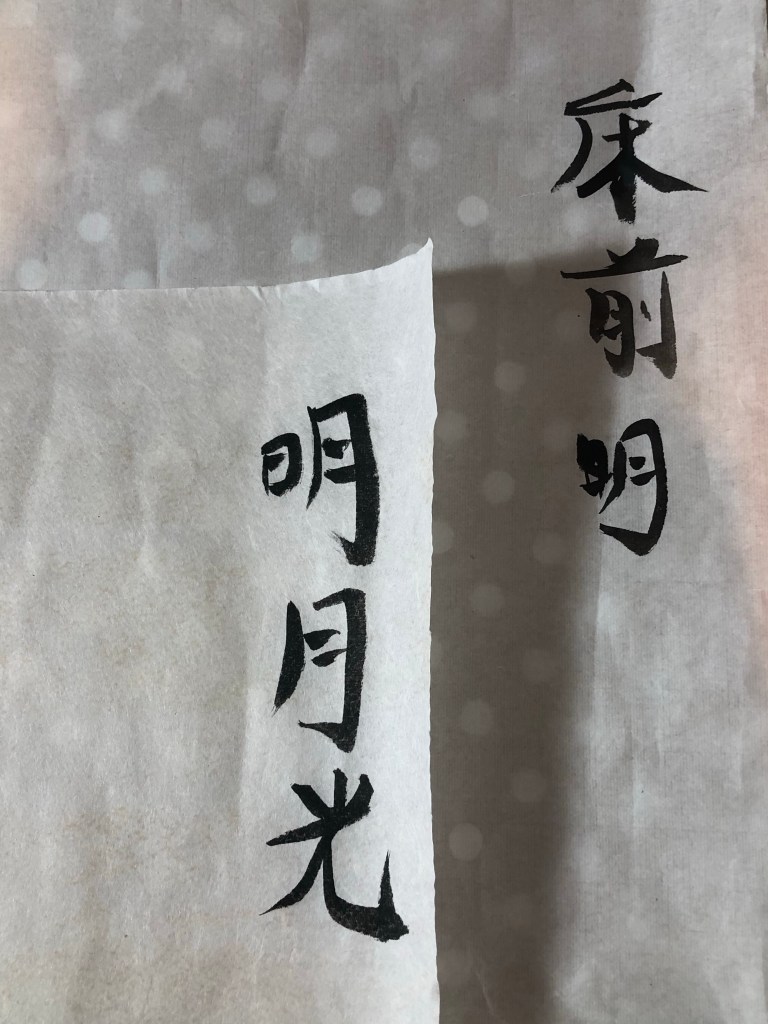
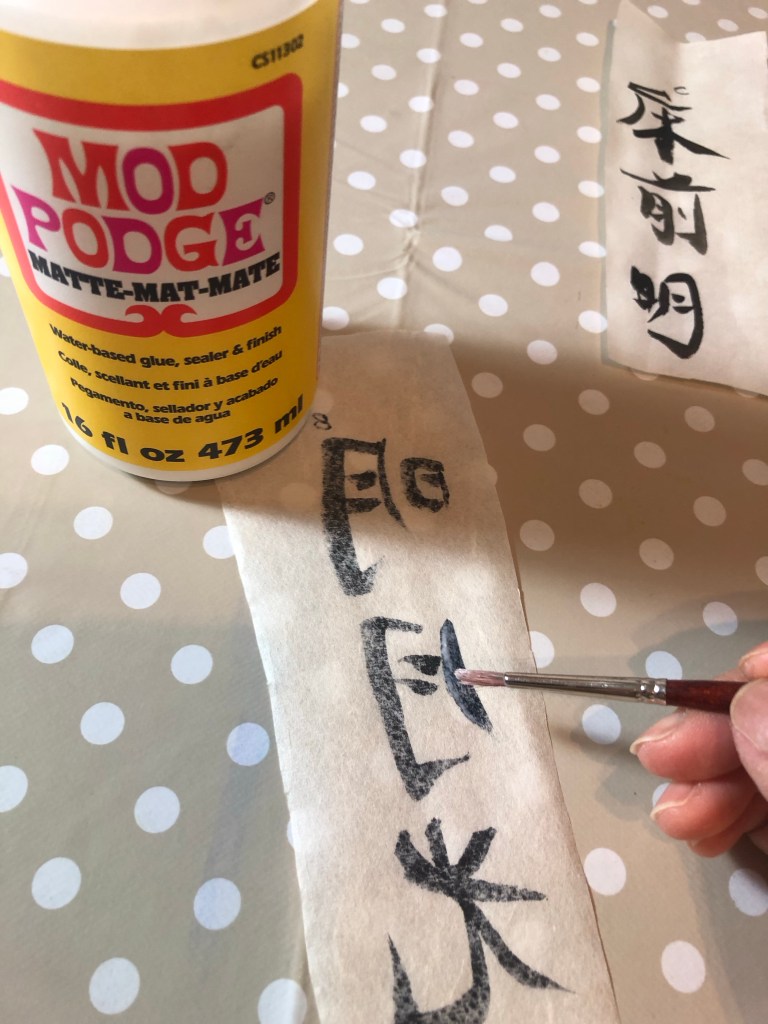
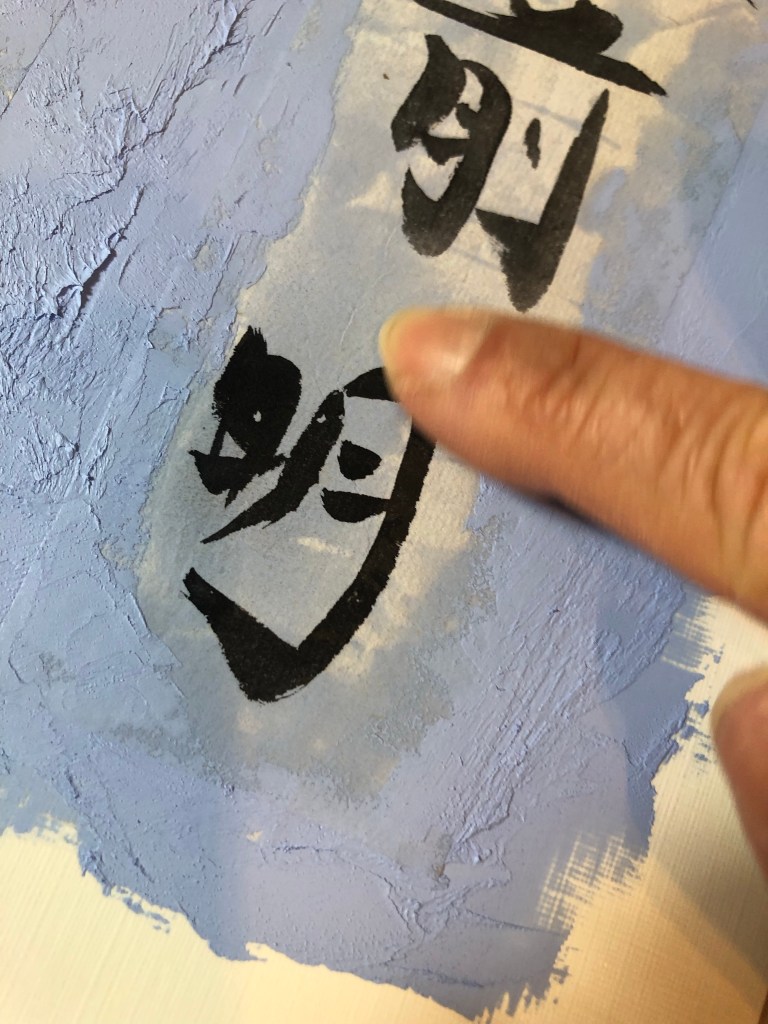
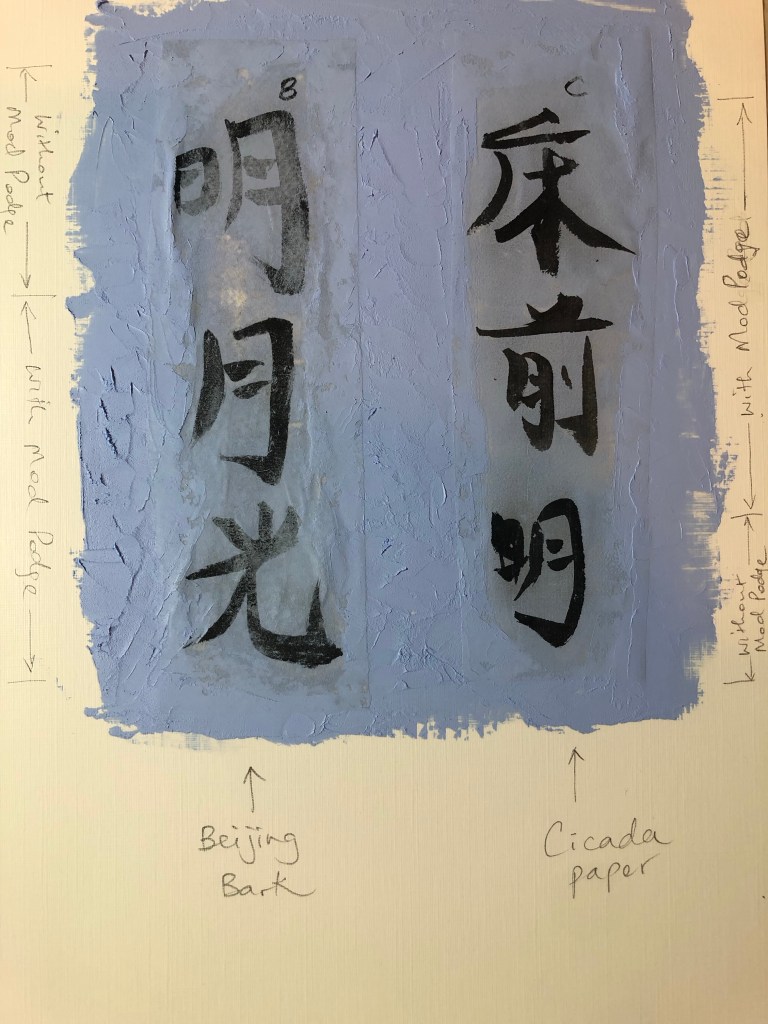
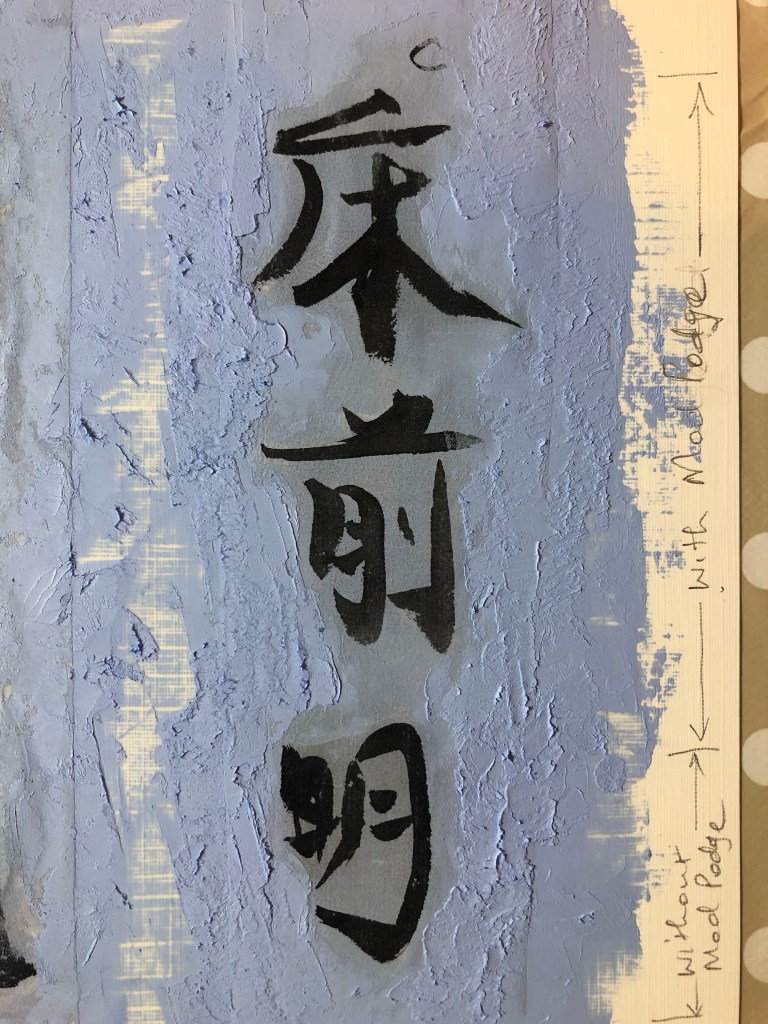
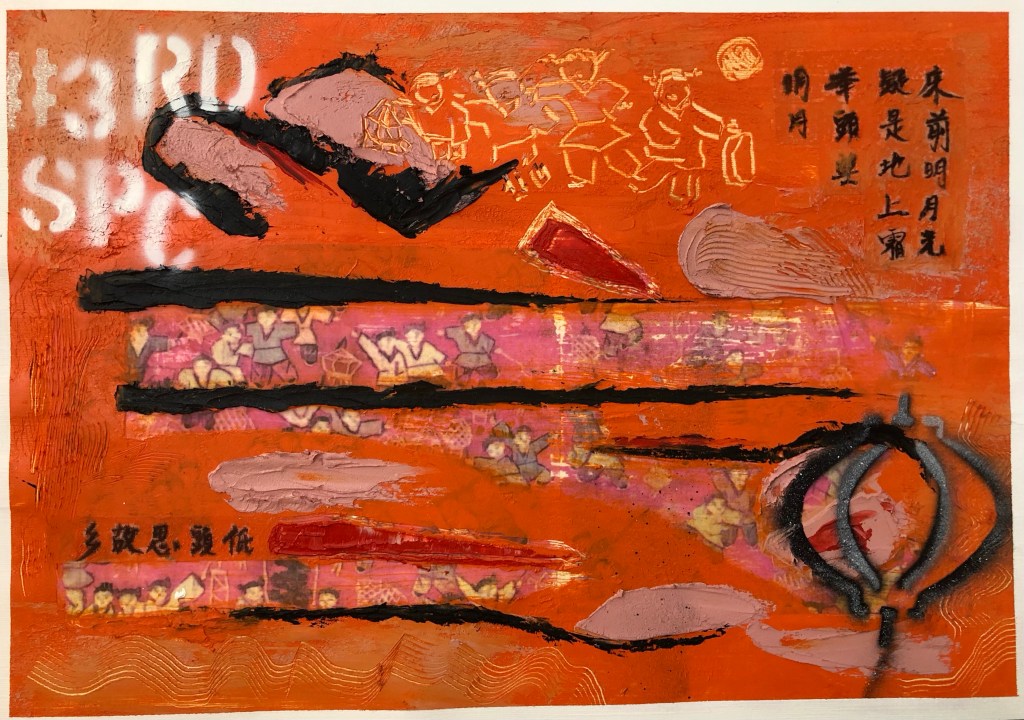
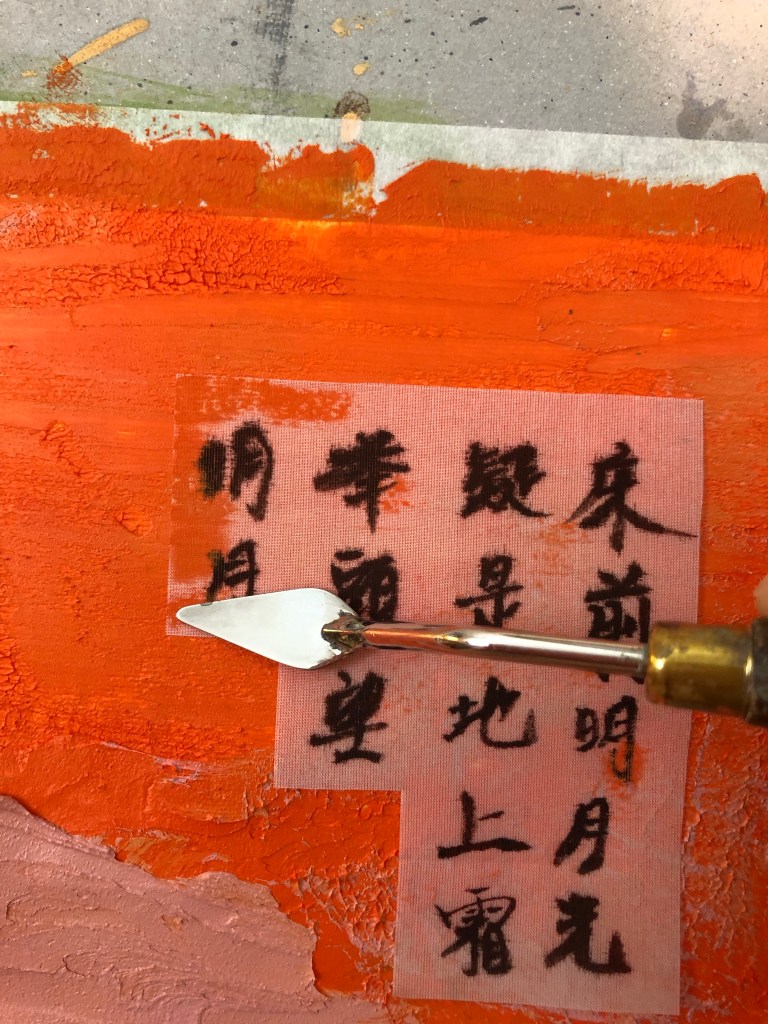
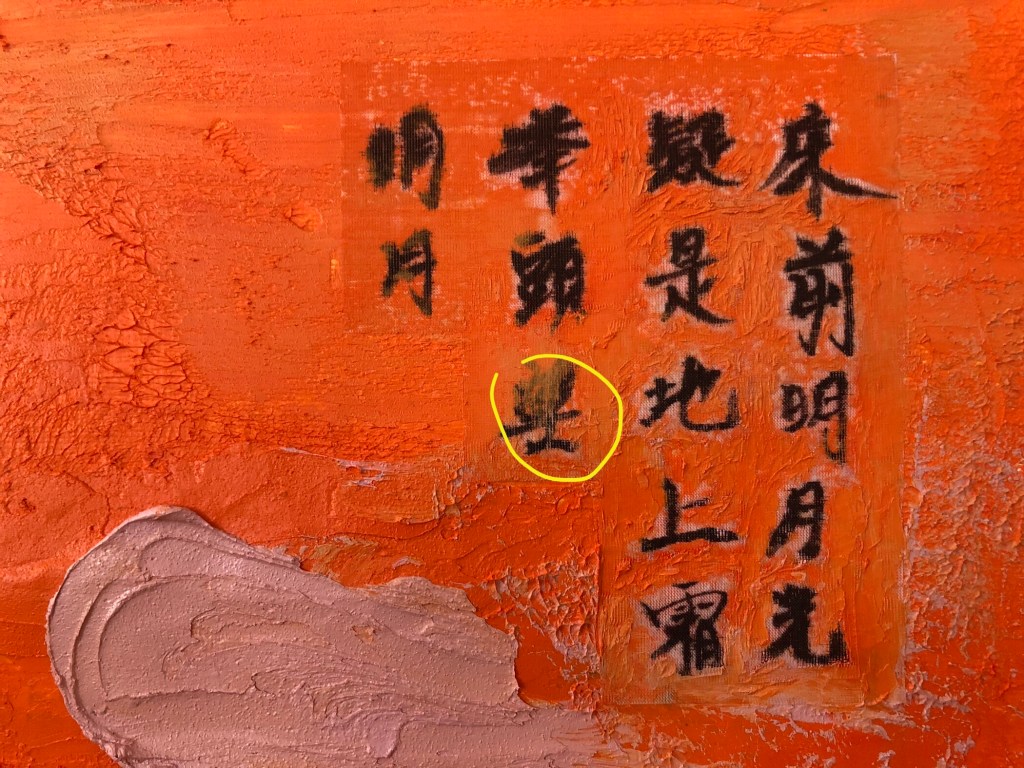
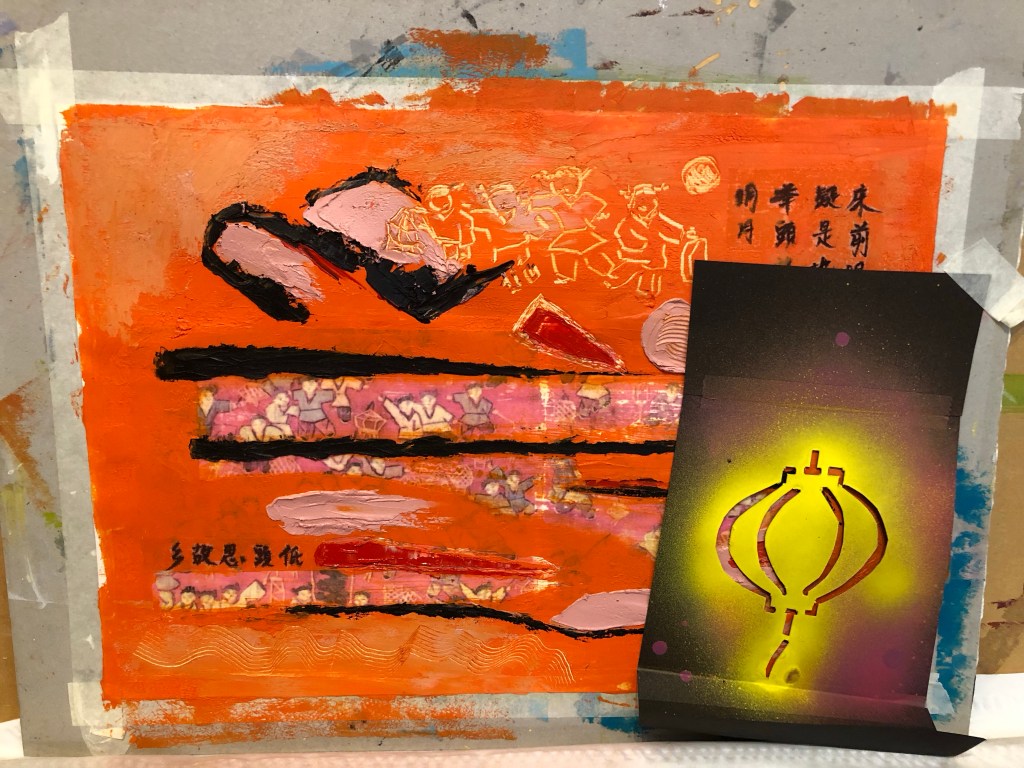
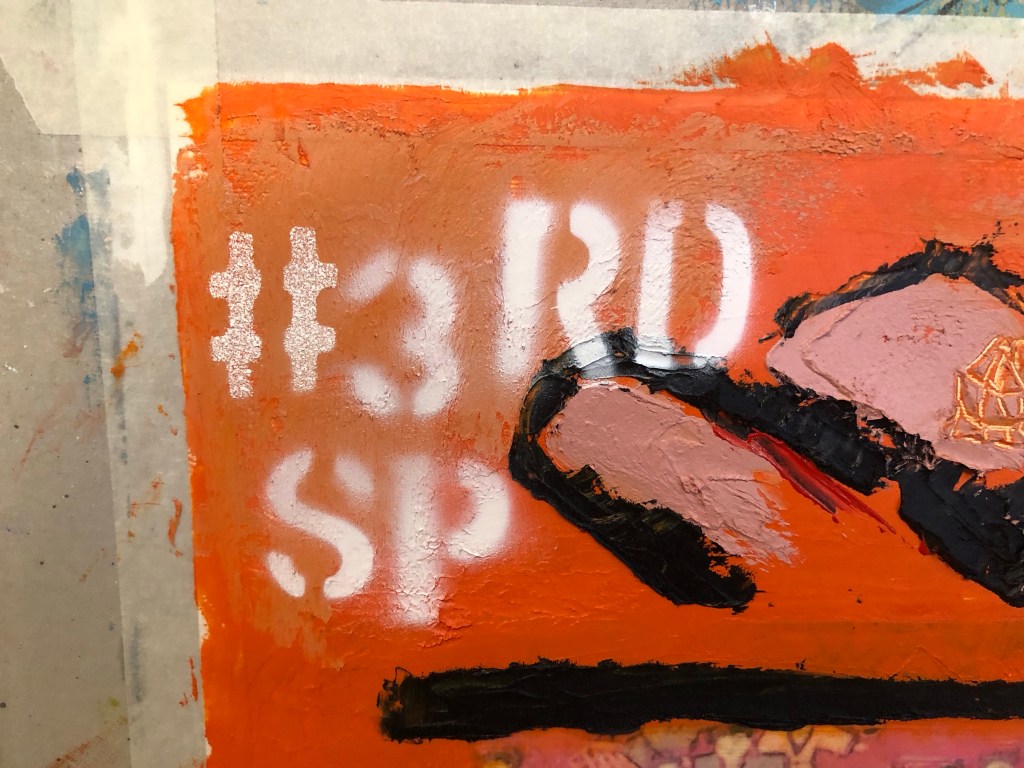
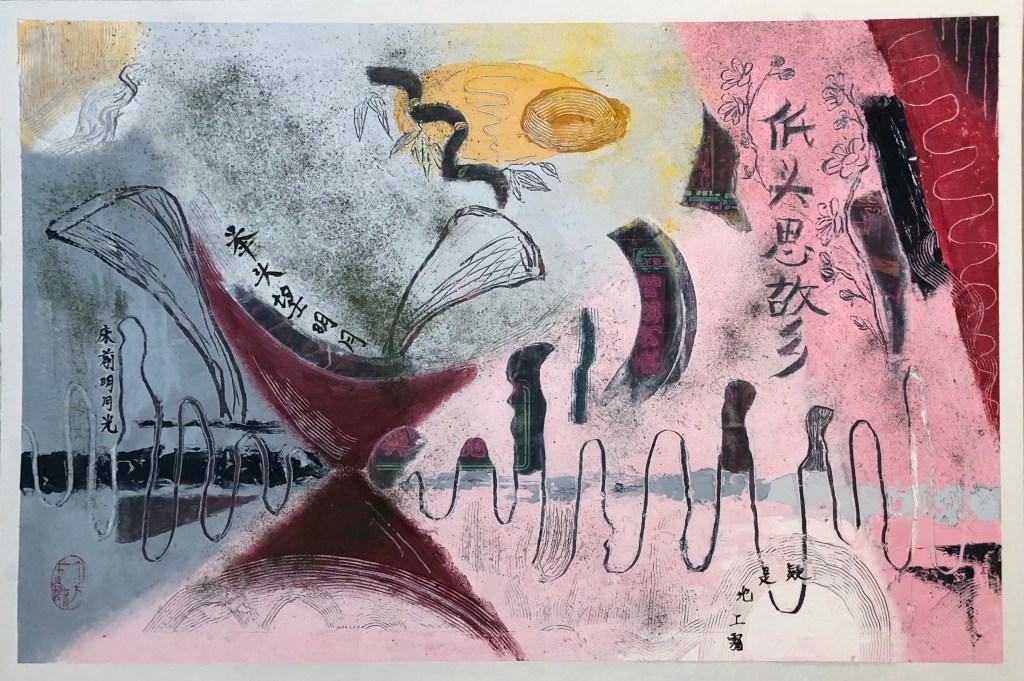
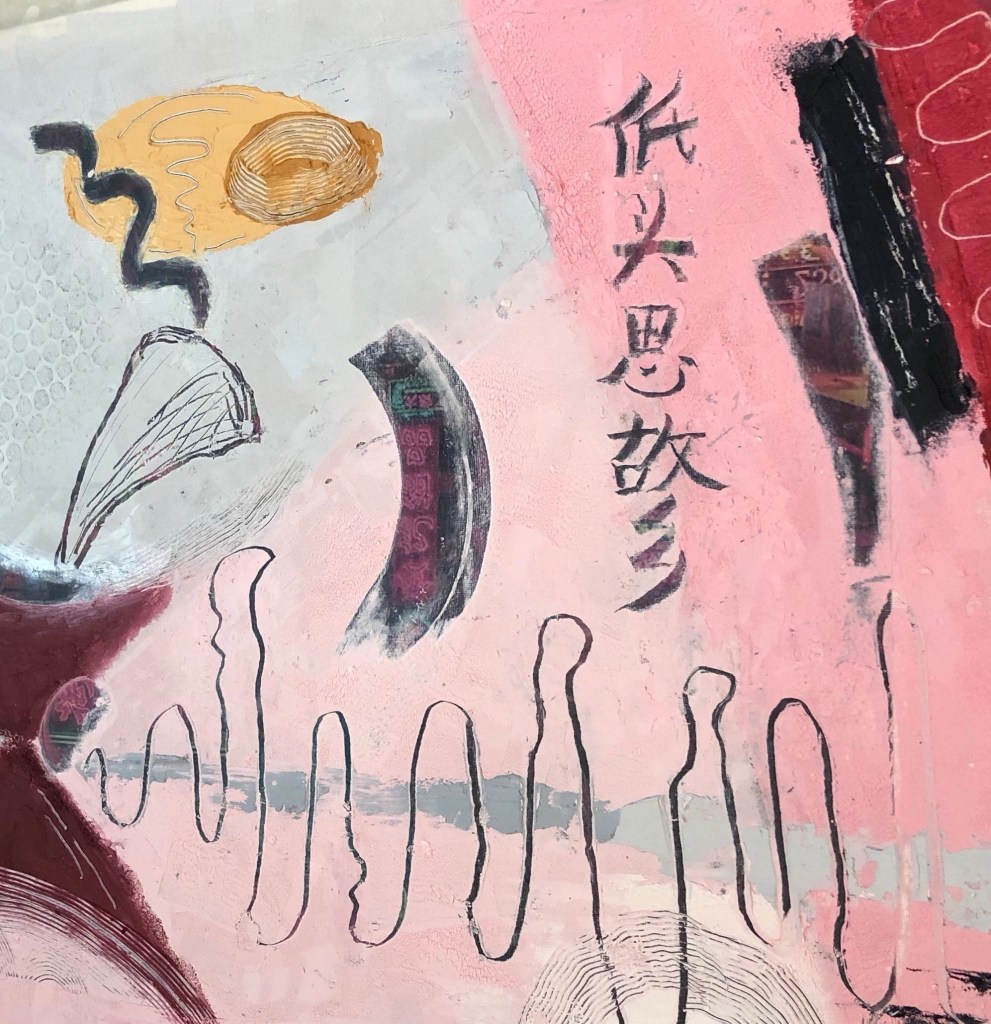
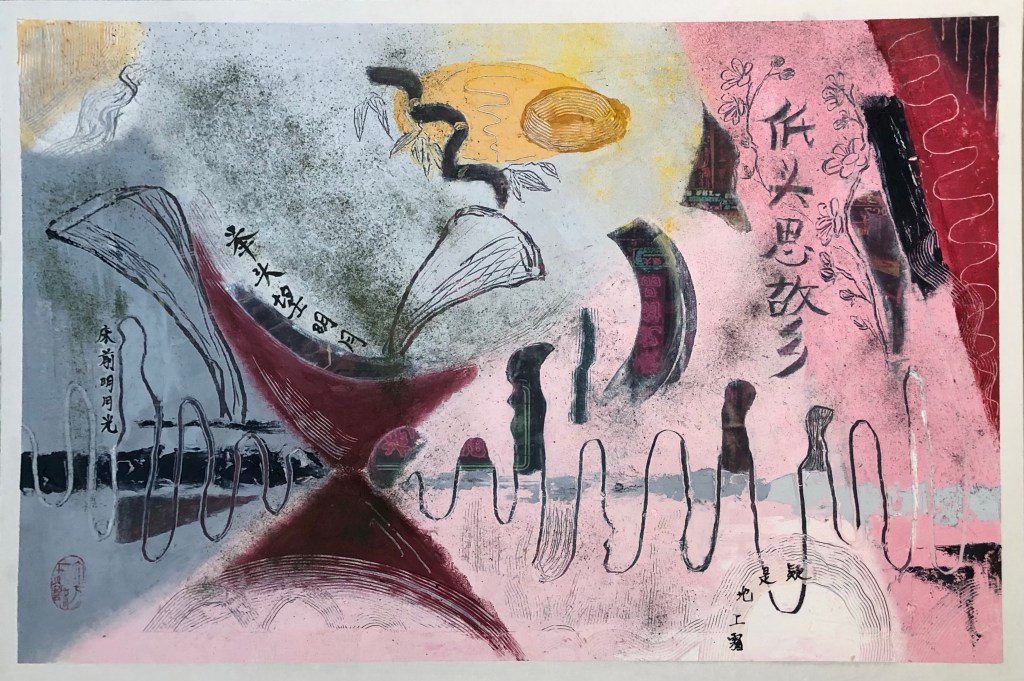
I liked the image and I then responded to it by making marks of several other cheongsams of various sizes. Bright red paint was used to depict the traditional Chinese buttons used on garments. Strips of Chinese calligraphy with the phrase ‘third space’ was layered onto the paint then pigment was sprinkled to add texture.
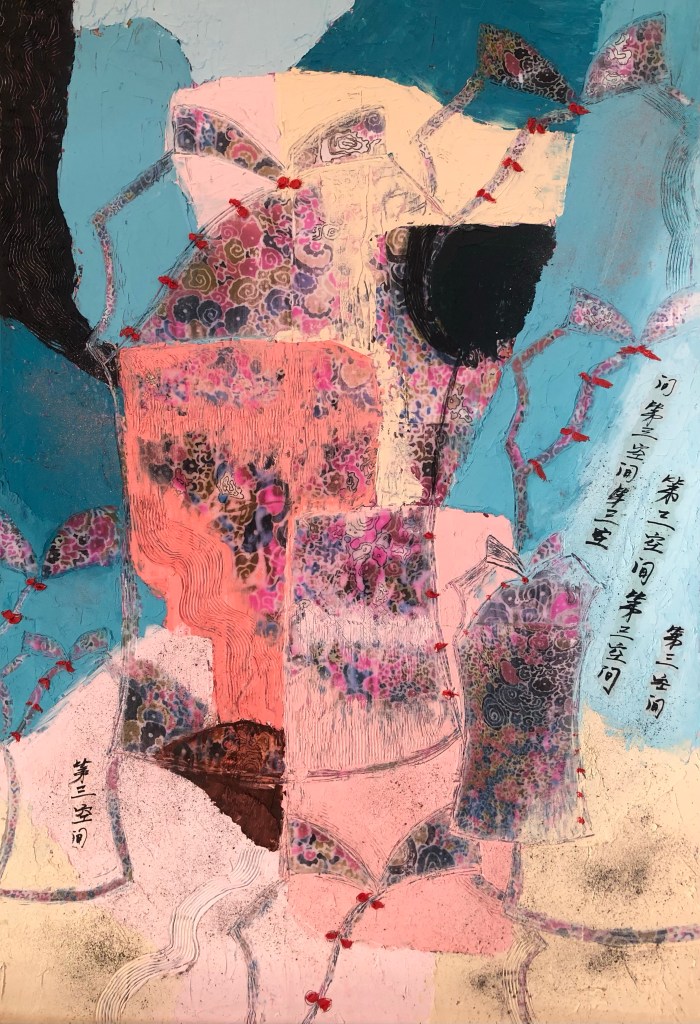
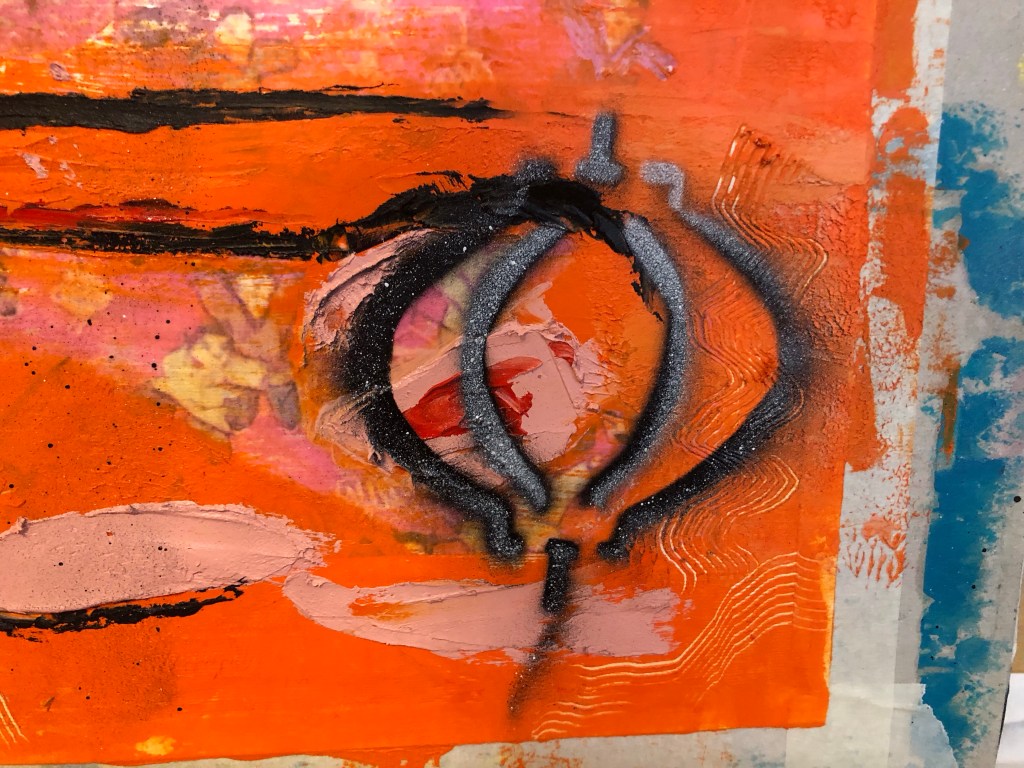
I felt troubled by the face, especially the dark eye, it looked too sinister. So I scraped off most of the dark eye to give it a kinder look.
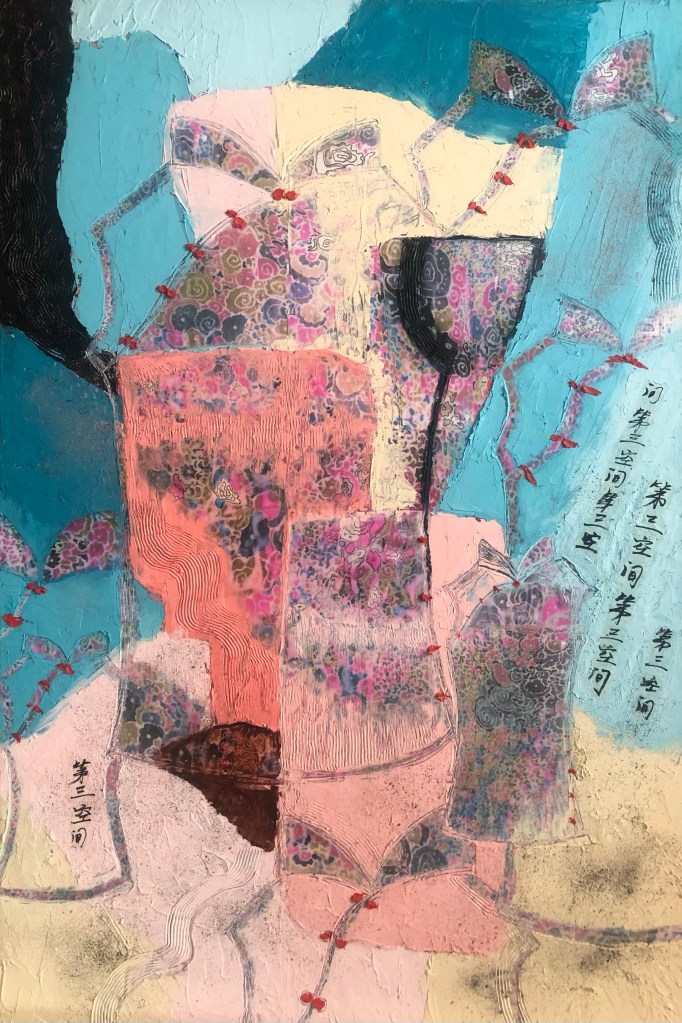
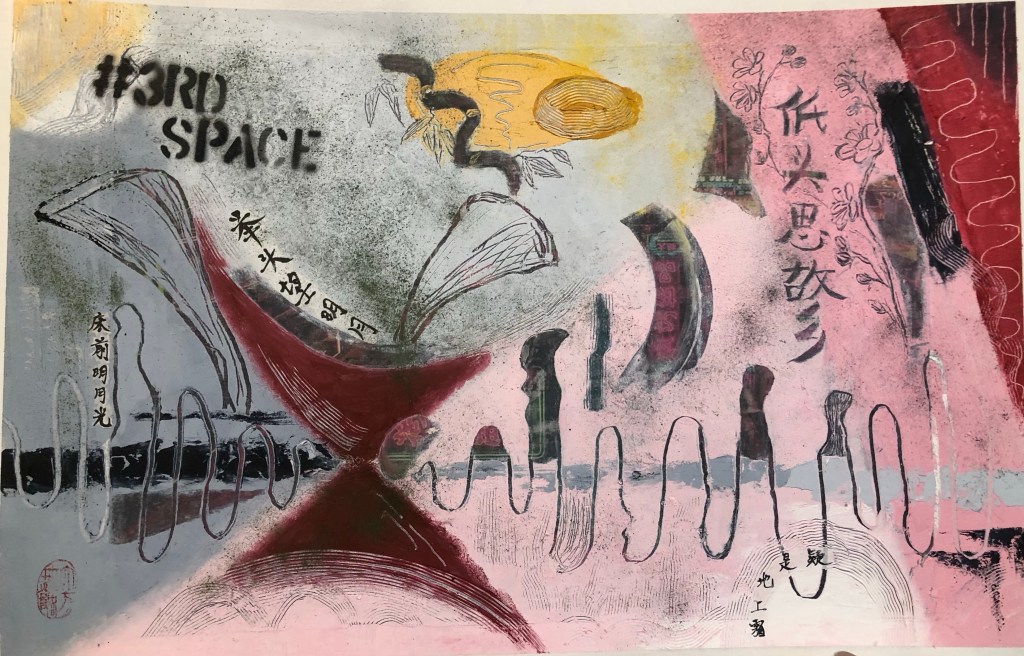
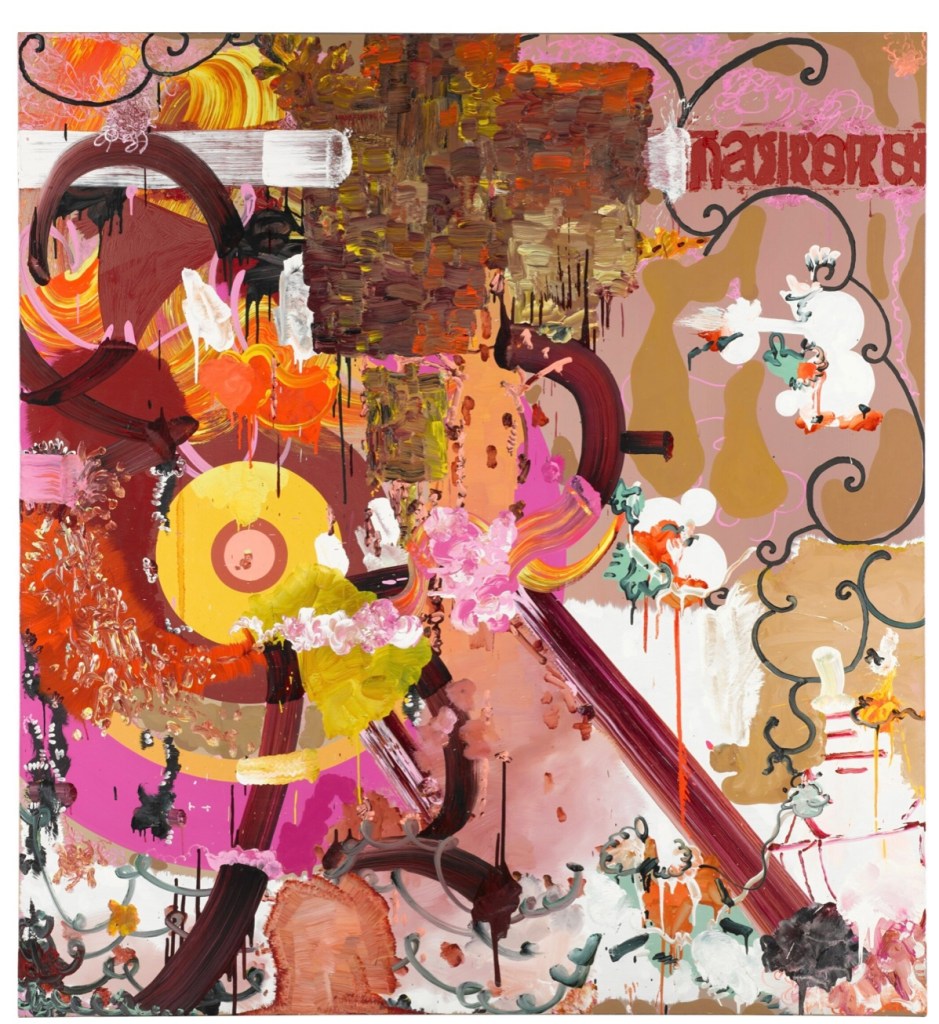
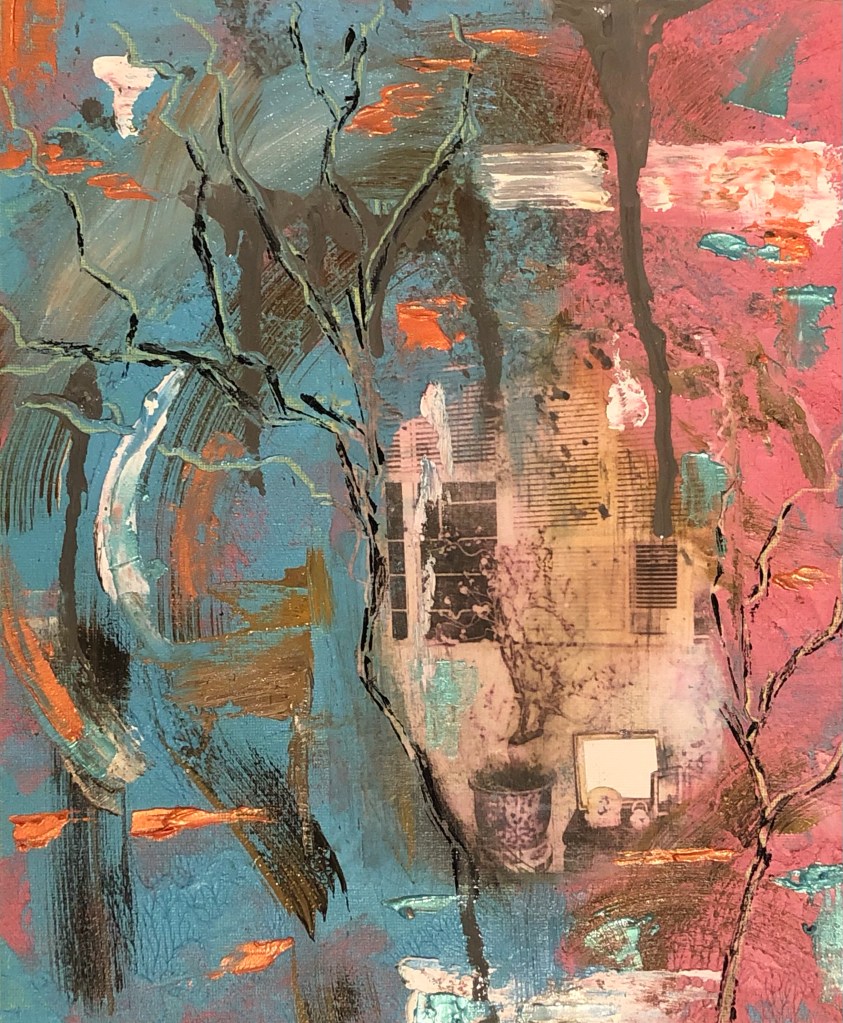
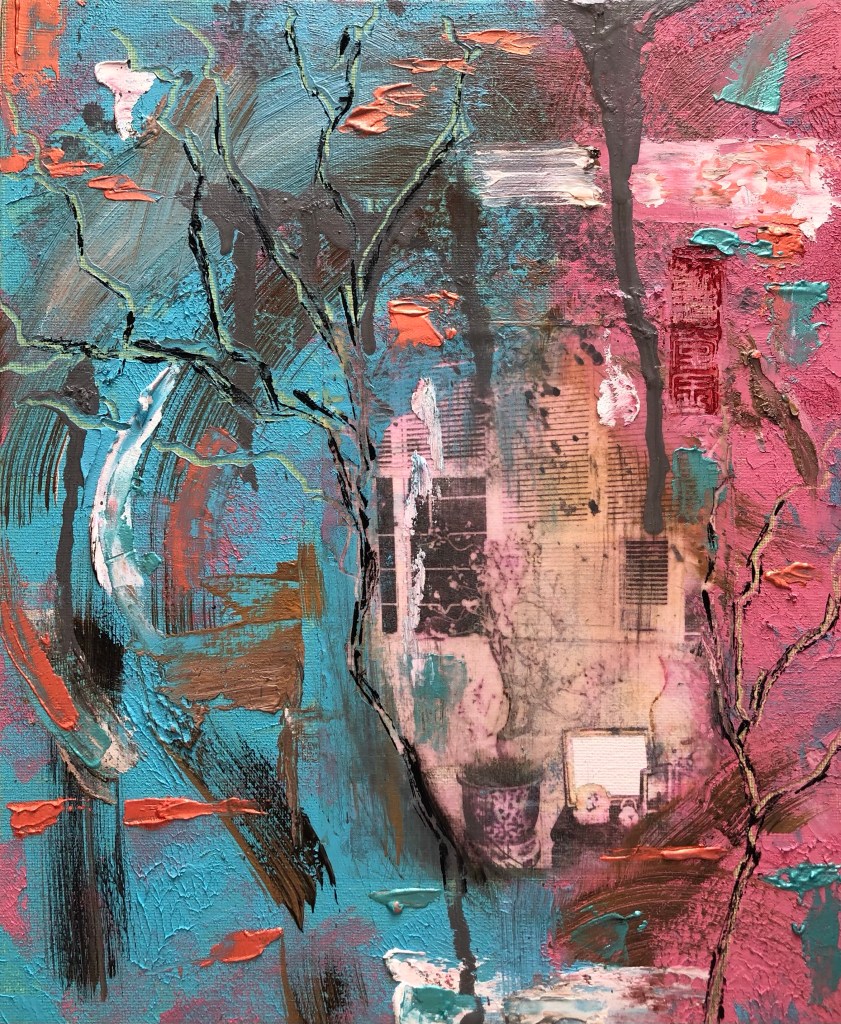
Finished work below – Cheongsam #1. Oil and cold wax on canvas with image transfer. Size 20×30 in.
REFLECTIONS
What I am happy with:
– The colour palette
– The fabric pattern that came through
– The Cheongsam shaped mark making
– The little red buttons as a colour pop
– The inlaying of Chinese calligraphy
– Enjoyed working with oil and cold wax media
What I’m not happy with:
– The composition, the ‘lips’ accidentally appearing led me to subconsciously start creating a face-like composition. I’m not sure if it worked. When the ‘eye’ was completely filled in black, it became a strange and eerie creature. It was too distracting hence I scraped off most of the black to reduce the impact.
– Due to the strange face, it doesn’t sit comfortably with me which perhaps is a good thing. Better than being forgettable.
Other thoughts:
– I wanted to use the cheongsam series to help me to delve into my thoughts about my family, especially my mother, our relationship and my heritage. I am not sure if I achieved this in just this painting because I was overly focusing on making the work and trying to get the composition right. But I am keen to continue the Cheongsam series and feel that I am at the beginning of something.
– I am intrigued by the history of the Cheongsam and want to find out more.
– The fact that such a traditional Chinese garment of my mother’s was made with a western style abstract pattern was intriguing – this is what the Third Space is about and I have accidentally stumbled upon this excellent example – my mother, a Chinese woman from colonised Hong Kong, chose this dress with this fabric. I have not fully processed this finding yet, but I wanted to acknowledge it here and will slowly delve into what I think and how I feel about this.
LEARNING
– Various symbols have emerged from this piece. I am inspired by Fiona Rae’s work where she often uses playful symbols. I can try a playful approach with e.g. lips or butterflies. The collars of the Cheongsam remind me of butterflies, they could be turned into a signature symbol that I use in my work.
– Other symbols such as the distinctive buttons that are used in Cheongsam and traditional Chinese garments, I loved playing with them when I was a child – I can investigate those further.
– I am intrigued by the Cheongsam and I want to research about its history and other related art such as in the book ‘Fusion of Cheongsam’ to get inspiration for making.
– As I was painting, I felt that I was trying too hard especially in the composition of the oil and cold wax layer. It felt deliberate rather than a free response to the canvas. I could use my sketchbook more to plan composition for my work, do more quick trial and error exploration.
NEXT STEPS
– Continue the Cheongsam exploration because I feel excited by the subject – research into its history and related art to get inspiration.
– Keep making, do some informal work. Not every piece has to be a finished painting.
– Play in my sketchbook.
– Relax and enjoy the making process. Take time and don’t try too hard.

 elizarawlings