BACKGROUND
Further to this blog:
I went onto the CSM campus to visit the Digital Printing Lab in January 2024 and discussed my requirements with a very helpful technician. Although the lab had great facilities, the only printer that could print onto silk is a UV printer. The effect would be very interesting but the size of the printable area is limited to around 77x33cm. The size is too small for a piece of work that I want to do for the MA interim show, but for other work, I could potentially use the UV printer and stitch together pieces of fabric which could be interesting.
So I have to turn to commercial companies for fabric printing. My MA colleagues suggested Contrado which also offers 40% student discount:
I looked at their website and was delighted with the products and services they offer. The type of printing on silk of satin fabric that they do is Sublimation Printing. Sublimation printing explained:
https://www.contrado.co.uk/sublimation-fabric-printing
I proceeded onto finding the right fabric for this research experiment.
METHOD
I started off by ordering a collection of samples of all their materials and the relevant colour charts. Fabric samples are listed here:
https://www.contrado.co.uk/poly-satin?optionValue=3768
A large quantity of fabric samples and colour charts arrived and I sorted through them all to pick out four fabrics to proceed for testing.
I ordered two poly satin and two natural silk materials. For the first print run experiment, I used a digital collage image that I had created previously and recently updated. One that I hope to use for the MA Interim show if this experiment works.
The samples arrived and Contrado gave me a couple of extra prints of one of the materials which was a bonus. They all looked good and useable:
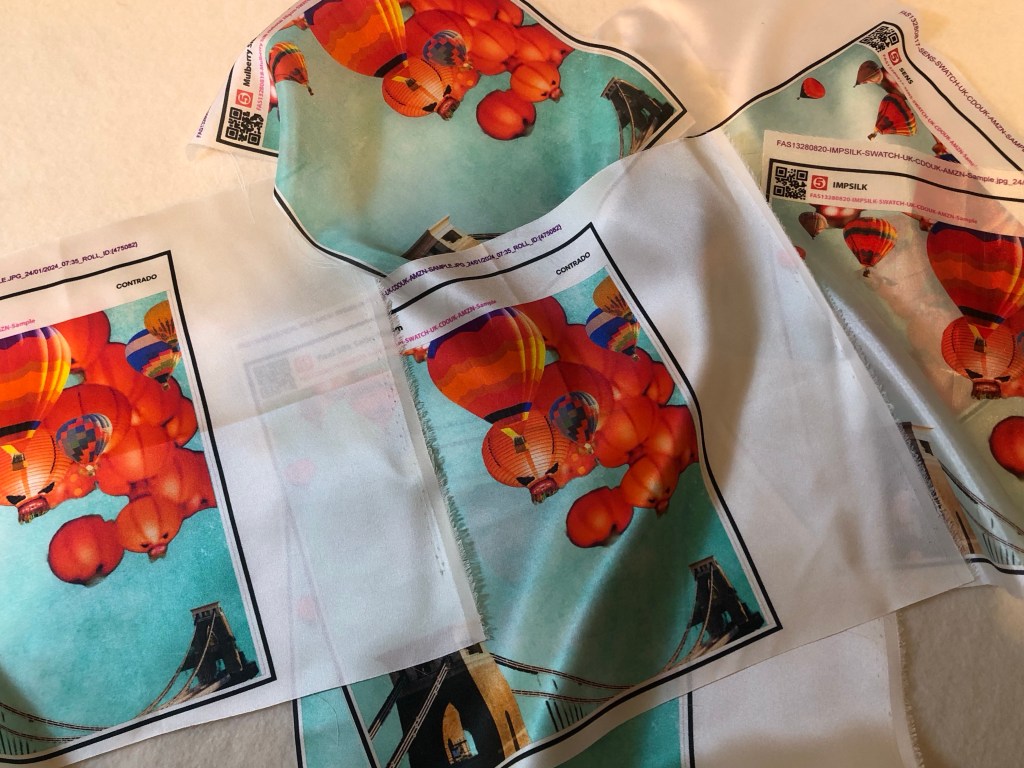
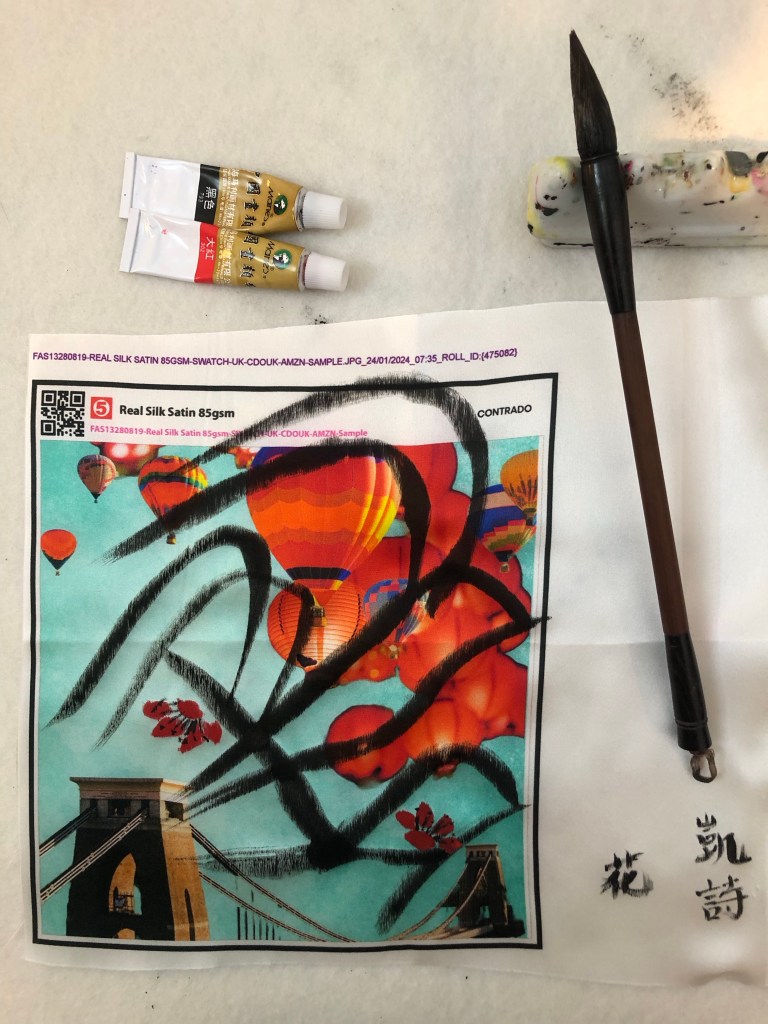
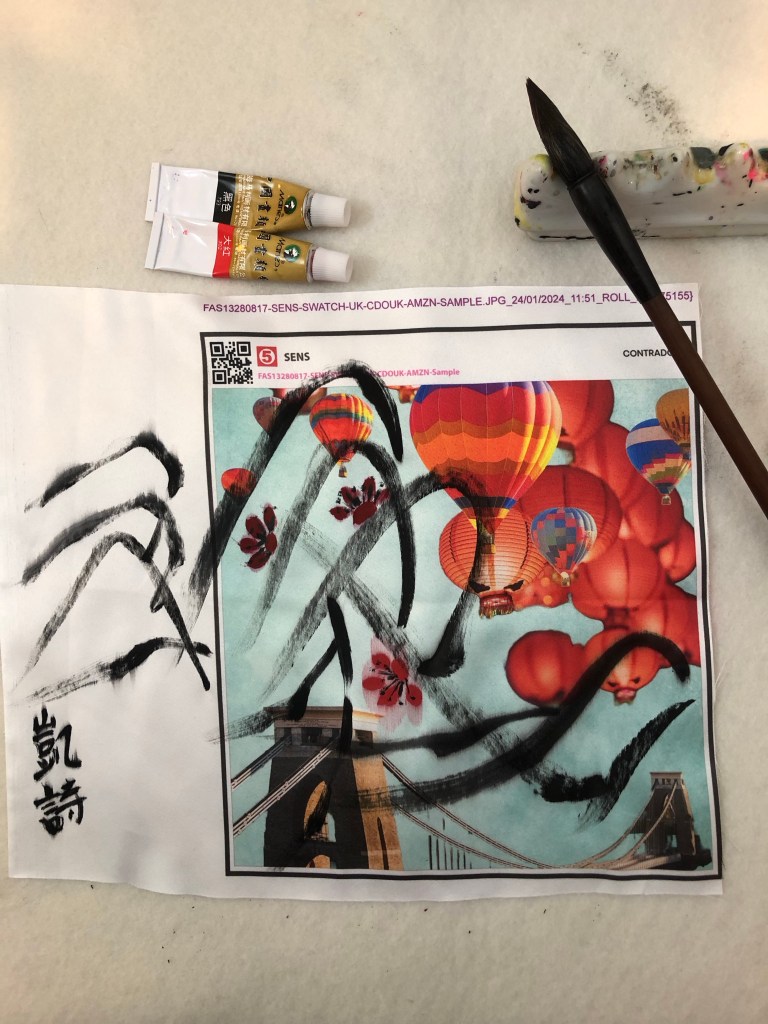
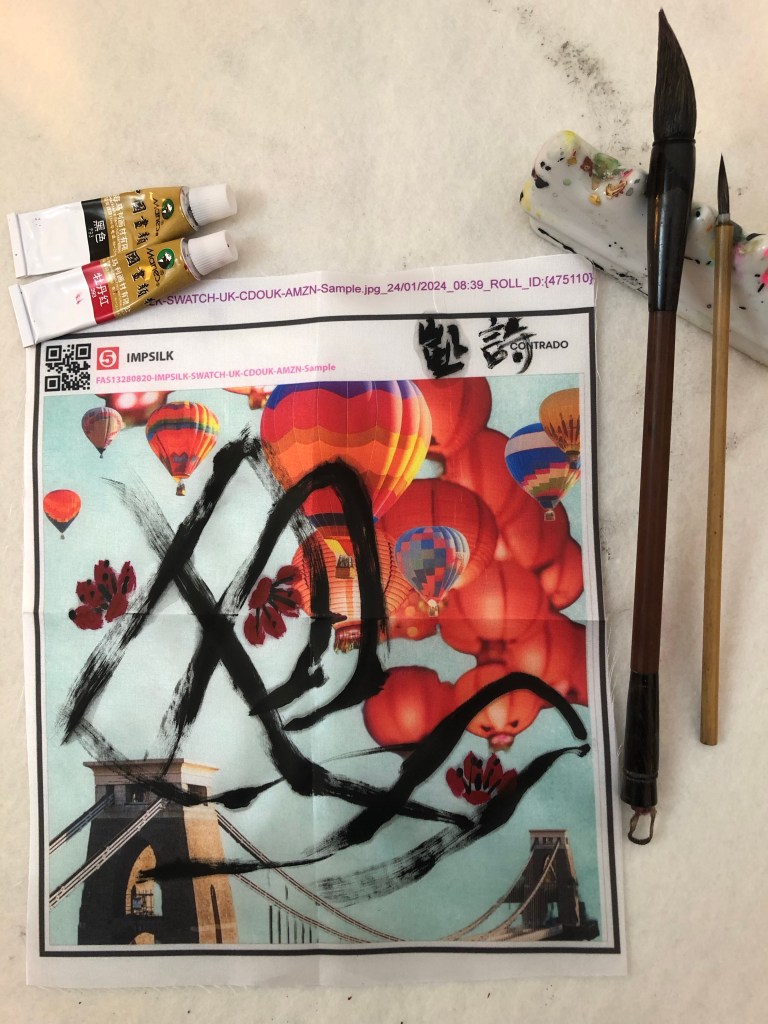
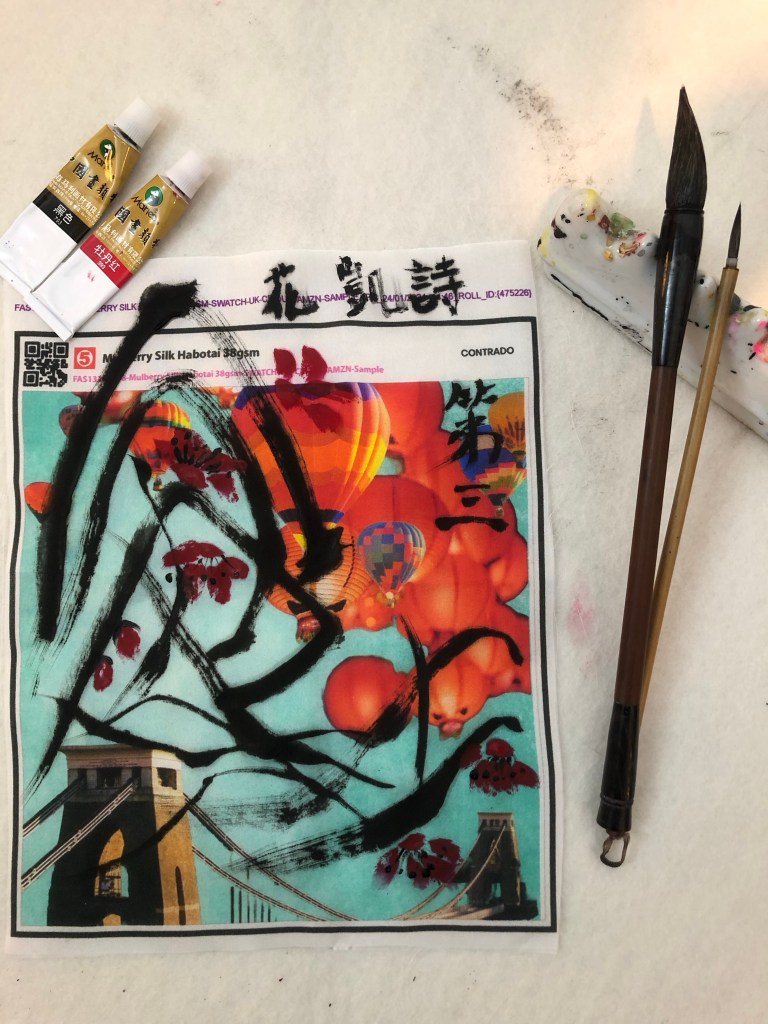
The idea is to do a Chinese brush painting of plum blossoms onto the fabric with the digital printing. The result of each experiment is show below:
REFLECTIONS
Reflecting on the results – the best outcome for me was the Mulberry silk Habotai 38gsm because:
– The material absorbency was just right. It absorbed the ink and contained the liquid well within the brush stroke. Whereas materials such as the Silk Impression (poly) was overly ‘sensitive’ in terms of absorbency; by this I meant it held onto the pigment but let the water from the ink spread beyond the painted area. This sensitivity would make it challenging to paint on because one has to carefully balance the water and pigment in the ink towards minimising the water which would make the brush flow (or glide) across the fabric difficult.
– The smoothness of the material surface, or fineness of the weave, was excellent. Meaning that the brush strokes did not pick up the weave pattern too much. Whereas Silk Sensation and Real Silk Satin both tended to show the weave too much. This would affect how the ‘flying white’ part of the brush stroke show up. For Flying White effect – see the tail end of the brush strokes in the Mulberry silk experiment where the canvas is partly shown in the stroke. The Flying White technique is important in Chinese brush painting and calligraphy because it shows the dynamism of the brush strokes.
– Area to be careful – the Mulberry silk Habotai material is quite transparent at 38gsm, so need to consider how to hang the final piece. E.g. to let light shine through or not.
LEARNING
– The key learning of the experiment is that Mulberry silk performed best and is the chosen material. I was delighted that I could find a suitable material with Contrado as they seem a good company to work with.
– I also learned a lot about how to analyse the results of Chinese brush painting on fabric – an area that is new to me.
NEXT STEPS
– Decide on the size of the piece to work on for the MA interim show and order the fabric.
– Complete the digital collage using Adobe Express – consider using old family photos.
– Practice painting the plum blossom and decide the final composition to go onto the fabric.
– Research and consider how to hang the piece, especially considering the transparency.
–
Research notes on the last point:
Ways to hang silk paintings –
http://www.visibleinvisible.com/pages/media/silk-paintings/silk-display.php
How to Hang a Tapestry 8 Ways
 elizarawlings